


The German Alps stretch from Lake Constance to the Salzburg border, with hundreds of villages offering mountain views, spa retreats and lakeside escapes. With more than 5,000 properties in current hotel searches, choosing the right base can be overwhelming, especially if you want easy access to cable cars, family facilities or a lake you can stroll to before breakfast. This guide focuses on five of the most popular hubs for English-speaking visitors and compares real hotels with strong booking appeal, from classic grand hotels to modern spa resorts.
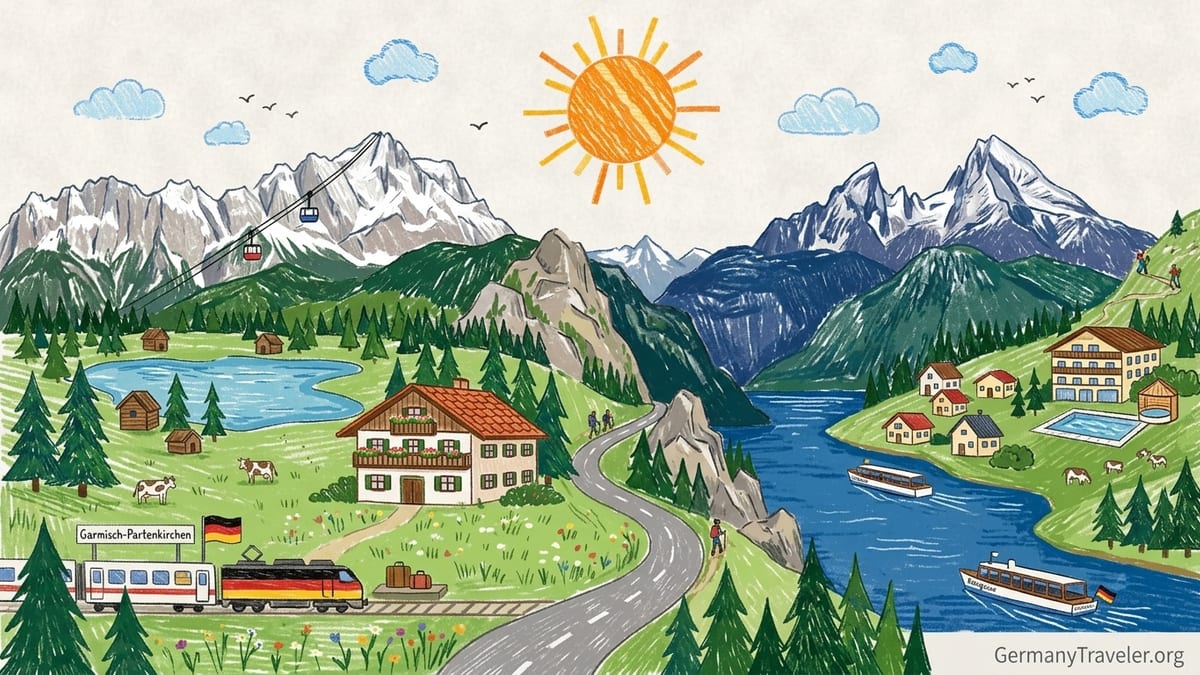
How to Choose Your Base in the German Alps
Before comparing individual hotels, it helps to narrow down your base. Garmisch-Partenkirchen and nearby Grainau work well if you want classic mountain views of the Zugspitze, an established ski scene and straightforward train access from Munich. Berchtesgaden and Königssee appeal to travelers who want dramatic peaks, a deep alpine lake and spa hotels close to the Jennerbahn cable car. Mittenwald is quieter and especially scenic, set under the Karwendel range; Oberstdorf is a strong all-rounder for hiking and skiing in the Allgäu; while Tegernsee offers a softer, more upscale lakeside atmosphere within easy reach of Munich.
When comparing hotels in these regions, pay particular attention to whether rooms have balconies facing the mountains or the street, whether spa and pool access is included in the rate, and what the parking arrangements are. Many four-star properties include an abundant breakfast buffet as standard, but underground parking can easily add 15 to 25 euros per night, which matters on a week-long stay. If you are arriving by train, look for hotels within a 10 to 15 minute walk of the station or close to a bus stop that connects directly to the lifts.
Finally, think seasonally. In winter, proximity to ski lifts and heated ski storage becomes more important than a lakeside terrace, while in summer you might prioritize a quiet garden, outdoor pool and shade in the afternoon. Some properties, especially in spa-focused areas such as Berchtesgaden and Tegernsee, allow day visitors into their wellness areas, so check if you want a more exclusive experience.
Garmisch & Grainau: Zugspitze Views and All-Round Bases
Garmisch-Partenkirchen is the most famous resort in the German Alps, with regular direct trains from Munich and a broad range of hotels. For guests who want a smaller mountain-view base with parking and breakfast included, Hotel Aschenbrenner is a good example of the local garni style. Rooms typically come with balconies looking straight onto the Wetterstein mountains, breakfast is served in a bright room or on a terrace with panoramic views, and the garden offers a quiet place to unwind after a day on the Alpspitze or Zugspitze trails. Parking is provided at the house, which removes the need for hunting street spaces in high season.
Travelers who want a more full-service experience often look to resorts with on-site pools and saunas. Several four-star properties around Garmisch include compact wellness areas, sometimes with an indoor pool, Finnish sauna and steam room. These hotels tend to sit within a short bus ride of the Hausberg or Alpspitzbahn lifts, and many offer ski storage and an area to dry boots overnight. Breakfast is nearly always included and can feel generous, with fruit, eggs to order and Bavarian cold cuts, but it is worth confirming whether half-board is available if you prefer not to go out to dinner every night.
Grainau, a few minutes west of Garmisch by local train or bus, is a quieter alternative directly under the Zugspitze. Here you will find smaller family-run hotels and guesthouses in walking distance of the Eibsee cable car valley station, ideal if you want to be on the first gondola. Many of these properties offer free outdoor parking, balconies with lake or mountain views and hearty breakfasts but might not have a large spa. Couples looking for a romantic stay often prioritize south-facing balconies and rooms with wood-paneled interiors, while families may prefer interconnected rooms and access to a garden where children can play.
Berchtesgaden & Königssee: Spa Hotels and Lakeside Access
For dramatic scenery and strong wellness options, Berchtesgaden and nearby Schönau am Königssee are among the most compelling bases in the German Alps. Hotel Garni Hanauerlehen in Schönau offers a good example of the local mix of mountain views, spa access and family facilities. Set on a sunny hill with wide views of the Watzmann and surrounding peaks, the hotel includes an indoor pool, sauna, sunbathing lawn and a breakfast buffet. Guests benefit from free parking at the house, family rooms, indoor and outdoor play areas for children, and easy access to buses that run towards the Jennerbahn cable car and Königssee boat dock.
Just a short drive away, Alpenhotel Fischer in Berchtesgaden shows the more classic four-star spa model. Located within walking distance of Berchtesgaden Hauptbahnhof, it works especially well for train travelers who do not want to rely on a car. The hotel typically offers parking and breakfast, along with a spa that includes multiple saunas, a steam room, hot tub and an indoor pool. Many rooms feature balconies or terraces with mountain views, and guests can be on a bus towards Königssee or the Jennerbahn within minutes, making it easy to switch between hiking, lake cruises and spa time.
At the very top of the local luxury range sits the Kempinski Hotel Berchtesgaden on the Obersalzberg plateau above town. This is a destination property for travelers who prioritize an expansive spa, indoor and outdoor pools with alpine views and on-site fine dining. The location is quiet and somewhat removed from the village, but that is part of its appeal: most guests arrive by car, make use of the underground parking, and then spend most of their time moving between the spa, hiking trails that start near the hotel and excursions by taxi or shuttle to Königssee or Berchtesgaden. Rooms usually have generous balconies or terraces, and floor-to-ceiling windows frame the surrounding peaks, which suits couples planning a romantic stay or travelers who do not mind paying a premium for comfort.
If you want to be close to Königssee itself, smaller spa-oriented hotels and guesthouses in Schönau sit one to three kilometers from the lake parking area. Examples include properties where the walk to the boat dock or Jennerbahn is around 20 to 30 minutes on foot or a short drive, with amenities such as free outdoor parking, breakfast rooms that look directly onto the mountains and small wellness zones with saunas. These can work particularly well for families who want a mix of lake visits, hikes on the Jenner and relaxed afternoons by the pool without the bustle of a town center.
Mittenwald: Karwendel Views and Quiet Charm
Mittenwald feels more intimate than Garmisch, and the hotel scene reflects that character. The village is served by a direct rail line between Munich and Innsbruck, and several hotels sit within a manageable walk or short taxi ride from the station. Post Hotel Mittenwald is a useful benchmark for travelers wanting a traditional four-star base with a spa. Recent listings show it offering an indoor pool, spa area, restaurant, bar and free parking, along with breakfast included in the room rate. Rooms tend to be alpine in style, many with balconies looking towards the Karwendel or Wetterstein ranges, making it easy to enjoy the scenery without leaving your room.
For those who prioritize spa facilities and a secluded romantic atmosphere over central location, the countryside around Mittenwald features some notable wellness retreats. These typically offer expansive spa areas with indoor and sometimes outdoor pools, multiple saunas, relaxation rooms and treatment menus focused on alpine herbs or regional ingredients. Parking is almost always included, and balconies or terraces tend to look out across meadows towards the higher peaks. Access to the Karwendelbahn cable car usually requires a short drive, but many guests come precisely because they prefer staying slightly removed from the village, then heading in by car for occasional dinners or train trips.
Families in Mittenwald often look for smaller hotels or guesthouses that combine simple spa zones with playrooms, gardens and flexible room layouts. Even if the wellness areas are compact, a small pool or sauna can make a big difference after a day hiking along the Isar river or up on the Kranzberg. Balconies that face away from the main roads and towards the slopes can help ensure quieter evenings if you are traveling with younger children who go to bed earlier, while free outdoor parking simplifies logistics for those moving on to another alpine region after a few days.
Oberstdorf: Allgäu Trails, Family Hotels and Lift Access
Oberstdorf in the Allgäu Alps offers an unusually broad range of walking and skiing terrain, and its accommodations reflect that diversity. Many hotels emphasize proximity to the Nebelhornbahn, Söllereckbahn or Fellhornbahn lifts, advertising walking times of 10 to 20 minutes or quick bus connections. Properties near the Nebelhornbahn, in particular, attract visitors who want to be on the first cable car in the morning and back in their hotel spa by late afternoon. Here you will often find hotels with indoor pools and small wellness areas, hearty breakfast buffets and an on-site restaurant, creating a self-contained base for a week-long stay.
Family-oriented hotels around Oberstdorf tend to focus on spacious rooms and apartments, playrooms, outdoor playgrounds and extras such as kids’ buffets at breakfast. Many include free outdoor parking and offer balconies with views towards the Nebelhorn or Kanzelwand, along with guest cards that reduce or waive local bus fares. In winter, ski storage rooms and boot dryers are standard in this category, while in summer the emphasis shifts towards bike storage and proximity to trailheads.
Travelers prioritizing a tranquil atmosphere can look to smaller garni hotels or guesthouses slightly away from the rail station and main pedestrian zone. These often provide breakfast only, allowing you to explore Oberstdorf’s restaurants, but still include comforts such as saunas or compact relaxation rooms. Walking times to the lifts may be longer, though local buses are reliable, and the trade-off is quieter nights and often better value for balconies with wide mountain views. Couples planning a romantic break often opt for such properties, especially if they prefer evenings on their own balcony rather than in a hotel bar.
Tegernsee: Lakeside Luxury and Relaxed Weekends
Tegernsee and the neighboring villages of Rottach-Egern, Bad Wiessee and Gmund are among Munich’s classic weekend escapes, with a strong concentration of lakeside and spa hotels. DAS TEGERNSEE on the hillside above the lake is one of the region’s flagship properties, combining far-reaching views with a large contemporary spa. Occupying a south-facing slope, the hotel’s buildings are set amid extensive grounds, and many rooms come with balconies or terraces that take in both the lake and the surrounding foothills. The panorama spa area spans thousands of square meters, typically including indoor and outdoor pools, saunas with lake views and multiple relaxation zones. Parking is usually provided on site, and breakfast focuses on regional products, which suits guests planning slow mornings before heading out on the trails.
Down by the lake shore, Tegernsee’s other upscale hotels blend direct waterfront access with indoor pools, saunas and gardens that run to the waterline. Some properties sit a short walk from train or boat piers, making them realistic options for travelers relying on public transport. Rooms often feature floor-to-ceiling windows and generous balconies, and couples book these for special occasions, valuing the combination of spa access, fine dining and sunset views over the water. Underground or courtyard parking is common, though it may incur a nightly charge; it is wise to factor this into your budget if you are arriving by rental car.
Families may prefer hotels set slightly back from the lake with larger grounds, playgrounds and more flexible room categories. These properties often include indoor pools that are explicitly family-friendly, along with early dinner options and easy access to lakeside paths and cable cars in the surrounding hills. Tegernsee is well connected by hourly regional trains to Munich, with stations at Tegernsee and Gmund, so it is entirely feasible to spend a week here without a car. In that case, look for hotels within walking distance of a station or a bus stop that connects to the Spitzingsee and Wallberg lift areas.
Mountain Views, Spas, Families or Lakes: Matching Hotel Types to Your Trip
Across all five regions, certain hotel types repeat. Classic mountain-view garni hotels typically offer breakfast, balconies and free outdoor parking but may only have a small sauna rather than a full spa. These can be excellent value in Garmisch, Mittenwald and Oberstdorf if your priority is to be out on the trails every day and you only need a comfortable room and hearty breakfast as a base.
Spa-focused hotels, more common around Berchtesgaden and Tegernsee, justify higher nightly rates with large wellness areas. When comparing options, look closely at whether spa access is included for the length of your stay and whether pools are adults-only or also open to children. Properties such as Alpenhotel Fischer or DAS TEGERNSEE illustrate how a strong spa offering can become the core of the experience, with guests spending multiple hours each day in saunas and relaxation rooms rather than treating them as a minor extra.
Family hotels prioritize space and flexibility. In practice that means family rooms with separate sleeping areas, children’s playrooms, outdoor playgrounds and often a more relaxed approach to pool usage. Hotels like Hanauerlehen show how a mid-sized property can blend mountain views, an indoor pool, breakfast and child-friendly features such as cots, play equipment and ski storage. Lakeside hotels, finally, trade some of the immediate mountain drama for direct access to water; in Tegernsee this often means private jetties, lawns leading to the lake and balconies angled for sunrise or sunset views.
The Takeaway
Choosing a hotel in the German Alps starts with deciding which landscape you want to wake up to every morning: the sharp peaks of the Zugspitze near Garmisch and Grainau, the deep fjord-like waters of Königssee, the quiet charm of Mittenwald, the broad Allgäu valleys around Oberstdorf or the gentler lakeside scenery of Tegernsee. Once you have picked a base, you can refine your search around mountain-view balconies, full spa access, family facilities or direct proximity to a cable car or lake shore.
Across the region, most mid-range and upscale hotels include breakfast and some form of parking, but details differ. Spa access policies, balcony orientation and distance to lifts or train stations can significantly shape your stay, especially if you are traveling without a car or with children. Using real-world examples from current hotel offerings in each area gives a sense of what to expect and what you might reasonably prioritize at your budget level.
If you are planning a first trip, consider splitting a week between two contrasting bases, for example three nights near Garmisch for classic mountain panoramas and three nights at Tegernsee for lakeside relaxation. Returning visitors often fine-tune their choices, moving from larger resorts to smaller garni hotels or from lakeside properties to high plateau spa retreats. With careful attention to the details outlined above, the German Alps offer no shortage of memorable places to stay.
FAQ
Q1. Do I need a car to stay in the German Alps?
It depends on your base. Garmisch-Partenkirchen, Mittenwald, Oberstdorf and Tegernsee have good train links and local buses to many cable cars, while smaller villages around Königssee are easier with a car, especially if you want to reach multiple trailheads or visit surrounding sights in one trip.
Q2. Which area is best for a first-time visitor to the German Alps?
Many first-time visitors choose Garmisch-Partenkirchen or Berchtesgaden because both combine strong scenery, clear trail networks, cable cars and a wide range of hotels. They also have straightforward connections from Munich, which simplifies arrival and departure.
Q3. How far in advance should I book hotels in the German Alps?
For peak summer and winter periods, it is sensible to book three to six months ahead, especially for spa hotels, lakeside properties and school holiday dates. Shoulder seasons in May, June, September and October are more flexible but popular hotels can still fill on weekends.
Q4. Are breakfast and spa access usually included in room rates?
Breakfast is commonly included in mid-range and upscale hotels, especially garni and family-run properties. Spa access varies: some hotels include full use of pools and saunas, while others restrict certain areas or charge a daily supplement, so always check the fine print before booking.
Q5. What should families look for when choosing a hotel?
Families should focus on room layout, availability of cots and extra beds, indoor play areas, child-friendly pool policies and proximity to easy walks or lift stations. Free parking and on-site dining also make logistics easier when traveling with younger children.
Q6. Which region offers the best spa hotels in the German Alps?
Berchtesgaden and Tegernsee stand out for their concentration of high-quality spa properties, ranging from classic four-star hotels with generous wellness areas to luxury resorts with extensive pools, saunas and treatment menus oriented around longer stays.
Q7. How close are typical hotels to hiking or ski lifts?
In most resorts you will find hotels within a 10 to 20 minute walk of major lifts, with others relying on short bus rides. Some properties, especially in Garmisch, Oberstdorf and around Königssee, highlight being only a few minutes’ walk or drive from cable car valley stations, which can be valuable if you plan to go up every day.
Q8. Is parking usually free at alpine hotels?
Smaller guesthouses and garni hotels often include free outdoor parking, while larger four and five-star properties tend to offer underground or covered parking for an additional nightly fee. The cost can add up over a longer stay, so it is worth checking before you book.
Q9. Are balconies standard in German alpine hotels?
Balconies or terraces are common but not universal. Many hotels offer a mix of rooms with and without balconies, often charging a premium for guaranteed mountain views. If a balcony is important, use room descriptions carefully and do not assume it is included by default.
Q10. When is the best time to visit for hiking versus skiing?
For hiking, late June to early October usually offers the most reliable conditions, with higher trails and cable cars fully open. For skiing, main resorts around Garmisch and Oberstdorf generally run from December into March, though exact dates vary by year and snow levels.