

The German Baltic coast strings together hundreds of kilometres of pale sand, shallow bays and traditional seaside resorts, but not every beach suits every traveller. Families with small children often look for gently shelving water and full facilities, while couples might prefer wider natural stretches with fewer people and a quieter evening scene. This guide compares the key Baltic resorts between Lübeck Bay and Usedom, using concrete on-the-ground details to help you choose the right beach for your style of holiday.
How the German Baltic Coast Works for Beach Holidays
The Baltic is tideless and comparatively shallow, which shapes almost everything about beach life on Germany’s northeast shore. At many family resorts you can walk out for 20 or 30 metres with the water only slowly rising past your knees, and sandbars create calm, warmer shallows that heat up quicker than the open sea. This is exactly why regional tourism offices in Schleswig-Holstein and Mecklenburg-Vorpommern highlight the Baltic as a good choice for less confident swimmers and young children rather than for big-wave seekers.
Summer water temperatures on the German Baltic typically sit in the high teens Celsius, sometimes nudging past 20 degrees in July and August. That still feels fresh to anyone coming from the Mediterranean, but the combination of fine sand underfoot and gently shelving bays makes it inviting once you are in. Lifeguard stations are standard at major resort beaches, especially in the school holidays, and coloured flags indicate changing conditions. At busy spots like Timmendorfer Strand, Warnemünde or Binz you will see watchtowers spaced along the sand and clear signposting of designated swimming zones.
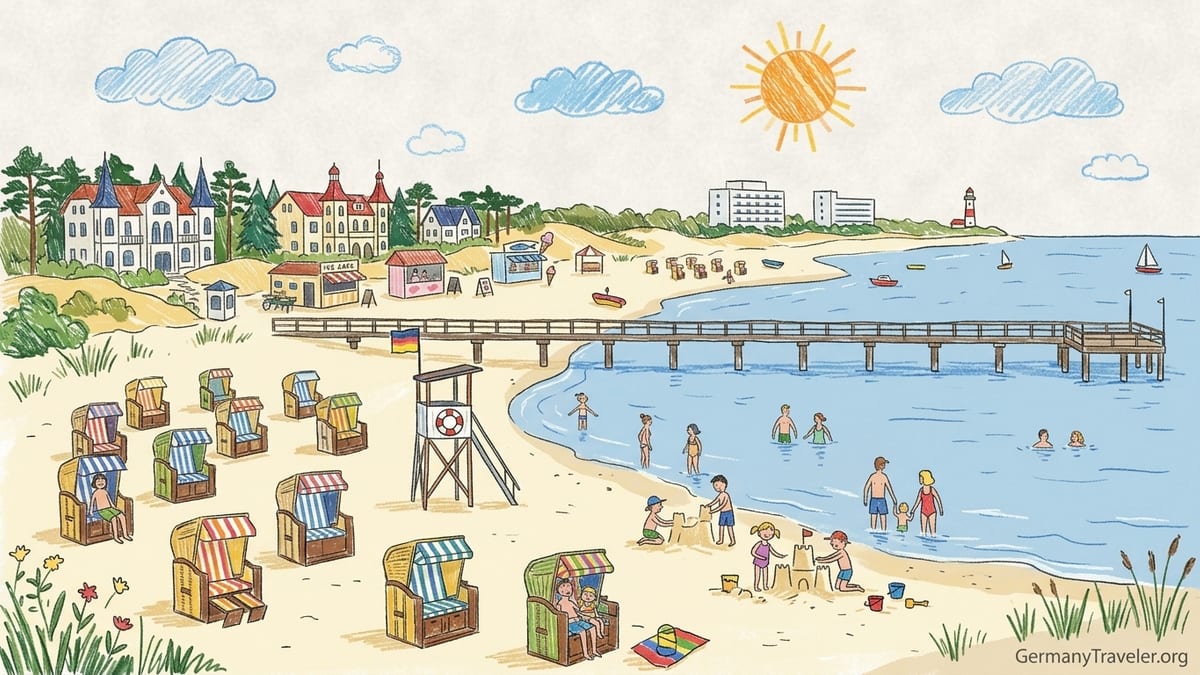
The classic seaside infrastructure repeats from bay to bay. Seafront promenades are lined with ice-cream kiosks, fish roll stands and cafes serving coffee and cake. Rows of Strandkörbe, the traditional hooded wicker beach chairs, can be rented by the hour or day, typically for a modest fee that varies by resort and season. Behind the dunes, you usually find car parks, toilets and showers, plus a band of villas and mid-rise hotels. Naturist sections, signposted as FKK, are often placed toward the edges of resort beaches or on quieter neighbouring stretches, giving everyone space.
Timmendorfer Strand and Scharbeutz: Classic Lübeck Bay Resorts
Southwest of Lübeck, Timmendorfer Strand and neighbouring Scharbeutz form one of the easiest seaside escapes from Hamburg. The beach here is long, pale and relatively narrow, with sand that is soft underfoot rather than stony. The shore slopes gently, so in calm conditions children can paddle and play in waist-deep water close to shore. On hot weekends the shallow strip near the tideline can feel almost lukewarm compared with the slightly cooler deeper water further out.
Timmendorfer Strand focuses strongly on comfort and amenities. The seafront promenade is backed by modern hotels and cafes, and almost every few metres there is a kiosk selling Fischbrötchen, soft ice cream and beach toys. You will find dense rows of Strandkörbe in high season, especially near the central Seeschlösschenbrücke pier, and advance reservations through local rental stands are recommended for July and August. Toilets, showers and changing cabins are dotted at regular intervals, which makes life easier with small children who need frequent breaks.
Scharbeutz, just up the coast, feels slightly more relaxed but offers similar shallow water and family-friendly sand. Locals from Lübeck and Hamburg often come just for the day because parking is straightforward and the amenities are close to the beach. Behind the promenade there are playgrounds, mini-golf and small surf schools that organise beginner classes in stand-up paddling or longboard surfing when conditions allow. In both resorts there are small fees for beach access and for Strandkorb rental, which helps fund clean-up, lifeguard coverage and showers.
Accommodation runs from large seafront hotels with wellness areas and indoor pools to self-catering apartments set back on quiet streets. For example, families might choose an apartment within a ten-minute walk of the sand so they can wheel a buggy straight down to the promenade. Public transport connections from Lübeck and Hamburg mean you can base yourself in the city and still reach the beach in around an hour, making these resorts a good first taste of the German Baltic for visitors without a car.
Fehmarn: Island Beaches for Shallow Water and Variety
Fehmarn, reached by bridge from the mainland, concentrates a surprising variety of Baltic beach types into one compact island. The headline family strand is Südstrand near Burgtiefe, a south-facing crescent of fine, almost white sand that gently shelves into typically calm water. Local guides describe it as one of the island’s warmest and most sheltered spots in summer, and the sand here has the classic soft texture that children love for digging and building. Rows of Strandkörbe, a lively promenade, playgrounds and the nearby FehMare pool complex create a full-service atmosphere where you can simply park once and settle in for the day.
For families who want even shallower water, the north-coast beach at Grüner Brink is often recommended. Here, sandbanks and a lagoon-like configuration mean that in summer the water can warm up noticeably in the first few metres from shore, and adults can often stand far out with the water still below chest height. Behind the dunes the landscape feels more natural, with sheep grazing and birdlife in the protected area, but there are still basics like toilets, parking and a snack kiosk, so parents are not completely on their own.
Fehmarn also offers more active and naturist options. On the southeastern side, the Wulfener Hals sand spit has famously shallow flat water on its inner side and windier conditions on the outer side, which is why many windsurf and kitesurf schools bring beginners here. Designated FKK areas exist at several stretches, including beaches near Wulfen and Wallnau, usually marked by clear signs so clothed and unclothed sunbathers can each find their preferred zone without surprise. Families who prefer standard swimwear can simply set up closer to the main access points and lifeguard towers.
Parking near Südstrand is straightforward, with large paid car parks behind the promenade. Hotels and holiday apartments are clustered in Burgtiefe and the town of Burg, a short drive inland. Many properties market themselves expressly to families, highlighting proximity to shallow beaches and child-friendly facilities like kitchenettes and washing machines. If you prefer a quieter, more natural setting, you can stay on the north coast or around the villages near Grüner Brink, then drive ten or fifteen minutes to reach the bigger resort infrastructure when needed.
Kühlungsborn and Warnemünde: Mecklenburg’s Flagship Seaside Towns
Further east, Kühlungsborn and Warnemünde showcase the typical seaside architecture and promenade culture of Mecklenburg-Vorpommern. Kühlungsborn stretches along a long, wide ribbon of pale sand that carries the Blue Flag seal for water quality. The beach slopes gradually into the sea, though it can deepen a little faster than the most sheltered bays on Fehmarn or Usedom. Lifeguard stations are spaced out along the busiest sections, and several access points are adapted for wheelchair users, reflecting the resort’s push for barrier-free tourism.
Kühlungsborn’s promenade is one of the longest in Germany, lined with restored spa hotels, cafes and restaurants. Families appreciate the clear zoning of beach sections, with dedicated quiet areas, dog sections and more active strips with beach volleyball courts. Strandkorb hire is available all along the main beach, often from small rental huts where you can pay by card or cash. Behind the dunes you find organised parking areas, and in high summer it pays to arrive before mid-morning to secure a space within walking distance of the sea.
Warnemünde, the beach district of the city of Rostock, combines a long, deep beach with a busy harbourfront. The sand here is soft and broad, which means there is usually room to spread out even on crowded sunny days. The water is generally shallow near shore, with small waves that are fun but rarely intimidating, although windier days can kick up more chop than in landlocked bays. Lifeguards monitor sections near the main access points, and flags guide where it is safest to swim on any given day.
Warnemünde is also known for its clear division into textile and naturist areas. Family visitors typically stay near the centre, close to the lighthouse and Teepott building, where cafes and kiosks hug the promenade and Strandkorb rows face the water. Further along the coast designated FKK sectors are clearly marked; it is common to see parents pushing prams along the promenade and then veering toward the family zones while other beachgoers continue to the naturist sections. With tram and train links into Rostock, Warnemünde works well for travellers who want to mix city sightseeing with classic Baltic beach time.
Darß and Zingst: Wild Dunes and Gentle Shorelines
The Fischland-Darß-Zingst peninsula offers a different feel from the classic spa towns. Here, long strips of dune-backed sand run along the outer Baltic shore, while shallow lagoons and inlets sit behind them. Around Prerow and Zingst, the main beaches still offer the fine, light sand typical of the coast, but the backdrop is more of a national park landscape than a promenade of villas. Families who enjoy nature often base themselves in small guesthouses or holiday apartments in the villages, then walk or cycle through pine forest to reach the sea.
On the main resort stretches near Zingst, the water entry is usually gradual, with a long zone of knee- to waist-deep water in calm conditions. This makes it attractive for children and cautious swimmers, although there can be a little more wave energy than in sheltered inner bays if onshore winds pick up. Lifeguard posts operate in season near the main access points, and basic facilities such as toilets, changing cabins and kiosks are concentrated around the village ends of the beaches. Further along the shore, toward the west or east, the sand becomes quieter and less developed.
The famous Weststrand near Prerow is a good example of how wilder Baltic beaches can suit confident families with older children. Here the dunes and forest come right up to the sand, and there is little in the way of fixed infrastructure. The sand itself is still soft and light, but there are no formal Strandkorb rows and only limited facilities. Naturist use is traditional on some parts of the peninsula, indicated by local signage, so visitors should pay attention as they walk to choose the section that matches their expectations.
Because parking at the forest edges and village entrances can fill up on warm weekends, many visitors prefer to arrive early or come by bicycle. Holiday rentals in Zingst and Prerow frequently provide bikes, making it easy to reach both the main resort beach with full facilities and the quieter natural stretches. This region suits travellers who want a compromise between safe, shallow Baltic bathing and a more scenic, less built-up shoreline.
Rügen’s Resorts: Binz and Beyond
Germany’s largest island, Rügen, offers several classic Baltic resort towns plus quieter bays and forests. Binz, on the island’s east coast, is the best known. Its beach is a wide, fine-sand arc around four to five kilometres long and up to about 50 metres wide, backed by a promenade of grand hotels and villas. The sand is light and soft, and the water remains shallow quite far out, which makes it particularly popular with families. In calm summer weather, adults can wade shoulder to shoulder with children a long way from shore and still be in standing depth.
Facilities in Binz are comprehensive. Lifeguard stations dot the central stretch, there are numerous access points with steps over the dunes, and the promenade hosts ice-cream parlours, bakeries and restaurants serving local fish. Strandkörbe line much of the beach, and rental stands usually offer daily or multi-day rates. Practical touches such as stroller-friendly ramps and several accessible entries make it easier for families across generations to spend a full day by the sea.
Other Rügen beaches offer variations on this theme. In Sellin and Göhren, the sand is similarly fine and pale, with shallow water and piers reaching into the sea. These resorts feel slightly smaller scale than Binz but share the same spa-town architecture and beach infrastructure. Toward the north, around Prora, the beach widens and becomes less crowded, though it still offers long, shallow entries into the water. Designated FKK sections usually sit toward the ends of the resort beaches or between towns, well signposted so visitors understand when they are entering a naturist area.
Accommodation choices on Rügen range from large seafront hotels with indoor pools in Binz to family-run pensions and self-catering apartments in smaller towns. Many visitors travel by car, using the causeway or bridge from the mainland, but there are also direct train connections into Binz from major German cities in summer. Once on the island, a combination of local trains, buses and cycling paths makes it realistic to explore more than one beach during the same holiday, such as combining a few days on the busy Binz promenade with quieter afternoons on less developed northern strands.
Usedom: The Long Beach of Ahlbeck, Heringsdorf and Bansin
On Germany’s eastern border, the island of Usedom is famous for one of the longest sandy beaches in the country. The stretch linking the “Kaiserbäder” of Ahlbeck, Heringsdorf and Bansin runs for many kilometres along a broad band of pale, soft sand. The shoreline slopes gently into the Baltic, creating conditions that feel especially forgiving for families with young children or adults who are not confident swimmers. In warm spells, the shallow zones can feel noticeably milder than the deeper water further offshore.
The three Kaiserbäder share similar infrastructure: ornate spa-era villas, piers that stretch out from the sand, and promenades lined with cafes serving coffee, cake and fish dishes. Lifeguards operate at central sections in season, and signs mark out both family zones and dog-friendly areas. Strandkorb hire is common, with long lines of chairs angled against the prevailing wind so that bathers can sit in sheltered comfort. Toilets, showers and changing options sit just behind the dunes or beneath the promenades, and small playgrounds help keep children occupied between swims.
Toward the Polish border, the beach continues past the main resort centres into quieter stretches. Designated naturist sections exist along parts of Usedom, including near Ahlbeck, and are popular among regular Baltic holidaymakers. These areas are usually clearly marked, and beachgoers naturally spread out so that families who prefer standard swimwear can enjoy the textile sections without feeling crowded. On peak summer days the central strips in Ahlbeck and Heringsdorf can get quite busy, so parents who want more space often walk ten or fifteen minutes along the sand to find a wider, calmer patch.
Parking in the Kaiserbäder can be tight in high season, as the historic centres were not built for modern car volumes. Many visitors choose accommodation within walking distance of the sea or use local buses to reach the beach. Hotels and apartments cover all budgets, from historic grand hotels on the front line of the promenade to simple guesthouses a few streets back. For families staying a week, self-catering apartments with balconies and easy buggy access to the promenade are a popular pick, allowing for relaxed breakfasts at home before strolling down to the shallow shoreline.
Choosing the Right Baltic Beach for Your Trip
When deciding between these Baltic resorts, think first about water depth and confidence levels in your group. For very young children and cautious swimmers, the shallowest and most sheltered entries are typically found at Fehmarn’s Südstrand and Grüner Brink, the wide bands of sand on Usedom between Ahlbeck and Bansin, and the classic resort stretches in Binz and other Rügen spa towns. On most calm summer days, these beaches offer a generous area of waist-deep water where you can stand together as a family and play safely under the eyes of lifeguards.
Sand quality is consistently high across the resorts listed here, but there are nuances. The sand on Fehmarn’s main family beaches and in Binz is often described as particularly fine and light, ideal for barefoot walking and sandcastle building. Darß and some wilder Rügen stretches mix in slightly coarser grains and occasional pebbles, which can be more interesting for beachcombing but a little less soft underfoot. If you plan to spend whole days sitting and digging with children, a resort with consistently fine sand and ready access to Strandkorb rentals makes the experience more comfortable.
Facilities and access matter just as much as the natural setting. Timmendorfer Strand, Scharbeutz, Fehmarn’s Südstrand, Kühlungsborn, Warnemünde, Binz and the Usedom Kaiserbäder all offer a full set of amenities: promenades, kiosks, toilets, showers, parking and a clear range of accommodation options close to the sea. Darß and the quieter ends of Rügen’s and Usedom’s beaches offer more space and scenery but less infrastructure, so they work best for travellers who are happy to bring picnics, walk or cycle to the sand and plan toilet breaks around the limited facilities near village access points.
Strandkorb rental and naturist sections are part of the cultural fabric of the German Baltic coast. Expect to pay a modest daily fee for a Strandkorb in the main resorts, which buys you wind shelter, a reclining seat and a lockable box for valuables. Most locals treat it as an essential part of a full beach day, especially with children who need shade. Naturist beaches, marked with FKK signs, tend to sit at the fringes of resort zones or on quieter stretches; families can easily avoid them by watching for signage and staying near central access points and lifeguard towers where standard swimwear is the norm.
The Takeaway
Across the German Baltic coast, the common thread is a gentle, shallow sea and a culture built around unhurried days on pale sand. For first-time visitors or families, resorts like Timmendorfer Strand, Scharbeutz, Fehmarn’s Südstrand, Kühlungsborn, Warnemünde, Binz and the Usedom Kaiserbäder offer the easiest combination of safe swimming, fine sand and full facilities. Those who value wilder scenery and quieter dunes can look to Darß, Zingst and the less developed stretches of Rügen and Usedom, trading some convenience for more space and a closer connection to nature.
Whichever beach you choose, plan around the Baltic’s particular rhythm: cooler water than southern seas, but often warmer in the shallows; long daylight hours in high summer; and a seaside tradition of Strandkörbe, promenades and evening walks. With a little research into water depth, sand quality, facilities and nearby accommodation, you can match a stretch of German Baltic coast precisely to your idea of the perfect beach holiday.
FAQ
Q1: Which Baltic beach on this list is best for families with very young children?
For toddlers and less confident swimmers, Fehmarn’s Südstrand and Grüner Brink, Binz on Rügen and the long Usedom beach between Ahlbeck and Bansin stand out because of their especially shallow, gently shelving water and fine, soft sand close to lifeguarded areas.
Q2: Where will I find the softest, finest sand?
The sand at Fehmarn’s Südstrand, Binz and the Usedom Kaiserbäder is often described as particularly fine and light, making it comfortable for barefoot walking and ideal for building sandcastles and playing with children.
Q3: Do I need to book a Strandkorb in advance?
In peak season, especially on sunny weekends in Timmendorfer Strand, Scharbeutz, Binz, Warnemünde and the Usedom Kaiserbäder, it is wise to reserve a Strandkorb a day or two ahead or arrive early, as the front rows near lifeguard stations and playgrounds are popular with families.
Q4: How much does a Strandkorb typically cost to rent?
Prices vary by resort and season, but you can expect to pay a modest daily fee, often comparable to the cost of a simple restaurant lunch for one person; hourly rentals are sometimes available later in the day at a lower rate.
Q5: Are naturist (FKK) beaches easy to avoid with children?
Yes. Naturist sections are usually clearly marked with FKK signs and tend to be located toward the edges of resort beaches or on quieter stretches, so families who prefer standard swimwear can simply stay near central access points and lifeguarded zones.
Q6: Which resort is easiest to reach by public transport without a car?
Timmendorfer Strand, Scharbeutz and Warnemünde have excellent rail links from cities like Hamburg and Rostock, while Binz on Rügen and the Usedom Kaiserbäder also receive seasonal long-distance trains, making them good choices for travellers who do not want to drive.
Q7: How cold is the water in summer, and is it comfortable for swimming?
In July and August the Baltic around these resorts is usually in the high teens Celsius, sometimes a little warmer in sheltered shallows; it feels cool on first entry but most visitors find it pleasant for swimming once they have acclimatised.
Q8: Where can I find quieter, more natural beaches with fewer buildings?
The dune-backed stretches on the Darß-Zingst peninsula, the less developed northern sections of Rügen and some of the outlying parts of Usedom offer more space, forest backdrops and fewer promenades, though with more limited facilities than the main resort beaches.
Q9: Is parking a problem at these Baltic resorts in high season?
At popular spots like Timmendorfer Strand, Kühlungsborn, Warnemünde, Binz and the Usedom Kaiserbäder, seafront parking can fill by late morning on sunny summer days, so arriving early or choosing accommodation within walking distance of the beach is a sensible strategy.
Q10: Are there good hotel options directly on or near the beach?
Yes. All of the main resorts mentioned, including Timmendorfer Strand, Scharbeutz, Fehmarn’s Südstrand, Kühlungsborn, Warnemünde, Binz and the Usedom Kaiserbäder, have a range of seafront or near-seafront hotels and apartments, from historic spa hotels with wellness areas to modern family suites and self-catering flats a short walk from the sand.