


The German Baltic coast has quietly become one of Europe’s most competitive short-haul beach destinations, with a mature package market that now goes far beyond simple hotel-only deals. From flexible rail-inclusive offers on Lübeck Bay to fully catered family weeks on Usedom and spa-focused escapes on Rügen, there are hundreds of real packages on sale at any given time. Understanding how these products work, what is actually included, and when a package beats booking your hotel and transport separately can save you hundreds of euros on a week by the sea.
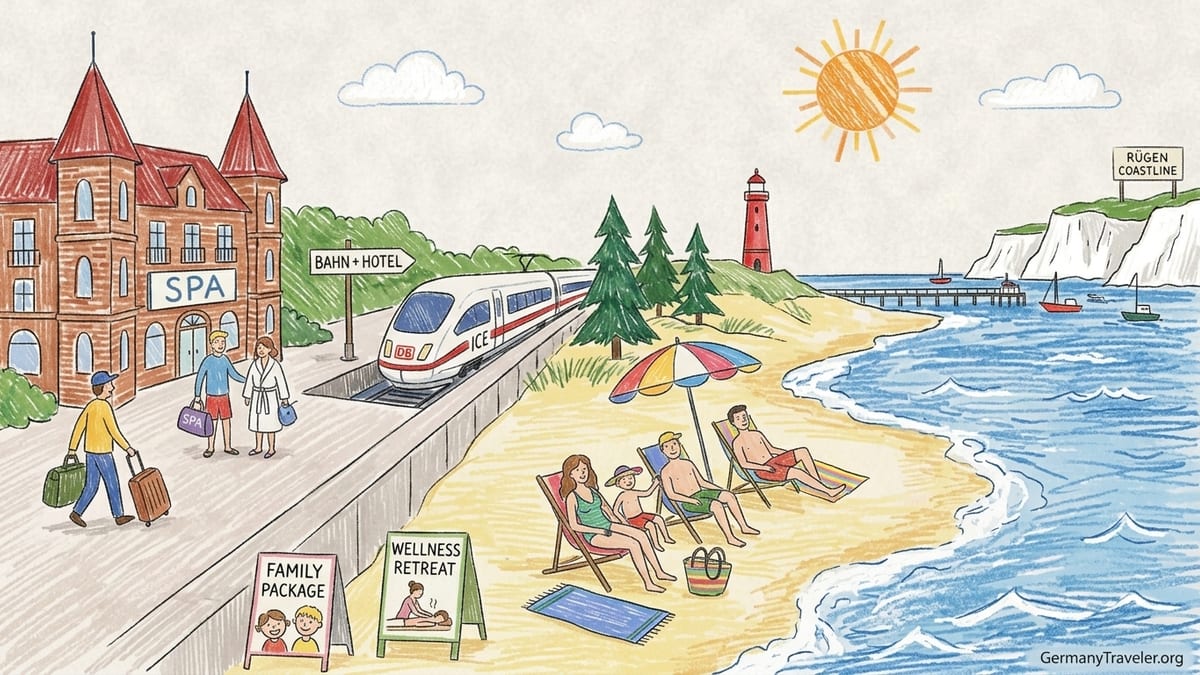
How German Baltic Coast Packages Work
On the German Baltic, the core decision is usually between a hotel-only coastal break, a hotel plus transport arrangement, or a more traditional package built around families or wellness. Hotel-only is still common: you might book two nights at a beachfront property in the Lübeck Bay region with breakfast only and then arrange your own Deutsche Bahn ticket or drive. This suits travelers who know the region and want maximum flexibility, but it gives you little protection if you need to cancel or if transport prices spike shortly before departure.
Hotel plus transport packages, often marketed as “Bahn + Hotel,” bundle rail travel with accommodation under a single booking. Platforms specializing in short breaks regularly feature Baltic offers where a return train journey from your nearest major German station, reserved seats, and two or three nights in a coastal hotel start from around 200 to 250 euros per person in a standard room with breakfast. In busy periods such as July and August, these rail-inclusive packages can undercut flexible Deutsche Bahn fares bought separately, especially on longer routes from southern Germany.
Classic package holidays along the Baltic coast add further components: half-board or full-board catering, spa access, children’s discounts, and sometimes extras such as bike rental, entry to local thermal baths or participation in organized excursions. A three-day romance-and-wellness stay in Neustadt in Holstein in Lübeck Bay, for example, might start from just over 250 euros per person and include breakfast, one or two set dinners, a spa bag with robe and slippers, and access to saunas and pools throughout your stay. Because these are structured as full package tours, they usually come with clearer cancellation policies and assistance if travel plans are disrupted.
Across the coast, board basis and cancellation terms vary widely, but some patterns are consistent. Bed and breakfast is the entry level, half-board is the most popular choice for both family and wellness trips, and all-inclusive is still relatively rare outside a few bigger seaside resorts. Free cancellation up to a defined deadline, often 14 to 30 days before arrival for standard packages, is common, while cheaper non-refundable offers require advance payment but can shave noticeable amounts off the headline rate.
Lübeck Bay: Hotel-Only vs Rail & Coach Packages
Lübeck Bay, stretching from Travemünde past Timmendorfer Strand, Scharbeutz and Neustadt in Holstein, is one of the densest clusters of package-ready hotels on the German Baltic coast. Travelers choosing hotel-only breaks here often target four-star seafront properties with their own spa areas, such as large resort hotels with indoor pools, Finnish saunas, sanarium cabins and beauty treatment rooms. A typical spring or autumn weekend in a sea-view room with breakfast might start around 160 to 220 euros per night for two adults, with spa access included for hotel guests but treatments charged separately.
Bus and coach operators also sell multi-day trips focused on Lübeck Bay that bundle transport from cities such as Cologne or Dresden with four to seven nights in a single hotel. A one-week package at a grand hotel on Timmendorfer Strand in shoulder season, including coach travel, half-board, and unlimited access to a 3,000-square-metre spa, may sell for something like 800 to 1,100 euros per person, depending on room type and departure point. What you gain is a near-frictionless experience: luggage carried for you, a reserved room block, and a fixed price unaffected by late rail fare increases, which can be appealing to older travelers or those who dislike multiple individual bookings.
Rail-inclusive city and coast breaks are increasingly visible around Lübeck Bay as well. Bundled Bahn + Hotel deals allow you to book a return rail ticket with seat reservations plus several nights near the beach in one transaction. For example, a three-night stay at a mid-range hotel in Travemünde with breakfast plus second-class rail travel from a major German city might run from roughly 230 to 300 euros per person in the off-season, with higher rates in school holidays. Because these packages are negotiated with Deutsche Bahn under special inclusive-tour agreements, the effective per-person rail price is often lower than a standalone flexible ticket, particularly when booked early.
For independent travelers with access to discounted rail cards, booking your own transport and choosing from the full range of hotels along Lübeck Bay can still be cheaper, especially if you are flexible on dates and happy to take non-refundable rooms. But if you are travelling in a peak week, want spa access and half-board included, and are starting far from the Baltic, the bundled coach or rail packages frequently offer equal or better value than assembling every component yourself, once you factor in seat reservations, resort fees and potential cancellation costs.
Mecklenburg Seaside Resorts: Half-Board Hotels and Seaside Wellness
Along the Mecklenburg coast, from Kühlungsborn and Heiligendamm to the beaches near Rostock and Wismar, traditional seaside hotels dominate and many of them lean heavily on half-board packages. A typical “Kurzurlaub” in a four-star property overlooking the sea might include two or three nights in a double room, daily breakfast, a three-course evening menu or buffet, and free use of an on-site wellness area with pool and sauna. Midweek packages in spring or autumn often start around 180 to 240 euros per person for a two-night stay, rising in high summer when the long beach promenades are at their busiest.
Wellness packages are especially common in Mecklenburg, where large spa areas are a selling point. A wellness-focused arrangement in a beachfront hotel between Wismar and Lübeck, for instance, may advertise more than 1,000 square metres of spa space, multiple saunas and a panoramic pool. Guests booking a minimum three-night stay get unlimited spa access, loan of a bathrobe and towels, and sometimes a complimentary massage or facial. Prices vary but expect at least 350 to 450 euros per person for a long weekend with half-board and one or two included treatments outside the high season.
These coastal hotels tend to market flexible cancellation conditions when sold as packages through tour operators, such as free cancellation or rebooking up to two or three weeks before arrival. Booked directly on an advance-purchase rate, however, the same hotel might require full prepayment with no refund. Travelers who value flexibility, particularly families who might need to change dates due to school or health issues, often benefit from choosing a package rate with included cancellation rather than the cheapest direct hotel offer.
Families weighing package vs independent booking on the Mecklenburg coast should also look at what is included beyond meals. Some hotels provide discounted or free entry to local attractions, such as neighboring spa complexes or small amusement parks, when you book an arrangement rather than just a room. Add-ons like complimentary bike rental for a day or reduced parking fees can tilt the calculation, making a slightly higher per-night rate in a package better value once you factor in what you would otherwise pay on site.
Rügen: Family Packages and Independent Freedom
The island of Rügen remains one of the strongest draws on the German Baltic coast and offers a full spectrum of products, from simple hotel rooms to structured family packages and rail-inclusive breaks. Many visitors still assemble their own stay by booking a hotel in Binz, Sellin or Göhren and then combining that with a rail ticket to Stralsund or Bergen on Rügen plus a local connection. For travelers on a tight budget or those using long-distance discount fares, this do-it-yourself approach can keep costs down, especially outside July and August when room rates soften.
Tour operators and specialist agencies, though, now sell targeted Rügen packages that compete directly with independent booking. A “Hotel auf Rügen – Urlaub an der Ostsee” arrangement might offer three or more nights in a hotel near the beach, breakfast each day, and optional rail travel added as a bundle. Basic hotel-only packages sometimes start just above 200 euros per person for a short stay in a standard room, while Bahn + Hotel versions including return rail travel from your home station can begin in the low-200s per person in low season, with higher prices during holidays and for longer stays.
Board basis on Rügen is typically breakfast or half-board in hotels, while apartments and holiday homes remain self-catering. Family packages in hotels often feature half-board so that parents do not have to search for a restaurant each night, and may include extras such as a children’s buffet, early kids’ dinner times, or vouchers for local attractions like climbing parks or boat trips. Larger beach hotels sometimes offer family rooms or junior suites where two adults and one or two children stay together, with reduced prices for kids sharing existing bedding or sleeping on a sofa bed.
Whether packages beat independent booking on Rügen depends heavily on travel dates and your transport. During school holidays and long weekends, hotel rates on the island can rise quickly and long-distance rail fares follow suit, making rail-inclusive offers more attractive. In shoulder seasons like late May or September, however, experienced travelers often find that combining discounted Sparpreis rail tickets with non-refundable hotel offers yields the lowest total price, at the cost of more restrictive cancellation terms and less included value on meals and activities.
Usedom: Family Weeks, Wellness Retreats and Board Basis
Usedom, marketed as the “sunshine island” of the Baltic, has a particularly well-developed infrastructure for both family and wellness vacations. Along the elegant imperial resorts of Ahlbeck, Heringsdorf and Bansin, as well as the smaller “Bernsteinbäder” further west, hotels and holiday centers compete with generous children’s offers. A typical family accommodation provider may offer children under a certain age staying in their parents’ room free of charge, with sliding discounts of around half price for older children. Some family holiday organizations publish transparent price lists where, for example, children up to two years pay nothing, those aged three to six pay only a small fraction of the adult rate, and those between seven and twelve receive a substantial reduction.
Packages on Usedom frequently use half-board as the default, particularly in family holiday centers and mid-range hotels. A one-week family stay including breakfast and dinner, beach access and a basic program of children’s activities can be priced per adult with heavily discounted child supplements, turning it into a predictable all-in weekly budget. Some providers operate social or non-profit family holiday schemes that bundle accommodation, meals and activities into a flat seasonal price, making a Baltic holiday viable for more modest incomes.
Wellness hotels on Usedom focus on spa access and relaxation programs. Resorts with extensive spa facilities, including pools, multiple saunas, and a full roster of massages and treatments, often sell themed packages: for example, three nights in a double room with breakfast, one or two dinners, unlimited spa use and a credit towards wellness treatments. Guests might also receive extras such as a welcome drink, a relaxation course, or use of a private beach area. Prices scale according to the standard of the property and the season, but a classic long weekend wellness package will usually be priced to compete with city spa breaks elsewhere in Germany.
Rail-inclusive offers to Usedom, marketed through Bahn + Hotel platforms, add a further option for travelers who prefer not to drive. These packages typically bundle a return rail journey from your home station to Usedom’s rail gateways, seat reservations and local onward connections with a hotel stay that includes breakfast or half-board. The result is a single price that covers both transport and accommodation, simplifying budgeting and often incorporating the rail ticket’s city add-on options. For families coming from distant regions, the combined value of bundled rail travel, favorable child discounts at the hotel and included meals frequently compares well with self-organized travel using standard tickets.
Comparing Board Basis, Spa Access and Cancellation Terms
When comparing the main German Baltic regions, the structure of packages is more similar than different, but the details matter. Bed and breakfast remains the baseline in Lübeck Bay, Mecklenburg, Rügen and Usedom; it is ideal for couples and independent travelers who plan to explore local restaurants. Half-board is the dominant option in family and wellness packages, especially in Mecklenburg resorts and on Usedom, where stays are often a full week or more. Full-board and all-inclusive arrangements are rarer, usually appearing in larger resort hotels or family centers that can cater for three meals daily at scale.
Spa access is a key differentiator, particularly for wellness packages. In Lübeck Bay and Mecklenburg, mid- to high-end hotels typically include use of pools and saunas in the room rate or package price, charging extra only for treatments. Some package offers clearly highlight spa benefits such as unlimited access to thermal areas, a spa bag with towels and bathrobe, or free participation in scheduled relaxation classes. On Rügen and Usedom, spa facilities vary widely between properties; a hotel marketed as a wellness resort is far more likely to bundle comprehensive spa access into its packages than a simple seaside pension or family-run hotel, where wellness might be limited to a small sauna.
Cancellation and rebooking terms are where packages often justify their price premium over bare hotel rates. Many package operators on the Baltic offer reduced or no-fee cancellation up to a set number of days before arrival, sometimes combined with low-cost options to add travel insurance or cancellation coverage. This is a significant contrast with non-refundable hotel-only offers purchased directly from the property or via global booking platforms, which can be cheaper up front but carry a high penalty if plans change. Travelers with children or those booking far in advance may find that the security of package cancellation terms outweighs modest savings from going fully independent.
From a value perspective, the deciding factors are usually your travel dates, group composition and risk tolerance. A couple visiting in late September who can travel midweek may be best served by booking a discounted spa hotel directly and adding a flexible rail ticket. A family of four travelling in August, by contrast, is more likely to benefit from a structured package on Rügen or Usedom that folds in children’s discounts, half-board, beach access and robust cancellation rights. The more components a package includes and the more complex your trip, the easier it becomes for a good package to beat a series of individual bookings once all hidden costs are counted.
The Takeaway
The German Baltic coast is no longer just a collection of beach hotels waiting for you to build your own holiday around them. Across Lübeck Bay, the Mecklenburg resorts, Rügen and Usedom, a dense network of tour operators, rail partners and hotel consortia now offers hundreds of real, competitive packages designed for beach breaks, family holidays and wellness escapes. For travelers willing to compare hotel-only options with hotel plus transport packages, there is genuine potential for savings, especially during peak periods and on longer routes from inland Germany.
For independent travelers who know the coast and can exploit discounted transport fares and early-booking hotel offers, booking each component separately still has advantages. You retain maximum flexibility, can target specific boutique properties and apartments, and may achieve the absolute lowest price in quieter months. But for families seeking predictable costs and solid cancellation terms, wellness guests looking for guaranteed spa access, and visitors travelling from farther afield, today’s Baltic packages often deliver better overall value than a do-it-yourself approach.
The most effective strategy is to define your priorities first: Is your focus beach time with children, spa facilities, or rail convenience from your home city? Once you know what matters most, compare at least one hotel-only scenario with two or three concrete package offers in your preferred region, paying close attention to what is included and what remains to be paid locally. With that groundwork, a German Baltic coast holiday can be both relaxing and financially sound, whether your sun lounger ends up on Lübeck Bay, a Mecklenburg promenade, a Rügen pier or a Usedom dune.
FAQ
Q1. Are Baltic Sea holiday packages in Germany really cheaper than booking everything myself?
In many cases they can be, particularly in peak season or when rail travel is bundled at inclusive-tour rates. For short midweek stays in low season, independently combining discounted hotel offers and saver rail fares can sometimes undercut package prices, but you may sacrifice flexible cancellation and extras such as spa access or half-board.
Q2. What board basis should I choose for a German Baltic family holiday?
Half-board is usually the most practical choice for families, since breakfast and dinner are covered and you remain free at lunchtime. Bed and breakfast works well if you like to explore local restaurants, while full-board or all-inclusive are mainly found in larger resorts or dedicated family centers and can be useful if you want to keep daily spending highly predictable.
Q3. Do wellness packages on the Baltic coast always include spa access?
Most wellness-branded packages in Lübeck Bay, the Mecklenburg resorts, Rügen and Usedom include unlimited access to on-site pools and saunas, plus loan of bathrobes and towels. Treatments such as massages or facials are sometimes bundled as a fixed number of sessions or a credit, but in many offers they remain optional extras charged on top of the package price.
Q4. How do children’s discounts typically work in Baltic family packages?
Hotels and family centers often allow very young children to stay for free in their parents’ room, with graduated reductions for older children. It is common to see infants up to two stay without charge, younger children paying only a small fraction of the adult rate, and older children receiving around half off, especially when sharing a family room or apartment under a weekly half-board package.
Q5. Is a Bahn + Hotel package worth it if I already have a rail discount card?
If you hold a rail card and can travel off-peak, separate train tickets combined with a hotel-only booking may be cheaper on some dates. However, Bahn + Hotel packages sometimes use special inclusive-tour fares that can still beat individual flexible tickets over long distances, particularly during school holidays when public fares are high, so it is worth pricing both options before you decide.
Q6. What cancellation terms should I expect from German Baltic packages?
Most standard packages allow free or low-fee cancellation up to a set deadline, often between two and four weeks before arrival, with higher charges closer to departure. Non-refundable promotional packages exist but are clearly labeled. By contrast, the cheapest hotel-only rates booked directly or through large platforms are often fully non-refundable from the moment of purchase.
Q7. Are all-inclusive packages common on the German Baltic coast?
All-inclusive in the classic sense, with all meals and most drinks included, is still relatively rare compared with Mediterranean resorts. You will find a few large hotels and family clubs offering full-board or soft all-inclusive concepts, but across Lübeck Bay, Mecklenburg, Rügen and Usedom, half-board remains the dominant model for both family and wellness stays.
Q8. When is the best time to book a package for Rügen or Usedom?
For school holiday weeks in July and August, it pays to book several months ahead, as both hotel capacity and inclusive rail or coach contingents sell out early. For shoulder seasons such as late spring or early autumn, you can often wait longer and still find competitive package deals, though the best-priced wellness and family arrangements are often snapped up first.
Q9. Can I add extra nights to a fixed Baltic Sea package?
Many tour operators allow you to extend a standard three- or seven-night package by adding extra nights at the same hotel rate, subject to availability. Transport components such as rail tickets or coach journeys usually stay fixed, so it is important to clarify any additional costs or changes to transfer arrangements before confirming an extension.
Q10. Are Baltic coast packages suitable for non-German-speaking travelers?
Yes. While many offers are marketed in German, frontline staff in larger hotels in Lübeck Bay, the Mecklenburg resorts, Rügen and Usedom usually speak at least some English. Booking through a tour operator simplifies arrangements, and once on site, resort infrastructure such as promenades, beaches and spa facilities is straightforward to navigate even with limited German.