


Germany’s Baltic Sea coast has thousands of holiday apartments and beach houses scattered along white sandy beaches, pine forests and family-friendly resorts. For many travelers, especially families and guests with pets, a self-catering apartment is more comfortable and often cheaper than booking multiple hotel rooms. This guide walks you through how to book directly with owners and local agencies, what to look for in the fine print, and how key destinations such as Timmendorfer Strand, Fehmarn, Fischland-Darß-Zingst, Rügen and Usedom compare when you are choosing a vacation rental instead of a hotel.
Why Choose a Holiday Apartment on the German Baltic Coast
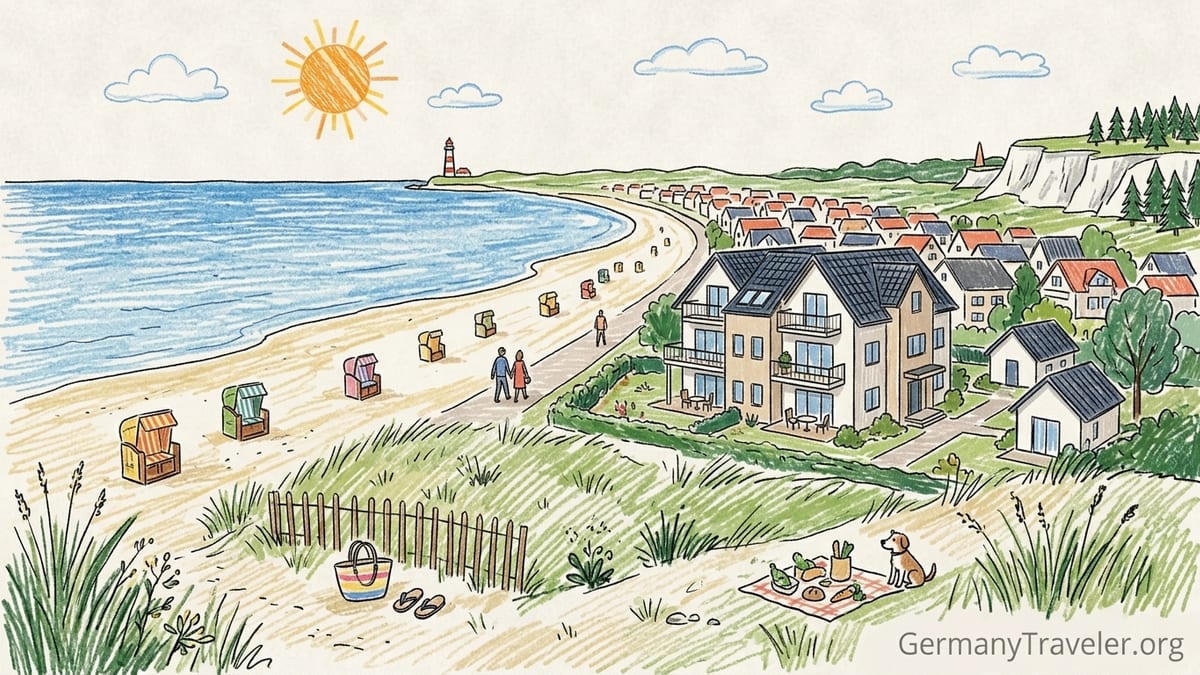
Along the German Baltic coast you will find dense clusters of Ferienwohnungen and holiday houses in almost every resort town. In places like Timmendorfer Strand, local observers note that a large share of buildings contain vacation rentals rather than classic hotels, giving travelers a wide choice of sizes and budgets. This scale means you can usually find something within walking distance of the beach, even in peak summer, if you book early.
For families and small groups, an apartment can quickly become better value than hotel rooms. A two-bedroom apartment in a mid-range property on Fischland-Darß-Zingst or northern Usedom might cost around 120 to 160 euros per night in high season, plus a one-time cleaning fee. Two adjoining hotel rooms in the same resort at 180 to 220 euros each per night soon exceed that. The ability to cook breakfast and some dinners in a proper kitchen also keeps restaurant spending in check.
Travelers with dogs have another strong reason to look at rentals. Across the coast, from Fehmarn campsites with upper-floor holiday flats to dog-friendly cottages in Wustrow or Zinnowitz, many units now accept one or sometimes two pets for a modest daily charge or a flat pet fee. This is far more flexible than many hotels, which either prohibit dogs outright or limit them to specific room types.
Direct booking with owners or local agencies is common. Instead of using a global platform, many travelers reserve via regional portals or property websites, especially once they know a town well. This can reduce service charges and make it easier to negotiate stay lengths outside standard minimums, such as asking for four nights in a property that usually requires a full week in high season.
Understanding Prices, Cleaning Fees and Minimum Stays
When you compare Baltic Sea rentals, always read beyond the nightly base rate. Most properties charge a one-time end-cleaning fee and often a separate booking or processing fee. In Timmendorfer Strand, for instance, a compact apartment like “Ostseescholle” listed on a regional portal shows a summer price of around 70 euros per additional night for two guests, but the first night is priced noticeably higher because it includes a 60 euro cleaning fee and a small booking fee. On a one-week stay, that cleaning fee spreads out to roughly 8 to 10 euros per night, which still keeps the overall cost lower than many hotels.
On the Fischland-Darß-Zingst peninsula, a garden apartment in Zingst advertises low-season rates of about 75 euros per night, mid-season around 85 euros and high season around 109 euros. The owner also charges a one-time cleaning fee of roughly 60 euros per stay. Minimum stays can be as short as two nights in winter but increase to five nights in peak summer and three nights over Easter or New Year, a pattern repeated across the coast. Even when a nightly rate seems attractive, a two-night stay can feel expensive once you add a full cleaning fee.
Fehmarn illustrates a different model. At a beachfront camping resort with modern upper-floor apartments, the minimum stay is often a full week in high season. Nightly rates vary by season, and there may be a separate processing fee of around 50 euros. This structure favors longer stays, which can work well for families planning a full week of cycling and beach days but makes a quick weekend getaway less economical than a hotel.
Many hosts now also list explicit pet charges and optional extras. A large family apartment in Wustrow advertised for up to six guests includes a 100 euro end-cleaning fee in the total, while noting that pets are welcome. Elsewhere on the coast, dog fees might appear as a one-time 25 euro supplement per stay or as a small daily charge. Bed linen and towel packages can also add 20 to 30 euros per person if not included, so factor those into your comparisons with hotel stays that normally include linen and daily housekeeping.
Timmendorfer Strand: High-Demand Rentals Near Lübeck
Timmendorfer Strand, close to Lübeck and within easy reach of Hamburg, has one of the densest inventories of vacation rentals on the German Baltic. Visitors can choose from beachfront apartment houses with underground garages to small units in residential streets behind the promenade. For example, Techt’s Apartmenthaus sits directly by the beach with its own garden and offers self-catering units where the service charge bundles the final cleaning, towels and bed linen. Underground parking is available, although the garage has a height limit that drivers of larger vehicles must check in advance.
Elsewhere in town, an apartment near the Kurpark marketed by a local agency highlights a private parking space and a short walk to the beach. Many of these central apartments sit within 200 to 500 meters of the sand, meaning a walk of five to ten minutes. In Niendorf, just along the coast, some modest holiday flats share similar conditions, with a clearly stated final cleaning fee of roughly 55 euros and parking directly at the house. In high season, minimum stays of four to six nights are typical across the area.
Prices in and around Timmendorfer Strand reflect strong demand. A compact but well-equipped one-bedroom apartment for two might start around 70 to 90 euros per night in late summer, rising in school holidays. For a family of four, expect two-bedroom apartments or small houses to reach well above 150 euros per night in peak periods. Compared with hotels along the promenade, where double rooms can easily approach or exceed 200 euros per night, a two-bedroom rental becomes cost-effective as soon as you would otherwise need two hotel rooms.
Kitchen facilities in this region tend to be modern: full-size fridges, ceramic hobs, ovens and dishwashers are common even in smaller units, reflecting the expectation that guests will self-cater. However, you should always check the inventory list. Some studio apartments make do with a compact kitchenette and limited counter space, which is fine for breakfast but less ideal if you plan to cook full dinners most nights. Direct booking with local agencies can often yield more precise answers about cookware, child-friendly dishes or whether the apartment’s balcony gets evening sun.
Fehmarn: Sea Views, Car‑Friendly Stays and Long Minimums
The island of Fehmarn, linked to the mainland by a bridge, attracts guests looking for open skies, kitesurfing beaches and relaxed family holidays. Many rentals cluster around camping resorts or village edges near the shore. A typical example is a set of holiday flats built above the sanitary buildings of a beachfront camping site, marketed as sunny and modern with sea views. These apartments sit within a short stroll of the beach and guests can use the wider campground facilities, from playgrounds to small supermarkets.
On Fehmarn, driving is almost essential, and rental owners assume guests arrive by car. Parking is usually included directly at the building or on the campsite. Minimum stays of seven nights are common in mid and high season, especially for sea-view apartments, and cancellation policies can be stricter. Where pets are allowed, owners frequently charge a nightly pet fee of a few euros to cover extra cleaning. This suits travelers planning a full week at the coast, but if you only have a long weekend, a hotel on the mainland may work out cheaper once you account for the minimum stay.
Kitchen equipment varies from basic kitchenettes in smaller apartments to full kitchens in detached holiday houses in inland villages. If you plan to spend long days on the beach or water, look for a dishwasher and a freezer compartment for ice packs. A detailed packing list provided by one Fehmarn rental agency even reminds guests to bring pet passports and beach gear, underlining how self-contained and practical these holidays are expected to be.
Compared with hot spots like Timmendorfer Strand, per-night rates on Fehmarn can be slightly lower, but high-season demand from water sports visitors keeps good sea-view units booked months in advance. For a family of four, a week in a well-located Fehmarn apartment can be significantly cheaper than two rooms in a comparable seaside hotel, especially when children are old enough to share a bedroom with twin beds or a bunk bed.
Fischland-Darß-Zingst: Nature, Pets and Family Apartments
The narrow peninsula of Fischland-Darß-Zingst is a favorite for travelers who want both broad sandy beaches and easy access to national park landscapes. In Dierhagen Strand or Wustrow, many properties sit just behind the dunes, while in Zingst itself you find apartments scattered between the Bodden waters and the long sea beach. A family apartment in Zingst with a large garden, for instance, advertises itself as quiet yet near the beach, with a minimum stay of two nights in low season and five in high season. The price grid shows clearly how rates climb in summer, but the one-time cleaning fee of around 60 euros stays constant.
Another property in Wustrow, marketed as “FW Wildgans,” can host up to six guests. Pricing information for a late August week lists a flat rental rate of about 1,050 euros for seven nights regardless of whether one or six guests stay, plus an included cleaning fee of 100 euros and a small booking charge. This structure means that larger family groups or two couples sharing get especially good value. The apartment is explicitly pet-friendly, highlighting a growing segment of rentals on the peninsula that cater to dog owners.
Dog owners are well served here. Local tourism information lists designated dog beaches along the peninsula, and many landlords mention short walking paths through coastal forests starting almost at the front door. Some rentals restrict pets to ground-floor units or charge modest surcharges to cover deeper post-departure cleaning. Travelers should pay close attention to house rules, especially about leaving dogs alone in the apartment or allowing them on sofas and beds, as ignoring those rules can trigger additional cleaning costs.
For families comparing with hotels, apartments on Fischland-Darß-Zingst usually offer more space per euro. A modern two-bedroom flat with balcony in Zingst, walkable to the beach, often comes with a fully equipped kitchen, dining table and outdoor seating. For four to five guests, the nightly rate including cleaning fee distributed across a week frequently undercuts the cost of booking two or three hotel rooms, particularly outside the peak school holiday weeks when agencies drop minimum stays to two or three nights.
Rügen and the Jasmund Region: Cliffs, Classic Villas and Parking Issues
Rügen is Germany’s largest island and has one of the broadest spreads of holiday rentals, from renovated spa-era villas in Binz and Sassnitz to modern complexes in the Jasmund region near the chalk cliffs. Many larger apartment houses stand a short walk back from the promenade or harbor, trading a few extra minutes to the beach for included parking and quieter surroundings. In the Jasmund area, especially around towns like Sassnitz, guests may be just a few hundred meters from the waterfront while also within a short drive of the national park.
Parking is a central issue on Rügen. In the busiest resorts, street parking can be limited and subject to seasonal fees. Many apartment listings highlight a dedicated space or underground parking as a key selling point. Some older villas converted into apartments do not have on-site parking at all, so guests must use public lots a few streets away. Before booking, check whether the advertised parking is directly at the property, in a private courtyard, or in a shared garage and whether height limits apply.
Rügen kitchens range from modern open-plan layouts in new-build apartments to compact kitchen corners squeezed into historic villas. Travelers planning to self-cater for a week should verify whether an oven and dishwasher are present, as some studios aim more at couples eating out in town. Cleaning fees on Rügen are broadly similar to the rest of the Baltic coast and often sit between 60 and 120 euros depending on apartment size. Larger houses for extended families may charge higher end-cleaning, but when split among six or eight people, this remains modest on a per-person basis.
The Jasmund region has a particularly high density of rentals, which helps keep prices competitive outside absolute peak weeks. For a group of four adults visiting in shoulder season, a two-bedroom apartment with sea view and parking can cost significantly less than two hotel rooms in the same resort. Once you factor in the ability to prepare breakfast while watching the ferries or to pack picnic lunches for hikes along the cliffs, apartments tend to offer a more relaxed rhythm than hotels with fixed breakfast hours.
Usedom and Northern Usedom: Space, Saunas and Family Capacity
Usedom, shared between Germany and Poland, markets itself heavily as a “sunny island” and offers large clusters of apartments in both the imperial spa towns in the south and the family-oriented resorts in the north. Northern Usedom, including the collective municipality of Usedom-Nord with Zinnowitz, Trassenheide and surrounding villages, has especially substantial rental inventories. In Zinnowitz, for example, entire streets behind the dunes are lined with small apartment houses and terraced holiday homes.
A semi-detached holiday house in a development such as Skanepark in Zinnowitz typically offers two or three bedrooms, a terrace and a small garden, suitable for families or two couples traveling together. These houses usually include one on-site parking space per unit, sometimes a second on request, and sit within walking or cycling distance of the wide sandy beach. Some modern apartment complexes in Zinnowitz and nearby resorts even advertise shared spa areas or saunas, turning a winter or shoulder-season visit into a wellness-focused stay.
Usedom rentals tend to be very explicit about beach distance. Listings might specify a 10 to 15 minute walk to the sea or advertise “strandnah” for properties within a few hundred meters of the dunes. An apartment house near the center of Zinnowitz, for instance, promotes its quiet yet central location coupled with balconies or terraces and direct access to cycling routes. Guests can walk to the beach, then retreat to a leafy residential street in the evening.
For families, capacity and layout matter. Many Usedom apartments are designed for three or four people, but there is also a healthy supply of larger units with bunk beds, sofa beds and separate children’s rooms. Cleaning fees and minimum stays are similar to elsewhere on the coast, with two-night stays possible in low season and four or more nights required in summer. Dogs are accepted in a notable share of properties, and various local providers specialize in pet-friendly accommodation, often near dog-friendly beach sections.
When an Apartment Beats Multiple Hotel Rooms
The financial tipping point between holiday apartments and hotels usually arrives as soon as you need more than one hotel room. Take a family of four considering Timmendorfer Strand in late August. Two mid-range hotel double rooms might cost 190 euros each per night, totaling 380 euros. A well-equipped two-bedroom apartment a few streets back from the beach might run 170 euros per night in base rent plus a 60 euro cleaning fee spread over a week, bringing the effective nightly cost to about 178 euros. Even if you add linen packages and tourist taxes, the apartment remains significantly cheaper.
On Fischland-Darß-Zingst, the “Wildgans” example in Wustrow demonstrates how pricing for larger groups favors apartments. Six people paying 1,160 euros total for a seven-night stay, including a 100 euro cleaning fee and a small booking charge, pay less than 28 euros per person per night. To match the same group capacity in hotel rooms, you would likely need three double rooms at perhaps 150 euros each per night in high season, making the hotel option several times more expensive.
Fehmarn and northern Usedom show similar patterns. On Fehmarn, a three-room apartment with sea view might cost around 1,200 to 1,400 euros for a high-season week for a family of five or six. If you compared that with two or three hotel rooms at 200 euros per room per night, the savings quickly reach several hundred euros, even once you include a pet fee and a processing charge. On Usedom, particularly in Zinnowitz and Trassenheide, apartments with capacity for four to six guests plus a dog often undercut family hotel suites while providing separate sleeping areas.
Beyond price, the qualitative benefits are significant. Having a kitchen means breakfasts on your schedule and simpler evenings when children are tired. Separate bedrooms allow parents to stay up after bedtime without huddling in the dark around a hotel minibar. Parking immediately by your own front door, common in Usedom housing estates and Fehmarn villages, is more convenient than searching for a hotel garage each evening. For groups who value space, privacy and routine, these factors often matter more than daily cleaning or on-site restaurants.
How to Book Direct and What to Check Before You Confirm
To book directly, many travelers use local portals that specialize in a particular region or go straight to individual property websites. Timmendorfer Strand, Zingst, Rügen and Usedom all have well-established local agencies that curate apartments and handle guest communication. Rates shown on these sites usually break out the base rent, cleaning fee, booking fee and tourist tax clearly, allowing you to compare like for like with offers on major global platforms.
Before you confirm, check a few critical details. Start with beach distance: is the unit directly behind the dunes, across a main road, or 15 minutes’ walk inland? Look for phrases indicating meters to the beach or walking times. Next, scrutinize parking information. Does the property offer a private parking space, underground garage or only public street parking nearby? Drivers of high vehicles should note any garage height limits.
For kitchen facilities, study the photo gallery and description. A “pantry kitchen” often signals a smaller setup, while listings that mention ovens, dishwashers and large fridges suit serious self-catering. Families with small children should check for high chairs, travel cots and stair gates. Guests with dogs must confirm whether pets are allowed in the specific unit and whether there are surcharges or restrictions such as “one dog only” or bans on leaving animals unattended.
Finally, read the rules on cleaning and minimum stays. Some Baltic coast landlords expect apartments to be left “broom-clean,” with garbage removed and dishes washed, even after you have paid a cleaning fee. Minimum stays may vary across seasons, and short gaps between bookings can sometimes be filled on request. Communicating directly with a local agency or owner often yields flexibility, occasionally including late check-outs or permission to store luggage between train times and check-in hours.
The Takeaway
Choosing a holiday apartment or beach house along Germany’s Baltic coast is less about sacrificing comfort and more about trading hotel services for space, flexibility and value. In resorts from Timmendorfer Strand to Zingst, the Jasmund region and northern Usedom, self-catering rentals line almost every street behind the dunes, enabling everything from quick low-season getaways to multi-generational summer gatherings.
For families and pet owners, apartments quickly become more economical than multiple hotel rooms, especially once you spread cleaning fees over a full week and factor in the savings from cooking some meals at home. Beach distance, parking availability, kitchen quality, cleaning fees, minimum stay rules and pet policies are the levers that matter most when comparing properties. With a bit of careful reading and direct communication with local agencies or owners, travelers can lock in a Baltic Sea base that feels like their own coastal home, whether for a stormy spring weekend or a sun-soaked August holiday.
FAQ
Q1. When is a Baltic Sea holiday apartment cheaper than hotel rooms?
For families or groups needing two or more hotel rooms, a two- or three-bedroom apartment is usually cheaper once you spread the cleaning fee over at least four or five nights.
Q2. How close to the beach are typical rentals in Timmendorfer Strand and Niendorf?
Many apartments sit 200 to 500 meters from the sand, roughly a five to ten minute walk, while a smaller number are directly behind the promenade or dunes.
Q3. What cleaning fees should I expect for German Baltic Coast rentals?
Most apartments charge a one-time end-cleaning fee, often in the range of about 50 to 120 euros depending on size, added to the rental price.
Q4. How do minimum stays work in peak season?
In high summer, many coastal rentals require five to seven night stays, especially in hot spots like Fehmarn, Zingst, Rügen’s resorts and busy areas of Usedom.
Q5. Are pets usually allowed in Baltic Sea holiday apartments?
A significant share of rentals, particularly on Fischland-Darß-Zingst, Fehmarn and northern Usedom, accept dogs, often with a modest daily or one-time pet fee.
Q6. What kitchen facilities can I expect in a typical apartment?
Most modern units have full kitchens with stove, fridge and often a dishwasher, while smaller studios may only offer kitchenettes suitable mainly for simple meals.
Q7. Is parking included with most Baltic Coast vacation rentals?
In many resorts parking is provided at or near the property, sometimes in underground garages, but older villas and central locations may rely on public parking nearby.
Q8. How far in advance should I book popular areas like Timmendorfer Strand or Rügen’s Jasmund region?
For summer school holidays, it is wise to book several months ahead, particularly if you need specific dates, sea views or pet-friendly accommodation.
Q9. Do I need to bring my own bed linen and towels?
Some rentals include linen and towels in the service charge, while others offer them as optional packages, so check the booking details carefully before you travel.
Q10. What should I check in the contract before confirming a direct booking?
Review beach distance, parking details, included utilities, cleaning and pet fees, minimum stay rules, cancellation conditions and any expectations about how clean you must leave the apartment.