


Germany’s Baltic Sea coast has quietly become one of Europe’s most competitive beach-hotel markets, with serious spa facilities, grand historic villas and family-friendly resorts stretching from Lübeck Bay to the Polish border. This guide focuses on the strongest areas for dedicated beach hotels and compares not just style and price, but concrete details that matter in practice: how close you really are to the sand, which hotels offer guaranteed sea views, what their pools and spas look like, and how easy it is to arrive by train with luggage and kids in tow.
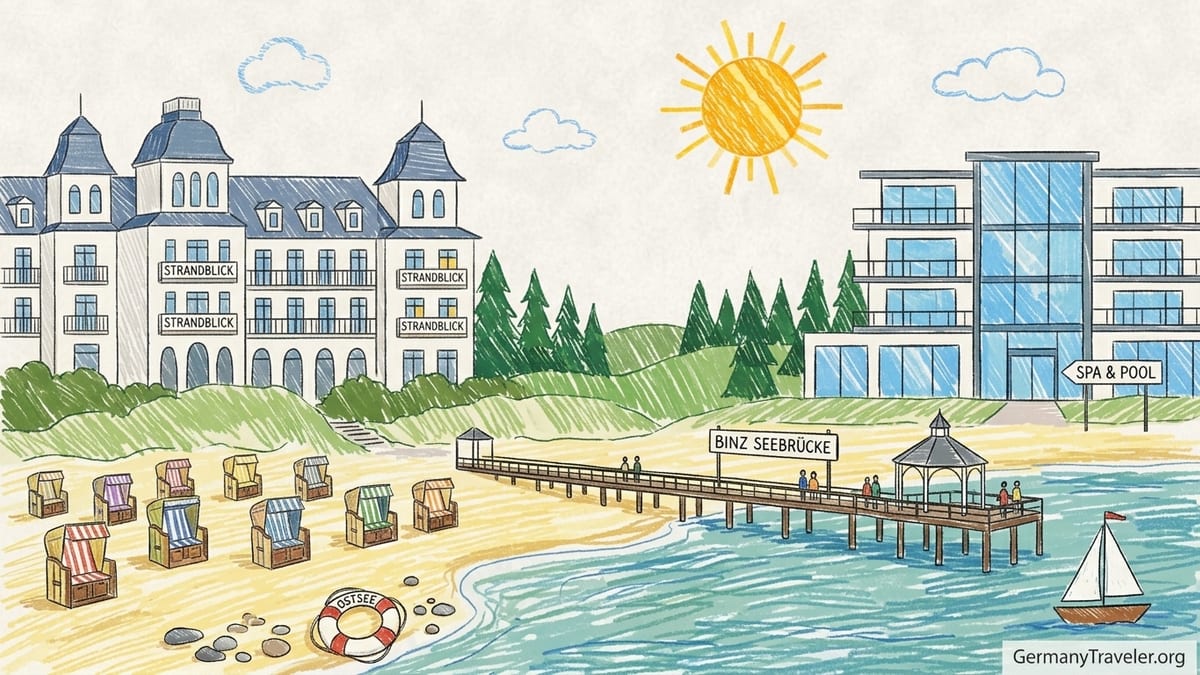
How to Choose the Right Baltic Beach Hotel
From the outside, many Baltic Sea hotels look similar: white facades in classic spa architecture, long promenades and rows of beach chairs on wide sandy bays. The differences emerge when you look at the details. Some properties sit directly on the promenade with only a line of dunes between you and the water, while others are a few streets back, which can mean a five to ten minute walk to the beach. When comparing hotels, it is worth checking whether “beachfront” means an unobstructed stroll from lobby to sand or simply being in the general resort area.
Sea-view rooms are another key differentiator. In sought-after resorts such as Timmendorfer Strand, Kühlungsborn, Binz and the Kaiserbäder on Usedom, only a fraction of rooms actually face the sea. These categories usually book out for school holidays and long weekends, and they are commonly 15 to 30 percent more expensive than rooms facing the town or garden. If waking up to a direct Baltic panorama is important, book early and read room descriptions closely to distinguish between “side sea view” and “front sea view”.
Most higher-end Baltic hotels now operate serious spa and wellness areas, often with indoor pools, saunas and treatment rooms that become essential on windy or rainy days. However, facilities vary widely: some properties have only a small pool and one sauna, while others offer multiple saunas, quiet relaxation rooms and in-house therapists. Families should check access rules, as a number of adults-oriented spas restrict children or limit their hours.
Getting to the coast without a car is increasingly realistic. Major resorts like Travemünde, Timmendorfer Strand, Kühlungsborn, Binz and Heringsdorf have rail connections, and a cluster of good hotels sit within a short walk or taxi ride of the stations. If you are driving, check whether your hotel includes parking or charges a daily fee, which can add a noticeable cost in the most popular seaside towns.
Lübeck Bay: Travemünde, Timmendorfer Strand and Scharbeutz
The wide arc of Lübeck Bay is among the most developed stretches of Germany’s Baltic coastline, with a dense concentration of hotels directly behind the sand. In Travemünde, long-established properties near the seafront cater to a mix of weekenders from Hamburg and longer-stay holidaymakers. Many hotels here are only a few minutes’ walk from the train station, making it an easy choice if you prefer to arrive by rail and then stay car-free.
Timmendorfer Strand is known as one of the more upscale resorts on this stretch, with a string of contemporary hotels and apartments along the promenade. A number of four-star and higher properties sit either directly on the beach or just across the pedestrian promenade, so the real walking distance to the sand is typically under two minutes. Sea-view rooms are common in the upper categories and often come with balconies that overlook the bay, which are especially attractive in the long evenings of late spring and summer.
Scharbeutz, slightly north along the bay, has grown into a strong mid-range and good-value market. Here you will find modern beachfront hotels and aparthotels that appeal to families, often with larger rooms or small kitchenettes, indoor pools and informal restaurants. These properties can offer better value than the most in-demand addresses in Timmendorfer Strand, while still giving quick access to the same stretch of beach and coastal cycling paths. Breakfast buffets in this area tend to be generous, with a mix of regional fish specialities, fresh bread and international options.
Car access is straightforward throughout Lübeck Bay, and many hotels provide on-site or nearby parking, though daily fees are common in central Timmendorfer Strand. Train connections from Lübeck into Travemünde and Timmendorfer Strand are frequent, and it is realistic to roll your suitcase from the station to several seafront hotels. If you are travelling with small children or lots of luggage, choosing a hotel within a flat ten-minute walk of the station can make arrival and departure days considerably easier.
Kühlungsborn & Warnemünde: Classic Promenades and Big Spas
Kühlungsborn has one of the longest continuous beach promenades on the German Baltic, lined with hotels in ornate spa architecture and modern additions. The majority of the larger properties cluster along the seafront, with only the promenade and dune strip separating them from the sand. Many of these hotels offer a high proportion of rooms with at least partial sea views, and top-floor suites can have expansive balconies that look directly over the bay. Because the town is elongated, it is worth checking the exact section of the promenade you prefer, whether closer to the marina or the central pier.
Spa facilities are a major selling point in Kühlungsborn. Visitors will find several hotels with full wellness areas, including indoor pools, multiple saunas and treatment rooms, often branded under names that appear consistently in local marketing materials. Some properties also sell short wellness packages that bundle accommodation, breakfast and a set number of massages or sauna rituals, which can represent good value in cooler months. If a large spa is a priority, look for recent photos of the pool and sauna areas to confirm size and condition, as some wellness spaces are much more extensive than others.
Warnemünde, the seaside district of Rostock, mixes working port, long sandy beach and classic resort hotels. One of its most recognisable landmarks is a high-rise five-star hotel that stands directly behind the beach and has become a local icon. This property and several neighbouring hotels offer rooms with sweeping views over the sea and harbour entrance, plus spacious spa areas with pools, steam baths and a wide range of treatments. The beach here is broad and flat, with only the promenade between most hotels and the sand, so true beach proximity is excellent.
Both Kühlungsborn and Warnemünde are easy to reach by public transport. Warnemünde has a train station almost at the harbour, and many hotels are within a short walk, which is ideal if you want to avoid driving into the compact streets. Kühlungsborn connects via regional trains and the nostalgic Molli narrow-gauge railway, and several seafront hotels provide private or partner parking a short distance from their entrances. Families should pay attention to room configurations, as some hotels in these traditional spa towns offer spacious family rooms or small apartments, while others lean more toward classic doubles aimed at couples.
Fischland-Darß-Zingst: Dunes, Nature and Relaxed Beach Hotels
The Fischland-Darß-Zingst peninsula appeals to travellers looking for a slightly wilder Baltic landscape, with long dune-backed beaches, pine forests and direct access to the Vorpommersche Boddenlandschaft National Park. Beach hotels here tend to be lower-rise and more integrated into the dune landscape than in the grand promenades of Kühlungsborn or Binz. In Ahrenshoop and Dierhagen, you will find stylish boutique-style properties that face either the open sea or the calmer bodden waters, often with cosy interiors and smaller, design-focused spa areas.
Zingst, on the eastern part of the peninsula, has developed a more substantial resort infrastructure with a clear focus on beachfront stays. A prominent seafront hotel in Zingst has recently attracted attention from German-language travel media and award panels, underlining how seriously the region now competes with better-known Baltic resorts. The property sits only a short walk from the town centre and a couple of minutes from the beach, with an outdoor pool, well-regarded wellness area and landscaped gardens that lead toward the dunes.
True beach proximity is one of the strengths of Fischland-Darß-Zingst hotels: in Zingst, several properties are separated from the sand only by a narrow promenade or dune path, so guests can typically reach the water in under five minutes. Sea-view rooms are somewhat less common than in high-rise resorts, but many hotels compensate with terraces, gardens and roof decks that offer partial views over the treetops or dunes. This layout suits travellers who are happy to focus on being outdoors rather than relying on panoramic views from bed.
Public transport is slightly more involved than in Lübeck Bay or Rügen, but regional buses and seasonal services connect the peninsula to the mainland rail network. Parking is in high demand during summer and school holidays, and many hotels either have limited on-site spaces or use shared car parks. Families often appreciate the relaxed, village-like feel of places such as Prerow and Zingst, where wide beaches and shallow water are well suited to children, and several hotels offer family rooms or interconnected units that give parents separate sleeping space while staying under one roof.
Rügen: Grand Seaside Resorts, Luxury Spas and Boutique Villas
Rügen is Germany’s largest island and one of its most iconic seaside destinations, known for chalk cliffs, beech forests and long-established spa towns such as Binz and Sellin. Binz in particular has a long line of historic and contemporary hotels along its seafront promenade. Several upscale properties here market themselves as beach hotels, with only the promenade and a strip of sand between the lobby and the water. A number of them have full-service spas, indoor pools and terraces facing the bay, making them solid choices if you want a classic resort feel with reliable wellness facilities.
One of the best-known high-end addresses in Binz sits just behind the seafront in the historic centre, roughly a few hundred metres from the beach. It combines a notable fine-dining restaurant with a substantial spa that includes pool, saunas and fitness areas. While it does not sit directly on the promenade, the walk to the sand is short, and guests often value the quieter location away from the busiest part of the strip. This illustrates a common trade-off on Rügen: you can choose either direct beachfront at the heart of the action or a slightly set-back position with more urban character and often better rates.
Sellin offers a different atmosphere with its famous pier and steep descent from the clifftop to the main beach. Several hotels on the elegant Wilhelmstraße sit above the sea; while they are not technically right on the sand, the walk down to the beach is scenic and still practical for most guests. A prominent spa hotel here offers extensive wellness facilities and a mix of double rooms and suites, many with balconies or terraces looking over the treetops or toward the Baltic. The setting feels more vertical than in flat resorts, which can give sea views a dramatic quality even when the beach is a short walk away.
Rügen is well connected by train and road to the mainland, with direct services to Binz and nearby stations. Once on the island, local buses and, in some seasons, resort trains link the main towns. Parking policies vary by property; some upmarket hotels include underground or courtyard parking, while others charge daily fees or rely on public car parks. For families, Rügen offers a wide range of room types, from straightforward family rooms with extra beds to separate holiday apartments operated under hotel brands. When comparing options, look closely at whether use of the spa and pool is included in the room rate and what hours children can access the wellness areas.
Usedom: The Kaiserbäder and Family-Friendly Seaside Resorts
On Usedom, the three so-called Kaiserbäder of Ahlbeck, Heringsdorf and Bansin form a continuous strip of elegant seaside resorts along a long sandy beach that extends toward Poland. Grand historic hotels and more contemporary structures line the promenade, many of them only a few steps from the sand. Several four-star and higher properties here are recognised for their spa facilities, with indoor pools, saunas and sometimes extensive wellness programs that attract guests even outside the peak summer season.
Heringsdorf is perhaps the best known of the trio for classic luxury, with prominent seafront hotels offering sea-view rooms, fine dining and sophisticated spa areas. Some of these properties feature large indoor pools that face the sea through picture windows, creating an attractive alternative when the weather is cool or windy. Parking here can be tight in peak periods, and guests should expect daily charges for on-site garages or lots, especially at the most centrally located hotels on or just behind the promenade.
Bansin and Ahlbeck mix historic villas with mid-range hotels and apartment houses. Several properties in these towns are located directly on or immediately behind the promenade, meaning you can typically reach the beach in under five minutes. Good-value beach hotels here may not have the largest spas, but many still offer at least a small pool and sauna, which can be useful with children or during shoulder seasons. Breakfast buffets in the Kaiserbäder tend to be generous and often highlight local products such as Baltic fish, regional cheeses and baked goods from nearby bakeries.
Usedom is accessible by train to the island’s main stations, and from there local rail lines and buses serve the Kaiserbäder. Many visitors still choose to arrive by car, especially families bringing beach equipment or planning to explore more remote stretches of coast. Parents will find a spectrum of family-friendly options, from hotels with dedicated family rooms and children’s menus to apartment-style accommodations that still offer breakfast and limited hotel services. When comparing offers, keep an eye on resort taxes and additional charges for parking or beach chair rentals, which can add appreciably to the overall budget in high season.
Comparing Beachfront Access, Spas, Breakfasts and Transport
True beachfront access is strongest in resorts where the hotel fronts directly onto the promenade, with no main road in between. This is common in parts of Lübeck Bay, Kühlungsborn, Warnemünde, Binz, Zingst and the Kaiserbäder, where you can often step out of the lobby, cross a pedestrian path and be on the sand in moments. In some towns, especially where cliffs or dunes are higher, you may be a short walk or staircase away even if the hotel technically faces the sea. Travellers with mobility issues or very young children should verify not just distance but also elevation changes between hotel and shore.
Spa infrastructure is one of the German Baltic’s trump cards compared with many other European beach regions. In high-season months, almost every major resort hotel will have at least a modest wellness area, and destinations such as Kühlungsborn, Warnemünde, Binz, Sellin, Heringsdorf and Bansin host properties with full spa complexes, including varied saunas, substantial indoor pools and comprehensive treatment menus. Outside the five-star bracket, some mid-range hotels offer access to more basic spa zones that still provide a useful retreat when the weather is mixed or cool.
Hotel breakfasts are often a highlight, and many travellers factor them into their value calculations. Even straightforward three- and four-star hotels tend to serve extensive buffets with hot and cold dishes, fresh fruit and pastries, and a selection of regional items. In luxury properties, breakfasts can feel more like brunch, sometimes including made-to-order egg stations, local fish specialities and sparkling wine. Since off-site breakfast options may be limited in smaller resorts, especially outside summer, choosing a rate that includes breakfast is usually a sensible decision.
In terms of access, Lübeck Bay, Warnemünde, Kühlungsborn, Binz and the Kaiserbäder are the most convenient for rail travellers, with stations near the waterfront and reliable connections to larger hubs such as Lübeck, Rostock and Berlin. Fischland-Darß-Zingst and some smaller towns on Rügen and Usedom may require a transfer to regional buses or a car journey. For drivers, most hotels either have on-site parking or arrangements with nearby car parks, but prices and availability vary greatly by season and location. Checking these details in advance can prevent unwelcome surprises on arrival, particularly in compact historic centres where street parking is tightly regulated.
The Takeaway
Germany’s Baltic coast now competes strongly with more famous European beach destinations, particularly for travellers who value a combination of wide sandy beaches, serious spa facilities and easy access by train or car. From the busy promenades of Lübeck Bay and Kühlungsborn to the nature-focused dunes of Fischland-Darß-Zingst, the grand resort towns of Rügen and the stately villas of Usedom’s Kaiserbäder, there is an unusually broad choice of hotel styles along a relatively compact coast.
For pure beachfront convenience with a wide range of hotel categories, Lübeck Bay, Warnemünde and Kühlungsborn are hard to beat. Travellers prioritising luxury spas and ornate architecture often gravitate toward Binz, Sellin and the Kaiserbäder, while those looking for quieter surroundings and more direct contact with nature may prefer Fischland-Darß-Zingst or less central stretches of Rügen and Usedom. Families can find spacious rooms and apartment-style stays in all of these regions, but should pay extra attention to the fine print around spa access, parking and included breakfast.
Whichever area you choose, booking early for peak summer dates is advisable, especially if you want guaranteed sea views or specific family room layouts. Spend time comparing not just price and star rating, but also the practical details of location, beach access, spa quality and transport connections. That extra research often makes the difference between a stay that simply happens to be by the sea and one that fully takes advantage of the Baltic coast’s growing reputation as a high-quality, beach-focused hotel destination.
FAQ
Q1: Which area of the German Baltic coast is best for a first-time visitor?
For a first visit, many travellers choose Lübeck Bay, Kühlungsborn or Binz on Rügen, as these resorts combine easy train access, lively promenades and a wide choice of beachfront and spa hotels.
Q2: How close to the beach are most Baltic seaside hotels really located?
In the main resorts, many hotels sit either directly on the promenade or one short street behind it, typically meaning a one to five minute walk to the sand, though some cliff-top locations require stair or lift access down to the beach.
Q3: Are sea-view rooms worth the extra cost?
Sea-view rooms often cost noticeably more, but many guests feel the premium is justified for the ability to watch sunrise or sunset over the water from bed or balcony, especially in places with wide, open views such as Binz, Kühlungsborn or the Kaiserbäder.
Q4: Do Baltic beach hotels usually have good spa facilities?
Yes, spa and wellness areas are a strong point of the German Baltic, with many four- and five-star hotels offering indoor pools, multiple saunas and treatment rooms, and even mid-range properties often providing at least a small pool and sauna.
Q5: Are these coastal resorts suitable for families with young children?
The Baltic coast is very family-friendly, with shallow, relatively calm water on many beaches, a wide choice of family rooms and apartments, and hotel facilities such as indoor pools and children’s menus that make stays with young children easier.
Q6: Is it possible to visit without a car and rely on public transport?
Yes, resorts such as Travemünde, Timmendorfer Strand, Kühlungsborn, Warnemünde, Binz and the Kaiserbäder on Usedom have train stations close to the waterfront, and from there it is usually a short walk or taxi ride to many hotels.
Q7: How expensive are beachfront hotels compared with places a bit inland?
Hotels directly on or just behind the promenade usually command higher rates than those a few streets back, especially in school holidays; moving slightly inland or choosing neighbouring resorts can significantly reduce nightly prices while keeping good access to the beach.
Q8: What is the best season for a spa-focused Baltic beach trip?
Spring and autumn are ideal for spa stays, with cooler temperatures that make saunas and indoor pools especially appealing, fewer crowds on the promenades and often better room rates than in the peak months of July and August.
Q9: Do hotels charge extra for parking and beach chairs?
Many coastal towns impose resort taxes and charge for parking in central areas, and beach chairs are often rented by the day or week, so it is wise to check in advance whether your hotel includes parking or discounted chair rental in any packages.
Q10: How far in advance should I book a sea-view or family room?
For school holidays, long weekends and prime summer weeks, sea-view and family rooms can sell out months ahead; booking three to six months in advance usually gives you the best choice of room types and locations.