


The German Alps are set for a busy 2026, with major booking platforms already selling bundled flight and hotel deals, hotel and car packages, and themed winter mountain stays. Whether you want to ski under the Zugspitze, hike around Königssee or wake up near Neuschwanstein Castle, choosing the right package type and base town can save you money and stress. This guide walks through the real options travelers are seeing for the 2026 season and how to decide what to book.
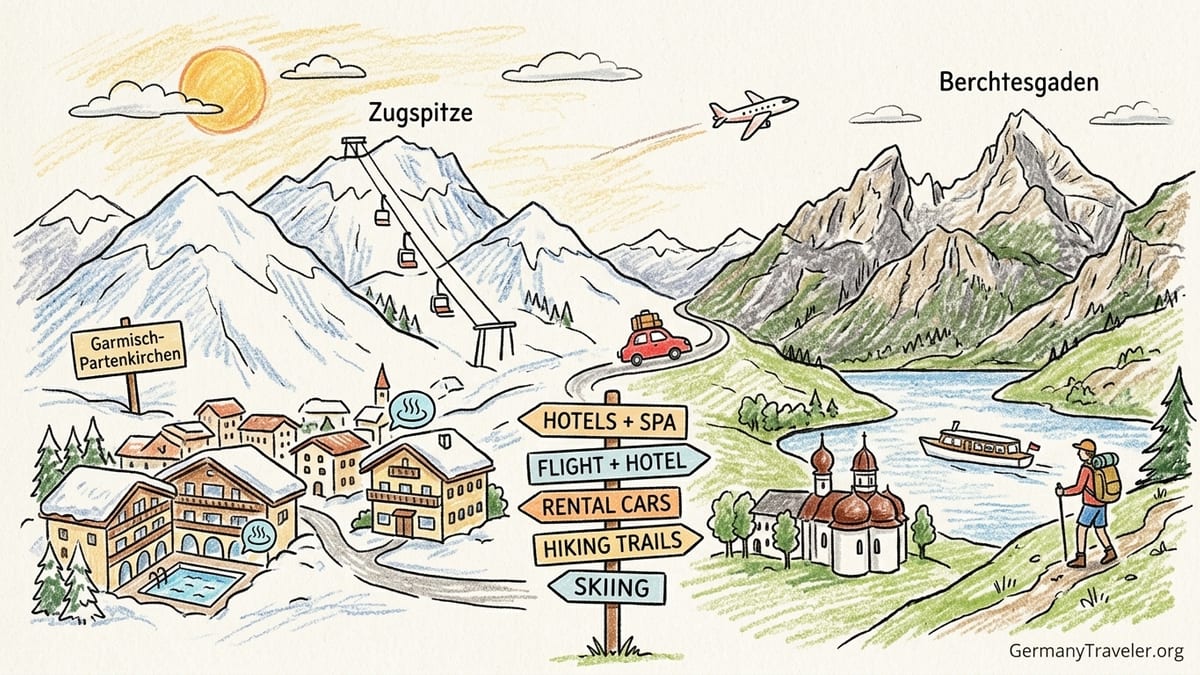
How German Alps vacation packages work in 2026
For 2026 trips, most travelers booking the German Alps will encounter “dynamic packages” on the big online travel agencies. These allow you to combine flights, hotels and sometimes car rental into one booking, with prices adjusted in real time based on airline and hotel inventory. On sites that specialize in packages for places like Berchtesgaden, you will typically see a price per person for a long weekend or week, calculated for two adults sharing a room. Flight options from hubs such as New York, London or Amsterdam are then layered on top to show a total trip cost.
Meanwhile, regional and niche operators continue to sell more traditional fixed packages. In Garmisch-Partenkirchen, for example, some hotels and resorts publish 2026 “winter holiday” or “mountain summer” offers that include a fixed number of nights, breakfast, access to spa facilities and sometimes lift passes or local transit cards. One wellness hotel in Garmisch advertises a winter package for two nights between December 2026 and February 2027, with breakfast buffet and full spa access starting from roughly 170 euros per person, demonstrating how hotel-run packages can bundle a lot of value into the nightly rate.
These two models can coexist in the same search results. A traveler comparing a dynamic flight plus hotel package into Munich plus a separate hotel deal in Garmisch will notice that the package site emphasizes the total trip cost and discount, while the hotel website emphasizes inclusions such as saunas, pools and half-board dining. Understanding which components you care about most will determine where you should start your search.
Flight plus hotel packages: when they make sense
Flight and hotel packages are most attractive if you are flying from outside Europe or from a distant European city and want a simple, single booking. For example, a couple looking at a January 2026 ski week in Garmisch-Partenkirchen might find an economy flight from Chicago to Munich bundled with seven nights at a midrange hotel near the Garmisch Classic ski area at a package rate that is several hundred dollars lower per person than buying the same flights and hotel separately. On many sites the headline saving appears because the hotel rate is discounted when combined with specific flights.
A similar pattern appears for Berchtesgaden, where international travelers can bundle flights into Munich or Salzburg with a hotel overlooking the Watzmann peaks. Package portals targeting the German market list city-break style offers that combine air tickets with three or four nights in hotels around Berchtesgaden, and English-language versions of those portals show the same inventory for overseas visitors. In these cases the convenience of a single point of payment, and the coordination of arrival times and check-in, appeals to travelers who are new to the region.
However, flight plus hotel packages are less compelling if your flights are covered by loyalty points or if you are already in Europe and traveling by train. A traveler who uses miles for a free award flight to Munich and then books a hotel offer at the Eibsee near Garmisch, where summer 2026 packages start around the mid four figures per person for a week including breakfast and lake access, often does better than forcing the flight into a bundle. In those circumstances, looking at hotel-only mountain packages and then adding a discounted rail ticket can be the smarter route.
Hotel plus car packages and self-drive Alpine trips
Hotel and car bundles are increasingly prominent in German Alps searches, particularly for Berchtesgaden and the quieter valleys. Booking sites that feature Berchtesgaden holiday packages now often highlight the ability to add car rental from Munich or Salzburg to a hotel reservation, marketing it as a “self-drive” or “road trip” deal. The benefit is obvious once you look at a regional map: a car makes it much easier to link Berchtesgaden with side trips to nearby Salzburg, Bad Reichenhall or the Salzkammergut lakes, and to time your visit to scenic spots like Königssee for early morning or late afternoon.
In real itineraries that travelers post for 2026, it is common to see a car collected at Munich Airport, a two-hour drive to Berchtesgaden, then onward drives to Garmisch-Partenkirchen, Füssen or Mittenwald before looping back to Munich. Booking a hotel plus car package smooths some of the logistics by aligning hotel dates with rental periods, and some operators negotiate extras such as reduced one-way drop fees between city and airport locations or free second drivers, details that are easy to miss when booking each element independently.
On the price side, the value of hotel plus car packages fluctuates with rental-car demand. In peak summer 2026, when many travelers are planning lake and hiking holidays, package deals that lock in a compact car for a week can protect you from late price spikes. In quieter shoulder seasons such as late April or early October, you may be able to undercut these bundles by watching standalone rental rates and booking a flexible hotel offer that includes parking and regional guest cards for public transport, especially in towns like Berchtesgaden where local buses cover many popular trailheads.
Choosing your Alpine base: Garmisch, Berchtesgaden, Füssen or elsewhere
The choice of where to base yourself is often more important than the package type. Garmisch-Partenkirchen is the classic all-rounder. As Germany’s best-known ski town, with access to both the Garmisch Classic area and the glacier slopes on the Zugspitze, it anchors many winter 2025 to 2026 ski packages and multi-night “Discover the Alps” tours. One example aimed at English-speaking visitors is a 7 to 11-night 2026 package that includes airport transfers, guided excursions around Bavaria and accommodation at an Alpine resort in Garmisch, showing how tour-style bundles still center on this town.
Berchtesgaden, on the other hand, appeals strongly to hikers and scenery seekers. Offers built around Berchtesgaden in 2025 and 2026 often emphasize its position within a national park landscape, with access to Königssee, Watzmann viewpoints and salt mines. Some bus-tour style packages now on sale for September 2026 include four or five nights at a local Alpine hotel as the hub for excursions, underlining Berchtesgaden’s role as a quieter, nature-focused base. For a traveler looking for a mix of hiking, lake cruises and day trips to Salzburg, a hotel plus car or hotel plus excursion package based here can be ideal.
Füssen occupies a different niche. The town itself is smaller than Garmisch and less mountainous than Berchtesgaden but is the main gateway to Neuschwanstein and Hohenschwangau castles. Many 2026 Bavaria itineraries include two nights in or near Füssen specifically to visit the castles, with some tour operators offering two to three-night “royal castles” packages that bundle castle tickets, guided tours and accommodation. Travelers who come in late spring or autumn, when snow is unlikely to be deep at lower elevations, may prefer Füssen or a combination of Füssen and Garmisch so they can balance cultural sightseeing with one or two mountain day trips.
There are also under-the-radar alternatives that show up in package searches. Mittenwald, for example, appears in some 2026 short-break itineraries as a base for those who want a quieter village feel with quick rail links to Garmisch. Lakeside locations around the Eibsee and smaller Bavarian resort towns have begun to advertise their own multi-night summer hiking or winter spa offers, which can be combined with separate flight bookings. These can suit repeat visitors who no longer need the convenience of a big package hub and are more interested in a specific landscape or hotel experience.
Package versus independent booking: cost, flexibility and protection
The debate between package and independent booking in the German Alps has sharpened as dynamic packaging has matured. In many 2026 examples, combining flights and hotels into one transaction can lead to upfront savings of several hundred euros per person compared with separate bookings. That is especially evident on routes where airlines compete aggressively to Munich, and hotels in Garmisch or Berchtesgaden are keen to fill midweek beds in shoulder seasons by offering discounted package-only rates.
Packages can also offer legal and practical advantages. In many European jurisdictions, booking a package that includes transport and accommodation with the same provider can give you package-travel protections, meaning that if your flight is canceled and you miss the first night of your hotel, the operator is obligated to assist or rearrange. This peace of mind is one reason some North American visitors opt for major global brands or well-known European tour operators when booking a first-time ski holiday in Garmisch or a Christmas break near the Eibsee.
Independent booking still has strong appeal. Travelers who prefer to mix chain hotels with local guesthouses, stay in holiday apartments in Berchtesgaden for part of the trip and then splurge on a spa hotel near the Zugspitze, often find they cannot easily replicate that pattern inside a single package. Booking everything separately also makes it easier to use airline miles for flights, hotel points for specific chain properties and local rail passes for travel between Munich, Füssen and Berchtesgaden.
In practice, many 2026 itineraries end up hybrid. A couple might buy a simple flight plus first-hotel package into Munich and Garmisch, then add a separate independent stay in Berchtesgaden and a final night in Munich. Others might lock in a seven-night half-board ski package at a Garmisch hotel and arrange their own low-cost carrier flights from within Europe. Thinking of your trip in segments can help you combine the value of packages with the freedom of independent travel.
Breakfast, spa access and other inclusions to watch
Most German mountain hotels selling packages into 2026 include breakfast as standard, especially in Garmisch and Berchtesgaden. Sample winter offers from Garmisch wellness hotels combine overnight stays with an extensive breakfast buffet, afternoon tea or coffee and full access to pools and saunas. Summer packages on the shores of the Eibsee feature multi-night stays with breakfast, private lake access, fitness facilities and free parking, confirming that inclusions can significantly shape the real value of a package.
Spa access is a key differentiator between otherwise similar looking deals. In ski season, some midrange hotels around Garmisch’s Hausberg and Kandahar slopes offer small wellness areas with saunas and relaxation rooms, while higher-end resorts sell packages that foreground large indoor pools, panoramic saunas facing the Zugspitze and optional massage add-ons. For travelers who expect to spend long days outdoors and want a reliable way to warm up and unwind, checking whether spa use is included in the nightly package price, and whether there are restricted hours, is just as important as comparing star ratings.
Half-board and other meal inclusions are more common in packaged offers than in flexible independent rates. A four or five-night Christmas stay near the Eibsee, for instance, might bundle breakfast and festive dinners along with seasonal activities like guided winter walks or mulled-wine evenings. In Berchtesgaden, some hotels that target bus tours and group packages include multi-course dinners in their per-person rates, making the nightly price appear higher but reducing on-the-ground expenses. Travelers who like exploratory dining may prefer B&B packages that keep evenings free, while those who want predictability in a ski week budget might deliberately seek half-board inclusions.
Cancellation conditions and seasonal differences
Cancellation terms vary widely across German Alps packages for 2026, and the fine print matters more than ever. Dynamic flight plus hotel packages often classify flights as non-refundable or changeable only with fees, while offering more flexible hotel rules up to a certain date before arrival. Traditional hotel-run packages in Garmisch, the Eibsee area or Berchtesgaden tend to publish tiered policies, such as free cancellation up to a few weeks before arrival, partial charges in the final fortnight and full charges within the last days.
Season strongly affects flexibility. Winter ski packages around Garmisch Classic and the Zugspitze typically have stricter terms in peak weeks such as late December, New Year and major February race weekends, when hotels know they can resell inventory. Some 2026 winter offers highlight early-booking discounts that come with more rigid non-refundable conditions. By contrast, mountain-summer packages for June to September around lakes and hiking regions sometimes offer more generous free-cancellation windows, particularly for stays of seven nights or longer.
Shoulder seasons introduce their own quirks. A short break in April in Füssen, targeting castle visits and valley walks rather than skiing, may come with flexible cancellation up to a few days before arrival, but if the package piggybacks on a limited promotional air fare into Munich, changing dates can still be costly. When comparing packages, it pays to imagine worst-case scenarios: if weather reports show persistent rain for the week of your planned Berchtesgaden hiking trip, how expensive is it to shift or shorten the stay, and does the operator offer any credit for future travel.
Winter versus summer packages in the German Alps
Winter and summer visits to the German Alps feel like entirely different trips, and package structures reflect that. Winter 2025 to 2026 ski holiday offers in Garmisch and nearby resorts typically emphasize lift access, ski rental and proximity to slopes. Operators that specialize in ski holidays in Garmisch-Partenkirchen for 2025 and 2026 market “snow-sure” stays with transfers to the Hausberg base area, storage for ski equipment and optional lessons. Some also advertise that a week in Garmisch can be significantly cheaper per person than a comparable ski week in parts of North America, an argument that resonates with overseas visitors watching their budgets.
Summer 2026 packages in places like the Eibsee or Berchtesgaden, by contrast, treat the mountains as a hiking and relaxation setting. A seven-night “mountain summer” offer on the shore of the Eibsee between June and early September 2026 includes lake access, use of pedal boats or SUPs, and a guest fitness program alongside breakfast. In Berchtesgaden, hotels promote hiking weeks that bundle guided walks, packed lunches or access to cable cars and the local guest card, which often covers bus rides and discounts on attractions.
For many travelers, the best approach is to think in terms of activities first and then choose the package season. Those focused on skiing and snowboarding should concentrate on offers that mention Garmisch Classic, Zugspitze or other defined ski areas, check whether lift passes are included and weigh the trade-off between higher peak-season prices and more reliable snow. Visitors more interested in castles, gorge walks and lake cruises may find late spring and early autumn packages in Füssen and Berchtesgaden quieter, cheaper and more flexible, with fewer crowds and milder weather for hiking.
The Takeaway
Looking at real 2026 offerings, three patterns stand out for German Alps vacation packages. First, Garmisch-Partenkirchen remains the anchor for ski-centric and general Alpine stays, with both global package brands and local hotels advertising bundled winter and summer deals. Second, Berchtesgaden and the Eibsee region are increasingly packaged as nature and wellness bases, often with hotel plus car or hotel plus excursion combinations that reward travelers who want hiking, lakes and cross-border day trips. Third, Füssen continues to serve as the castle hub, best booked as a shortstay within a wider Bavaria itinerary, either on its own or as part of a loop with Garmisch or Berchtesgaden.
Travelers deciding between package and independent booking can safely treat price, flexibility and desired inclusions as the main criteria. If you value a single booking, airport transfers and built-in protections, a flight plus hotel package centered on Garmisch or Berchtesgaden makes sense. If you prefer tailored stays, loyalty points and the freedom to linger in a favorite valley or village, combining hotel-run packages with self-organized transport will serve you better. Carefully comparing inclusions such as breakfast, spa access, parking, lift passes and cancellation rules will help you identify which 2026 German Alps package is genuinely a deal and which is simply convenient.
FAQ
Q1. Is it cheaper to book a German Alps package or arrange everything independently?
In 2026 examples, dynamic flight plus hotel packages to hubs like Garmisch or Berchtesgaden often undercut separate bookings by a few hundred euros per person, especially from long-haul origins. However, travelers using airline miles, hotel points or staying in smaller guesthouses can sometimes save more by booking flights, hotels and any car rental separately.
Q2. Which base is best: Garmisch-Partenkirchen, Berchtesgaden or Füssen?
Garmisch-Partenkirchen suits those who want classic ski infrastructure, yearround cable-car access and a lively town. Berchtesgaden works best for hikers and scenery lovers who want Königssee, Watzmann views and easy day trips to Salzburg. Füssen is ideal for castle-focused travelers, especially those prioritizing Neuschwanstein and Hohenschwangau, and is often used as a two or three-night stop within a wider itinerary.
Q3. Do German Alps ski packages usually include lift passes and equipment?
Some dedicated ski packages for Garmisch and nearby resorts include discounted or included lift passes and access to on-site rental shops, but many generic flight plus hotel bundles do not. Always check whether lift passes, lessons and equipment rental are listed as inclusions or add-ons before assuming they are covered.
Q4. Is a rental car necessary if I stay in Berchtesgaden or Garmisch?
A car provides flexibility for side trips and early starts, and hotel plus car bundles are marketed heavily for Berchtesgaden and the lakes. That said, both Berchtesgaden and Garmisch have decent public transport, local buses and organized excursions, so travelers who prefer not to drive can manage without a car by choosing central hotels and using guest cards for buses and regional trains.
Q5. How far in advance should I book a 2026 German Alps package?
For peak ski periods around Christmas, New Year and February 2026, as well as school-holiday weeks in summer, it is sensible to book core accommodation and any flight plus hotel package six to nine months ahead. Shoulder-season stays in April, May, September or October typically remain available closer to departure, though specific spa hotels or lakeside properties can still sell out.
Q6. Are breakfast and spa access usually included in German mountain hotel packages?
Breakfast is included in most Alpine hotel packages, particularly in Garmisch, Berchtesgaden and around the Eibsee. Spa access varies more: many wellness-oriented properties include pools and basic sauna use in the nightly rate, while some charge extra for premium spa areas or treatments. It is worth checking the exact wording of inclusions before booking.
Q7. How flexible are cancellation policies on 2026 packages?
Dynamic packages often have stricter rules on flights than hotels, with low-cost airfares usually non-refundable. Hotel-run packages in the German Alps commonly allow free or low-cost cancellation until a set number of days before arrival, after which partial or full charges apply. Peak winter and holiday periods tend to have the tightest conditions.
Q8. Is it better to visit the German Alps in winter or summer?
Winter is best for downhill skiing, snowboarding and cozy spa stays, especially in Garmisch and nearby ski areas. Summer and early autumn are better for hiking, lake activities and castle visits, making Berchtesgaden, the Eibsee region and Füssen particularly attractive. The right choice depends on whether snow sports or trails and lakes are your top priority.
Q9. Can I combine multiple bases like Garmisch, Berchtesgaden and Füssen in one trip?
Yes, many 2026 itineraries link two or three bases over 10 to 14 days, often using Munich as the flight gateway. A common pattern is to start in Garmisch for mountains and Zugspitze views, move on to Berchtesgaden for national-park hiking and lake scenery, then finish with one or two nights in Füssen for castle visits before returning to Munich.
Q10. Are there good options for travelers who do not ski?
Absolutely. Even in winter, non-skiers can enjoy cable-car rides, winter hiking, spa days and cultural visits in Garmisch or Berchtesgaden. In warmer months, package and hotel offers in Füssen, around Königssee and at lakes like the Eibsee focus on walking, boat trips and relaxed mountain scenery rather than snow sports, making them ideal for non-skiers.