

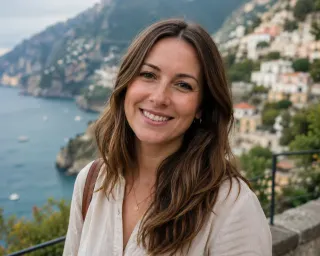
I did Königssee as a long day trip from Munich on a July weekday, chasing all those impossibly green lake photos I had seen for years. What I actually got was a mix of serene water, unexpected queues, sudden mountain weather, and the kind of tiredness that only comes from squeezing too much Alpine beauty into one day. Here is exactly how it felt, hour by hour, with all the small details I wish I had known in advance.
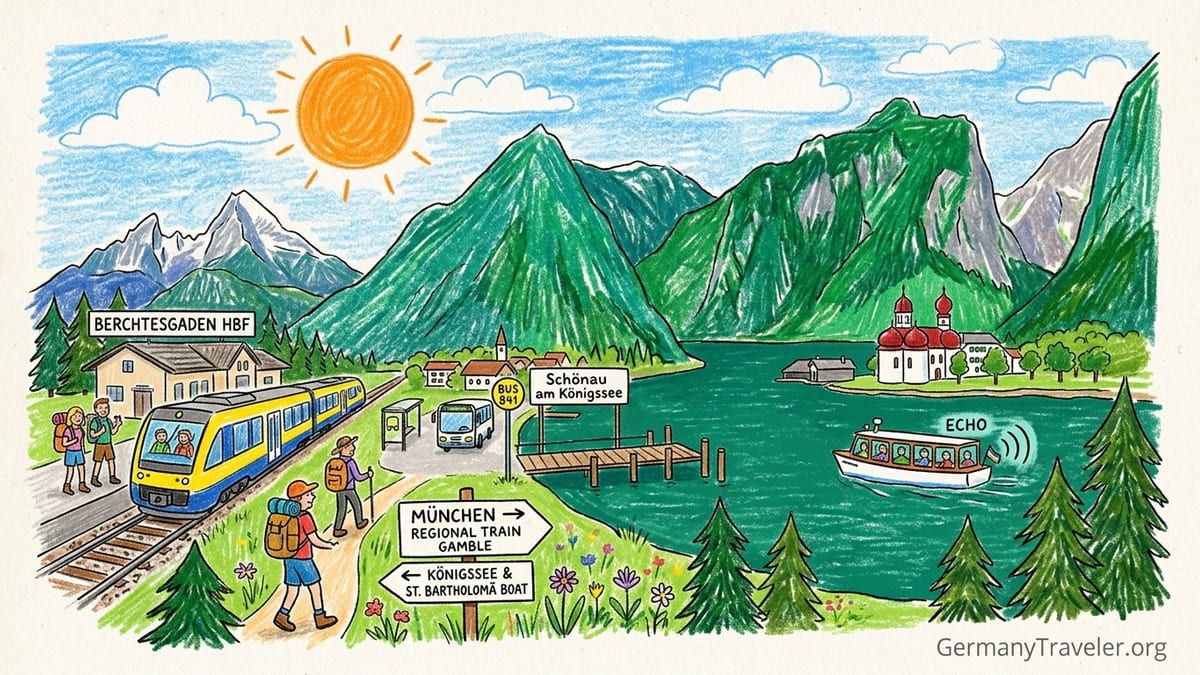
Starting From Munich: The Early Train Gamble
I based myself in Munich and decided not to move hotels, so Berchtesgaden and Königssee had to work as a single ambitious day trip. I caught an early regional train from Munich Hauptbahnhof, somewhere after 7 a.m., using a Bayern Ticket that covered the whole journey on regional trains. The connection that morning ran via Freilassing to Berchtesgaden, with just one tight change. On paper the journey time sat close to the two hour estimate you see in tourism brochures, but with the transfer and a few mild delays it felt closer to two and a half hours door to door from central Munich.
The train ride itself started in a gray, sleepy Munich and gradually rolled into something much more cinematic. After Rosenheim the scenery sharpened into proper foothills, farmhouses with red roofs, and peaks that finally looked like the Alps instead of just hazy outlines. I grabbed a coffee and a pretzel at the station bakery before boarding, because from experience I know regional trains in Bavaria often have no catering. That coffee turned out to be breakfast, since I underestimated how long it would take before I could sit down for a real meal in Berchtesgaden.
By the time we approached Berchtesgaden station, the carriage had filled with a very clear mix of people: hikers with poles, families with kids in neon rain jackets, and a noticeable number of tour groups speaking English and Italian who were obviously heading straight for Königssee. Hearing people around me talk about “making the first boats” made me realize I was not the only one trying to beat the crowds, and that there really is a morning rush pattern on good-weather days.
Berchtesgaden station itself is modest and easy to navigate, but there is no dramatic Alpine welcome right at the platform. You step off the train, see a simple station building and a bus area, and only once you look up do you get the first glimpse of the surrounding peaks. It was a reminder that the postcard scenery at Königssee still required one more leg of public transport and a bit of patience.
Bus to Schönau am Königssee: The Last Hop Before the Water
From the train station I followed the flow of people out to the buses. I took a public bus toward Schönau am Königssee, the small village at the lake. The ride was short, around 15 minutes, and included that slightly chaotic boarding dance you get when one bus is basically feeding everyone from the just-arrived train. I validated that my Bayern Ticket covered the bus ride, which it did on my travel day, but I still checked the posted notices at the stop to be sure. Policies can change, and I did not want a surprise fine to start my day.
Sitting by the window, I finally felt the Alps closing in. The road curled along the valley, past a mix of guesthouses, supermarkets and the occasional farm field. I could tell which people were overnighting in Schönau because they watched the hotels like hawks, clenching printed booking confirmations. I was slightly envious. Already, the idea of waking up here and strolling to the lake, instead of racing from Munich, seemed very appealing.
The bus dropped us near the main Königssee parking area, and from there it was a flat, paved walk of a few minutes through a little tourist village of souvenir shops, outdoor clothing stores, and kiosks selling pretzels and sausage. It had that familiar Alpine resort vibe: lots of carved wood balconies, flower boxes, and a disproportionate number of hiking socks on display. I ducked into a bakery for a second coffee and a quick roll, knowing it might be a while before I found proper food at the lake or on the boats.
As I walked toward the boat landing, the lake slowly revealed itself between buildings. First I heard it before I truly saw it: the low hum of electric motors and the echo of the boatman’s trumpet bouncing off the cliffs. Königssee is famously quiet because the boats run on electric power, and that soft whirring sound became part of the day’s soundtrack.
Buying Königssee Boat Tickets: Lines, Departure Boards and Choices
The ticket area at Königssee looked like a small lakeside bus terminal, with several counters, a digital departure board and clear signage in German and English. I joined the main ticket queue at around 10 a.m., which already snaked out into the open in a loose zigzag. From the outside the line felt intimidating, but it moved steadily because each boat departure takes a substantial number of passengers at once. I waited a bit under 25 minutes before reaching the counter, which is shorter than some reports I had read, but long enough that I was glad I had brought water and sunscreen.
At the counter I was presented with the classic Königssee choice: buy a round trip to St. Bartholomä only or go all the way to Salet at the far end of the lake, with a stop included at St. Bartholomä on the way back. I decided to go for the full lake experience and paid for the return ticket to Salet. The adult fare was just over twenty euros for the full route that season, and the cashier printed a ticket with a clearly marked departure time and boarding number. That specific time slot system reassured me because it meant I could step out of the line and know I had a place on a particular boat instead of competing with everyone in a free-for-all.
Boarding worked with a simple funnel system. A staff member called out the departure time and destination, checked tickets, and let people through to the wooden pier in waves. While waiting, I studied the lake’s color. The water had that dense, jewel-toned green you see in photos, but with a surprisingly dark, almost inky depth close to shore. Steep cliffs fell straight into the water, which immediately explained why you cannot just walk along the shoreline. The only practical way to truly see Königssee is from the boats.
By the time we boarded, the boat was close to full, though I still managed to find a seat by an opening window. The captain asked people to remain seated during departure, and there was a gentle scramble as families tried to keep kids at the windows. The interior was all wood benches and large glass panes, with the faint smell of varnish and lake water. It felt charming and a little old fashioned, in a good way.
On the Electric Boat: Silence, Echoes and the First Weather Shift
As we pulled away from the dock, the town noises fell behind almost instantly. The electric engine produced a low hum, but otherwise the main sound was the wake fanning out behind us. The cliffs on either side of the lake rose sharply, and within minutes I understood why people compare Königssee to a fjord. Mobile reception dropped out early, which I considered a feature rather than a flaw.
About a third of the way down the lake, the boat came to a slow stop near the famous “echo wall.” The captain stepped outside with a trumpet and played a simple melody. Each phrase bounced cleanly back from the cliffs, more distinct than I expected, and people instinctively fell silent. It was touristy but undeniably beautiful. Listening to the echo while low clouds drifted around the peaks was one of the most atmospheric moments of the day.
While we floated there, the weather shifted in that quick mountain way. When I boarded in Schönau it had been bright and warm enough for T-shirts. By the middle of the lake, a breeze picked up, the temperature dropped, and clouds thickened over the ridges. I was glad I had packed a light shell jacket in my daypack. You cannot just duck into a shop or café for warmth on the boat, so layers matter, even in July.
The ride to Salet took a bit under an hour. I watched as waterfalls appeared on distant cliffs and then slipped behind us. Occasionally the captain pointed out landmarks in German and English, adding short anecdotes rather than a constant commentary, which kept the ride peaceful. Children on board moved between excitement and naps, lulled by the smooth motion. For a while, I stopped worrying about schedules and just stared at the shifting textures of rock, forest and water.
Salet and Obersee: Beauty, Crowds and the Tired Legs Factor
Salet is the final boat stop, a small landing with a rustic feel: a wooden dock, a few low buildings, grazing cows in meadows, and trail signs pointing toward Obersee and further into Berchtesgaden National Park. When we stepped off the boat, the group immediately thinned out. Some people lingered near the dock, others marched straight toward the trailhead, and a few clearly turned back on the next boat.
I chose to walk to Obersee, which is not a long hike in distance but still demanded energy. The path is rocky in sections and slightly undulating, and I could feel the early start from Munich in my legs. It took me roughly 20 minutes to reach the lakeside, including a few photo stops. The first view of Obersee was one of those rare moments where reality matched the hype: still water, a perfect reflection of the peaks, and a solitary wooden boathouse that looked like it had been placed there by a photographer.
By late morning the area around that famous boathouse was busy, with people queuing politely to take their turn on the small platform for photos. It felt a little like a mountain theme park at that exact spot, but walking just a minute or two along the path gave me more space. I sat on a rock near the shore, ate a cereal bar from my pack and watched clouds skim across the mountaintops in the reflection. That quiet snack, feet aching just enough to remind me I had earned the view, ended up more satisfying than the dozens of photos I took.
I did not push further to the far end of Obersee and the Rothbach waterfall. The path beyond becomes more demanding, and I was always aware that the long chain of transport back to Munich still awaited me. In that sense, Königssee as a day trip teaches you to choose your battles. With an overnight in Berchtesgaden I might have attempted the full hike. On a single-day schedule, I turned around and allowed enough time to stroll back slowly to Salet for the return boat.
St. Bartholomä: Church, Smokehouses and a Much Needed Meal
On the way back, the boat dropped us at St. Bartholomä, the famous peninsula with the red onion-domed church. As we approached, the scene felt almost too picturesque: white walls, dark red towers, steep forest rising directly behind, and boats docking in a steady rhythm. The landing area had a mix of benches, gravel paths and low wooden buildings that housed cafés and fish smokehouses.
By this point it was early afternoon and I was very ready for a real meal. I followed the smell of smoke and joined a modest line at one of the small fish stands. I ordered a portion of freshly smoked local trout served on a disposable plate with bread and a simple side. The fish was warm, flaky and unsurprisingly expensive for what it was, but eating it at a wooden table facing the lake made it feel worth the splurge. If fish is not your thing, there are also places serving classic Bavarian fare like sausages and potato salad, but the smoked fish felt uniquely tied to Königssee.
After eating, I walked the short path around the church for different vantage points. I stepped into the church briefly, which offered a moment of cool, dim quiet in contrast with the busy shore outside. Inside, the small baroque interior felt intimate and more modest than the dramatic setting suggests. I did not stay long, partly because I still needed to keep half an eye on the boat timetable back to Schönau.
The atmosphere on the peninsula was half pilgrimage, half picnic. Families spread blankets, hikers dozed on benches, and people dipped their toes in the icy water near shore despite the posted signs asking people not to swim. It was one of the few points that day where I felt the crowds more intensely. I liked it, but I would not come here expecting empty mountain solitude in high season.
When I rejoined the queue for the return boat, I noticed how the cumulative tiredness of the day had changed my patience level. Standing in line with the weight of my daypack digging into my shoulders and the sun reflecting off the water, I was grateful for every bit of shade. Even with frequent departures there was still a 20 to 30 minute wait. It was not extreme, but after many hours of movement, each delay felt slightly magnified.
Back to Schönau and Berchtesgaden: The Afternoon Slump
The ride back to Schönau felt quieter than in the morning. People spoke in softer voices, and several passengers nodded off in their seats. I watched St. Bartholomä shrink in the distance and felt that familiar bittersweet sense of leaving a place before truly exhausting every possible trail and viewpoint. Doing both Salet and St. Bartholomä on a day trip felt rewarding, but I could also see how an overnight stay would open up a much more relaxed rhythm.
Once back at the dock, the tourist village felt busier and warmer than it had in the morning. The sun had broken fully through the clouds, and the paved paths radiated heat. I ducked into a café near the landing for a late coffee and a slice of cake, partly for calories and partly to sit in a proper chair. The waitress seemed used to people in exactly my state: slightly sunburned, wind-tousled, clutching cameras and maps with slow movements.
I had originally flirted with the idea of adding either the Berchtesgaden salt mine or the Eagle’s Nest in the same day. Standing there in the mid-afternoon haze, I realized that would have been pure overkill for me. The salt mine requires a dedicated, timed visit with gear changes and underground tours, and the Eagle’s Nest involves catching a specific mountain bus from Obersalzberg and allowing time for both the journey and the summit. On paper you can chain them together. In the reality of my body and my pace, it would have turned a lovely day into a stressed box-ticking exercise.
Instead, I strolled back to the bus stop and rode down to Berchtesgaden town center. There, I had a short wander through the old streets, which felt surprisingly calm compared with the lakeside scene. I grabbed an ice cream from a small shop in the center and ate it on a bench while looking up at the surrounding ridges. It was a quiet, domestic slice of life that balanced the more iconic scenery of the lake.
The Long Ride Home: Crowded Trains and That Particular Kind of Exhaustion
For the return to Munich, I boarded an afternoon regional train from Berchtesgaden back via Freilassing. This time, the carriage was more crowded, packed with day trippers returning from all directions. Finding a free seat near a window took a bit of weaving through bags and hiking poles. Once I sat down, I felt the day’s miles all at once, from the early alarm to the hike at Obersee, the time in queues, the standing on boats and docks, and the constant small decisions about tickets and timings.
I watched as the dramatic peaks gradually flattened back into rolling countryside. At some point, between dozing and staring out the window, I realized I had barely looked at my phone all day except to check the time. The rhythm of boats and buses had dictated the structure of the trip more than any digital plan. That analog flow left me pleasantly drained instead of frazzled.
We arrived at Munich Hauptbahnhof sometime in the evening light, and the shift from mountain air to city station smell felt abrupt. I walked back through the hall past takeaway stands selling Leberkäse and Turkish döner, tempted but ultimately too tired to stand in another line. Instead, I grabbed a simple sandwich at a supermarket near my accommodation and ate it sitting on my bed, feet up against the wall, scrolling back through the day’s photos. My watch told me I had walked well over what I would on a normal sightseeing day, even though none of the individual walks felt extreme in the moment.
Emotionally, the exhaustion felt satisfying. Berchtesgaden and Königssee in a single day from Munich is not a leisurely holiday outing. It is a full, head-clearing immersion that starts in a bustling city, dives deep into a narrowing Alpine valley, and then pulls you back out all in roughly fourteen waking hours. By the time I switched off the light, my mind was still replaying the echo on the lake and the Obersee reflections, but my body had already surrendered to sleep.
What I Would Do Differently Next Time
Looking back, the biggest structural decision that shaped the entire day was staying in Munich instead of spending at least one night in Berchtesgaden. On the plus side, I kept a single hotel base and did not have to move luggage. On the minus side, the early wake up, the long train ride out and back, and the need to watch the clock all day made the experience more compressed than the landscape really deserves.
If I returned, I would likely book a guesthouse or small hotel in either Berchtesgaden or Schönau am Königssee itself for at least one night. That would let me catch an earlier, quieter boat, have more flexibility with weather changes, and perhaps commit to the full hike to the far end of Obersee and Rothbach waterfall. It would also make it more realistic to add the salt mine or Eagle’s Nest on a separate day without feeling like I was rushing from one major site to another.
On the packing side, I was glad I wore comfortable trail shoes rather than city sneakers, even though the main paths are not technical. My feet thanked me by late afternoon. A small daypack with layers, sun protection, a water bottle and a few snacks felt essential. Even with cafés and kiosks at the lake and peninsula, those quiet moments at Obersee and on the boats were made much richer by having my own provisions when I wanted them.
In terms of timing, arriving at Königssee around 10 a.m. was just good enough, but I would aim for even earlier next time, especially in peak summer. That would reduce the initial queue for tickets, open more space on the boat for scenery watching instead of seat hunting, and create more breathing room for spontaneous extra stops without sweating the last train back to Munich.
The Takeaway
My day in Berchtesgaden and on Königssee was not the serene, perfectly composed Alpine postcard I had in mind before I went. It was better and messier: early alarms, crowded boats, echoing trumpets, sudden chills, warm smoked trout, tired feet and a long, sleepy train back through the Bavarian countryside. It proved that even heavily photographed places can still feel deeply real when you are standing in the middle of them with a damp jacket, a rumbling stomach, and a slightly anxious eye on the timetable.
If you are considering the same day trip from Munich, expect it to be a full, sometimes tiring but ultimately very rewarding adventure. Go knowing that you will queue, that the weather may change twice in an hour, and that you will almost certainly wish you had more time. Balance your ambitions between Salet, Obersee and St. Bartholomä according to your energy rather than your fear of missing out.
Most of all, allow yourself small pauses in between the “must see” stops. Sit on a rock by Obersee and let the reflections settle. Linger a few minutes longer at St. Bartholomä after your lunch instead of sprinting to the next boat. Take that extra lap through Berchtesgaden town center on the way back to the station. Those smaller, quieter moments were what ultimately turned a busy sightseeing checklist into a lived, textured memory of one long Alpine day.
FAQ
Q1. Is a day trip from Munich to Berchtesgaden and Königssee really doable?
Yes, it is doable as a long day if you start early and accept that it will be tiring. My round trip from Munich by regional train plus bus worked in one day, but it felt like a full, almost fourteen hour outing.
Q2. Did you feel rushed trying to see Salet, Obersee and St. Bartholomä in one visit?
I felt comfortably busy rather than panicked. Doing the full route to Salet, walking to Obersee and then stopping at St. Bartholomä was a lot, but manageable. I skipped the longer hike beyond Obersee and any side trips like the salt mine or Eagle’s Nest.
Q3. How long did you wait in line for the Königssee boat?
Arriving around 10 a.m., I waited just under half an hour to buy my ticket and board. The line looked intimidating but moved steadily because each electric boat carries a good number of passengers per departure.
Q4. What did you wear and pack for the day?
I wore light hiking shoes, breathable clothes and brought a thin waterproof shell in my daypack. I also carried sunscreen, a refillable water bottle, snacks and a camera. The weather changed from warm to chilly on the lake, so layers felt very important.
Q5. Was the Obersee walk at Salet difficult?
The walk from Salet to the Obersee shore was not technically hard, but it was rocky and uneven in spots and I definitely felt it after an early start from Munich. It took about 20 minutes at a moderate pace with photo stops.
Q6. Did you visit the Eagle’s Nest or the Berchtesgaden salt mine the same day?
No, I did not. I had planned to possibly add one of them, but by mid-afternoon I was glad I had not tried. For my energy level, combining Königssee with either the Eagle’s Nest or the salt mine in the same day from Munich would have felt rushed.
Q7. How was the food at St. Bartholomä?
I ate freshly smoked local fish with bread from one of the small stands near the church. It was simple, a bit pricey for the portion, but very satisfying in that spot. There were also options for sausages, drinks and sweets for people who do not eat fish.
Q8. Did you find Königssee overcrowded?
It was busy, especially around the main dock, St. Bartholomä and the classic Obersee boathouse viewpoint. However, stepping just a few minutes away from each hotspot made a big difference, and the boat rides themselves still felt peaceful.
Q9. Would you stay overnight in Berchtesgaden next time?
Yes. After doing it once as a day trip, I would happily book at least one night there in the future. That would allow for earlier boats, more relaxed hiking and the chance to add other sights without watching the clock so closely.
Q10. Was the trip physically exhausting?
Yes, but in a satisfying way. Between the early wake up, multiple transports, walking at Obersee and around St. Bartholomä, and time spent standing in queues and on boats, I ended the day pleasantly worn out but very glad I had gone.