


Planning a first trip to Germany usually starts with the same simple question: should you go to Berlin or Munich. For many travelers, the real answer is both. With fast trains linking the capital to Bavaria in roughly four hours and easy side trips to Nuremberg and fairy-tale small towns, it is straightforward to combine Germany’s two star cities in one focused, high‑value itinerary.
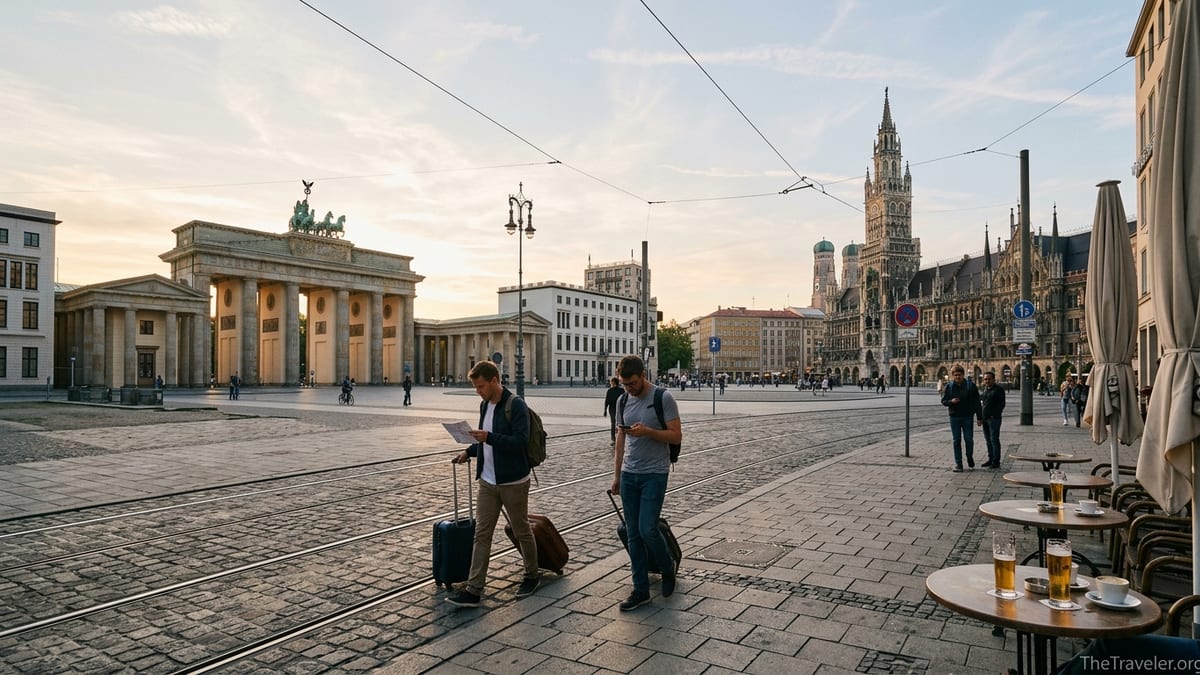
How Many Days Do You Need for Berlin and Munich?
For a first trip that focuses on city highlights, most travelers will be well served by splitting their time fairly evenly between Berlin and Munich. In practice, that usually means 2 or 3 nights in each city on a 5-day trip, 3 nights in each on a 7-day trip with one day left for a side excursion, and 4 to 5 nights in Berlin plus 3 to 4 nights in Munich on a 10-day route. This allows enough time for Berlin’s museums and World War II history while keeping space for Munich’s beer gardens, palaces and day trips into Bavaria.
On shorter itineraries of 5 days, it is realistic to see the core sights in each city if you plan tightly and use the train between Berlin and Munich as a half travel, half sightseeing day. On 7-day and 10-day plans, you can slow the pace, add Nuremberg or a Bavarian castle excursion, and fit in a few neighborhood strolls and local restaurants instead of rushing from monument to monument.
If you are flying from North America, consider starting in the city where your flights are cheapest, often Berlin, and ending in Munich or vice versa. One-way “open jaw” tickets save you having to backtrack and can be only marginally more expensive than simple round trips depending on your dates. Many travelers, for example, fly into Berlin Brandenburg Airport and depart from Munich Airport after a week to ten days of city and castle time.
Season matters too. In winter, you may want to bias days toward Berlin’s museums and indoor culture, while in late spring or early fall you might give Munich extra time to enjoy the English Garden, beer gardens and alpine day trips. Around late September, hotel prices in Munich rise sharply for Oktoberfest, so with a fixed budget it can make sense to base more nights in Berlin and keep Munich to 2 or 3 nights in that period.
Understanding Train Connections Between Berlin, Munich and Nuremberg
The backbone of any combined Berlin and Munich itinerary is the high speed rail line that links the two cities. Intercity Express (ICE) trains typically take about 4 to 4.5 hours between Berlin Hauptbahnhof and Munich Hauptbahnhof on the fastest connections, with an hourly or near-hourly frequency along the Munich–Nuremberg–Leipzig–Berlin route. Seats can be reserved and there is usually a restaurant or bistro car on board, making it an efficient and comfortable way to move between cities while seeing a slice of central Germany from your window.
Advance fares on Deutsche Bahn for this route can be significantly cheaper than last minute tickets if you are willing to lock in a specific departure. It is common to see discounted “Super Sparpreis” offers for Berlin to Munich in the range of 30 to 60 euros one way if booked weeks ahead, while flexible day-of tickets can easily be over 100 euros depending on demand and time of day. For families, it is worth checking how children travel for free or at reduced prices when linked to an adult ticket, which can make even first class attractive for longer segments.
Nuremberg sits almost exactly between Munich and Berlin on the long distance routes and is also tightly linked to Munich by fast regional and high speed trains. The Munich–Nuremberg Express uses the high speed line and can do the trip in around an hour, and frequent services give you multiple options across the day. Because the Munich to Nuremberg stretch is within Bavaria, regional tickets like the Bayern Ticket can be good value if you are traveling after the morning rush and do not need the very fastest ICE connection.
For most first time itineraries, the most straightforward pattern is Berlin to Munich (or the reverse) in a single four hour ICE journey, then adding Nuremberg as a stop between Munich and your next destination. For example, you might travel from Munich to Nuremberg in the morning, store your luggage in the lockers at Nuremberg Hauptbahnhof while you explore the Old Town and Documentation Center, then either continue by train toward Frankfurt or backtrack to Munich in the evening. This keeps your packing and unpacking to a minimum while still giving you a taste of Franconia.
How Long to Spend in Each City on a First Trip
On a 5-day Berlin and Munich itinerary, most travelers will be happiest with 2 nights in Berlin and 2 or 3 nights in Munich, using the remaining travel day to shift between the cities. With this structure, you arrive in Berlin on Day 1, have a full day there, then train to Munich on Day 3 and enjoy two or three nights in Bavaria. This keeps the number of hotel changes to just one while still giving both cities a meaningful slice of time.
For 7 days on the ground, 3 nights in each city with one “flex” day works well. That extra day can become a full day trip from Munich to Nuremberg or Neuschwanstein Castle, or a side trip from Berlin to Potsdam for palaces and gardens. For instance, you might spend Days 1 to 3 in Berlin, take a half hour S Bahn ride to Potsdam on Day 4, and then transfer to Munich on Day 5 for three nights that include a day trip to Nuremberg or the Bavarian Alps.
On 10 day routes, it is worth leaning a little more heavily toward Berlin if you enjoy museums and contemporary culture or toward Munich if your priority is Bavarian villages and alp views. A balanced split is 5 nights in Berlin and 4 nights in Munich with one night reserved for a stop in Nuremberg, possibly staying within the medieval walls near the Kaiserburg. That arrangement allows two full sightseeing days in each major city, one or two neighborhood days, and one or two regional excursions without the sense of racing a checklist.
Travelers who are particularly interested in World War II history often prefer 4 full days in Berlin so they have time to visit the Topography of Terror, the Memorial to the Murdered Jews of Europe, the German Resistance Memorial Center, and the House of the Wannsee Conference, as well as the Berlin Wall Memorial at Bernauer Strasse. In Munich, a similar deep dive would include a half day at the former Dachau concentration camp memorial site plus the documentation center at Königsplatz and the Nazi architecture sites near the Königsplatz and Ludwigstrasse.
A Practical 5-Day Berlin and Munich Itinerary
On a 5-day trip, aim to keep logistics simple and accept that you are seeing headline sights, not everything. One workable pattern is to start in Berlin for two nights and then shift to Munich for two nights, with your train journey occupying the middle of the trip. This gives you two full days split between the cities plus two half days on arrival and departure for flexible wandering, meals and light sightseeing rather than dense museum visits.
Day 1 can be focused around Berlin’s historic core near Unter den Linden and the Brandenburg Gate. After arriving at Berlin Hauptbahnhof or from Berlin Brandenburg Airport, check into a central hotel such as those around Friedrichstrasse or Alexanderplatz and spend your afternoon on foot: walk through the Brandenburg Gate, see the Reichstag from outside, and explore the Holocaust Memorial. An evening meal in a classic Berlin restaurant, perhaps trying currywurst or döner kebab from a well reviewed stand near your hotel, gives you a soft landing into the city.
Day 2 becomes your intensive Berlin day. You might buy a Berlin AB day ticket or a 72 hour Berlin WelcomeCard that covers metro and tram journeys and offers discounts at major attractions. Use public transport to see Museum Island in the morning, choosing one or two key museums such as the Pergamon’s neighbors while its main hall is under long term renovation, then cross to the Hackescher Markt area for lunch. In the afternoon, head to the East Side Gallery to see surviving Berlin Wall segments covered in street art before finishing with views over the city from the TV Tower or a rooftop bar near Potsdamer Platz.
Day 3 is for your transfer to Munich. Morning ICE trains from Berlin to Munich often arrive by early afternoon, giving you time to settle into a hotel near Munich Hauptbahnhof, Karlsplatz or the Old Town. After dropping bags, stroll through Marienplatz, see the Glockenspiel on the New City Hall, and walk to the Viktualienmarkt for snacks or an early dinner. If the weather is pleasant, you might spend the evening in a beer garden such as the one at the Augustiner Keller, sampling a liter of Helles and a plate of roast pork with dumplings.
Day 4 in Munich focuses on culture and green space. Use a day ticket on the MVV system to ride out to the Nymphenburg Palace complex for a few hours, then back into town to explore the English Garden. Many visitors rent bikes through city bike sharing schemes or from rental shops near the train station. If energy allows, finish in the evening at a traditional beer hall like the Hofbräuhaus or a quieter local favorite such as Augustiner am Platzl, then spend your final morning walking through the Residenz or doing last minute shopping before flying out or catching a train onward.
Extended 7-Day Itinerary Including a Side Trip
With a full week, you can slow the pace in each city and build in a regional excursion without feeling rushed. One popular structure is 3 nights in Berlin, 3 nights in Munich and a day trip in the middle of the Munich stay, either to Nuremberg or to the Bavarian Alps. This allows 2 full days of Berlin sightseeing, 2 full days in Munich, and 1 full day devoted to the side trip, plus travel time.
In Berlin, Days 1 and 2 can follow a similar pattern to the 5-day plan, with one day around central icons and one day devoted to World War II and Cold War history. On Day 3, you might dedicate your time to a single theme such as art and design, visiting the Hamburger Bahnhof or the Neue Nationalgalerie, then exploring neighborhoods like Kreuzberg or Prenzlauer Berg for cafes and independent shops. This is a good day to lean on a city transport pass so you can hop on and off U Bahn and trams without counting individual tickets.
Travel to Munich on Day 4, and then use Day 5 for a focused Munich city day: perhaps starting at the Munich Residenz and Treasury, then moving to the Deutsches Museum for science and technology exhibits, and finishing at a modern restaurant in the Glockenbachviertel. On Day 6, take a full day trip. For Nuremberg, trains depart frequently and the fastest journeys take around one hour from Munich. Spend your day climbing up through the Old Town to the Kaiserburg castle, walking the walls, and visiting the Documentation Center at the former rally grounds for historical context before returning to Munich in the evening.
An alternative Day 6 is a Bavarian Alps excursion, for example to Garmisch-Partenkirchen or to Füssen for Neuschwanstein and Hohenschwangau castles. Organized day tours depart from central Munich and often bundle bus transport, castle entry times and a guide for roughly the equivalent of a nice dinner out, while independent travelers can reach Füssen by regional train in about two hours followed by a short bus ride to the castles. Day 7 is then your departure day, which you can keep simple with a relaxed breakfast and perhaps a last stroll through the English Garden before heading to Munich Airport by S Bahn using an Airport City Day Ticket or equivalent zoned day pass.
10-Day Route With Nuremberg and Bavarian Extensions
A 10-day trip gives enough breathing room to add both Nuremberg and at least one Bavarian landscape day, turning a simple city break into a deeper slice of Germany. One balanced pattern is 4 nights in Berlin, 4 nights in Munich and 1 or 2 nights in Nuremberg, reachable by an hour’s train from Munich or roughly 3 hours from Berlin depending on the connection. This spreads out travel days and allows one city to serve as a hub while you venture out.
Start with 4 nights in Berlin, including one day trip to Potsdam. That Potsdam day can include Sanssouci Palace and its gardens, the New Palace, and a walk across the Glienicke Bridge, famous for Cold War spy exchanges. With a Berlin AB transport ticket plus a small extension ticket for zone C, you can make the most of suburban trains and trams to cover the distance without separate single fares. Use the other Berlin days to explore Museum Island, alternative neighborhoods like Friedrichshain, and lakeside areas such as Wannsee if you are traveling in warmer months.
On Day 5, head to Nuremberg, staying one or two nights inside or just outside the medieval walls. The city’s compact center makes it easy to see a lot on foot: walk from the Hauptbahnhof through the Handwerkerhof artisans’ courtyard, along the river to the Hauptmarkt, and up to the Kaiserburg for views. History minded visitors can spend half a day at the Documentation Center and rally grounds, reachable by tram or S Bahn, and food lovers can sample Nuremberg’s short bratwurst sausages at one of the traditional bratwurst kitchens in the Old Town.
From Nuremberg, it is only about an hour by ICE or regional express to Munich, so Days 7 through 10 can be based there. Build in at least one full Munich sightseeing day, one Bavarian Alps or lake excursion, and one flexible day that can absorb weather or energy fluctuations. For instance, if a rainy forecast makes the mountains less appealing, you might substitute a day in the museums of the Kunstareal or the vast Deutsches Museum. If the weather is clear, a boat trip on Lake Starnberg or a cable car ride near Garmisch-Partenkirchen can deliver the alpine views many travelers associate with Germany.
Public Transport, Passes and On-the-Ground Practicalities
Both Berlin and Munich have dense, integrated public transport systems combining S Bahn, U Bahn, trams and buses, and fares are based on zones. In Berlin, most visitor sights fall within zones A and B, covering the central city to the edge of the suburbs. Zone C includes outlying areas such as Potsdam and the airport. Many first time visitors opt for 24 hour AB or ABC day tickets, or tourist products like the Berlin WelcomeCard, which bundles unlimited transport within chosen zones plus discounts at several attractions. Prices vary by duration and zones, so it is worth comparing the cost of a simple 24 hour AB card with the extra value from attraction discounts before buying.
Munich’s MVV system uses a ring style layout with core zone M and surrounding numbered zones. For short city stays, day tickets covering zone M or M plus nearby zones usually suffice, and there are specific products such as the CityTourCard and Munich Card that combine transport and sightseeing discounts. For the journey to and from Munich Airport, many travelers use an Airport City Day Ticket which covers the S Bahn ride to the city plus further travel in the defined zones for the rest of the day, sometimes costing only slightly more than a simple airport return.
On intercity travel days, it is worth thinking about check-in times and luggage. Because ICE trains between Berlin, Nuremberg and Munich are relatively frequent, you can choose a departure that allows a relaxed hotel checkout, an unhurried ride and an afternoon check-in at your next hotel without having to store bags. For example, leaving Berlin around 10:00 or 11:00 in the morning often puts you in Munich mid afternoon, in time for a leisurely top up at a coffee house before you can access your room. If you want to maximize sightseeing, you can travel earlier and drop your bags at the new hotel or in station lockers and then hit the streets right away.
Spending patterns are another practical consideration. Restaurant mains in central Berlin and Munich often start around the mid teens in euros for simple dishes, with higher prices in touristy areas around major squares. Beer in large beer gardens might be priced per liter at a level that surprises travelers used to smaller craft pours, so check the menu and split glasses if needed. Museum entries typically range from single digits to mid teens in euros, and some large institutions offer combined tickets or reduced entry late in the day. Budgeting for a mix of high profile sights and free city experiences like parks and river walks keeps total daily spending manageable.
The Takeaway
Combining Berlin and Munich on a first trip to Germany is easier than it might look on a map. Fast ICE trains, clear public transport systems and a dense network of hotels and restaurants make it simple to move between the capital’s street art and history and Bavaria’s baroque churches and beer gardens in a matter of hours. With 5 days, you can taste both cities. With 7, you can add a side trip. With 10, you can fold in Nuremberg and a Bavarian mountain or lake, turning a simple city break into a broader German experience.
The best split of nights comes down to interests. Travelers drawn to museums, political history and nightlife often linger longer in Berlin, while those attracted to traditional architecture, beer culture and day trips into the Alps may prefer to weight the itinerary toward Munich. Either way, focusing on just a couple of bases and using trains for point to point travel keeps logistics smooth. With a bit of advance planning on rail tickets and local passes, you can spend more of your time in Germany doing what you came for: wandering old streets, sitting in leafy parks with a coffee or beer, and getting a feel for everyday life in two of Europe’s most compelling cities.
FAQ
Q1. How many days do I really need for a first trip that includes both Berlin and Munich?
Most travelers should plan at least 5 full days, but 7 to 10 days is more comfortable. Five days lets you see core highlights in each city, while a 7 or 10 day trip allows room for side excursions and slower neighborhood exploration instead of a rush through only the biggest sights.
Q2. In what order should I visit Berlin and Munich?
In practice it rarely matters, so choose based on flight prices and schedules. Many visitors fly into Berlin, spend a few days there, then take a four hour ICE train south to Munich and fly home from there. Others reverse the sequence or even add a third city like Frankfurt at the beginning or end for flight convenience.
Q3. How far in advance should I book the Berlin to Munich train?
If your dates are fixed, it is sensible to start checking fares several weeks ahead and book once you see a discounted advance fare that fits your plans. Discounted tickets can be significantly cheaper than flexible same day tickets, but they lock you into a specific train. If you value flexibility more than savings, a more expensive flexible ticket bought closer to departure might make sense.
Q4. Is Nuremberg better as a day trip from Munich or as an overnight stop?
Nuremberg works well both ways. As a day trip from Munich, a roughly one hour train ride each way still leaves you with several hours for the Old Town and major sights. As an overnight, staying inside the old walls gives you atmospheric evenings and early mornings when day trippers are absent. If your schedule allows a 10 day itinerary, a night in Nuremberg can be a rewarding break between Berlin and Munich.
Q5. Do I need a rental car for this itinerary?
No, a rental car is not necessary for a Berlin and Munich focused route and can even be a burden in city centers due to parking costs and traffic rules. High speed and regional trains efficiently link all the cities mentioned, and local public transport in Berlin, Munich and Nuremberg is extensive. A car only becomes clearly useful if you prioritize rural Bavarian stays well away from rail lines or want maximum flexibility in alpine regions.
Q6. Which city is better as a base for Bavarian day trips?
Munich is a stronger base for Bavarian excursions thanks to its position and transport links. From Munich you can reach Nuremberg, Füssen for Neuschwanstein, Garmisch-Partenkirchen, Lake Tegernsee and other alpine or lake areas by train or organized tour. Berlin is better used as a base for places like Potsdam, Wannsee and nearby historic towns rather than Bavarian destinations.
Q7. How should I split my budget between the two cities?
Accommodation and restaurant prices in Berlin and Munich are broadly comparable, though Munich can be noticeably more expensive during events like Oktoberfest. A practical approach is to set a similar nightly budget for both cities and then allow more discretionary spending in Munich if you plan several full day excursions or beer garden evenings. Keeping an eye on event calendars and hotel rates in both cities before you finalize dates can help avoid peak price spikes.
Q8. Are there particular neighborhoods in Berlin and Munich that work best for first time visitors?
In Berlin, central areas like Mitte, around Friedrichstrasse or Hackescher Markt, and parts of Prenzlauer Berg are popular for their mix of transport access, restaurants and sights. In Munich, staying near the Old Town around Marienplatz, in the area between Hauptbahnhof and Karlsplatz, or in the Lehel and Glockenbachviertel neighborhoods gives good access to attractions and public transport. Choosing a location near an S Bahn or U Bahn station matters more than being beside a single specific sight.
Q9. What is the best time of year to combine Berlin and Munich?
Late spring and early fall usually offer the best balance of comfortable temperatures and manageable crowds. May, June, September and early October are often pleasant, with long daylight hours for exploration. July and August can be busier and hotter, while winter offers Christmas markets and lower hotel prices but shorter days and a greater chance of gray, cold weather. Event weeks such as big trade fairs and festivals can drive up prices in both cities, so checking calendars before booking helps.
Q10. Can I visit both cities and still see Neuschwanstein Castle on a short trip?
Yes, it is possible, but on a 5 day itinerary it will make your schedule quite tight. The most straightforward way is to base in Munich for at least two nights and take a long day trip to Neuschwanstein by tour bus or regional train, while still allowing two or three nights in Berlin. On a 7 or 10 day trip, including Neuschwanstein is easier, since you can dedicate one full day to the castle without sacrificing too much time in either city.