


Few countries are as perfectly built for a road trip as Germany. Excellent roads, compact distances, fairy-tale towns and mountain-and-river scenery make it easy to link the Romantic Road, Bavaria’s Alps, the Black Forest and the Rhine Valley into one unforgettable drive. This guide walks you through how to do it, with practical advice on renting a car, driving the Autobahn, budgeting for fuel and parking, and realistic multi-day itineraries that string together Germany’s most scenic routes.
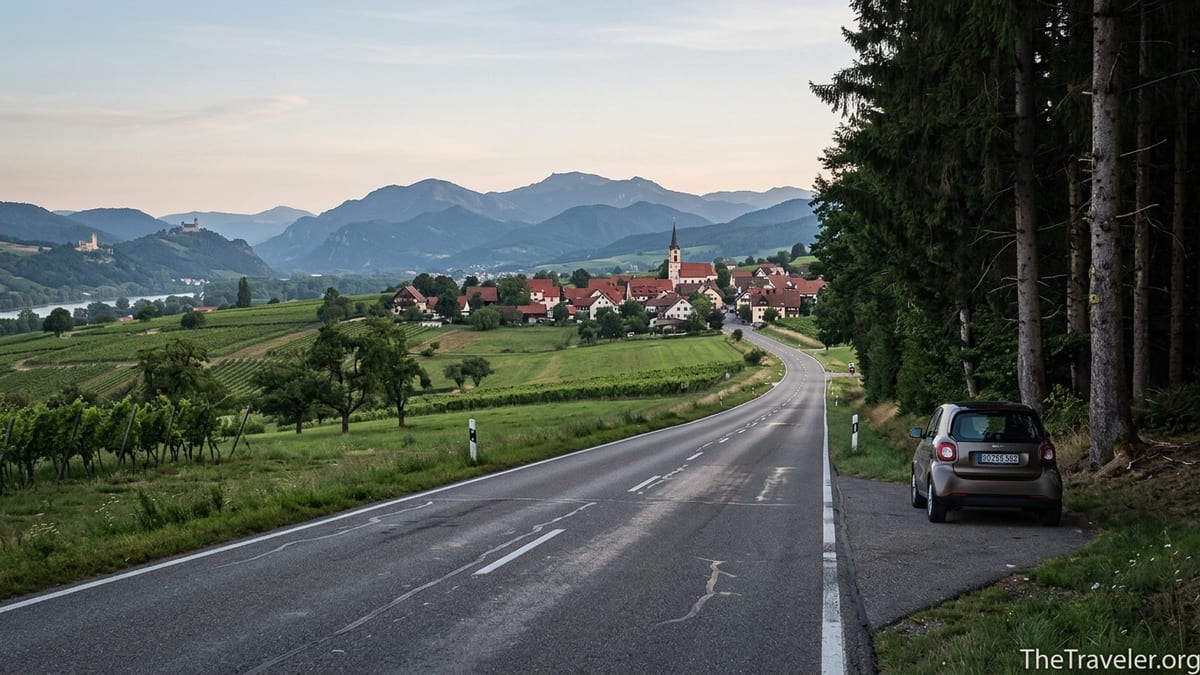
How Germany Road Trips Work in Practice
For most travelers, a Germany road trip starts by flying into Frankfurt or Munich and picking up a rental car at the airport. Frankfurt is ideal if you want to start with the Rhine and Romantic Road; Munich works better if your focus is Bavaria, the Alps and a loop back via the Black Forest. International brands like Sixt, Europcar, Hertz and Avis dominate airport locations, but there are often good deals from local firms in city centers too. For a compact automatic, base rates outside peak summer often start around 40 to 60 euros per day, before insurance, one-way fees and fuel.
Automatic transmission is common but still not guaranteed on the cheapest categories, so you should always filter specifically for “automatic” when booking. Many travelers choose a compact SUV or wagon because German roads to small villages, wineries and mountain trailheads can be narrow, and luggage quickly fills a small hatchback. If you plan to drive into historic old towns such as Rothenburg ob der Tauber or Bamberg, a smaller car makes parking much easier than a large SUV or van.
Most rental cars in Germany already meet emissions requirements for environmental zones, but it is still worth checking that your car has a green emissions sticker if you plan to drive into big cities like Munich, Stuttgart or Frankfurt. When comparing offers, look at the deductible on collision damage coverage as well as the allowance for kilometers. Large chains at the airports usually offer unlimited mileage and can add a second driver at a daily fee; smaller local agencies may have mileage caps but sometimes include a second driver in the base price.
Fuel planning matters because Germany is not cheap at the pump. Prices fluctuate, but in recent years regular gasoline has often hovered around 1.80 to 2.00 euros per liter, which is roughly 7 to 8 euros per US gallon. Many highway rest areas have 24-hour fuel stations that are convenient but usually more expensive than stations in nearby towns. For long days covering the Romantic Road or the Black Forest High Road, it is often worth refueling in a supermarket forecourt or village station just off the main route to save a few euros.
Understanding German Roads, Rules and the Autobahn
Germany’s reputation for rule-based order applies strongly on the roads. On regular rural roads, expect limits of 70 to 100 kilometers per hour, while inside built-up areas the limit is normally 50 kilometers per hour unless posted otherwise. Major multi-lane roads without a central barrier often have 100 to 120 kilometer per hour limits. On many Autobahn sections the famous “no general speed limit” still exists, but even there the recommended speed is 130 kilometers per hour and stretches with construction, curves or dense traffic frequently have fixed limits.
In practice, that means the flow in the right and middle lanes usually runs between 110 and 140 kilometers per hour, with some fast cars occasionally overtaking at 170 or more. The discipline of keeping right except when overtaking is taken seriously and enforced by social pressure and sometimes by police. Before pulling out to pass, you should always check your mirrors carefully, because a car that was a distant dot seconds ago can close the gap very quickly. Overtake, then move back into the right lane when safe rather than cruising indefinitely in the left lane.
On scenic routes such as the Romantic Road or the Schwarzwaldhochstrasse in the Black Forest, you will encounter a mix of local traffic, tour buses and cyclists. Passing through villages every few kilometers forces the pace down, which is part of the charm. Speed cameras in these zones are common, especially at the edge of small towns, where the limit drops abruptly from 100 to 70 or 50 kilometers per hour. The typical visitor experience is less about high speeds and more about comfortable cruising, pulling off for viewpoints and leaving enough slack in the day to explore.
Parking rules are generally clear and signposted. Blue zones with a “Parkscheibe” symbol require you to display a cardboard parking disc, which rental cars in Germany often keep in the glovebox. In old towns like Rothenburg ob der Tauber, Füssen or Cochem, you will usually park in a signed visitor lot just outside the walls or on the riverfront, paying at a machine that accepts coins or card. Hourly rates in smaller towns often range around 1 to 2 euros per hour; bigger cities and underground garages can be more. Always check if a parking ticket needs to be placed on the dashboard and watch for time limits in residential areas labeled for permit holders.
Driving the Romantic Road: Rothenburg to Füssen
The Romantic Road is a themed route that runs roughly 400 to 460 kilometers between Würzburg and Füssen, passing through half-timbered towns, Baroque churches and rolling countryside. Many visitors focus on the southern half, between Rothenburg ob der Tauber and Füssen, because it concentrates the classic images: red-roofed medieval streets, the Harburg Castle above its valley, the pastel facades of Dinkelsbühl, and the alpine backdrop around Neuschwanstein Castle.
A practical two or three day drive might start with an overnight in Rothenburg ob der Tauber. You would park at one of the signed lots outside the walls, walk through the medieval gates to explore the town and maybe join the famous evening night watchman tour. The next morning, you could drive south via Dinkelsbühl for a coffee on the Marktplatz, then continue to Nördlingen, whose intact ring wall can be walked in an hour. From here, drivers usually angle toward Augsburg or Landsberg am Lech for another night, or continue on to Füssen if time is short.
From the Füssen area, the road heads toward Schwangau and the pair of castles, Neuschwanstein and Hohenschwangau, which are among Germany’s busiest attractions. Parking is concentrated in a set of large paid lots at the base of the village, where daily parking often costs around 10 to 15 euros. To avoid crowds and traffic jams, many road trippers try to book castle tickets for early morning and arrive in the village by 8:00 or 8:30 in high season. After your visit, you can either stay another night in Füssen to enjoy the lakeside walking paths or continue toward Garmisch-Partenkirchen and the Bavarian Alps.
Signage for the Romantic Road is generally good, with brown tourist signs reading “Romantische Straße,” but your main navigation should still rely on a GPS app or the car’s built-in system. In summer and on holiday weekends you may encounter school buses, tractors and tour groups, so build in extra time. Many travelers report that the most enjoyable days on the Romantic Road are those where they drive no more than three hours, with leisurely stops for lunch in village Gasthäuser, short walks along riverbanks and unscheduled detours to viewpoints or small castles that catch the eye.
Bavarian Alps and Scenic Loops beyond the Romantic Road
Once you reach Füssen at the southern end of the Romantic Road, it is easy to extend your journey deeper into the Bavarian Alps. One popular circuit is to follow local roads from Füssen to Garmisch-Partenkirchen, then loop around to Mittenwald and the Isar valley before turning north toward Munich. This route threads between lakes such as Staffelsee and Kochelsee, where you can pull into small public parking areas for a shoreline stroll or a swim in warm weather.
The German Alpine Road, which runs east-west along the northern edge of the Alps, intersects nicely with these plans. Sections between Garmisch-Partenkirchen and Berchtesgaden are particularly scenic, though you might choose just a day segment if time is limited. A typical driving day might involve leaving Garmisch after breakfast, taking local roads through Bad Tölz and around Tegernsee, then arriving in the Chiemsee area in the late afternoon. Distances are modest, usually under 200 kilometers, but they feel longer because of slower speeds and frequent views that tempt you to stop.
Road conditions in the Alps are generally excellent, but they can be narrow with tight curves, especially on mountain passes and small detours to trailheads or viewpoints. In winter and early spring, you must check whether your rental comes with winter tires or chains if you plan to drive into higher elevations. Some mountain toll roads and private access roads to alpine hotels charge a small fee at a barrier, usually payable in cash or card. In popular ski towns such as Garmisch or Berchtesgaden, overnight parking at hotels is often included or charged as a daily fee, while public garages near cable car stations usually price by the hour.
From Munich, many travelers either end the trip, returning the car at the airport, or continue west toward Lake Constance and the Black Forest. A practical way to link regions is to drive from Munich to Lindau on Lake Constance in around two and a half hours, then take a half day to wander the island old town before continuing toward the forested hills of Baden-Württemberg. This connection transforms a Romantic Road and Alps itinerary into a full southern Germany loop.
Black Forest by Car: Schwarzwaldhochstrasse and Beyond
The Black Forest covers a broad swath of southwestern Germany, and the classic way to experience it by car is along the Schwarzwaldhochstrasse, also known as the Black Forest High Road. This scenic stretch of the B500 follows the northern ridge from Baden-Baden to Freudenstadt, roughly 60 kilometers of curves, viewpoints and dense evergreen forest. Without stops, you could drive it in an hour and a half, but most visitors take at least half a day to enjoy overlooks at spots like Mummelsee and walks along short forest trails.
As you leave the spa town of Baden-Baden, the road climbs quickly, offering glimpses back toward the Rhine plain. Parking areas along the route are usually clearly marked lay-bys on the right side of the road, often free, with trailheads leading to viewpoints or small lakes. At Mummelsee, for example, there is a cluster of parking areas serving a lakeside hotel, shops and a short loop path around the small mountain lake. It can become busy in peak season and on sunny weekends, so arriving in the early morning or later in the afternoon reduces stress and makes it easier to find a space.
South of Freudenstadt, the B500 continues in separate sections toward Triberg, Titisee and eventually Waldshut on the Swiss border. Many road trippers craft a two or three day Black Forest circuit that starts in Baden-Baden, follows the High Road to Freudenstadt, then heads through towns like Triberg, home to famous cuckoo clock shops and the often-visited waterfalls. From there, drivers commonly continue to Titisee or Schluchsee for lakeside stays, with opportunities to rent rowboats in summer or walk through quiet forest in autumn fog.
Driving in the Black Forest requires a relaxed mindset. The scenery invites frequent stops, but some stretches are narrow, and in winter or during roadworks certain segments of the B500 may have reduced lanes or temporary closures. Local tourism sites and current traffic apps are worth checking the day before, so you can adjust and perhaps take an alternative valley road or delay a planned segment. Even with these adjustments, most people find that a combination of ridge-top views and winding valley roads delivers the quintessential Black Forest atmosphere.
Rhine Valley and Moselle: Castles, Vineyards and River Roads
The Middle Rhine Valley between roughly Bingen and Koblenz is one of Europe’s classic river landscapes, with steep vineyards, castle-topped hills and towns such as Bacharach, Sankt Goar and Boppard strung along the water. For drivers, the main experience is to follow the roads that parallel the river on one bank, then cross on a bridge or ferry to see the other side. Many travelers combine a Rhine drive with a Moselle detour, creating a loop from Frankfurt that feels rich yet manageable in three or four days.
A common pattern is to pick up a rental car in Frankfurt, then drive about an hour to Rüdesheim or Bacharach and base yourself there for a night or two. You would park in a riverside lot or a small hotel garage, then use the car during the day for short excursions. For example, you might drive to Sankt Goar to see the Lorelei rock area, then continue toward Boppard, stopping at roadside lay-bys overlooking the river’s bends. In several towns, there are signposted roads climbing the slopes behind the villages, with viewpoints and parking areas among the vineyards that give panoramic views over the Rhine and trains snaking along the banks.
Linking the Rhine with the Moselle is straightforward via roads that cut across the hills, often taking under an hour. On the Moselle, the drive between Cochem and Bernkastel-Kues is especially scenic, with loops in the river and hillside wineries above small wine villages. Here, speed limits are moderate, and you share the road with local residents, cyclists and occasional tractors pulling trailers of grapes during harvest. Parking in villages often means using municipal lots near the river, where fees are similar to those along the Rhine: modest by big-city standards, but enforced.
Many visitors decide to return their car in Frankfurt at the end of a Rhine or Rhine-plus-Moselle loop, catching an evening flight after a final lunch on a riverfront terrace. Because Frankfurt Airport is a major hub, one-way rental fees within Germany are often relatively small when picking up in a city and dropping at the airport, though it is always wise to confirm charges in advance. Combining the Rhine with the Romantic Road and Black Forest is possible with a week or more, but if you have just five or six days, limiting yourself to one or two regions usually leads to a more relaxed trip.
Sample 7 to 10 Day Road Trip Circuits
To make the most of Germany’s scenic routes without turning your vacation into an endurance test, it helps to visualize realistic day-by-day circuits. A popular seven day loop starting and ending in Frankfurt might look like this in broad strokes. On day one you drive from Frankfurt to the Middle Rhine, stay in Bacharach or Boppard and take a short river cruise or walk among the vineyards. Day two you cross to the Moselle, follow the river between Cochem and Bernkastel-Kues, then overnight near Trier or return toward the Rhine depending on your pace.
From there, day three can be a transfer day south toward the Romantic Road, arriving in Würzburg or Rothenburg ob der Tauber for an afternoon in the old town. Day four is spent driving the Romantic Road segment via Dinkelsbühl and Nördlingen, ending around Augsburg or Landsberg am Lech. On day five you reach Füssen and the castles, with a night there to avoid rushing. Day six is a scenic drive into the Bavarian Alps toward Garmisch-Partenkirchen or Mittenwald. On day seven, you return the car in Munich or Frankfurt, perhaps with a short Autobahn stretch mixed with quieter country roads.
With 10 days or a bit more, you can weave in the Black Forest. One common pattern is to begin in Munich, loop south to Füssen and along part of the German Alpine Road, then drive west via Lake Constance into the Black Forest for two or three nights around Triberg or Titisee. From there, you might follow the B500 north along the High Road to Baden-Baden, then aim toward the Rhine and finally Frankfurt or back to Munich. The key is to cap long driving days at around three to four hours of wheel time, leaving space for castles, walks, winery visits and village cafes.
If you favor slow travel and want fewer one-night stays, you could build a circuit around just three bases. For example, spend three nights on the Rhine, three around Rothenburg and Dinkelsbühl on the Romantic Road, and three in the Black Forest near Titisee. From each base you can fan out on day trips, returning to the same hotel each night. This approach is especially attractive for families with children or anyone who dislikes packing and unpacking, and it works well because distances between many highlights are in the 60 to 150 kilometer range, allowing relaxed day excursions.
When comparing circuits, remember that scenic roads are not fast routes. A 180 kilometer driving day that is mostly Autobahn can feel easy, while 140 kilometers on twisting two lane valley and mountain roads can take most of the day. Looking at your route on a map, note how many small towns you pass, how often you need to cross rivers and whether you are on a major federal road or a minor local road. Planning for generous margins makes it more likely that you will enjoy late afternoon light in a vineyard or forest clearing instead of racing the sunset on an unfamiliar rural road.
The Takeaway
A road trip across Germany’s Romantic Road, Bavarian Alps, Black Forest and Rhine Valley links some of the country’s most evocative images into a single experience: medieval walls at sunset, mist drifting through spruce forests, vineyards spilling down to the water and castles appearing high above the bends of rivers. With good infrastructure and clear rules, it is accessible even to drivers new to European roads, provided you respect speed limits, plan reasonable daily distances and allow space for the landscapes to slow you down.
By choosing practical starting points such as Frankfurt or Munich, booking a suitable rental car with the right transmission and insurance, and structuring your days around two or three hours of actual driving, you can turn a dream of “driving the Romantic Road and beyond” into an enjoyable, stress-resistant reality. Scenic highways like the B500, riverfront roads along the Rhine and Moselle, and the connecting web of country lanes all reward curiosity and flexibility. With a bit of planning and a willingness to explore beyond the main itinerary, a Germany road trip can feel both efficient and deeply personal.
FAQ
Q1. Do I need an international driving permit to drive in Germany?
For most visitors holding a license from the European Union, the United Kingdom, the United States, Canada, Australia and many other countries, a valid home license is accepted in Germany for short stays. An international driving permit can still be helpful as an official translation and is sometimes requested by rental companies, so it is wise to check your rental terms and carry one if it is easy to obtain.
Q2. What is a realistic daily driving distance on a scenic Germany route?
On the Autobahn you can cover 300 kilometers or more in a few hours, but on scenic routes such as the Romantic Road, the Black Forest High Road and river valleys, a comfortable daily distance is often around 150 to 220 kilometers. This allows time for stops in villages, viewpoints and short walks without feeling rushed.
Q3. Is it difficult for first-time visitors to drive on the Autobahn?
Driving on the Autobahn is straightforward if you are comfortable with highway driving and follow a few rules: keep right except when overtaking, respect posted speed limits and be very careful before moving into the left lane, where fast cars can approach quickly. Many travelers find that after an hour they are relaxed, cruising near the recommended 130 kilometers per hour and using the left lane only when necessary.
Q4. How expensive is fuel compared with North America?
Fuel in Germany is typically significantly more expensive than in most parts of North America. While exact prices change, travelers often find that filling a compact rental car costs the equivalent of 80 to 100 US dollars. Factoring this into your budget and choosing a fuel efficient vehicle can help keep overall trip costs under control.
Q5. Can I visit Neuschwanstein Castle and still drive a scenic route the same day?
Yes, but you should plan carefully. Many travelers book an early morning castle entry time, arrive in Schwangau by around 8:00, visit Neuschwanstein and nearby Hohenschwangau, then drive a short scenic leg in the afternoon, such as to Garmisch-Partenkirchen or Mittenwald. Trying to combine a midday castle visit with a long mountain drive often feels rushed.
Q6. Is winter a good time for a Germany road trip?
Winter can be atmospheric, especially in the Black Forest and Bavarian Alps, but driving conditions depend on snow and ice. You should ensure your rental car has winter tires during the cold months, expect shorter daylight hours and be prepared for occasional road closures on higher routes. For first-time drivers in Europe, late spring, summer and early autumn generally provide easier conditions.
Q7. Do I need to reserve parking at hotels in small towns?
Many hotels and guesthouses along the Romantic Road, in the Black Forest and in Rhine and Moselle villages either include a few parking spaces or charge a modest daily fee for a reserved spot. In very compact old towns, spaces can be limited, so it is sensible to check when booking and note whether you will park on-site, in a nearby public lot or in an underground garage.
Q8. Are there toll roads in Germany I should budget for?
Germany does not currently charge passenger cars for using the Autobahn, and most major roads are toll free. There are, however, a few private or local mountain roads and access roads to certain attractions that charge small tolls. In neighboring countries such as Austria and Switzerland, vignettes or highway tolls are common, so if your route crosses borders you should check the rules in each country.
Q9. How far in advance should I book a rental car for summer?
For peak summer months and popular holiday periods, many travelers find that booking a rental car at least two to three months ahead offers the best choice of vehicles and prices, especially if you need an automatic or a larger family car. Booking earlier does not always guarantee the lowest price, but it reduces the risk of limited availability at convenient pick up locations.
Q10. Is it better to use paper maps or a navigation app?
Most drivers rely on smartphone navigation apps or the car’s built in GPS, which work well across Germany. It is still useful to carry a paper map or download offline maps in case of patchy mobile coverage in rural valleys or forests. Having an overview map also helps when you want to adjust your route spontaneously for a scenic detour or to avoid traffic.