


Combining Berlin, Dresden and Leipzig in one eastern Germany itinerary is easier than many travelers expect. High-speed and regional trains link all three cities in as little as 1 to 2 hours, hotels cluster around walkable historic centers, and day trips slot neatly into 5, 7 or 10 days on the ground. The key is deciding how many nights each city deserves and in what order to travel so you are not wasting time doubling back.
How to structure a Berlin–Dresden–Leipzig trip
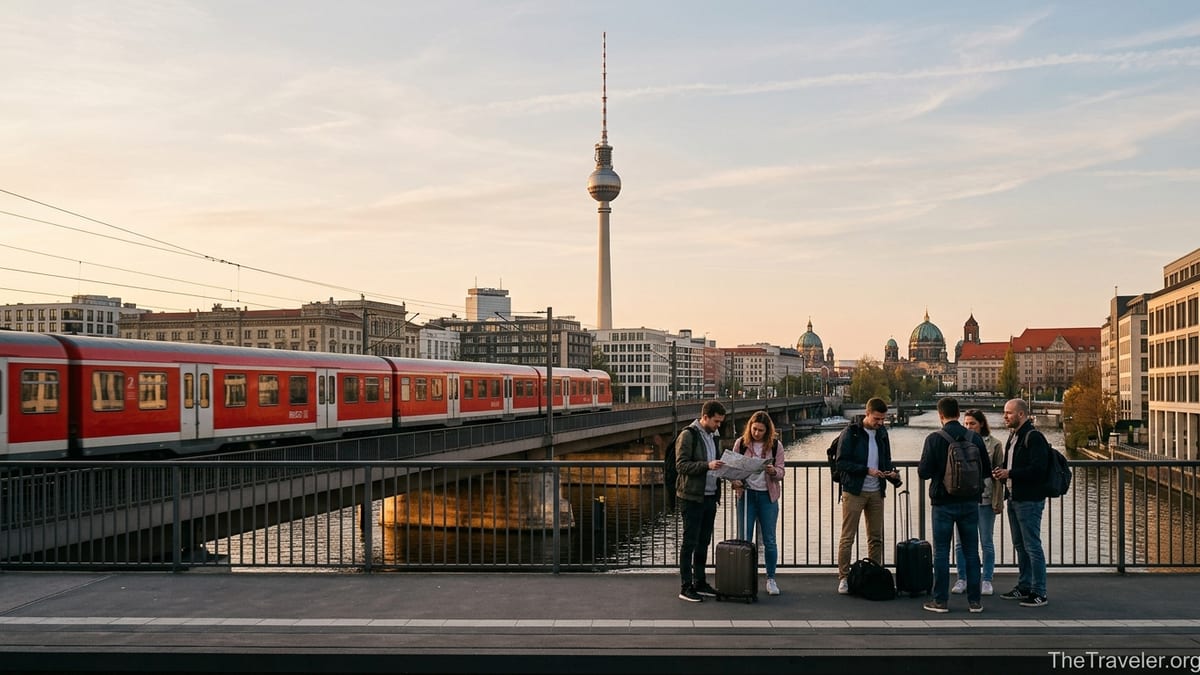
Most travelers will want to fly in and out of Berlin, then loop south to Dresden and west to Leipzig before returning to Berlin or continuing elsewhere in Germany. With current rail timetables, trains between Berlin and Dresden typically take around 2 hours on direct services, while Berlin to Leipzig is often about 1 hour 15 minutes by fast train. Dresden to Leipzig is roughly 1 hour on frequent regional or intercity trains, making it easy to move between the three without renting a car.
For a first visit, Berlin usually deserves the largest share of your time thanks to its spread-out sights and contrasting neighborhoods. Dresden’s baroque Old Town and riverside setting reward at least two nights, especially if you plan to see the major museums or add a day trip into Saxon Switzerland. Leipzig, compact but culturally rich, feels comfortable with 1 or 2 nights depending on your interest in music history, creative districts and its lively bar and café scene.
Price-wise, Berlin hotels in central areas such as Mitte or Prenzlauer Berg often cost more than equivalent properties in Dresden or Leipzig, especially in summer and during big trade fairs. This makes it logical to “front-load” your budget in Berlin, then enjoy slightly lower nightly rates further south. A mid-range double room near Berlin’s Hackescher Markt, for example, can easily run 150 to 220 euros per night in high season, while a similarly rated hotel right by Dresden’s Frauenkirche or Leipzig’s Markt may be closer to 110 to 160 euros for the same dates.
When planning your route, also consider your appetite for museum time versus café-hopping or nature. Berlin and Dresden can be museum-heavy days if you wish. Leipzig, by contrast, often works best as a place for street-level exploring, coffee, and live music, which can be a welcome change of pace in the middle or at the end of a longer trip.
5-day Berlin, Dresden and Leipzig itinerary
With only 5 days, you will need to keep a tight focus. A realistic split is 3 nights in Berlin, 1 night in Dresden and 1 night in Leipzig, traveling in a simple north-to-south arc. This gives you two full days and two evenings in Berlin, plus a focused day and evening each in Dresden and Leipzig before returning to Berlin or flying out of Leipzig or another hub.
Arrive in Berlin on Day 1 and base yourself in Mitte if you want classic first-timer convenience. From a hotel around Friedrichstrasse, Gendarmenmarkt or Hackescher Markt, you can walk to the Brandenburg Gate, Museum Island and Unter den Linden, and you are one or two stops by S-Bahn from Berlin Hauptbahnhof for onward trains. Spend Day 1 on the historic core, then use Day 2 for a mix of the Berlin Wall Memorial, the East Side Gallery and an evening in Kreuzberg or Friedrichshain for canalside or riverside dining.
On Day 3, continue in Berlin or, if you prefer, take a half-day trip to nearby Potsdam, returning in the late afternoon for one last dinner in the city. Most travelers will then take an evening train to Dresden, checking into a hotel in the Altstadt within walking distance of the Zwinger, Frauenkirche and the Elbe riverfront. A late arrival is manageable since the Old Town is compact and well lit, and many restaurants around the Neumarkt stay open until at least 10 pm.
Day 4 is your Dresden day: explore the reconstructed Old Town, visit at least one major museum such as the Old Masters Gallery in the Zwinger, and cross the Augustus Bridge to the Neustadt for dinner in a more bohemian setting. In the evening, take an hour-long train to Leipzig and sleep near Leipzig Hauptbahnhof or around the Markt, which positions you to explore quickly the next morning. Day 5 is then all about Leipzig’s compact center, with time for St. Thomas Church, the Gewandhaus area and the Karli (Karl-Liebknecht-Strasse) strip before you board a late train back to Berlin or head to your next destination.
7-day Eastern Germany route with extra depth
With a week, you gain breathing room. A common pattern is 4 nights in Berlin, 2 in Dresden and 1 in Leipzig, which allows dedicated days for Berlin’s neighborhoods and at least one day trip from Dresden. You start again in Berlin, but instead of staying only in high-demand Mitte, some travelers prefer Prenzlauer Berg for a quieter, residential feel with plenty of cafés and family-friendly restaurants clustered around Kollwitzplatz and Helmholtzplatz. From there, trams link directly to Hackescher Markt, and S-Bahn connections to the main station are straightforward.
Spend your first two days in Berlin on the major historic and cultural sights: the Reichstag, Holocaust Memorial, Museum Island and the Berlin Wall Memorial at Bernauer Strasse. A third day could focus on alternative Berlin: walking from Kreuzberg’s Landwehr Canal across into Neukölln, then east to Friedrichshain for street art and the East Side Gallery. A fourth Berlin day is the natural slot for a day trip to Potsdam or the Spreewald, both popular with current Deutschlandticket users looking for easy rail excursions, before you board an evening train to Dresden.
In Dresden, base yourself for two nights in the Innere Altstadt if you want pure convenience. Hotels around Prager Strasse and the Altmarkt put you within a 10 to 15 minute walk of most key sights and the Elbe. If you prefer a slightly more local atmosphere but still want to walk across the river to Old Town, look at small hotels and guesthouses in the Innere Neustadt close to Albertplatz or along Königstrasse. In this part of the city, tram stops at Albertplatz or Carolaplatz give you quick access back to Dresden Hauptbahnhof.
Use your first Dresden day for the city itself, then dedicate your second to an outing. In 2026, regional trains and S-Bahn services continue to link Dresden with the Elbe Sandstone Mountains and Saxon Switzerland in about 40 to 50 minutes, opening up hiking routes above the Bastei Bridge or boat trips on the Elbe. Alternatively, you can visit nearby Meißen for porcelain history and a smaller, hilltop old town. Return to Dresden in the evening, pick up your bags, and take the roughly 1-hour rail hop to Leipzig for a final overnight and full or half day of exploration before departure.
10-day itinerary with day trips and slower travel
For 10 days, you can slow your pace and explore each city’s surroundings more deeply. A balanced split is 5 nights in Berlin, 3 in Dresden and 2 in Leipzig, typically in that order. This gives you five full days in Berlin, three in and around Dresden and two in Leipzig before your onward journey. The extra time removes the need for rushed museum visits and opens up less obvious excursions.
In Berlin, consider dividing your base into two different neighborhoods if you enjoy variety. For example, start with three nights in Mitte or Prenzlauer Berg to cover the core historic and cultural sights, then shift to Kreuzberg or Friedrichshain for two nights focused on food, nightlife and canal or riverside walks. Hotel rates in Kreuzberg and Friedrichshain are sometimes slightly lower than in the most central parts of Mitte, and you gain a more local, evening-oriented atmosphere.
Use your Berlin days to layer experiences: one for Bundestag and Unter den Linden, one for Museum Island and the Humboldt Forum, one for contemporary galleries and food markets, and one for a slower walk along the Landwehr Canal or Tempelhofer Feld. Day trips from Berlin can also expand beyond Potsdam and the Spreewald; current rail guides regularly mention destinations such as Lutherstadt Wittenberg or Oranienburg as easy 1-day outings by regional or ICE trains, all reachable in roughly 30 to 60 minutes by fast connections.
With three nights in Dresden, you can devote one full day to the Old Town, one to a full-day excursion into Saxon Switzerland or Meißen, and one to exploring the Neustadt and Elbe meadows at a relaxed pace. On your travel day to Leipzig, schedule a midday or late-afternoon train so you can still enjoy a dinner in Leipzig’s Barfußgässchen lane or along Karl-Liebknecht-Strasse, then use your remaining full day in Leipzig for museums, church visits, and perhaps a side trip to the lakes south of the city if the weather cooperates.
Choosing the right base in Berlin
Where you stay in Berlin can shape your experience as much as your choice of sights. Because the city has no single, traditional center, it is useful to pick a neighborhood that matches your style and minimizes day-to-day transport time. For first-time visitors who want easy access to museums and famous landmarks, Mitte is the sensible choice. Areas around Friedrichstrasse, Unter den Linden and Hackescher Markt combine good U-Bahn and S-Bahn connections with walkability to Museum Island, the Brandenburg Gate and the Reichstag. Hotels here tend to be modern and business-friendly, and prices often run at the upper end of the city average.
If you value quieter streets and a residential feel, Prenzlauer Berg remains a favorite. The district’s tree-lined avenues north of the center feature renovated 19th-century apartment blocks, playgrounds and a high concentration of cafés and brunch spots around Kollwitzplatz and Helmholtzplatz. Travelers with young children often appreciate that the area feels safe and relaxed even late in the evening, and tram lines such as the M1 connect directly to central nodes like Hackescher Markt, keeping journey times short.
For nightlife, independent dining and a more alternative atmosphere, Kreuzberg and Friedrichshain are strong bases. Kreuzberg’s streets around the Landwehr Canal and Görlitzer Park brim with Turkish eateries, cocktail bars and small music venues, while Friedrichshain centers around Boxhagener Platz and the eastern end of the East Side Gallery. Many younger visitors choose mid-range hotels or serviced apartments here because prices are often a little lower than in Mitte, and the areas feel alive past midnight without being purely touristy.
Travelers who prefer a classic European boulevard feel sometimes opt for Charlottenburg, west of the Tiergarten, where hotels line avenues close to the Zoologischer Garten station and the Kurfürstendamm shopping street. This area works well if you are arriving or leaving via Berlin’s western rail hubs or Tegel’s former replacement routes and want good access to long-distance trains from Zoologischer Garten or Berlin Hauptbahnhof without staying directly next to the main station.
Where to stay in Dresden and Leipzig
Dresden’s main decision is between Old Town convenience and New Town character. The Innere Altstadt south of the Elbe is the postcard district, with the Frauenkirche, Zwinger Palace, Semperoper and numerous baroque squares clustered within a small radius. Many hotels here are modern structures rebuilt after the Second World War but offer spacious rooms, efficient air conditioning for summer visits and buffet breakfasts popular with tour groups. From a hotel off the Altmarkt or Neumarkt, almost everything you are likely to see on a short trip lies within a 10 to 15 minute walk.
Across the river, the Neustadt has two distinct personalities. The Innere Neustadt around Königstrasse and Albertplatz features elegant baroque townhouses, quieter streets and boutique hotels ideal for couples who want charm without being in the thick of the Old Town crowds. Further north, the Outer Neustadt is Dresden’s bohemian quarter, full of bars, independent shops and street art. Budget guesthouses and small hotels here usually cost less than in the Altstadt, and trams from Albertplatz or Bautzner Strasse run directly back towards the river and main station.
Leipzig is more compact, so the choice of base is simpler. Staying in or just outside the ring road that encircles the historic center allows you to walk to St. Thomas Church, the Old Town Hall, the Gewandhaus and the main shopping arcades in minutes. Hotels around the Hauptbahnhof are particularly convenient if you have early trains, and the station building itself houses one of Germany’s larger station malls, which is useful for last-minute snacks or supplies.
Travelers seeking a local neighborhood feel in Leipzig often gravitate towards the Südvorstadt, especially around Karl-Liebknecht-Strasse. This area has a dense mix of cafés, vegetarian-friendly restaurants and bars, popular with students and younger professionals. You can stay here in a guesthouse or small design hotel and ride a short tram or S-Bahn back into the old town in about 10 minutes, combining quieter nights with easy access to the sights.
Train logistics and ticket tips
Trains tie this route together, and understanding the basic options will save you both time and money. On the main Berlin to Dresden and Berlin to Leipzig corridors, high-speed or fast intercity trains are the most convenient, typically taking about 1 hour 15 minutes between Berlin and Leipzig and roughly 2 hours between Berlin and Dresden on direct services. These trains usually require or strongly recommend seat reservations during peak travel dates such as school holidays, Christmas markets season and major trade fairs.
Regional trains between Dresden and Leipzig run frequently and are perfectly comfortable for the roughly 1-hour journey. These services are often included in regional day passes or the nationwide flat-fare ticket products that have replaced earlier discount schemes, making it straightforward to keep costs predictable. Because travel products and pricing change often, it is worth checking the latest offers a few weeks before your trip, especially if you plan to use a combination of long-distance and regional services across several days.
Germany’s main rail booking platforms allow you to compare long-distance, intercity and regional services on one screen and often highlight savings if you commit to a specific train time. For instance, booking a Berlin to Dresden intercity departure several weeks in advance can sometimes cut the fare substantially compared with buying a flexible ticket on the day. If you prefer spontaneity and want to keep your schedule open for weather changes or last-minute day trips, a regional day ticket or nationwide monthly product might suit you better, even if the point-to-point fare is not the absolute lowest.
When planning connections, avoid scheduling tight transfers of less than 15 minutes if you are carrying heavy luggage or traveling with children. Although the Berlin, Dresden and Leipzig stations all have escalators, lifts and clear signage, platforms can be long and busy, especially at Berlin Hauptbahnhof. Build in a buffer so that a minor delay or a crowded elevator does not cause you to miss a key onward train or a reserved seat segment.
Suggested budgets and seasonal considerations
While exact costs vary widely by travel style, it is possible to outline approximate daily budgets for a combined Berlin, Dresden and Leipzig itinerary. Mid-range travelers might expect to spend around 150 to 220 euros per night for a double room in central Berlin, 110 to 160 euros in central Dresden and similar or slightly less in Leipzig, particularly outside major trade show dates. Daily food costs for a mix of café breakfasts, casual lunches and sit-down dinners generally run around 40 to 70 euros per person, depending on how often you choose multi-course meals or specialty coffee and cocktails.
Rail travel between the three cities is relatively affordable by Western European standards. An advance-purchase long-distance ticket between Berlin and either Dresden or Leipzig can sometimes be found in the 20 to 40 euro range per person each way, while regional passes that cover multiple journeys in a day can be good value for pairs or families planning side excursions. Urban transport tickets in each city, such as day passes for U-Bahn, S-Bahn and trams, typically add 8 to 12 euros per person per day to the budget, though walking and occasional single tickets can reduce that if your hotel is centrally located.
Seasonally, the most popular months for this itinerary are May through September, when outdoor cafés, riverbanks and parks are at their best. July and August can bring higher hotel rates and more crowds at headline sights, but Berlin and Leipzig usually absorb summer visitors well thanks to their size. Dresden feels noticeably busier during its famed Striezelmarkt Christmas market, which typically runs from late November until Christmas Eve, drawing coach tours and raising room rates across the city center. In that period, Leipzig also hosts Christmas markets around the Markt, and Berlin’s major squares see festive stalls and skating rinks.
Shoulder seasons in April, early May, October and early November can be excellent times to visit. You are more likely to find moderate prices on centrally located hotels and quieter museum galleries while still enjoying comfortable walking weather. Winter, especially January and February, brings shorter opening hours for some attractions and requires warmer clothing, but it can also be the cheapest time for city-center accommodation and train tickets, which appeals to budget-minded travelers comfortable with colder conditions.
The Takeaway
A well-planned Berlin, Dresden and Leipzig itinerary delivers a concentrated look at eastern Germany’s history, culture and everyday life without overloading you with transit time. Fast rail links keep journeys between cities to around 1 to 2 hours, and compact historic centers in Dresden and Leipzig balance Berlin’s sprawl. Whether you have 5, 7 or 10 days, allocating more nights to Berlin and at least one night each to Dresden and Leipzig ensures you see more than just station platforms and postcard squares.
For 5 days, aim for a brisk 3-1-1 split, using Berlin as your arrival and departure hub. At 7 days, a 4-2-1 pattern provides space for at least one day trip from Dresden and a slower day in Leipzig. With 10 days, spreading your stay to 5-3-2 opens the door to neighborhood-hopping in Berlin, an outing into Saxon Switzerland and relaxed café time in all three cities. Combine realistic nightly budgets, thoughtful hotel bases and flexible rail tickets, and you will have a route that feels coherent rather than rushed.
Ultimately, the best itinerary is the one that fits your interests. Museum-focused travelers might linger in Berlin’s Museum Island and Dresden’s art collections, while others may prioritize Leipzig’s music heritage or the hiking trails along the Elbe. Use the suggested frameworks here as a starting point, then adjust the mix of nights, neighborhoods and day trips to build an eastern Germany journey that feels both efficient and deeply satisfying.
FAQ
Q1. Is it better to start this itinerary in Berlin or Dresden?
Starting in Berlin usually works best because more international flights and long-distance trains arrive there, and you can adjust to the time zone before heading south.
Q2. How many nights should I spend in Berlin compared with Dresden and Leipzig?
On most trips, plan at least 3 to 5 nights in Berlin, 2 to 3 in Dresden and 1 to 2 in Leipzig, adjusting up or down based on your interests.
Q3. Do I need to rent a car for a Berlin–Dresden–Leipzig itinerary?
No. Fast intercity and regional trains connect all three cities in 1 to 2 hours, and local transport networks are extensive, so a car is usually unnecessary.
Q4. Which Berlin neighborhood is best for first-time visitors?
Mitte is usually the most convenient for first-timers, with easy walking access to major sights and good U-Bahn and S-Bahn connections to other areas.
Q5. Is Dresden walkable if I stay in the Old Town?
Yes. From a hotel in the Innere Altstadt, most major sights, the riverfront and many restaurants are within a 10 to 15 minute walk, even with children.
Q6. Can I visit Dresden or Leipzig as a day trip from Berlin instead of staying overnight?
It is possible, especially with early trains, but an overnight stay in each city gives you a more relaxed experience and time for evening walks and dinners.
Q7. How far in advance should I book train tickets between the cities?
Booking 2 to 8 weeks ahead usually offers better prices and more seat options on long-distance trains, especially during summer or Christmas market season.
Q8. Are these cities suitable for families with children?
Yes. All three have parks, riverfront areas, child-friendly museums and reliable public transport, and neighborhoods like Prenzlauer Berg and Dresden’s Altstadt work especially well for families.
Q9. What is the best time of year to do this itinerary?
Late spring and early autumn offer pleasant temperatures and moderate crowds, while December is popular for Christmas markets, particularly in Dresden.
Q10. Is English widely spoken in Berlin, Dresden and Leipzig?
In hotels, restaurants in central areas and at train stations, staff usually speak at least basic English, though learning a few German phrases is always appreciated.