


Eastern Germany rewards travelers who slow down enough to ride its riverside rail lines, wander palace parks and linger in rebuilt baroque squares. With efficient trains, compact historic centers and striking nature in Saxon Switzerland, it is one of the easiest regions in Europe to explore on a one or two week itinerary built around Berlin, Potsdam, Leipzig, Dresden and the Elbe sandstone cliffs.
How to Use This Eastern Germany Itinerary Guide
This guide is built for independent travelers who want realistic routes rather than ambitious wish lists. All four sample itineraries use public transport as the backbone, with optional rental car sections if you prefer to drive. Travel times reflect typical regional or intercity trains in 2025 and 2026, such as the Berlin to Dresden line which usually takes around two to two and a half hours depending on the service and stops. You can buy tickets on the Deutsche Bahn app or from station machines, which display journey times clearly before you pay.
The focus is on a core loop connecting Berlin, Potsdam, Leipzig, Dresden and Saxon Switzerland, with optional detours into Saxony Anhalt for towns like Wittenberg or Quedlinburg. Overnight allocations are intentionally modest: you will rarely change beds on consecutive nights unless the distance is short or you are using a city as a base for day trips. This minimizes the packing, unpacking and station transfers that can quietly consume a third of your holiday.
For prices, expect regional train day tickets within one state to start in the low double digits per person, and longer intercity hops between Berlin, Leipzig and Dresden to range from roughly the cost of a casual restaurant meal to a slightly higher amount if you do not book in advance. City hotels in central Berlin or Dresden with mid range comfort often fall somewhere in the low to mid three figure range per night in high season, while guesthouses in smaller towns near Saxon Switzerland can be significantly cheaper.
Each itinerary section below explains where to sleep, how long the transfers take in practice, and which days are best kept flexible in case of rain, rail strikes or simply the urge to linger on a riverside terrace.
Eastern Germany in 5 Days: Berlin, Potsdam and a Taste of Dresden
A five day trip is short for the region, but you can still experience the contrast between Berlin’s layered capital, Potsdam’s palaces and Dresden’s baroque skyline. Plan three nights in Berlin with a side trip to Potsdam, followed by two nights in Dresden. This keeps the one intercity transfer to a manageable distance and allows at least one full day in each major city without heavy luggage.
Begin with arrival in Berlin. Base yourself near the central station, Mitte or Prenzlauer Berg so that early morning trains and late evening walks remain straightforward. Spend your first full day on Berlin’s headline sights such as the Brandenburg Gate, Museum Island and the East Side Gallery. On your second full day, ride the S Bahn or a regional train to Potsdam. Typical journeys from Berlin Hauptbahnhof to Potsdam Hauptbahnhof take around 30 minutes on regional trains and a little longer on the S Bahn, with trains running at least every 20 to 30 minutes through most of the day. Once there, you can walk or take a short tram ride to Sanssouci Park, where entry to the gardens is free and palace tickets are sold in timed slots at on site counters.
On day three, travel from Berlin to Dresden. Direct trains usually take roughly two to two and a half hours, with some slightly faster intercity services and some slower regional combinations. Aim for a mid morning departure so that you can check into a hotel near Dresden’s Altstadt and still have the afternoon to explore the rebuilt Frauenkirche, Zwinger and riverfront terraces. Day four is your only full day in Dresden on this itinerary, so keep it compact: museums and churches in the morning, followed by a walk along the Elbe past pastel villas in the afternoon. Day five is your departure day; if your onward train or flight leaves later in the day you can add a morning visit to the Green Vault or a final stroll across the Augustus Bridge before heading out.
Seven Days: Adding Leipzig and Saxon Switzerland
With a full week, you can add both Leipzig and a first glimpse of Saxon Switzerland National Park. A logical pattern is three nights in Berlin, two nights in Dresden, and two nights in Leipzig, with one of the Dresden days used for a day trip into the national park. This sequence keeps your longest individual transfer to roughly two and a half hours while giving you time to explore each city on foot.
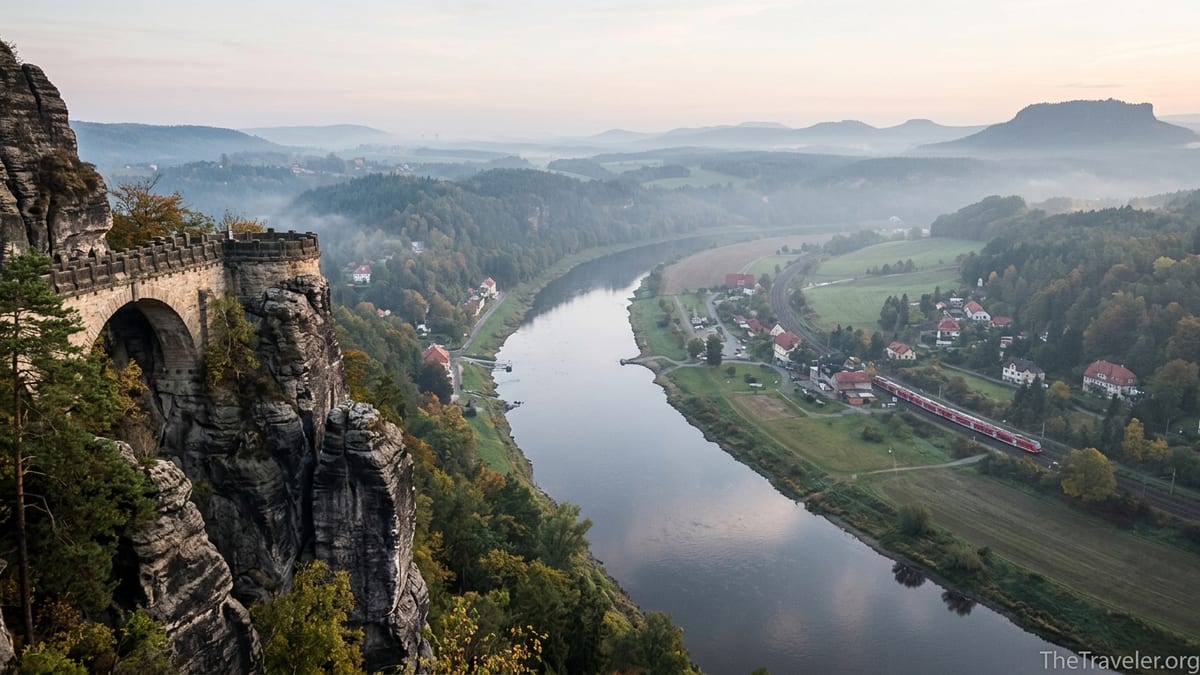
After the Berlin and Potsdam days described earlier, head directly from Berlin to Dresden on day three or four. Use your arrival day for the Old Town, then dedicate your next full day to Saxon Switzerland. From Dresden Hauptbahnhof, frequent suburban trains follow the Elbe valley to towns like Bad Schandau or Rathen, often taking between 35 and 50 minutes depending on the exact destination and the number of stops. Many visitors choose Rathen, cross the short ferry over the Elbe and hike up to the Bastei Bridge for sweeping views of the sandstone cliffs and river bends. Others base themselves at Bad Schandau, which lies further along the line and offers additional marked trails deeper into the park.
Return to Dresden in the evening and overnight again in the city. On the following day, take the train from Dresden to Leipzig, which generally takes a little over an hour on direct intercity services, sometimes slightly longer on regional trains. Leipzig’s Hauptbahnhof is one of Europe’s largest terminal stations, and many mid range hotels sit within a ten to fifteen minute walk. Spend the afternoon exploring the compact Old Town, including the Thomaskirche associated with Johann Sebastian Bach and the arcaded passages filled with cafes and bookstores.
Use your last full day in Leipzig for either city sights or a half day excursion to the lakes south of the city, easily reached by S Bahn and tram. If you are departing internationally from Berlin, trains from Leipzig to Berlin Hauptbahnhof typically take around an hour and fifteen minutes to an hour and a half depending on the category of service you choose. Because of this short hop, many travelers leave Leipzig after breakfast and still make midday or afternoon flights from Berlin Brandenburg Airport with time to spare.
Ten Days: A Classic Loop with Optional Saxony Anhalt
A ten day itinerary allows you to slow the pace and add an overnight near Saxon Switzerland or a detour into Saxony Anhalt. One effective plan is to spend three nights in Berlin, one night in Leipzig, three nights in Dresden or Dresden plus the national park, and up to three nights for optional extras such as Wittenberg, Meissen or Quedlinburg.
Start with three nights in Berlin, using one day for Potsdam as before. On day four, take the relatively short train ride to Leipzig, with most direct connections taking around an hour and a quarter. One night in Leipzig is enough to sample the musical heritage and lively bar scene near Karl Liebknecht Strasse, particularly if you arrive by midday. If you prefer slower travel, you can extend Leipzig to two nights and trim a night elsewhere.
From Leipzig, continue to Dresden on day five. Direct trains usually take between one hour and one hour and fifteen minutes. On arrival, focus on the riverfront and Old Town. Day six can be devoted either to more of Dresden’s museums and alternative neighborhoods like the Neustadt, or to a relaxed half day in Meissen, which lies about half an hour away by regional train. Meissen’s hillside old town, porcelain museum and castle make for an easy, compact excursion that fits comfortably between breakfast and dinner back in Dresden.
Day seven and eight are best spent in or around Saxon Switzerland. You can either continue to base yourself in Dresden and take repeat day trips into the park, or shift your base to Bad Schandau, which you can reach from Dresden by train in roughly 45 minutes. Staying in the park area reduces daily travel time and allows early morning or evening walks when the Bastei and other viewpoints are quieter. A common pattern is one day centered on the Bastei and Rathen area, and another on routes around Schrammsteine or the Kirnitzschtal, reached by local buses and a historic tram.
For your final two or three days, consider Saxony Anhalt. From Dresden or Leipzig you can reach Lutherstadt Wittenberg in approximately one and a half to two hours by regional or intercity rail, making it feasible as either a day trip or an overnight stop between Dresden and Berlin. The town’s compact center includes the Castle Church associated with the Reformation and several small museums. Quedlinburg, a UNESCO listed town with timber framed streets, usually requires a change of trains and a total travel time of several hours from the main cities, so it fits best into a ten day or longer itinerary where you can justify at least one overnight stay rather than rushing in and out the same day.
Fourteen Days: Deep Dive with Flexible Days and Side Trips
With two full weeks, you can combine all the elements above into a relaxed loop that adds breathing space, recovery days and room for spontaneous side trips. One logical allocation is four nights in Berlin, two nights in Leipzig, four nights in Dresden including Saxon Switzerland, and four nights split among Potsdam, Wittenberg and a smaller town such as Quedlinburg or Görlitz.
Use the first four nights in Berlin not only for the big landmarks but also for neighborhood exploration in Kreuzberg, Neukölln and Charlottenburg. A two week stay allows you to spend an afternoon in a lakeside lido on the city outskirts or to visit smaller museums without sacrificing headline sights. You can still fit in a full day in Potsdam as described earlier, or even a second day focused on less visited corners like the New Garden, Cecilienhof and Glienicke Bridge.
From Berlin, travel to Leipzig and spend two or three nights there. In addition to the central churches and passages, a longer stay lets you visit the Monument to the Battle of the Nations by tram, explore the former cotton mill arts complex at Spinnerei or rent a kayak or paddleboard on the city’s tree lined canals and nearby lakes when the weather cooperates. Prices for these activities vary, but rentals for a couple of hours on the water generally cost less than a typical restaurant dinner for two, making them accessible add ons to a longer trip.
Continue to Dresden for at least four nights, and consider renting an apartment or guesthouse room if staying that long. You can intersperse full days in Saxon Switzerland with easier city days to avoid fatigue on consecutive hikes. A typical pattern might be city sightseeing on day one, a Bastei focused hike on day two, museums and cafes on day three, and a second national park day exploring a different section on day four. Because the trains from Dresden toward Bad Schandau and other park gateways run regularly through the day, you can start hikes later in the morning after a relaxed breakfast and still return in time for dinner along Dresden’s riverside terraces.
The remaining days can be reserved for Saxony Anhalt or other smaller towns. You might travel from Dresden or Leipzig to Wittenberg for one night, then continue to a place like Quedlinburg or Naumburg an der Saale, or you might stay longer in Potsdam itself, using it as a quieter base with easy rail access to Berlin. Given the frequency and relative affordability of regional trains across the region, you can often decide these final stops just a few days in advance based on weather and energy levels rather than strictly locking every overnight weeks ahead of time.
Practical Rail Logistics and Ticket Tips
Eastern Germany’s rail network is dense, and most of the journeys in these itineraries can be completed using a mix of regional and intercity trains. For example, Berlin to Potsdam is usually around half an hour on a regional line or slightly longer on an S Bahn service, with departures running many times per hour in daytime. Berlin to Leipzig commonly takes about an hour and a quarter on faster trains, and Berlin to Dresden typically falls in the two to two and a half hour range depending on the route and intermediate stops.
Ticketing can seem complex at first because of overlapping regional offers, city transit zones and discount passes. As a rule of thumb, if you plan only one intercity trip on a particular day, a point to point ticket booked in advance may be cheapest. If you intend to string together several regional journeys within one federal state or association area, such as day tripping from Dresden to different Saxon Switzerland gateways, a regional day ticket that covers unlimited journeys within that day often provides better value. Local transport apps and ticket machines usually present these as specific named offers with a clear validity map on screen, which helps you avoid accidentally using a ticket that is valid only within part of a route.
In cities, public transport zone tickets are an important detail. Berlin and Potsdam fall across several tariff zones, and some visitors inadvertently buy an inner city ticket but ride a train beyond its boundary to Potsdam. Inspectors on regional trains do conduct checks and can issue on the spot fines that often cost the same as or more than a nice dinner in a mid range restaurant. To avoid this, always confirm that your ticket explicitly includes the zones or stations you intend to use before boarding, especially on day trips that cross from one urban area into another.
Seat reservations are generally optional on German trains except for some long distance international services, but making one can be worthwhile on popular Friday or Sunday departures between Berlin, Leipzig and Dresden. The cost is usually modest compared with the ticket price and can spare you from standing or searching for seats with luggage. For regional trains within Saxon Switzerland, however, reservations are typically not available; instead, aim for earlier departures on sunny weekends, when hikers crowd the most scenic routes.
Where to Base Yourself: Neighborhoods and Overnights
Choosing the right overnight base shapes how restful your itinerary feels. In Berlin, many travelers balance access to the Hauptbahnhof with neighborhood character by staying in Mitte, Prenzlauer Berg or near Friedrichstrasse. These areas offer easy S Bahn links to Potsdam and the airports, plus short walks to Museum Island, Hackescher Markt and the government quarter. Rooms in these central districts cost more than in outlying neighborhoods, but you save transit time each morning and evening, which matters on a tight five or seven day itinerary.
In Leipzig, a central hotel or guesthouse near the Hauptbahnhof or Augustusplatz works well for one or two nights. The Old Town area is compact, and most key sights are accessible on foot within 15 minutes. Staying near the station also simplifies early departures to Dresden or Berlin and allows you to pop back to your room during the day if you are traveling in summer and need a rest in the heat.
Dresden presents a choice between the atmospheric but quieter Altstadt and the livelier Neustadt across the river. For first time visitors focused on baroque architecture and quick access to trains, the Altstadt is usually more convenient, with many hotels within walking distance of both Hauptbahnhof and the major museums. If you are staying four nights or more and enjoy nightlife, consider splitting your time, with a couple of nights in the Neustadt for its cafes, bars and street art before switching to an Altstadt hotel for early morning rail departures and pre flight packing.
For Saxon Switzerland, base decisions depend on how intensively you plan to hike. Bad Schandau is a classic choice, offering a mix of hotels, guesthouses and spa facilities within walking distance of the station and riverfront. Smaller places like Rathen, Königstein or Pirna are quieter and may have limited evening dining choices but sit closer to certain trailheads. If you prefer the flexibility to head into the park only on the best weather days, staying in Dresden and day tripping out allows you to switch quickly between city culture and nature without changing accommodations.
FAQ
Q1. Is it realistic to visit Berlin, Leipzig, Dresden and Saxon Switzerland in just five days?
It is technically possible but feels rushed. A five day trip works best if you focus on Berlin, include a day trip to Potsdam and limit yourself to one additional city, usually Dresden with one full day on the ground.
Q2. How many nights should I spend in Saxon Switzerland National Park?
If you enjoy hiking, two to three nights in or near the park provide a good balance of trails and rest days. Many travelers base themselves in Dresden and take one or two day trips, but staying in Bad Schandau or Rathen lets you start walks earlier and avoid the busiest midday hours.
Q3. Do I need to rent a car for this Eastern Germany itinerary?
No, you can complete all of the routes described using trains, S Bahn and local buses. A car can be helpful for reaching smaller Saxony Anhalt towns or remote trailheads, but for Berlin, Potsdam, Leipzig, Dresden and the main Saxon Switzerland gateways, public transport is usually faster and less stressful.
Q4. What is the best time of year to follow these itineraries?
Late spring and early autumn are ideal, typically from May to June and September to early October. Temperatures are usually mild, outdoor cafes operate long hours, and hiking in Saxon Switzerland is comfortable. High summer can be hot in city centers and crowded on popular viewpoints like the Bastei.
Q5. Are train tickets in Eastern Germany expensive compared with renting a car?
For most travelers, regional rail passes and advance purchase tickets make train travel competitive with or cheaper than a rental car when you factor in fuel, parking and tolls. Solo travelers in particular often find rail more economical, while groups of three or four may see smaller price differences and choose based on convenience.
Q6. Can I use Berlin as a base for day trips to both Potsdam and Dresden?
Berlin works very well for Potsdam, which is only about half an hour away by regional train. Dresden, however, is usually two to two and a half hours each way, making it a long day trip. You can do it if necessary, but staying at least one night in Dresden is more relaxing and lets you see the city after day trippers leave.
Q7. Is Saxon Switzerland suitable for beginner hikers?
Yes, many marked trails near Rathen, Bastei and Bad Schandau are manageable for people with average fitness and sturdy shoes. Paths can be steep or rocky in places, so a basic level of mobility is necessary, but you do not need technical climbing experience for the classic routes described in this guide.
Q8. How far in advance should I book accommodation in places like Dresden and Bad Schandau?
For peak travel periods such as school holidays and major festivals, booking several months ahead is wise, especially in smaller towns with limited rooms. In shoulder seasons, you can often find suitable mid range hotels a few weeks out, though booking earlier still gives you more choice near stations and riverfronts.
Q9. Is it easy to visit Saxony Anhalt towns like Wittenberg as day trips?
Yes, towns such as Lutherstadt Wittenberg are well connected by regional and intercity trains, often with travel times of around one and a half to two hours from Berlin, Leipzig or Dresden. This makes them realistic day trips, though staying overnight lets you enjoy quieter evenings once tour groups depart.
Q10. Do I need to speak German to use trains and buses on these routes?
No, many station signs, ticket machines and onboard announcements in major cities provide information in both German and English. Downloading a translation app and learning a few basic phrases is still helpful, especially in smaller towns and when asking for directions or assistance from staff.