

Eastern Germany offers a compact mix of world-class cities, atmospheric historic towns and easy-to-reach nature, all connected by efficient rail lines and reasonably priced regional tickets. Deciding where to spend limited days can be challenging, especially if you are choosing between Berlin, Dresden, Leipzig, Potsdam, Görlitz, Meissen, the Spreewald wetlands, Saxon Switzerland National Park, Magdeburg and a handful of smaller historic towns. This guide compares these destinations with concrete examples of what you will actually experience on the ground, helping couples, families and first-time visitors shape a realistic and rewarding itinerary.
How to Structure a Trip Through Eastern Germany
Most international visitors arrive via Berlin, which makes a natural base for the first three or four nights. From there, fast ICE and IC trains reach Dresden in roughly two hours and Leipzig in about 75 minutes, with advance tickets on Deutsche Bahn often available from around 20 to 30 euros per person in second class if booked early. Because distances are short, many travelers choose one major city such as Berlin or Dresden, then add two or three satellite destinations like Potsdam, Meissen or Saxon Switzerland as day trips.
For couples interested in culture and nightlife, a common pattern is four nights in Berlin, two in Dresden and two in Leipzig, using regional day tickets for side trips. Families often slow this pace, spending more time in just two hubs to avoid frequent hotel changes. For example, a family might stay a full week in Berlin with one day trip each to Potsdam and the Spreewald, followed by three nights in Saxon Switzerland to mix castles and easy hikes. Because regional trains generally allow children under a certain age to travel free or discounted when accompanied by parents, it is worth checking current family rules when you buy Länder-Tickets or the Deutschlandticket.
Budget also shapes the itinerary. Berlin and Leipzig offer wide ranges of hostel and mid-range hotel options, with double rooms in well reviewed chain hotels often starting around 80 to 120 euros per night outside major trade fairs. Dresden and smaller Saxon towns can be slightly cheaper, especially if you stay in guesthouses a tram ride from the center. Nature destinations like the Elbe Sandstone Mountains around Saxon Switzerland often combine simple pensions, hikers’ inns and holiday apartments that suit families or small groups prepared to self cater.
If you are unsure where to focus, think in themes. Berlin is strongest for big-city energy and modern history, Dresden for Baroque riverfront beauty and day trips, Leipzig for creative culture, Potsdam and Meissen for palaces and small-town charm, Spreewald and Saxon Switzerland for distinctive landscapes, Görlitz and other historic towns for atmospheric architecture, and Magdeburg as a pleasant, less touristed city on the Elbe with solid rail connections.
Berlin: Urban Energy and Big-Picture History
Berlin remains the essential gateway to Eastern Germany, particularly for travelers interested in Cold War history, museums and a cosmopolitan restaurant scene. The city’s Museum Island in the center brings together several major collections, including the Neues Museum and the Altes Museum. A day ticket for the Museum Island museums is typically priced in the low to mid 20 euro range per adult, while single museum tickets are usually around 12 to 14 euros depending on the institution, so culture-focused visitors often find the day pass good value if they plan to see at least two museums in one day.
For couples, classic combinations include a morning walking from the Brandenburg Gate along Unter den Linden, an afternoon in the museums and an evening in neighborhoods like Kreuzberg or Neukölln, where you will find small wine bars, Turkish restaurants and contemporary bistros in converted industrial spaces. Families might gravitate toward the German Museum of Technology for hands-on exhibits, the Berlin Zoo near Zoologischer Garten, and boat cruises on the Spree that last around one hour and give a gentle overview of the central sights without exhausting younger children.
Berlin also works well as a logistical hub. The central station, Berlin Hauptbahnhof, has frequent departures to Dresden, Leipzig and Magdeburg, and you can reach Potsdam with a local S Bahn ride in about 30 to 40 minutes. If you buy a Berlin WelcomeCard or similar city pass, you will typically get unlimited public transport in zones AB or ABC for 48 to 72 hours plus discounts at major attractions, which can trim costs for visitors planning several museum visits and daily transit use.
In terms of atmosphere, Berlin feels sprawling and informal, with many former East Berlin districts such as Friedrichshain and Prenzlauer Berg now filled with renovated Altbau buildings, indie shops and cafes. Travelers who enjoy street art, flea markets and creative neighborhoods will likely want more time here than those mainly seeking postcard style historic centers, which are better found in Dresden, Meissen and Görlitz.
Dresden and Leipzig: Twin Hubs of Saxony
Dresden and Leipzig sit roughly 100 kilometers apart in Saxony, yet offer distinct experiences that complement each other well. Dresden’s Altstadt on the south bank of the Elbe is famous for the reconstructed Frauenkirche dome, the Zwinger palace complex and the Semperoper opera house. Much of this area was destroyed in 1945 and painstakingly rebuilt after reunification, so wandering the terraces at sunset gives both beauty and a sense of historical layering. Visitors can climb the Frauenkirche dome for panoramic views, with tickets usually costing under 15 euros, or book evening performances in the opera or concert halls if they plan ahead.
Leipzig, by contrast, has a more lived in, bohemian character. The city is known for its role in the peaceful demonstrations that helped bring down the East German regime, traces of which you can explore at sites like the Stasi Museum and Nikolaikirche. It is also strong on music history, with the Thomaskirche associated with Johann Sebastian Bach and the Gewandhaus Orchestra offering regular concerts. Neighborhoods such as Plagwitz and Südvorstadt feature repurposed industrial canals, street art, cafes and record shops that appeal to younger travelers and creative professionals.
Culturally minded couples could easily split four or five days between these two cities, perhaps staying first in Dresden’s Baroque quarter near the Frauenkirche, then transferring by hourly regional train to Leipzig for a weekend of galleries, concerts and brewery style restaurants. Families often prefer Dresden as a base because of its compact old town and easier access to river cruises and the narrow gauge steam railways in the surrounding region, but teenagers may appreciate Leipzig’s informal student atmosphere.
From a cost perspective, you will find a range of city hotels in both places, with centrally located three star properties often in the 80 to 110 euro range for a double outside peak trade fair dates. Public trams and buses are straightforward, and regional day tickets within Saxony make it affordable to combine city sightseeing with short excursions to Meissen, the Saxon Switzerland trails or castle towns along the Elbe.
Potsdam, Meissen and Görlitz: Historic Charm at a Slower Pace
Potsdam lies just southwest of Berlin and is one of the easiest and most rewarding day trips from the capital. A standard S Bahn or regional train ticket from Berlin’s central zones to Potsdam Hauptbahnhof is inexpensive, and the ride takes around 30 to 40 minutes. Once there, most visitors head for Sanssouci Park, a sprawling landscape of palaces, terraced vineyards and gardens that were once the summer residence of Prussian kings. Entry to the park grounds is free, but time slot tickets for individual palaces such as Sanssouci Palace or the Neues Palais carry separate charges, commonly in the range of 14 to 19 euros per adult depending on the combination you choose.
Meissen, about 30 minutes by regional train from Dresden, offers a compact historic core above the Elbe River. The hilltop Albrechtsburg castle and Meissen Cathedral overlook red roofed townhouses, while the riverside promenade provides gentle walks. The town is also synonymous with Meissen porcelain, and the porcelain manufactory on the edge of town has demonstration workshops and a museum where you can watch artisans painting pieces by hand. Combined tickets for the manufactory exhibitions typically fall in the mid teens per adult in euros, and there is a cafe and shop on site. This makes Meissen an appealing half day or full day trip for travelers interested in craftsmanship and small scale shopping.
Görlitz, further east on the border with Poland, rewards those who are willing to travel a bit longer. Regional trains from Dresden or direct services from other Saxon cities generally take around two hours. The town’s unique charm lies in its exceptionally well preserved stock of Gothic, Renaissance and Art Nouveau buildings, many of which have been used as film sets for international productions. Walking from the Obermarkt through the narrow lanes to the riverside bridge into Zgorzelec in Poland gives a sense of crossing multiple eras and borders in an afternoon. Accommodation prices here often undercut larger cities, so couples on a slower itinerary may choose to spend a night, enjoying quiet evenings in traditional restaurants and riverside cafes.
These three towns share a slower pace and are especially attractive for couples seeking atmospheric streets and classic architecture, or for families who want car free centers where children can move around more freely. They also pair well with wine tasting along the Saxon Wine Route near Meissen, or with bike rides between Potsdam’s palaces on dedicated paths that avoid heavy traffic.
Spreewald and Saxon Switzerland: Nature Escapes Close to the Cities
Spreewald and Saxon Switzerland are two of Eastern Germany’s most distinctive natural landscapes, both reachable in roughly one to two hours by train or car from major cities. The Spreewald, south of Berlin, is a UNESCO designated biosphere reserve of canals, meadows and traditional wooden houses. The classic experience here is a punted boat tour from villages like Lübbenau or Lehde. A typical public barge ride lasting two to three hours often costs around 20 to 30 euros per adult, with children’s tickets discounted and shorter one hour routes available for families with younger kids. Many operators also run evening or “moonlight” cruises in warmer months, which can be particularly appealing for couples.
Beyond the boats, the Spreewald area has flat cycling trails suitable for all ages, and you can rent bikes in many villages for approximate daily rates starting around 10 to 15 euros per person. Some guesthouses offer package deals that combine accommodation, a boat trip and access to regional thermal baths, which can be good value in shoulder seasons. Traditional food specialties include pickles, smoked fish and dishes flavored with local herbs, all of which you will see on menus in village restaurants.
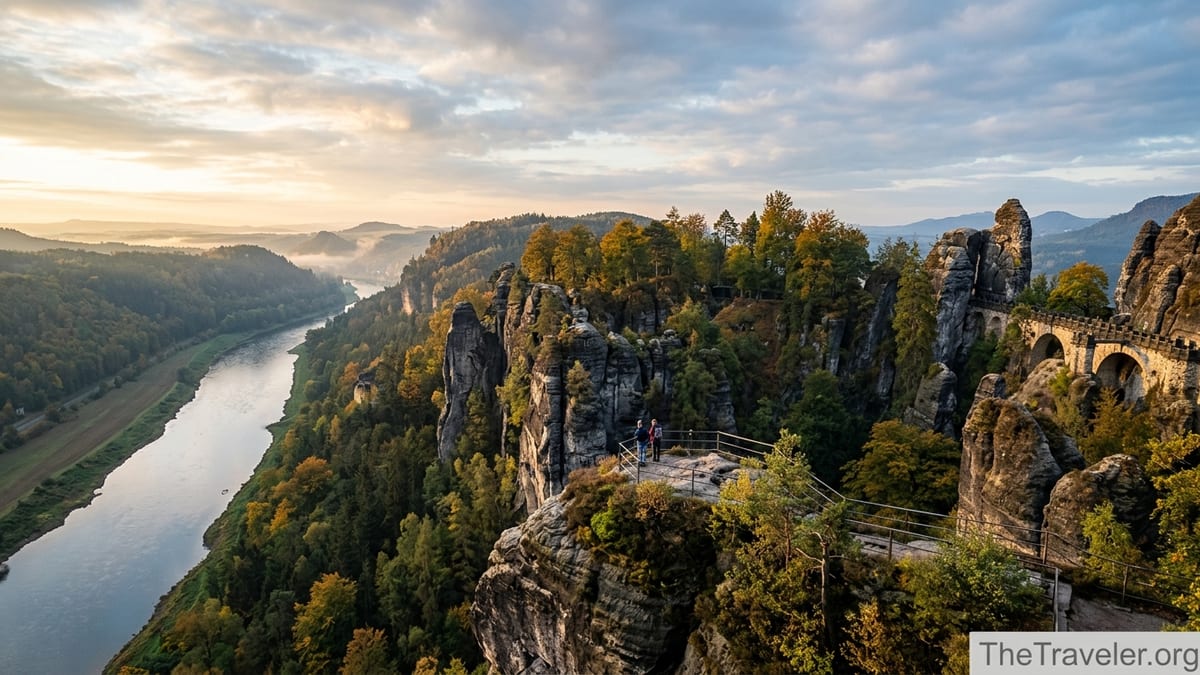
Saxon Switzerland National Park, southeast of Dresden along the Elbe River, offers a more dramatic landscape of sandstone cliffs, forests and river valleys. The Bastei Bridge, near the small town of Rathen, is the most famous viewpoint, with towering rock formations above the river. You can reach the area by taking a regional train from Dresden to Kurort Rathen in about 40 minutes, then crossing the Elbe by small ferry and hiking uphill for roughly 30 to 45 minutes, depending on your pace. There is usually a modest visitor fee to access certain lookout platforms and the remains of the rock fortress, but the surrounding network of marked trails through gorges and ridges is free to explore.
For families, straightforward routes like the walk from Rathen to the Bastei and back offer big scenery without technical difficulty, though stone steps and some steep sections mean a baby carrier is more practical than a stroller. Experienced hikers and couples seeking quieter corners can venture further along multi day trails such as the Malerweg, a long distance route that loops through the region and is commonly broken into several day stages with overnight stays in villages like Bad Schandau or Königstein. In high season, popular stretches can feel busy around mid day, so starting early or exploring lesser known viewpoints away from the Bastei helps preserve a sense of solitude.
Magdeburg and Smaller Historic Towns: Underrated Stops on the Elbe
Magdeburg, capital of Saxony Anhalt, tends to fly under the radar compared with Berlin or Dresden, but it can be a worthwhile stop for travelers moving between Berlin and western or central Germany. The city sits on the Elbe River and features a striking Gothic cathedral, one of the oldest in Germany, as well as modern riverfront promenades. One of the most family friendly sights is the large waterway junction north of the city where the Elbe and Mittelland Canal meet, including a long canal bridge that carries barges over the river. Access to viewpoints and walking paths in this area is usually free, making it an inexpensive outing for visitors interested in engineering and river landscapes.
Around Saxony and Saxony Anhalt you will also find a cluster of smaller historic towns well suited to slow travel. Places like Quedlinburg in the Harz foothills offer cobbled streets and half timbered architecture, while Bautzen combines Sorbian cultural heritage with a fortified hilltop location above the Spree. These towns are typically reached by regional trains or buses and offer guesthouses and small hotels that are often more affordable than those in larger cities, sometimes with doubles well under 100 euros per night even in busier months.
For couples, these secondary towns provide atmospheric backdrops for unhurried walks, local wine or beer tastings and visits to small museums or castle ruins. For families, the lower traffic volumes and compact centers make it easier to explore with children, and seasonal events such as Christmas markets or medieval festivals can be memorable highlights if your dates align. Because these locations are less international, expect fewer English menus or signs; learning a handful of German phrases or using a translation app will make everyday encounters smoother.
Strategically, you might weave one of these towns into a longer journey, for example traveling from Berlin to Quedlinburg for two nights, then continuing by train toward Leipzig or Dresden. This breaks up journeys, keeps accommodation costs reasonable and offers a sense of how life feels outside the main urban corridors.
Choosing the Right Mix for Couples and Families
When comparing destinations, it helps to match places to your travel style and the season. Couples visiting in spring or autumn often prioritize Dresden, Leipzig, Potsdam and Saxon Switzerland, where mild weather suits walking city streets and hiking. A sample 10 day couple’s itinerary might include four nights in Berlin for big city culture and nightlife, two nights in Dresden with a half day in Meissen, two nights hiking in Saxon Switzerland, and two nights in Leipzig for concerts and cafe life. Train tickets between each leg are usually under two hours, which keeps travel days light.
Families with younger children may prefer more time in nature and fewer hotel changes. One realistic plan could involve a week in Berlin with built in playground stops, a day trip to Potsdam for palaces and parks, and another day trip south to Spreewald for a short boat tour and easy cycling. From there, three or four days around Bad Schandau or Königstein in Saxon Switzerland would allow for short hikes to viewpoints, a visit to a fortress such as Königstein and relaxed evenings in family run pensions that often provide kid friendly menus and early dinner hours.
Budget conscious travelers should also consider how museum heavy their plans are. Berlin and Dresden reward intensive museum days but entrance costs add up, especially for larger families. In contrast, much of the appeal of Potsdam’s gardens, the Spreewald canals and Saxon Switzerland’s hiking trails is free or low cost, aside from transportation and occasional small access fees. Many city passes and regional rail tickets grant children free or discounted travel when accompanied by an adult, which can significantly reduce the overall cost of moving between these destinations.
Finally, think about language and accessibility. Berlin, Leipzig and Dresden see substantial international tourism, and English is commonly spoken in hotels, major attractions and many restaurants. In smaller towns and rural areas such as Spreewald villages or Saxon Switzerland hamlets, English may be less widely used, although younger staff in guesthouses and cafes usually manage basic communication. Booking accommodations with high recent ratings and clear photos, and checking whether they are within walking distance of a train station or bus stop, can make life easier if you are traveling without a car.
The Takeaway
Eastern Germany rewards travelers who combine one or two major cities with smaller towns and nature areas rather than focusing on a single urban center. Berlin anchors most trips with its mix of political history, creative neighborhoods and major museums. Dresden and Leipzig bring contrasting faces of Saxony, one Baroque and riverfront, the other youthful and artistic. Potsdam and Meissen add refined palaces and historic streets, while Görlitz and Magdeburg provide quieter, more local experiences along the Elbe and Neisse.
On the nature side, the Spreewald offers gentle canals, traditional villages and flat cycling suitable for all ages, whereas Saxon Switzerland delivers dramatic sandstone cliffs and some of the country’s most memorable hiking. Smaller historic towns scattered across Saxony and Saxony Anhalt round out the picture, giving you the chance to experience half timbered architecture, regional cuisines and seasonal festivals without large crowds.
Whether you are a couple planning a culture heavy long weekend or a family designing a two week summer holiday, the key is to recognize how close these destinations sit to each other and to build an itinerary that balances museum time with open air relaxation. With careful planning and realistic expectations about travel times and costs, you can sample Berlin’s street life, Potsdam’s palaces, Meissen’s porcelain workshops, Spreewald’s canals and Saxon Switzerland’s viewpoints in a single, coherent journey.
FAQ
Q1. How many days do I need to see the main highlights of Eastern Germany?
Most first time visitors spend 7 to 10 days, splitting time between Berlin and one or two Saxon hubs like Dresden or Leipzig, with day trips to Potsdam, Meissen or Saxon Switzerland as interests allow.
Q2. Is it realistic to visit Saxon Switzerland as a day trip from Berlin?
It is possible but long. Trains from Berlin to Bad Schandau or Rathen typically take around three hours each way with changes, so most travelers prefer to base in Dresden or a nearby town and visit Saxon Switzerland from there.
Q3. Which city is better for families, Berlin or Dresden?
Berlin offers more big ticket attractions, playgrounds and varied neighborhoods, while Dresden is smaller and easier to navigate. Families with young children often find Dresden less overwhelming, but older kids may appreciate Berlin’s variety.
Q4. Do I need a car to explore Spreewald and Saxon Switzerland?
No. Both regions are accessible by regional trains and local buses. In Spreewald, boats and rental bikes cover most routes, while in Saxon Switzerland, trains and ferries link trailheads and villages along the Elbe.
Q5. Are Eastern German cities and towns generally safe for tourists?
Yes, they are comparable in safety to other German destinations. Normal city precautions apply, such as watching belongings on public transport and in crowded areas, but violent crime against tourists is rare.
Q6. When is the best time to visit for hiking in Saxon Switzerland?
Late April to June and September to early October usually offer pleasant temperatures and stable weather. July and August can be warm and busier on popular trails like the Bastei.
Q7. Can I use one rail ticket to visit both Potsdam and central Berlin in a day?
Yes, if you buy a day ticket or city pass that covers Berlin zones ABC you can usually travel between Berlin and Potsdam on the same ticket, using S Bahn, regional trains, buses and trams within the validity period.
Q8. Is English widely spoken in smaller towns like Meissen or Görlitz?
English is common in hotels, main attractions and some restaurants, but less so in small shops and traditional eateries. Basic German phrases and a translation app help smooth interactions.
Q9. How expensive are museum visits in Berlin and Dresden?
Individual museum tickets often range from about 10 to 15 euros per adult, while combined day passes for clusters like Berlin’s Museum Island cost a bit more but can be cheaper than several single entries.
Q10. What is a good base if I want both city culture and easy access to nature?
Dresden works particularly well, combining a compact historic center, strong museums and quick regional train links to Meissen, Saxon Switzerland National Park and small river towns along the Elbe.