


Berlin is one of Europe’s easiest cities for car-free travel, and that convenience does not stop at the city limits. With dense regional rail, integrated tickets and frequent services, you can reach royal parks, lake country, canal towns and Cold War history across Brandenburg using only trains and local buses. This guide focuses on real, workable day trips from Berlin that start and end by rail, using current timetable checks at the time of writing. Because schedules and fares can change, readers should always refresh key details on official journey planners before departure.
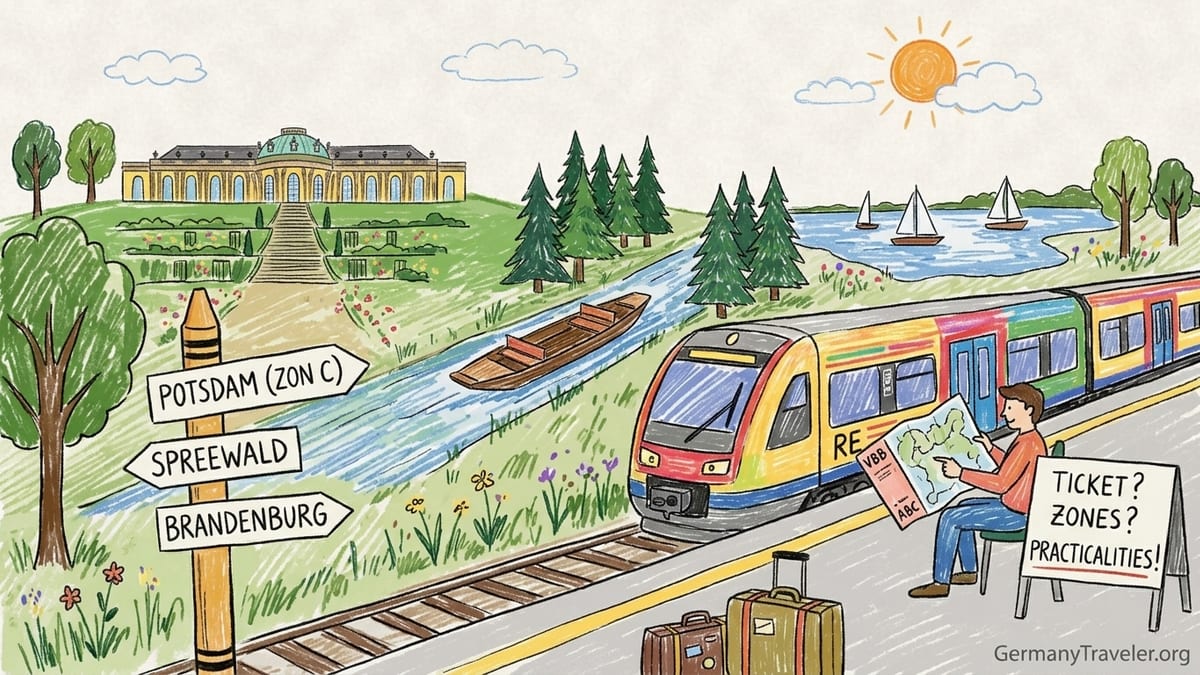
Understanding Tickets, Zones and Practicalities
Greater Berlin and Brandenburg share a common public transport network, the Verkehrsverbund Berlin Brandenburg (VBB). For visitors staying in Berlin, the city is divided into zones A, B and C. Most hotels and sights sit in A and B, while destinations just beyond the city edge, such as Potsdam and Oranienburg, lie in C. A standard Berlin AB day ticket typically covers travel on S-Bahn, U-Bahn, trams and buses inside Berlin, while an ABC ticket extends to Potsdam and other near suburbs. Exact prices change periodically, so it is essential to check them on the BVG or VBB ticket apps or at station machines on the day you travel.
For longer regional journeys across Brandenburg, many travelers now use the nationwide Deutschlandticket, which is a monthly pass valid on almost all local and regional public transport in Germany, including VBB trains, S-Bahn and most buses and trams. It is not valid on long-distance ICE, IC or EC trains. The Deutschlandticket is sold as a subscription and normally runs per calendar month, so visitors need to time the start date carefully. Because terms and participating services can evolve, anyone considering it should confirm current rules with an official sales channel before purchase.
Whether you use single regional tickets, day passes or the Deutschlandticket, one detail often surprises visitors: bicycle transport is usually not included. In Berlin and Brandenburg you normally need an extra bike ticket for the train, even if you already hold a valid passenger ticket or pass. There are also limits on bicycle capacity on some regional trains, especially on summer weekends towards lake and nature areas. Travelers planning to bring bikes on day trips should always check current bicycle rules and consider avoiding peak departure times when trains can be crowded.
Service levels are generally strong on core routes from Berlin, but there are some points to keep in mind. Weekend track works can disrupt regional lines, with replacement buses adding time and reducing comfort. Seasonal excursion trains, such as extra services into Spreewald during busy months, can appear in the timetable for only part of the year. Final return trains from smaller towns may depart surprisingly early, especially on Sundays. For every trip described in this guide, use an official journey planner to confirm departure times, platform changes, and the last sensible return to Berlin on the exact date of travel.
Potsdam: Palaces and Parks at the Edge of Berlin
Potsdam is Berlin’s classic day trip and the easiest major excursion to manage car-free. The city lies just southwest of the capital and is fully integrated in the VBB system. From Berlin Hauptbahnhof, frequent regional trains such as RB21 or RB22, as well as some RE services, run to Potsdam Hauptbahnhof. Travel times are usually around 25 to 35 minutes, and direct S-Bahn line S7 connects central Berlin stations like Friedrichstrasse and Alexanderplatz to Potsdam in roughly 45 minutes. From the station, the historic center is about 10 minutes on foot across the bridge, while trams and buses outside the station take you to the palace parks.
The main sights at Sanssouci Park, including Schloss Sanssouci and Neues Palais, lie about 2 to 3 kilometers from Potsdam Hauptbahnhof. Fit travelers can walk in around 30 to 40 minutes through the city center, but most visitors prefer to use a tram or bus. Several lines connect the station to stops near the park gates in roughly 10 to 15 minutes. Once inside the park, paths are car free and distances between palaces and gardens can be covered on foot. A relaxed day allows 5 to 7 hours of sightseeing, including the old town, Dutch Quarter and one or two palaces with interior visits.
Potsdam fits comfortably into a single long day from Berlin, especially in summer when days are longer. A sensible schedule might involve an outbound train between 8:30 and 10:00, followed by a late afternoon or early evening return around 18:00 to 20:00. Services remain frequent into the evening, but families and those unfamiliar with the network often prefer to avoid the last trains. Because Potsdam sits in the Berlin ABC zone, travelers can use a single Berlin ABC day ticket, a Brandenburg regional day ticket, or the Deutschlandticket for the whole trip, as long as they check that each is valid on their chosen trains.
Potsdam is also a good example of how engineering works can change routines. At times, construction on the S7 or on the regional lines requires diversions or partial closures, with replacement buses extending travel times. When checking times for a particular date, look carefully for notes about rail replacement services or different travel times at weekends. Always allow some margin in your schedule, especially if you plan a timed palace guided tour that cannot be shifted easily.
Brandenburg an der Havel: Old Town, Lakes and Quiet Streets
Brandenburg an der Havel offers an atmospheric old town, riverside promenades and access to lakes and canals, with a calmer feel than Potsdam. Regional Express trains such as RE1 run frequently from Berlin Hauptbahnhof, Ostbahnhof and other central stations to Brandenburg Hbf. Direct journey times are usually between 45 and 60 minutes. From the main station, it is roughly a 20 to 25 minute walk across town to the historic cathedral island and old quarter, or a shorter tram ride from stops directly in front of the station.
The city spreads across several islands and river channels, so walking distances depend on your exact route. Many visitors stroll from the station through Neustadt, across bridges to the cathedral island and back through Altstadt, which can easily fill 3 to 4 hours. Boat trips on the Havel and local lakes are common in warmer months, so travelers aiming to join a scheduled cruise should build in extra time to move from the station to the departure pier. Exact sailing times, routes and operating seasons change annually and should be checked with local providers shortly before your trip.
A realistic door-to-door day from Berlin might look like an outbound RE1 between 9:00 and 10:00 and a return between 17:00 and 19:00, leaving enough time for a long lunch and a few museum visits. The RE1 is one of the busiest regional lines in eastern Germany, especially during commuting peaks and on summer weekends when passengers travel to lakeside stops between Berlin and Brandenburg. If you are flexible, avoiding the absolute peak hours in the early morning and late afternoon can make the ride more comfortable.
Ticketing here demonstrates the reach of VBB regional fares. Brandenburg an der Havel lies outside the simple Berlin ABC zones, so you will usually combine Berlin local tickets with a VBB regional ticket, a Brandenburg day ticket, or use the Deutschlandticket if you hold it for that month. Since fare structures and conditions can change, especially around cross-state products, always confirm current prices and validity in an official sales app or at Berlin Hauptbahnhof before boarding.
Lübbenau and the Spreewald: Canals and Nature by Rail
Lübbenau is a key rail access point into the Spreewald biosphere reserve, known for its maze of tree-lined canals and traditional wooden punts. From Berlin Hauptbahnhof, Regional Express services such as RE2 usually run towards Cottbus and stop at Lübbenau (Spreewald). Typical direct journey times are around 1 hour to 1 hour 15 minutes. From the station, it takes about 10 to 15 minutes on foot to walk into the small historic center, and about 15 to 20 minutes to reach the main harbors where canal tours depart.
Lübbenau is especially popular on sunny weekends in spring and summer, when many Berliners travel down for boat tours. Canal trips are generally seasonal, often running from around spring through autumn with more limited services in winter. Departure frequencies, routes and prices vary by operator and time of year, so it is essential to check the current offerings directly with local Spreewald punt or boat companies shortly before your visit. A typical Spreewald day might include a 2 to 4 hour canal excursion, plus time for walking, cycling or visiting the nearby village of Lehde, which can be reached by boat or on foot.
From Berlin, travelers can plan a departure between 8:00 and 10:00 and aim for a return between 17:00 and 20:00, which usually allows one substantial canal trip and time for wandering. Families with children should keep an eye on the journey length and consider snack breaks in Lübbenau before boarding boats. Because the RE2 can also be busy, particularly on warm Saturdays and Sundays, it is worth reaching the platform a bit earlier to choose suitable seats together.
Lübbenau is a good example of how onward travel remains practical without a car but requires some walking. The main harbor areas are within a relatively short, flat walk from the station, so most visitors do not need local buses. However, those heading deeper into the Spreewald, perhaps to more remote boat harbors or trailheads, may rely on seasonal shuttle buses or bike rentals. Anyone planning these deeper excursions should confirm bus routes and times in advance and factor in the need to return to the station for the last useful RE2 back to Berlin in the early or mid evening.
Werder (Havel) and Beelitz Heilstätten: Relaxed Towns and Unusual Sights
Werder (Havel) lies on an island in the Havel west of Berlin and combines a small historic core with lakeside views and seasonal events such as the spring blossom festival. From Berlin Hauptbahnhof, regional trains on the RE1 line typically reach Werder in around 35 to 45 minutes. The station sits on the mainland, about 15 to 20 minutes on foot from the old town island. The walk is straightforward and partly along the river, and a full loop around the island, including coffee or cake at one of the cafes, can fill 2 to 3 hours. Many visitors then continue their day by exploring the waterfront, vineyards or viewpoints above the town.
Werder works well for a slower excursion or combined with a short side trip to Potsdam, which lies on the same RE1 line. With a Deutschlandticket or a relevant VBB regional day ticket, it is often easy to hop off in Potsdam for an evening stroll or dinner on the way back to Berlin. Timings should be checked on the day, as small timetable shifts or engineering works can affect connection times at Potsdam or Berlin.
Beelitz Heilstätten, south of Potsdam, offers a very different type of outing centred on a historic sanatorium complex set in forest. From Berlin, travelers normally take a regional train such as RE7 towards Bad Belzig or Dessau and alight at Beelitz Heilstätten station. Typical journey times from Berlin main stations fall around 35 to 45 minutes. From the station it is around a 10 to 15 minute walk to the entrance of the treetop path and visitor area, where tickets are sold for the forest canopy walkway and guided tours of historic buildings. Inner distances within the site can add significant walking time, especially for those joining guided tours in specific buildings.
A day at Beelitz Heilstätten usually involves 4 to 6 hours on site, enough for the treetop path, a guided tour and time at the cafes. Outbound departures between 9:00 and 11:00 give a relaxed schedule, with a return towards Berlin in the mid to late afternoon. Children often enjoy the forest setting and elevated walkway, but some of the history of the former sanatorium complexes is quite heavy. Families may prefer to focus on the nature elements and choose tours suitable for younger audiences, checking age recommendations when booking.
Oranienburg and Sachsenhausen: History within the ABC Zone
Oranienburg lies north of Berlin and is historically linked to the former Sachsenhausen concentration camp memorial, one of the most sobering day trips from the capital. From central Berlin, S-Bahn line S1 runs directly to Oranienburg in about 45 to 50 minutes from stations like Potsdamer Platz or Friedrichstrasse. Regional trains can be slightly faster from certain stations, often around 30 to 35 minutes, but frequencies vary. Oranienburg S-Bahn and regional station is a short walk, roughly 10 minutes, from the town center with its palace and riverside paths.
The Sachsenhausen memorial site lies about 2 kilometers from Oranienburg station. Many visitors walk, taking around 20 to 25 minutes, while others use local buses that run between the station area and stops near the main entrance. Current bus routes, numbers and exact stop names should always be confirmed on official journey planners or at the station, because they can change with timetable revisions. Visiting the memorial is emotionally and historically intense; most travelers spend 3 to 5 hours at the site, including the museum exhibitions, grounds and moments of reflection.
A practical day from Berlin might involve a departure between 9:00 and 10:00, arrival in Oranienburg before late morning, and a return train between 16:00 and 19:00. Because Oranienburg lies in the Berlin C zone, a Berlin ABC day ticket is usually sufficient for the whole journey on S-Bahn, regional trains and most local buses within the city, though travelers should always check the latest tariff details. Families with older teenagers often combine the memorial visit with a quieter hour in Oranienburg itself, perhaps at the small palace park or along the river, to decompress before returning to Berlin.
As with other regional routes, weekend engineering works occasionally affect services towards Oranienburg. At times the S1 may terminate before the town, with rail replacement buses completing the last leg, which can add significant time and reduce comfort. Travelers visiting Sachsenhausen on a fixed date, perhaps to coincide with guided tours or educational programs, should check their exact trains a few days beforehand and again on the morning of travel.
Frankfurt (Oder) and Less Obvious Escapes
Farther east, Frankfurt (Oder) offers a full-day outing with a different atmosphere from the lake and palace destinations nearer to Berlin. The city sits on the Oder river, opposite the Polish town of Słubice, and is linked by frequent Regional Express trains, most often on the RE1 line. Journey times from Berlin Hauptbahnhof typically range between 1 hour and 1 hour 15 minutes. From Frankfurt (Oder) station, it takes about 10 to 15 minutes on foot to reach the central squares and riverfront, and a little longer to walk across the bridge into Poland for those interested in a cross-border stroll.
Frankfurt (Oder) lends itself to a more urban style of excursion, with churches, museums and river views. Visitors often spend 4 to 6 hours in town, including lunch and time on both sides of the river. Because this is an international border, travelers must carry valid identification, such as a passport or national ID card, which may be requested in spot checks. Rail tickets within Germany follow VBB patterns, while separate rules apply for local buses in Słubice. Anyone planning to cross should consult up-to-date information about border regulations and transport tickets for the Polish side.
Beyond Frankfurt (Oder), several smaller Brandenburg towns work well for quieter, less obvious train-based day trips. Examples include destinations on the lines towards Eberswalde, Bad Belzig or Neuruppin, where regional trains link Berlin to smaller historic centers or gateway stations for hiking areas. In these cases, onward travel from the station often involves a combination of walking and local buses, and sometimes seasonal shuttle services to trailheads or lakes. Because service patterns and even stop names can shift, it is particularly important to use the VBB journey planner close to your travel date to confirm that connections remain practical.
These lesser-known trips reward travelers who enjoy wandering without a fixed checklist of sights. A flexible timetable, with outbound trains between 8:00 and 11:00 and returns from early evening onwards, allows you to adjust your day to the weather, the quality of local cafes and how long you end up sitting by a lake. When planning, pay extra attention to the time of the last practical return train, not just the very last service, in case a missed connection in a small town would leave you with a long wait or a complex detour.
Family Travel, Weekends and Seasonal Considerations
Traveling with children in Brandenburg is straightforward but benefits from a little advance planning. VBB and Deutsche Bahn offer various child fare policies, often allowing younger children to travel free when accompanied by an adult, with different age thresholds depending on the specific ticket. For example, some regional day tickets permit a certain number of children under a set age to travel free with one adult. Because these rules can and do change, it is essential to check the child fare conditions of your chosen ticket type at purchase time, either in the app or at a staffed counter. Do not assume that policies you read in older guidebooks still apply.
Weekend travel adds its own dynamics. Saturdays and Sundays are popular for day trips to lakes, Spreewald, Potsdam and other green areas. Trains leaving Berlin between roughly 9:00 and 11:00 can become very full, especially in summer. If you prefer a quieter journey, aim for earlier departures or choose destinations like Frankfurt (Oder), which can see fewer leisure groups than classic resort lines. Returning to Berlin, late afternoon trains often fill quickly, so families may want to leave a bit earlier or have a backup connection in mind.
Seasonality also plays a major role. Many excursion boats in the Spreewald and on Brandenburg lakes operate from around spring to autumn and switch to limited winter schedules, with shorter hours and fewer departures. Some attractions have reduced opening days in the off-season or close completely for renovation periods. Even large sites like palaces in Potsdam may limit interior tours outside high season. Always check opening times for your intended date, and remember that some holidays in Germany fall on different days each year, affecting both operating hours and train timetables.
Finally, engineering works are a constant feature of the German rail network. In Brandenburg this may mean temporary closures of segments of the RE1, RE2 or other key lines, with bus replacement services adding anywhere from 15 minutes to over an hour to journeys. Information is usually published weeks in advance on official channels, but short-notice changes do occur. Before committing to a specific day trip, take a moment to run your connection through an official planner for both the outbound and return legs, checking for notes about construction, platform changes, and whether bicycles are permitted on all segments of your planned route.
The Takeaway
Berlin is one of Europe’s best bases for car-free adventures, and Brandenburg’s network of regional trains and local buses makes day trips remarkably simple. Within an hour or so, you can move from a city apartment to the terraces of Sanssouci in Potsdam, the canals of Lübbenau, the hushed memorial grounds of Sachsenhausen, or the old streets of Brandenburg an der Havel. All of the destinations in this guide can be reached with realistic walking distances from the station and, where needed, clearly signposted local buses.
The key to a smooth excursion is good preparation. Understand whether your trip lies within the Berlin ABC zones or requires wider VBB regional coverage, decide if a one-day ticket or the Deutschlandticket fits your plans, and remember that bicycles almost always need their own ticket. Check engineering works and seasonal timetables, especially for weekend and holiday travel. Build in time for missed connections or longer walks than expected, and keep an eye on the last practical return train, not just the final theoretical one.
In return, you will gain easy access to lakes, forests, palaces and small-town streets, all without hiring a car or studying complex driving rules. Potsdam and Oranienburg suit first-time visitors, Lübbenau and Brandenburg an der Havel please nature and canal lovers, while Werder, Beelitz Heilstätten and Frankfurt (Oder) fill in the picture of a region that is more diverse than many visitors to Berlin ever realize. With a bit of planning and a charged transport app, Brandenburg by train can become the most rewarding part of your Berlin stay, and a model for low-impact travel elsewhere.
FAQ
Q1. Do I need a separate ticket to reach Potsdam from central Berlin?
Potsdam usually lies in the Berlin C zone, so you either need a Berlin ABC ticket, a suitable VBB regional ticket, or a Deutschlandticket that covers local and regional services on your travel date. Always confirm current zone boundaries and ticket conditions before you set off.
Q2. Is the Deutschlandticket the best option for a short visit to Berlin and Brandenburg?
The Deutschlandticket can be excellent value if you are taking several regional trips within a calendar month, but it is sold as a monthly product with its own terms. For a very short stay with only one or two excursions, individual regional day tickets or Berlin ABC day tickets may work out better, so compare prices on official sales channels for your specific plans.
Q3. Can I take my bicycle on Brandenburg regional trains for free?
Generally no. Most VBB and regional services require a separate ticket for bicycles, and capacity can be limited, especially on busy weekend routes to lakes and nature areas. Check the current bicycle policies and prices for your chosen line and consider traveling outside peak periods if you bring a bike.
Q4. How far in advance should I check for engineering works on my route?
Major works are often published several weeks ahead, but short-notice changes can appear closer to travel. It is wise to check your route once when planning the trip, again a few days before, and one more time on the morning of departure using an official journey planner or station information boards.
Q5. Are day trips like Lübbenau and Spreewald possible in winter?
They are possible, but the character of the trip changes significantly. Many canal boat services reduce frequency or pause in the coldest months, and some tourist facilities shorten opening hours. If you visit in winter, focus on walks, museums and any special seasonal experiences, and verify in advance which boat routes, if any, are running.
Q6. What is a realistic sightseeing duration for Potsdam’s Sanssouci Park?
Most visitors who want to see at least one palace interior and walk through parts of the park should allow 4 to 6 hours on site. This leaves time for the walk or tram ride from the station, ticket queues, interior visits and breaks in the gardens without feeling rushed.
Q7. How late do trains usually run back to Berlin from Brandenburg an der Havel or Frankfurt (Oder)?
Regional Express services on main lines such as RE1 typically operate into the late evening, but exact last departures vary by day and season. For comfort and flexibility, plan to be on one of the earlier evening trains and double check the time of the very last service on your exact travel date.
Q8. Are these Brandenburg day trips suitable for young children?
Many destinations, such as Potsdam’s parks, Lübbenau’s canals and Beelitz Heilstätten’s forest treetop path, appeal to children, but journey lengths and content vary. Sachsenhausen, for example, is often considered more appropriate for older teenagers and adults because of the historical material. Families should review each site’s own guidance and adjust their plans accordingly.
Q9. What should I do if my regional train is replaced by a bus due to construction?
Replacement buses usually depart from clearly signed areas near the station and are timed to connect with trains. They can be slower and more crowded, especially if bicycles are not accepted. Allow extra time in your schedule, listen for on-board announcements, and follow staff instructions to ensure you make any onward trains back toward Berlin.
Q10. How can I avoid the most crowded trains for popular day trips?
To reduce crowding, aim for earlier morning departures, especially on warm weekends, avoid the busiest lake-bound lines if possible, and consider traveling on weekdays outside local school holidays. Using journey planners to identify alternative services slightly before or after peak times can also make a noticeable difference in comfort.