


Germany’s North Sea coast is one of the country’s most family-friendly regions, with safe tidal shallows, supervised beaches, and resorts that understand what traveling with children really looks like. From classic spa towns to wide, dune-backed beaches and car-free islands, parents can now choose from thousands of family-oriented hotels, apartments and holiday parks. This guide compares standout options in Cuxhaven, Büsum, Sylt, Norderney, St. Peter-Ording, Norddeich and Borkum, with a focus on what matters most to families: room layouts, pools, kids’ clubs, playgrounds, kitchen facilities, beach distance, bad-weather activities and child-friendly bathing areas.
How to Choose the Right North Sea Base for Your Family
The German North Sea coast stretches from Lower Saxony up through Schleswig-Holstein and out to the East Frisian and North Frisian Islands. Within this long shoreline, family experiences differ significantly from place to place. Cuxhaven, Norddeich and Büsum are classic mainland resorts that combine tidal flats, grassy dikes and manageable town centers. Sylt, Norderney, St. Peter-Ording and Borkum offer island or peninsula flair, often with broader beaches, dune landscapes and a stronger sense of “getting away.”
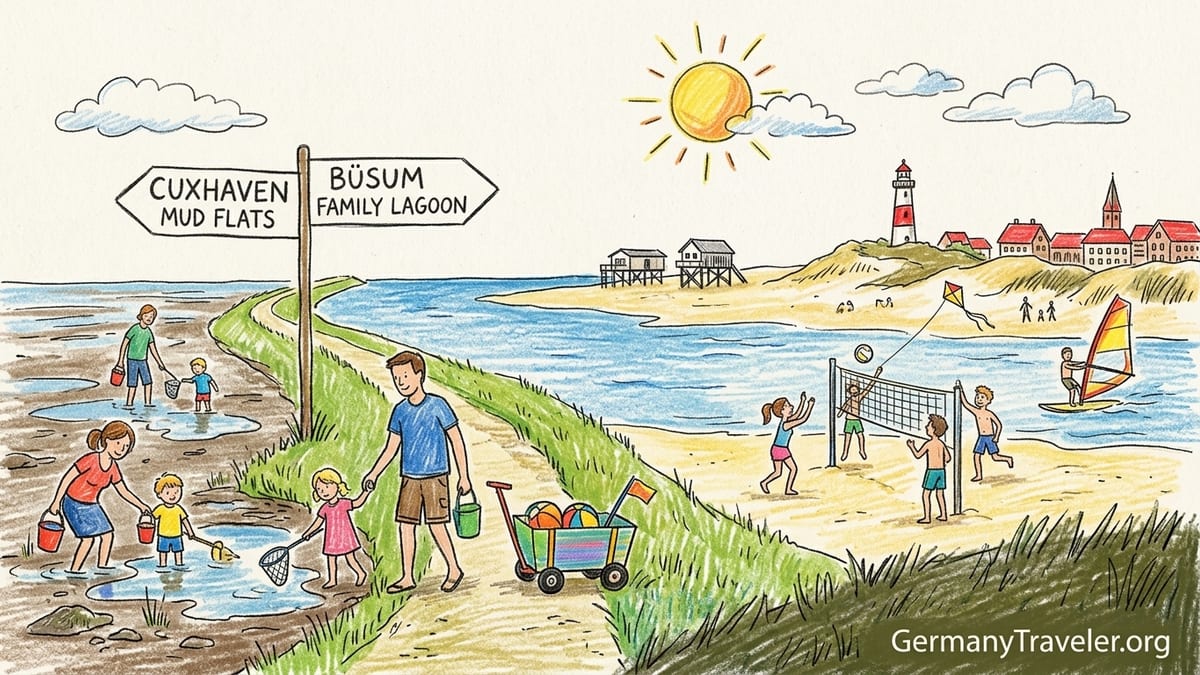
For very young children, shallow and often supervised areas such as Cuxhaven’s Duhnen and Sahlenburg sections, Büsum’s Familienlagune Perlebucht and the family beaches on Norderney and Norddeich are especially appealing, because kids can paddle in tidal pools without immediately confronting surf waves. For older kids and teens, wave-rich beaches in Westerland on Sylt, St. Peter-Ording’s immense sandbank or the West Beach of Borkum add more excitement and space for sports like beach volleyball, kite surfing or beach sailing.
Accommodation style is another key decision. Many families prefer apartments or aparthotels with kitchenettes and separate sleeping areas; others like traditional hotels with breakfast and daily cleaning plus access to pools and spas. Across the North Sea region, Booking-type platforms currently list many thousands of family-friendly properties, but quality varies widely. The best strategy is to shortlist a few destinations first, then compare two or three concrete properties in each, paying close attention to room size, beach distance, indoor pool access and bad-weather back-up options like playrooms, indoor playgrounds or wave pools.
Season and budget also play a role. In July and August, a family suite in a popular resort like Westerland on Sylt or St. Peter-Ording can easily run into the high three figures per night, particularly close to the seafront. On the mainland in Cuxhaven or Büsum, or slightly inland from the prime dune line, prices often remain more moderate while still giving quick access to the dike and beach. Shoulder seasons such as May, June and September often balance lower prices with relatively mild weather and fewer crowds, which can be especially attractive for families with preschoolers.
Cuxhaven: Tidal Flats, Wide Dikes and Short Strolls to the Sand
Cuxhaven sits where the Elbe River meets the North Sea, with several distinct seaside districts such as Duhnen, Döse and Sahlenburg. Families tend to favor these areas because of their broad tidal flats, playgrounds along the promenade and easy, stroller-friendly walks across the dike to the shore. The coastline here is dominated by grassy foredikes and the UNESCO-listed Wadden Sea, so you will often be walking directly out over mudflats when the tide is low and paddling in very shallow water when it is in.
In Duhnen and Döse you will find a mix of mid-sized hotels and aparthotels with family rooms or small kitchens. Many properties cluster just behind the dike, which means you can typically reach the beach in five to ten minutes on foot even with small children. Families who value kitchen facilities might look for apartment houses or hotel-apartment hybrids around the Kurpark and promenade, where units often feature separate bedrooms, sofa beds in the living room and kitchenettes with basic cooking equipment. This layout allows parents to prepare simple meals during nap times or in the evening without having to manage restaurant visits for every meal.
A key advantage of Cuxhaven is its variety of bad-weather options. The town offers a modern seawater wave pool and spa, indoor playgrounds and a small zoo-like animal park, giving families something to do if the North Sea wind turns chilly. Many hotels either sell discounted admission to local spas or have their own small indoor pools and saunas. When comparing properties, it is worth checking whether the hotel’s pool has a shallower children’s area and if there is an on-site playroom. Even basic extras like board games, a children’s corner at breakfast and kid-friendly TV channels can make a difference on rainy afternoons.
Budget-wise, Cuxhaven can be more affordable than the fashionable islands. Families can often secure an apartment with two rooms and a balcony in Duhnen or Sahlenburg at prices that would only buy a small double room on Sylt in peak season. Parking is usually straightforward, which makes Cuxhaven a logical choice for road-tripping families who want to combine beach time with excursions to nearby attractions in Cuxland such as the small harbors of Dorum or Otterndorf.
Büsum: Family Lagoon, Shallow Pools and Strong Infrastructure for Kids
Büsum has become one of the North Sea’s flagship destinations for family vacations, largely thanks to its purpose-built Familienlagune Perlebucht. This large artificial lagoon west of town offers tide-independent swimming areas, sandy play zones, playground equipment, hammocks and family-friendly bathing spots shielded from strong waves. Several family-oriented hotels sit just behind the dike here, putting you within a five minute walk of the lagoon and its shallow, supervised areas that are ideal for non-swimmers.
Hotels such as the nordica Hotel Friesenhof and Strandhotel Küstenperle position themselves explicitly as family properties near the Perlebucht. The Küstenperle, for instance, combines modern family rooms and suites with an indoor pool, spa and a restaurant where an adjoining playroom keeps children busy while parents finish their meals. The hotel highlights practical amenities like baby cribs, bottle warmers, high chairs, diaper pails and a youth game room, which reflects how seriously Büsum’s hospitality sector takes family needs. Nordica Hotel Friesenhof, located close to the family lagoon as well, markets itself on direct beach access and proximity to playgrounds and water-sports areas, which suits both younger and older children.
Beyond the lagoon, Büsum runs a dense schedule of child-focused activities, especially in summer. The town’s visitor information promotes offerings like the Meerzeit Büsum seawater wave pool and spa, the Mini-Maxi-Club and Neeles Spielehafen indoor play zones, puppet theater performances in the Kurpark and regular children’s events along the dike. For parents, this means that even if the weather is grey or windy, there is nearly always something age-appropriate to do indoors within a short walk or a quick local bus ride.
Accommodation types in Büsum range from simple pensions and holiday apartments to four-star hotels with spa facilities. Families who want kitchen facilities can book apartments within walking distance of the Perlebucht, often with separate bedrooms and balconies. Those who prioritize convenience may lean toward hotels with breakfast buffets and restaurants on site. Many properties offer family rooms for three or four people, sometimes with bunk beds for children, and some allow dogs in particular categories for families who want to travel with a pet. When comparing prices, remember that locations closer to the Perlebucht and Meerzeit pool often command a premium in high season, but they can significantly reduce the daily logistics of hauling gear to the beach.
Sylt and Westerland: Island Atmosphere, Pools and Serviced Apartments
Sylt is Germany’s most famous North Sea island, known for its long sandy beaches, elegant villages and high-end dining scene. For families, the main hub is Westerland, a resort town with a central promenade, public wave pool and a concentration of hotels and serviced apartments. The Sylter Welle complex in Westerland offers a seawater wave pool with slides and a large indoor spa, which is a major advantage during cloudy or windy spells, and several hotels and apartments are located within a short walk of this facility.
On the accommodation side, many family travelers gravitate toward aparthotels and serviced apartments that combine hotel services with extra space. In Westerland, properties with two-bedroom apartments or family suites are widely available, often equipped with kitchenettes, dining tables and balconies. Some premium apartment houses emphasize upscale finishes while still welcoming children, while more mid-range options focus on practicality and proximity to the beach rather than design. Typical nightly rates for a two-room apartment in peak summer can reach the mid to high three figures, especially if you want a sea view or immediate promenade access.
Several island hotels and resorts market specifically to families. Complexes with indoor pools are especially valuable here, since Sylt’s weather can be variable even in July. Facilities like child-friendly pool areas, play corners in the lobby, rental bikes with child seats and easy beach access make life simpler for parents. Wider Sylt also offers family-oriented holiday villages, such as cottage-style resorts with playgrounds and supervised children’s activities, though these are sometimes located outside Westerland in quieter communities like Rantum or Wenningstedt.
In terms of beach experience, Westerland’s west coast has more surf than the sheltered Wadden Sea side, so it is better suited to confident swimmers and older kids. Some sections of the beach are supervised in summer with lifeguard stations. Families with toddlers may prefer to spend at least part of their time exploring the calmer mudflats on the island’s eastern side or visiting nature centers that introduce children to the Wadden Sea ecosystem. As always, local tide tables are important so that you can time safe mudflat walks or shallow paddling sessions.
Norderney and Norddeich: Car-Light Island Life and Easy Mainland Access
Norderney, one of the East Frisian Islands, blends a historic spa town atmosphere with family-friendly beaches and a compact center that is easy to navigate with strollers. The island offers both holiday apartments and hotels, many of which provide family rooms or suites. A number of accommodations emphasize wellness and spa facilities, while others highlight their proximity to the island’s broad North Beach, supervised swimming areas and dune playgrounds. Families often choose apartment-style lodging here, as it allows flexibility for meals around nap schedules and less reliance on restaurant dining.
Some properties on Norderney offer distinct family rooms with additional beds, play corners, games and outdoor playgrounds. Larger hotels may include children’s playrooms with table football or console games, as well as gardens with swings and climbing frames. A key selling point for the island is its network of well-maintained cycling paths and car-restricted zones, which create a relatively safe environment for kids to move around compared to a typical mainland city. In bad weather, Norderney’s spa and bathing facilities, including modern seawater pools and family-friendly wellness centers, provide indoor entertainment.
Back on the mainland, Norddeich serves as both ferry port for Norderney and a family seaside resort in its own right. The town is known for its flat, easily accessible dike promenade, a large sandy and grassy beach area and shallow Wadden Sea shallows. Families appreciate the short distances between parking areas, hotels, apartments and the beach, which simplifies logistics when traveling with small children and lots of equipment. The resort also offers attractions such as the seal sanctuary and national park center, which introduce children to local marine life and habitat in a hands-on way.
Accommodation in Norddeich skews heavily toward holiday apartments and guesthouses, many with kitchenettes and multiple bedrooms. There are also mid-sized hotels with family rooms, some offering small indoor pools or direct access to spa facilities in the neighboring spa house. When choosing where to stay, look for mentions of playgrounds, garden access, proximity to the beach crossings and inclusive extras like high chairs, baby beds or beach carts. These details can significantly improve the daily rhythm of a family holiday, particularly in changeable weather.
St. Peter-Ording: Endless Sand, Dune Hotels and Family Suites
St. Peter-Ording, located on the Eiderstedt peninsula, is famous for its enormous sandy beach that stretches for kilometers and is lined with iconic stilt houses. For families, the appeal lies in both the sense of space and the variety of zones, from quieter family areas to busier sections geared toward kite surfers and beach sports. Because the beach is so wide, most accommodations sit behind the dike or in the districts of Bad, Dorf and Böhl, meaning that boardwalks, shuttle buses or short car rides are often part of the daily routine to reach the surf.
The town offers several hotels that specifically cater to families with larger rooms, connecting units and child-focused amenities. For example, some boutique-style properties in the Bad district provide family rooms of around 30 to 35 square meters with bunk beds or sofa beds for children and small kitchenettes or tea kitchens, sometimes with balconies overlooking dunes or the village. Other hotels and guesthouses emphasize spacious suites that provide separate living and sleeping areas. Family travelers also make heavy use of holiday apartments, which tend to be modern, well-equipped and within cycling distance of beach access points.
St. Peter-Ording’s infrastructure supports kids with playgrounds along the dike, a local spa complex with pools and a wave pool, and outdoor activity parks within the dunes. In poor weather, families can retreat to indoor play areas, swimming pools and wellness centers that often feature dedicated children’s pools. Many hotels either have small indoor pools themselves or collaborate with nearby spa facilities. It is worth checking whether your chosen property includes spa admission in the guest card, as this can add significant value, especially if you expect a few rainy days.
Because St. Peter-Ording is highly popular, particularly during school holidays, advance booking is essential for families seeking larger units. In peak season, nightly rates for a family room or two-bedroom apartment within walking distance of the main promenade can be relatively high, though traveling in late spring or early autumn brings more moderate pricing and a calmer atmosphere. As with other North Sea destinations, bicycles are an excellent way to get around, and many hotels and rental agencies offer child seats, trailers or cargo bikes to make family outings easier.
Borkum: Car-Free Center, Wide Beaches and All-Weather Activities
Borkum, the largest of the East Frisian Islands, sits further out in the North Sea than its neighbors, which gives it a particularly maritime climate and a reputation for fresh, low-pollen air. The island’s main town is largely car-free, which immediately changes the feel for visiting families. After arriving by ferry and island train, most travelers move around on foot or by bicycle, and many accommodations are located within a ten to fifteen minute walk of both the beach and the central pedestrian zone.
The beach on Borkum’s west side is broad and backed by dunes, with supervised swimming zones in summer, beach playgrounds and a choice of sections for quieter family time or more active sports. For younger children, the shallow zones near the shore are usually sufficient for paddling and simple games, while older kids can try activities like beach volleyball, windsurfing or guided Wadden Sea walks. Lifeguard presence and posted flags help parents gauge daily bathing conditions, which can vary with wind and tide.
On the accommodation front, Borkum has a mix of traditional hotels, apartment houses and family vacation facilities. Some hotels highlight wellness areas with saunas and rooftop relaxation rooms that look out over the roofs of the town, while others emphasize family rooms and proximity to the beach promenade. Many island apartments provide two or more bedrooms and fully equipped kitchens, which is convenient for week-long stays with children. Because the town is compact, even properties without direct sea views are often only a short walk from the water or the tidal flats on the quieter eastern side.
Bad-weather alternatives on Borkum include the island’s water park and spa complex, which features indoor pools, slides and wellness facilities, as well as museums, play corners in the spa house and guided indoor activities in the local visitor centers. For families with mixed age groups, this range of options is particularly valuable. When comparing places to stay, check not only for features like baby beds, high chairs and on-site playgrounds, but also for how quickly you can reach indoor attractions on foot or by bike if the weather turns.
Practical Tips: Rooms, Pools, Kitchens and Safe Bathing
Across all of these destinations, a few practical criteria can help you distinguish truly family-ready accommodation from properties that simply accept children. First, consider room layout. Family rooms that offer some separation between adult and child sleeping areas, such as a bedroom plus living room with sofa bed, often make evenings more relaxing than a single open-plan room. On islands like Sylt or Norderney and in resorts like St. Peter-Ording, serviced apartments and aparthotels are particularly popular because they combine separate bedrooms with breakfast options and cleaning services.
Second, pay close attention to pools and play areas. Even a small indoor pool can be invaluable for burning off energy when the wind picks up. Look for explicit mention of a children’s pool, shallow entry or splash zone, as well as safety measures such as non-slip floors and visible lifeguards in larger complexes. Outdoor playgrounds on-site, fenced gardens and indoor playrooms with toys or game consoles give children independent space to play while adults enjoy a coffee on the terrace or in the lobby. Properties like beach-proximate family hotels in Büsum, where playgrounds and youth game rooms are integrated into the building, show what to look for.
Third, kitchen facilities strongly influence daily rhythms. A full kitchen or kitchenette enables families to prepare simple breakfasts, snacks and early dinners without depending entirely on restaurant hours, which can be especially important with toddlers who eat early or pickily. Mainland towns like Cuxhaven, Büsum and Norddeich, as well as apartment-heavy islands like Norderney and Borkum, offer a large selection of such units. Check what is included in the kitchen, such as a fridge, stovetop, microwave and basic cookware, because equipment levels can vary widely even within the same category.
Finally, consider beach distance, access and bathing conditions. For stroller users and small children carrying buckets and spades, being within a few hundred meters of a ramp or stairs over the dike makes a tangible difference. Tide-independent lagoons, such as Büsum’s Perlebucht, offer reliable shallow water, while classic Wadden Sea beaches in Cuxhaven and Norddeich require more attention to tide times. Surf-facing beaches in Westerland and St. Peter-Ording add wave action and a sportier feel but may be better suited to older children who are confident in the water. Lifeguard-supervised sections are common in high season and are worth seeking out when choosing which beach access point to use each day.
FAQ
Q1: Which North Sea resort is best for families with toddlers who cannot swim yet?
Families with non-swimmers often find Büsum and its Familienlagune Perlebucht especially suitable, because tide-independent shallow pools and family beaches make it easier to manage water play with very young children. Cuxhaven’s Duhnen and Sahlenburg areas and the flat, sheltered shallows in Norddeich are also good options, as long as parents follow local tide and safety advice.
Q2: Are there many hotels with kids’ clubs on the German North Sea coast?
Dedicated kids’ clubs with daily programming exist, but they are more common in larger resort hotels and holiday villages than in small family-run pensions. You are more likely to find organized childcare and activity programs at bigger complexes on islands like Sylt and Norderney or at spa-style resorts in places such as Büsum and St. Peter-Ording. Many towns also run municipal kids’ programs through their spa administration in summer, which can supplement hotel offerings.
Q3: How important is an indoor pool when booking a North Sea family holiday?
An indoor pool is not essential, but it can be a major advantage given the region’s changeable weather. Even in July and August, windy or cool days are common, and having a pool in the hotel or nearby spa gives families a reliable back-up plan. In destinations like Westerland on Sylt, Büsum and St. Peter-Ording, proximity to a seawater wave pool or spa complex can sometimes compensate for staying a little further from the beach.
Q4: Is it better to book a hotel room or an apartment with children?
For stays of a week or longer, many families prefer apartments or aparthotels with kitchenettes and separate bedrooms, because they allow flexible meal times and quieter evenings while children sleep. Classic hotel rooms with breakfast work well for shorter stays or for families who do not want to cook on holiday. Aparthotels that combine breakfast buffets, cleaning service and apartment-style layouts can offer a practical middle ground, particularly on islands where dining out every night may be expensive.
Q5: How far in advance should I book for school holiday periods?
For peak summer weeks in July and August, it is wise to secure family-sized units several months in advance, especially on popular islands like Sylt, Norderney and Borkum and in sought-after spots such as St. Peter-Ording. Larger family rooms and apartments with two bedrooms are in limited supply and tend to sell out first. Shoulder-season visits in May, June or September are often more flexible, though booking a few weeks ahead is still recommended for the most desirable properties.
Q6: Are the beaches on the German North Sea coast generally supervised?
Many main bathing sections in these resorts are supervised by lifeguards during the core season, typically from late spring through early autumn and particularly in the middle of the day. Supervision levels and schedules vary between resorts and individual beach sections, so it is important to check local information boards, flags and municipal websites. For mudflat walks, families should always follow guided tours or local safety guidelines, because currents and incoming tides can be deceptive.
Q7: Do I need a car for a family holiday on the North Sea?
A car is helpful for reaching mainland resorts like Cuxhaven, Büsum and Norddeich and for exploring the hinterland, but it is not strictly necessary if you focus on a single destination with good rail and bus links. On islands such as Norderney and Borkum, many visitors leave the car on the mainland and get around by foot, bicycle or local buses. Families with a lot of gear sometimes appreciate having a car for transfers, but once you are in resort areas with compact centers and dike promenades, daily distances are usually manageable without one.
Q8: What should I look for in terms of kitchen equipment when booking?
Descriptions like “kitchenette” or “tea kitchen” can mean very different things, so it is worth checking details and photos. For most families, a fridge, basic stovetop or microwave, sink, kettle and a set of pots, pans and dishes are the minimum for preparing simple breakfasts and dinners. If cooking is central to your holiday plan, look for full kitchens with ovens and more extensive utensils, which are more common in dedicated holiday apartments and less so in classic hotel family rooms.
Q9: Are dogs allowed in family hotels and on beaches in these resorts?
Many North Sea properties offer specific dog-friendly rooms or apartments, sometimes for an extra cleaning fee, and some family hotels near the beach explicitly welcome pets in certain categories. Beach rules vary by resort but typically designate dog beaches or off-season periods when dogs can run freely. Families planning to bring a dog should check both their accommodation’s pet policy and local beach regulations in advance to avoid surprises.
Q10: How do prices compare between mainland resorts and islands?
As a broad pattern, mainland towns like Cuxhaven, Büsum and Norddeich tend to offer more moderate prices for family rooms and apartments than high-profile islands like Sylt, especially in peak season. Island destinations such as Norderney and Borkum often fall in between, with some premium-priced seafront properties and more affordable options a short walk inland. Flexible travel dates, choosing slightly less central locations and considering shoulder-season stays can all help families secure better value without sacrificing access to beaches and child-friendly facilities.