


Planning a beach holiday in Germany usually leads to one big question: North Sea or Baltic Sea. Both coasts offer long sandy beaches, islands, bike paths and family resorts, yet the experience feels very different. Germany’s official tourism boards often describe the North Sea as wilder and windier, shaped by powerful tides and the UNESCO listed Wadden Sea, while the Baltic is calmer, milder and better suited to classic seaside promenades and all day swimming. This guide compares the two coasts in practical detail so you can decide which German beach holiday fits your style, budget and travel plans.
North Sea vs Baltic Sea: How the Coasts Feel
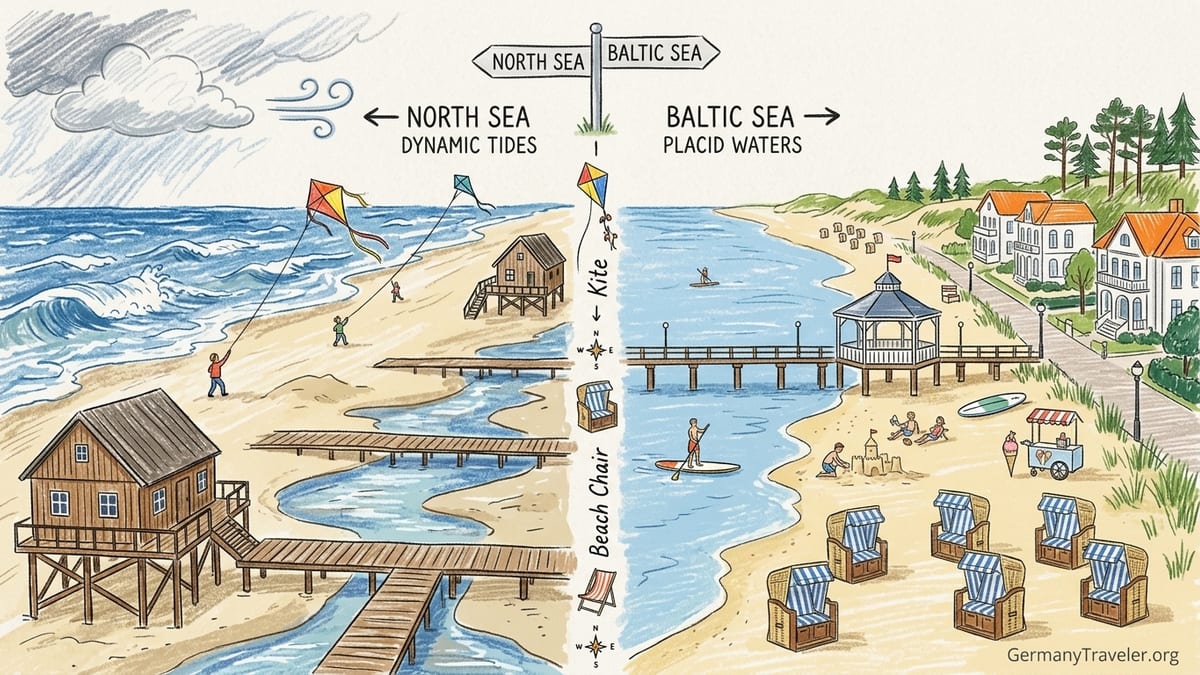
The German North Sea and Baltic Sea are only a few hours apart by car, but they feel like two different worlds. Stand on the dune above Sankt Peter Ording on a July afternoon and you will see a huge, windswept beach, waves rolling in from the open North Sea and wooden stilt houses standing in the sand. Come back six hours later and the water may have retreated hundreds of meters, leaving wet sand and tidal channels where swimmers had been earlier that day.
On the Baltic coast in places like Timmendorfer Strand, Kühlungsborn or Binz on the island of Rügen, the sea looks much more placid. The Baltic is an inland sea with weaker tides, so the waterline hardly moves. The beaches are usually narrower than at the North Sea but still sandy and comfortable, with neat rows of traditional wicker beach chairs, a long promenade behind the dunes, ice cream parlors and evening concerts in small seaside pavilions. The overall feeling is more relaxed and orderly, with fewer surprises from the sea.
This physical difference shapes the whole holiday. North Sea trips are often about big skies, brisk walks along the dike, watching the weather change and timing your day around the tide tables. Baltic holidays lean toward leisurely swimming, strolling the pier, renting a paddleboard or pedalo and knowing that the water will be in roughly the same place all day. If you like gentle predictability, the Baltic wins. If you are drawn to elemental forces and dramatic landscapes, the North Sea is more compelling.
For many travelers, the choice is emotional as much as practical. German families who return to the same island every year will insist that the atmosphere on “their” coast is unique. As a first time visitor, you do not need that loyalty. Instead, focus on what you actually want to do all week and choose the coast that makes those activities easiest.
Beaches, Tides and Swimming Conditions
The strongest practical contrast is how the water behaves. At the North Sea, tides dominate daily life along the coast. On islands like Sylt, Amrum or Föhr you can watch the sea come and go completely twice a day, exposing the Wadden Sea’s mudflats at low tide. In the North Frisian region, popular resort towns such as Büsum or Cuxhaven even publish printed tide calendars every season so visitors know when they can swim or take a mudflat tour. At high tide, waves can be lively, and the water is noticeably saltier, which many swimmers feel on their skin and lips.
Swimming at the North Sea is perfectly possible in summer, but you often have to plan around the tides and accept that conditions may change quickly with wind and currents. On Sylt, for example, lifeguards mark safe swimming zones with flags from roughly May to early October, and warning signs remind visitors not to underestimate rip currents or hidden obstacles exposed only at low tide. Families with smaller children often prefer the more sheltered east sides of the islands or tidal lagoons where the water is shallower and waves gentler.
The Baltic coast is quite different. Because it is only weakly connected to the North Sea, tidal ranges are minimal, and beaches like Scharbeutz, Grömitz or Nienhagen have water that stays put throughout the day. You can spread out your towel in the morning and expect the sea to still be there when you return from lunch. Waves are usually modest, except during storms, and the water is less salty. In July and August, on warm days the Baltic often reaches temperatures in the low twenties Celsius, which many swimmers find more inviting than the fresher North Sea.
If your priority is easy all day swimming, especially with school age kids who like to run in and out of the water without checking a tide table, the Baltic usually offers a smoother experience. If you are intrigued by walking barefoot across wet sand where waves rolled hours before, and do not mind that the sea may “disappear” for a while each day, the North Sea’s changing shoreline becomes part of the holiday’s charm.
Families, Kids and First German Beach Holidays
For families, both coasts work well, but the details matter. Along the North Sea, classic family destinations include Sankt Peter Ording with its wide sandy beach and playground equipped stilt houses, the quieter island of Föhr with green dikes and a mostly sandy coastline, and the village of Neuharlingersiel in Lower Saxony, where kids can watch shrimp boats come and go. Many towns run children’s programs in summer, such as guided mudflat walks, seal watching boat trips from Harlesiel or Büsum and nature discovery days inside Wadden Sea visitor centers.
Parents with toddlers, however, sometimes find the North Sea more demanding. On a windy day in St Peter Ording or on the west coast of Sylt, sand can sting bare legs, and when the tide is low, the actual waterline might be a long walk from the beach entrance. The landscape is spectacular, but a pushchair and tired three year old can turn that drama into a small logistical challenge. In return, you get huge spaces for kite flying, beach sailing and building giant sand forts that survive for hours as the tide creeps back.
The Baltic is usually the easier introduction to German beach holidays for families who simply want straightforward swimming and short distances. Resorts such as Grömitz, Boltenhagen or Binz on Rügen are built around family needs, with playgrounds directly on the promenade, small funfairs in peak season, mini golf, bike rental stands and in some places covered piers with indoor play areas for rainy days. Family hotels in these resorts often include indoor pools and breakfast buffets tailored to children, so even if the weather turns cool you still have a reliable water fix and plenty of activities within walking distance.
Real-world price examples change year to year, but as a rough guide a simple self catering holiday apartment for four near the beach in a mid range Baltic resort outside school holidays might start from the low to mid three digit range per night, while a comparable place on a prestige North Sea island like Sylt often costs more in peak summer. Budget conscious families often look at mainland Baltic towns or less famous North Sea spots such as Büsum or Carolinensiel to balance seaside access with manageable prices.
Islands, Road Trips and Getting Around
Island hopping is one of the joys of the German North Sea. The North Frisian islands of Sylt, Amrum and Föhr sit inside or near the Wadden Sea National Park and feel distinctly maritime. Sylt, Germany’s northernmost island, combines 40 kilometres of surf facing beach with upscale boutiques and high end restaurants in towns like Kampen and Westerland. It is reachable via car train from Niebüll or domestic flights, and in high season train tickets and parking fees can become a noticeable part of your budget.
Nearby Amrum offers a different atmosphere. With only around 20 square kilometres of land and one of Europe’s widest sandy beaches, nicknamed Kniepsand, it feels more laid back than Sylt and is especially popular with nature lovers and families who enjoy long walks on open sand. Regular ferries connect Amrum with Dagebüll on the mainland, and crossings are part of the trip’s charm as you glide past sandbanks, small Hallig islets and flocks of seabirds. Föhr, reached via the harbour town of Dagebüll, offers green fields, small villages with thatched houses and a softer microclimate sheltered by neighbouring islands.
On the Baltic side, Germany’s main holiday islands are Rügen and Usedom, both accessible by road and rail over fixed bridges or causeways. Rügen is the larger and more varied, combining broad sandy beaches in Binz or Sellin with dramatic chalk cliffs in Jasmund National Park and quiet inland lakes. You can easily base yourself for a week in Binz, spend mornings on the family friendly beach with its pier and beach chairs, then take day trips by car or the narrow gauge tourist railway called Rasender Roland to explore lighthouses and fishing villages.
Usedom, split between Germany and Poland, markets itself as a sun rich island with long beaches from Ahlbeck to Heringsdorf and an elegant promenade lined with turn of the century villas. Because both islands are reachable without ferries, they lend themselves well to road trips: you can leave Berlin in the morning, stop in Stralsund for lunch and be on a Baltic beach by late afternoon. The mainland Baltic coast between Lübeck Bay and the Mecklenburg lake district also offers an easy series of stops, from Travemünde’s ferry harbour to smaller villages like Zingst on the Fischland Darss peninsula.
If you enjoy the feeling of “crossing water” and stepping onto an island separated from the mainland, the North Sea has the edge. If you want the flexibility to come and go by car without worrying about ferry timetables or extra ticket costs, the Baltic islands and coast are more practical.
Weather, Seasons and Overall Atmosphere
Weather is a decisive factor in northern Germany. The North Sea is typically windier and feels cooler, especially in shoulder seasons like May, early June and September. On a typical summer day in Sankt Peter Ording or on Amrum, you may get a mix of sunshine, fast moving clouds and short showers as low pressure systems roll in from the Atlantic. Even in July and August, many people keep a light down jacket or windbreaker in their luggage next to swimsuits and sandals.
The upside is that North Sea air feels fresh and clear, and heat waves are rare. Many visitors with hay fever or respiratory problems find the climate soothing, which is why spa resorts with “North Sea air cures” have a long tradition here. The atmosphere on beaches is active and somewhat rugged: people walk dogs along the dike in all seasons, fly kites against a grey sky and accept that beach days may end with hot tea in a thatched café rather than a sunset cocktail.
The Baltic coast usually enjoys slightly milder and more stable weather, sheltered from the full force of Atlantic systems. Summer days on Rügen or in Kühlungsborn are often warm but not oppressive, with more frequent periods of settled high pressure. In practice that can mean several days in a row where you can plan beach activities without constantly checking the forecast. When hot continental air reaches northern Germany, Baltic beaches become classic summer scenes with packed promenades, long queues at ice cream stands and evening swims in calm water that retains warmth.
Atmospherically, the Baltic resorts often feel a touch more nostalgic and genteel, with white villas from the 19th century, music pavilions and people dressed for a pre dinner stroll along the pier. The North Sea, especially in Schleswig Holstein’s Wadden Sea region, feels more rural and nature focused. You might stay in a farmhouse holiday apartment behind the dike, wake to the sound of sheep grazing nearby and end the day watching sunsets over endless mudflats at low tide.
Watersports, Cycling and Active Holidays
If you are planning an active holiday, both coasts are strong contenders, but their strengths differ. The North Sea’s reliable wind and open water attract kitesurfers and windsurfers to spots like Sankt Peter Ording, where shallow sandbanks and long beaches create ideal training grounds. On islands like Amrum and Sylt, you also find surf schools offering beginner and intermediate courses, as well as stand up paddling on the more sheltered Wadden Sea side when the tide is in. Mudflat hiking with a licensed guide is one of the signature experiences of the Wadden Sea, allowing you to walk out from the beach across the seabed at low tide to sandbanks or even neighbouring islands under safe conditions.
The Baltic, by contrast, is more about paddleboards, kayaks and relaxed sailing. Calm water in bays such as Lübecker Bucht or around Fehmarn makes it easy for beginners to try stand up paddling without worrying about large waves. Marinas in resorts like Kühlungsborn or Heiligenhafen offer sailing schools and short boat tours, including evening cruises along the coast. Windsurfing and kitesurfing do exist here, especially on Fehmarn which has spots facing both open Baltic and more sheltered waters, but the overall feel is less extreme than on the North Sea.
Both coasts are excellent for cycling. On the North Sea, the signposted North Sea Cycle Route follows dikes, marshland and small fishing villages. Families can rent bikes in towns like Husum or Büsum and ride on mostly flat, traffic light paths watching sheep, cows and birdlife in the salt marshes. On the Baltic, cycle paths often parallel the seafront, so a leisurely ride from Timmendorfer Strand to Scharbeutz, for example, becomes a sequence of beaches, cafés and sea views, with frequent chances to stop for a swim.
Realistically, if your dream holiday is trying or improving wind based watersports like kitesurfing or wave riding, the North Sea has the edge. If you mostly want gentle paddleboarding, short family sailing lessons and lots of opportunities for casual bike rides with frequent ice cream stops, the Baltic feels tailor made.
Accommodation, Prices and Practicalities
Across both coasts, the main accommodation types are similar: self catering holiday apartments, thatched roof holiday houses, mid range hotels and classic seaside spa hotels with wellness facilities. On the North Sea, many visitors choose Ferienwohnungen on farms behind the dike or in small villages, often at slightly lower prices than frontline beach apartments on major islands. For instance, a simple two bedroom flat on the mainland near Husum or Büsum can cost notably less in peak summer than a comparable unit in Westerland on Sylt, where prestige and limited space push rates upward.
On the Baltic, purpose built beach resorts offer many family hotels with package prices that include breakfast or half board, kids’ clubs and sometimes access to indoor pools or small water parks. Large destinations like Grömitz, Boltenhagen or the Mecklenburg spa resorts typically have a wide range of categories from simple guesthouses to smart boutique hotels in renovated villas. Inland a short drive away, small towns and lakeside areas often offer more affordable accommodation, which can work well if you are driving and happy to combine beach days with countryside excursions.
Travel logistics can also influence your choice. The Baltic coast has more rail connected resorts, including Binz on Rügen and Timmendorfer Strand near Lübeck, which you can reach from major cities like Berlin or Hamburg with one or two changes. North Sea islands usually require a combination of train or car and ferry or car train. These connections are efficient but add to travel time and sometimes cost, especially if you are taking a car over to islands like Sylt or Föhr during school holidays when demand is high.
In general, the Baltic coastline offers slightly more choice for short, spontaneous weekend trips, because you can often decide on a Thursday to drive up for a sunny Saturday without worrying about ferry reservations. The North Sea rewards longer stays and a bit more forward planning, especially if you want a coveted strandkorb beach chair directly at the waterline on busy islands in peak season.
The Takeaway
If you strip the question down to its core, the German North Sea is the better choice for travelers who value wild nature, big skies, dramatic tides and wind powered activities, and who do not mind adjusting their plans to the moods of the sea. The Baltic coast suits those who prefer calm water for swimming, classic promenade life, stable summer weather and easy logistics by car or train.
Families with water confident kids who love waves, long beach walks and mudflat exploration often thrive at the North Sea, especially on islands like Amrum, Föhr or parts of Sylt where nature is the main attraction. Families with toddlers or grandparents in the group usually find it simpler on the Baltic, where they can spend unhurried days between the beach and the promenade without poring over tide timetables or watching for changing currents.
Budget and travel style matter, too. North Sea islands with limited space and high demand lean more toward higher nightly rates, restaurant prices and parking fees, while many Baltic resorts and mainland towns provide a broader spread of options from modest apartments to upscale spa hotels. Neither coast is inherently cheap in German high season, but with flexible dates and willingness to look at less famous towns you can shape a holiday that fits your finances.
In the end, there is no universally “better” coast, only the one that aligns with what you want this particular trip to be. If you have a week, you can even split your time, starting with a few blustery days at the North Sea watching the tide roll over the Wadden flats, then driving across Schleswig Holstein to finish with warm evening swims and ice cream on a Baltic promenade. Many German holidaymakers do exactly that over the years, and often end up loving both coasts for what they are.
FAQ
Q1: Which coast is better for swimming with children, North Sea or Baltic?
The Baltic coast is usually better for uncomplicated swimming with children because tides are weak, the waterline stays similar all day and waves are often smaller, which makes it easier for kids to go in and out of the water without worrying about strong currents or long walks to reach the sea.
Q2: Is the German North Sea really much colder than the Baltic in summer?
In high summer the temperature difference is often only a few degrees, but the North Sea usually feels fresher because of stronger winds and more exposed open water, while sheltered Baltic bays can warm up more quickly during sunny periods.
Q3: Do I need to check tide tables for a holiday on the Baltic coast?
No, for normal beach use you generally do not need tide tables on the Baltic coast, because tidal changes are small and the sea does not retreat for hundreds of meters in the way it does along much of the North Sea shore.
Q4: Which German islands are best for a first North Sea trip?
For a first North Sea holiday many travelers choose Föhr or Amrum for a relaxed family atmosphere and wide beaches, or Sylt if they want a mix of long surf beaches, restaurants and nightlife along with Wadden Sea nature on the eastern side.
Q5: What are good starter destinations on the German Baltic Sea coast?
Popular first time choices on the Baltic include Timmendorfer Strand and Scharbeutz near Lübeck, Grömitz in Holsteinische Schweiz, and the island of Rügen with resorts like Binz and Sellin that combine sandy beaches with easy day trip options.
Q6: Is a North Sea holiday much more expensive than a Baltic holiday?
Prestigious North Sea islands like Sylt can be noticeably pricier for accommodation and dining in peak season, but on both coasts prices vary widely, and mainland North Sea towns or less famous Baltic resorts can offer similar value if you book early and avoid school holiday peaks.
Q7: Which coast is better for watersports like kitesurfing and windsurfing?
The North Sea is generally stronger for wind based sports such as kitesurfing and wave riding thanks to more consistent wind and open exposure, while the Baltic excels for calmer activities like stand up paddling, relaxed sailing courses and family friendly kayaking in sheltered bays.
Q8: Can I visit both the North Sea and Baltic Sea in one trip?
Yes, it is very feasible to combine both coasts in a single holiday, especially in Schleswig Holstein where a drive from the North Sea Wadden Sea area to the Baltic around Lübeck Bay can take only a few hours, allowing you to experience both atmospheres in one itinerary.
Q9: Is it necessary to have a car for a beach holiday on either coast?
A car gives more flexibility, especially for reaching smaller North Sea harbours and ferry terminals or exploring Baltic side trips, but several Baltic resorts and some North Sea islands like Sylt are accessible by train, so a car free holiday is possible if you choose your base carefully.
Q10: When is the best time of year for a German beach holiday?
The most reliable months for beach weather are usually July and August, with June and early September often pleasant but more variable; outside these months you can still enjoy walks, cycling and spa facilities, but should expect cool temperatures and pack windproof clothing.