


The German North Sea coast has become one of Europe’s most competitive short‑stay markets, and nowhere is this clearer than in the surge of vacation rentals. Current booking platforms list roughly 1,687 rentals around Westerland on Sylt, about 1,200 around Cuxhaven, 1,105 around St. Peter‑Ording, 1,100 around Büsum and 975 around Norderney. For travelers this means strong choice, but also higher prices and more fine print. This guide walks you through the key destinations and what to know before you book a Ferienwohnung (apartment) or Ferienhaus (holiday house) along Germany’s North Sea coast.
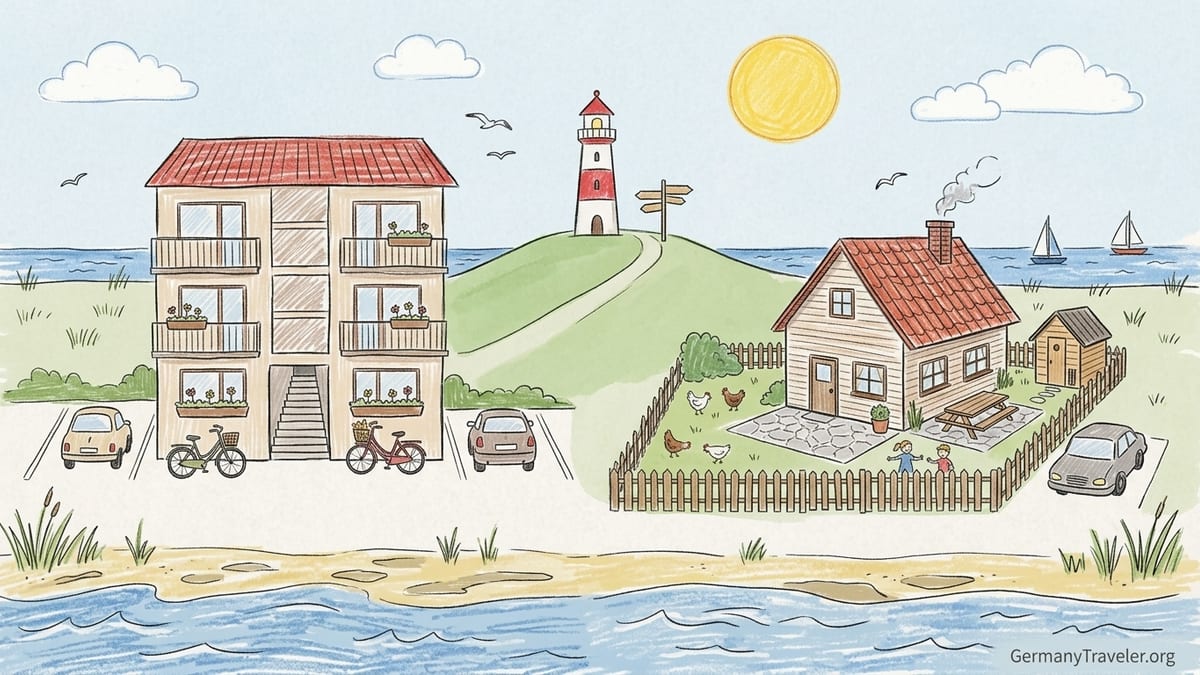
Ferienwohnung or Ferienhaus: What You Really Get
On the German North Sea, the two main self‑catering options are Ferienwohnung (apartment) and Ferienhaus (holiday house). In practice, a Ferienwohnung is usually one unit inside a larger building, often 35 to 70 square meters, with one or two bedrooms and a balcony or small terrace. In Büsum, for example, the Deichlodge apartments sit in a multi‑unit house between the town center and the Familienlagune Perlebucht and offer compact one‑ and two‑room units with shared stairwells and a common style of decor. A Ferienhaus is normally a standalone building, often 80 to 120 square meters, with its own entrance, private garden or terrace and space for families or small groups.
For couples, a Ferienwohnung near the Kurzentrum in St. Peter‑Ording can be ideal. One central apartment marketed for two people offers a living‑sleeping room, a small kitchen, a modern shower and, crucially, a reserved underground parking space. By contrast, a holiday house in a Cuxhaven suburb such as Altenbruch or Duhnen might include two or three bedrooms, a separate living room, a full kitchen, a small sauna and a fenced garden. That makes a real difference if you are bringing children, surfboards or bikes and want storage and outdoor space rather than a compact balcony.
Price differences reflect that extra space. A mid‑range one‑bedroom apartment in Büsum or Cuxhaven can start around 70 to 110 euros per night in shoulder season, while a detached house with three bedrooms, garden and sauna on Föhr or near Cuxhaven’s beach areas can easily reach 160 to 220 euros per night in high summer, sometimes more on Sylt or Norderney. Families often find that the higher nightly rate for a Ferienhaus still compares favorably with booking multiple hotel rooms, especially when they factor in home‑cooked meals and shared living areas.
Cleaning and energy are another difference. Many apartments on the mainland now fold final cleaning and utilities into the total price, while some larger holiday houses still quote a separate end‑cleaning charge or have higher base prices to reflect the extra work and consumption. Always read the breakdown: a compact two‑room apartment in Büsumer Deichhausen can advertise a nightly base rate plus a modest cleaning fee, while a farmhouse‑style holiday home near Cuxhaven may bundle cleaning, water and electricity into a single seasonal rate. The end result can look similar, but the way it is presented differs.
Regional Overview: Where to Book on the North Sea Coast
Sylt and Westerland sit at the luxury end of the market. With around 1,687 rentals listed around Westerland alone, the island caters heavily to domestic visitors looking for premium apartments close to the Kampen dunes or the Westerland promenade. Expect manicured facades, designer interiors and high prices even outside school holidays. Meanwhile Cuxhaven, with around 1,200 rentals, is a classic mainland resort where families book apartments in Duhnen or Döse with quick access to the beach, the Wadden Sea flats and kid‑friendly infrastructure.
St. Peter‑Ording and Büsum offer a slightly more relaxed but still highly developed scene. St. Peter‑Ording’s roughly 1,105 rentals are spread across the long sandbank and the four districts of the town. You get a mix of small studios in apartment complexes near the Kurzentrum, family apartments in residential streets and a limited number of holiday houses closer to the dunes. Büsum and the adjoining village of Büsumer Deichhausen account for around 1,100 rentals, many of them in two‑ to four‑unit houses tucked behind the dike or around the Perlebucht lagoon. This is a strong choice if you like a traditional harbor atmosphere and shorter walks than in the very spread‑out resorts.
Norderney, with about 975 listings, sits between Sylt’s polish and Büsum’s family focus. The town center is dense, with 19th‑century villas converted into holiday apartments and modern apartment houses scattered in the side streets. Outside the town, a smaller number of contemporary houses and apartments sit near the dunes or in quieter residential quarters. A similar pattern appears on Föhr and Borkum, where villages like Wyk auf Föhr or Borkum town cluster many small apartments and a limited stock of detached houses with gardens.
The East Frisian mainland resorts, such as Neuharlingersiel, Carolinensiel and Norddeich, add yet another layer. These coastal villages usually have a compact harbor, a promenade and belts of newer holiday apartment buildings behind the dike. Here, vacation rentals are often slightly more affordable than on the islands, while ferry links make day trips to Norderney, Langeoog or Borkum easy. Travelers with cars or those trying to keep costs under control often use these mainland bases to experience North Sea island life without paying island premiums every night.
Beachfront Premiums and Location Trade‑offs
Across the North Sea coast, beachfront or dune‑side locations carry a noticeable premium. On Sylt, a modern one‑bedroom apartment with partial sea view in Westerland or Wenningstedt can cost double what you would pay for a similar‑sized unit a few streets back, especially in July and August. In Cuxhaven‑Duhnen, a two‑room apartment in a building directly on the beach promenade might charge 130 to 160 euros per night in high season, while a comparable apartment ten to fifteen minutes’ walk inland lists closer to 90 to 110 euros for the same period.
St. Peter‑Ording is a special case because the sandy beach is wide and the stilted beach restaurants sit far out on the sand. Even apartments that market themselves as “strandnah” still require a walk across the dune and salt marsh. You pay more for units near the beach access roads and spa facilities, not necessarily for literal sea view. A compact apartment at the Kurzentrum with a dedicated parking space and elevator can cost 100 to 140 euros per night in main season, while simpler units back in the village stay lower, even if the walking distance is similar.
Büsum’s Perlebucht and harbor district create another micro‑market. Apartments that border the family lagoon or sit directly on the dike can command a premium of 20 to 40 percent over those located a few streets inland. A two‑room unit near the lagoon might reach 140 euros in August, while a similar property in Büsumer Deichhausen, a short bike ride away, advertises rates closer to 90 euros and attracts guests happy to trade direct beach access for quieter surroundings and lower costs.
On Norderney and Föhr, the town centers compress demand. Historic villas one street behind the promenade often advertise “Meerblick” from upper floors and price accordingly, while ground‑floor apartments without view but within the same building can be significantly cheaper. Borkum’s town layout means that even centrally located apartments are usually a short walk from the beach; the main difference is proximity to the promenade, shops and the railway station. If you plan to spend entire days on the sand, a slightly higher rate for a promenade‑adjacent building can save on daily logistics, especially with children and beach gear.
Inside the Rental: Kitchens, Washing Machines, Parking and Pets
A key advantage of both apartments and holiday houses over hotels is the kitchen. Even smaller Ferienwohnungen in Büsum or St. Peter‑Ording usually have a kitchenette with two‑burner hob, fridge, dishwasher and basic cookware, enough for breakfast and simple dinners. In Cuxhaven‑Döse, for example, a one‑bedroom apartment in a mid‑range building might come with a compact but full kitchen, including oven and dishwasher, allowing guests to cook local fish bought at the harbor. Larger holiday houses on Föhr or near Cuxhaven often add extras such as large fridges, baking ovens and outdoor grills on the terrace.
Washing machines are more unevenly distributed. Many detached houses on Borkum, Föhr and along the East Frisian mainland have private washing machines and sometimes dryers, which is invaluable for families staying longer than a week or surfers drying wetsuits. By contrast, city‑style apartments in Westerland or Norderney’s center may not have private machines. Some complexes offer a shared laundry room in the basement that operates on coins or tokens, while smaller buildings simply suggest using a local laundromat. If you are traveling with small children or for two weeks or more, it is worth making “Waschmaschine in der Wohnung” or “Waschmaschine im Haus” a firm filter when you search.
Parking is another practical detail that varies sharply by location. In St. Peter‑Ording, many modern apartment buildings and holiday houses offer an on‑site parking space, sometimes in underground garages. A central apartment there highlights a reserved underground spot as a major advantage, saving guests the hassle of searching for street parking near the busy Kurzentrum. In Cuxhaven and Büsum, it is common for houses to include at least one parking space in the yard or on the driveway, although multi‑unit houses may have compact or tandem parking arrangements.
Pets are widely accepted in the North Sea region but never assumed. Individual owners decide whether dogs are allowed and often charge a modest daily supplement or a one‑off pet fee. A house in Büsum might explicitly allow one dog and provide a tiled floor, garden and outdoor hose for rinsing sand, while a city apartment in Westerland or Norderney’s center may have a strict no‑pets policy due to building rules or allergy concerns. Travelers with dogs should also check local regulations on dog beaches and leashes, as islands and mainland resorts designate specific stretches of sand for dogs and enforce seasonal restrictions.
Cleaning Fees, Minimum Stays and the Small Print
German consumer rules mean that quoted prices for vacation rentals now usually include mandatory charges like final cleaning and energy, but presentation still differs by provider. Some owners bundle everything into a single nightly rate, while others show a lower per‑night price plus a separate end‑cleaning charge. A farmhouse apartment near Cuxhaven lists “Endreinigung inklusive” in its seasonal table, with main‑season prices around 115 euros per night for a 45‑square‑meter unit, making it easier to compare with hotels. On the other hand, a smaller apartment in Büsumer Deichhausen might show a basic rate of under 60 euros per night outside school holidays but add a one‑time cleaning fee that only becomes obvious when you reach the booking summary.
Guests sometimes underestimate what “final cleaning” includes. Even when end‑cleaning is charged, owners usually expect guests to leave the property in a reasonably tidy state: dishes washed or in the dishwasher, trash disposed of in the correct bins and sand shaken out as best as possible. Disputes occasionally arise when owners claim extra cleaning time and attempt to bill guests after departure. While such cases are not the norm, they illustrate the importance of reading house rules carefully, especially in larger holiday houses with gardens, saunas or fireplaces that require more work after heavy use.
Minimum stays have tightened as demand has surged. On Sylt and Norderney, many hosts require five to seven nights in high summer and during major holidays. It is still possible to find three‑night stays in shoulder seasons, but short stays under three nights are rare in peak weeks. On the mainland, especially in Cuxhaven or Büsum outside school holidays, some apartments accept two‑night bookings, though owners may charge a slightly higher nightly rate for very short stays to compensate for the fixed cleaning effort. Travelers planning weekend escapes in May or September should book early to secure properties that accept shorter stays.
Cancellation and deposit policies vary. Some professional agencies in Cuxhaven, Büsum or the East Frisian mainland require a deposit of around 20 to 30 percent at booking and balance payment a few weeks before arrival, with a sliding refund scale depending on when you cancel. Private owners sometimes ask for bank transfers instead of card payments and may offer more flexible arrangements in low season. On the premium islands, agencies tend to follow stricter schedules, reflecting consistently high occupancy; last‑minute cancellations during July or August can mean forfeiting a significant portion of the rental cost.
Islands vs Mainland: Access and Ferry Issues
Access logistics are a major difference between mainland resorts and the islands. Cuxhaven, Büsum and St. Peter‑Ording sit on the mainland, so you can drive directly to your rental and park on site without worrying about ferries or car quotas. Even busy districts like Cuxhaven‑Duhnen or Büsum’s harbor remain reachable via standard federal roads and regional trains, though traffic can be heavy on summer Saturdays. This ease of access makes mainland rentals particularly attractive for families carrying lots of gear or for travelers arriving late at night.
Sylt is reached by train, including the popular car shuttle from Niebüll, and by limited flights. Although there is no conventional car ferry from the German mainland, you still need to plan arrival slots on peak days, as car shuttles sell out and traffic backs up toward the causeway. Once on the island, parking in Westerland and Kampen is scarce and often paid, which increases the value of a rental that includes an on‑site space. If you plan to arrive by train without a car, selecting a Westerland apartment close to the station and supermarkets can keep your holiday car‑free.
Ferry access comes into play for Norderney, Föhr and Borkum, as well as for the East Frisian offshore islands. Norderney’s ferries leave from Norddeich, with some departures requiring advance reservations for vehicles during peak season. The crossing is short, but shifting tides and weather can affect schedules, particularly in autumn and winter. On Föhr, most visitors sail from Dagebüll, with clear instructions on when cars must be at the pier before departure. Borkum is reached via Emden or a neighboring terminal, with both regular ferries and faster catamarans; the latter are passenger‑only, making them unsuitable if you are bringing a car.
Staying on the mainland in villages like Norddeich, Neuharlingersiel or Carolinensiel can mitigate ferry complexities. You can park your car near your vacation apartment, take a day ferry to an island and return in the evening, avoiding the need to book car decks and adapt to island parking restrictions. This hybrid strategy is especially helpful for travelers who are unsure how they or their children will cope with island logistics or for those traveling outside high season, when some island services run on reduced schedules and late‑evening crossings are limited.
Price Signals and How to Read the Market
The current distribution of rentals, with roughly 1,687 around Westerland, 1,200 around Cuxhaven, 1,105 around St. Peter‑Ording, 1,100 around Büsum and 975 around Norderney, underlines how transactional the North Sea rental market has become. High listing numbers do not automatically mean spare capacity; in summer holidays and during long weekends, many of these units are fully booked. Instead, the numbers show how finely segmented the market is, with everything from budget studios to designer penthouses competing for attention on major booking platforms.
For travelers, nightly price is only one part of the equation. Look closely at what is included: final cleaning, bed linen, towels, parking and tourist tax can all move the total cost. A “budget” apartment that initially appears at 80 euros per night but charges 90 euros for end cleaning, linen rental and parking may ultimately cost more per stay than a 110‑euro unit that includes all extras and has a shorter minimum stay. Platforms increasingly show total stay costs early in the booking process, but agency sites and private owners might still display split figures that require careful addition.
Seasonality is strong. High season typically encompasses the school summer holidays, major public holidays such as Easter and some autumn weeks with school breaks. Prices then step down into “Zwischensaison” and “Wintersaison,” with significant savings. A one‑bedroom apartment in Büsum that charges over 130 euros per night in August may fall to under 70 euros in November, sometimes with flexible arrival days and reduced minimum stays. Similar patterns appear in Cuxhaven and St. Peter‑Ording, where winter attract guests who enjoy long walks in stormy weather, spa visits and quieter towns.
Quality also differs widely, even at similar price points. Reviews, up‑to‑date photographs and detailed descriptions of mattresses, blackout curtains, heating and ventilation matter on a coastline where wind, salt and sand affect buildings quickly. A freshly renovated apartment one block behind the promenade in Norderney may be a better long‑term value than an older, sea‑facing unit with dated insulation and thin windows. Travelers who are sensitive to noise or temperature should look for mentions of triple glazing, modern heating systems and sun‑shading, particularly in compact top‑floor apartments.
FAQ
Q1. What is the main difference between a Ferienwohnung and a Ferienhaus on the German North Sea coast?
A Ferienwohnung is usually an apartment within a larger building, often 35 to 70 square meters with shared entrances, while a Ferienhaus is a standalone holiday house with its own entrance, garden or terrace and more space for families or groups.
Q2. How much more do beachfront or sea‑view rentals cost compared with properties set back from the coast?
In places like Sylt, Cuxhaven or Büsum, units close to the promenade or dike can be roughly 20 to 50 percent more expensive than similar apartments a few streets inland, especially in high summer.
Q3. Do most North Sea vacation rentals include a fully equipped kitchen?
Yes, even small apartments typically have a kitchenette with hob, fridge and basic cookware, while larger houses often provide full kitchens with oven, dishwasher and larger fridges suitable for families.
Q4. How common are washing machines in North Sea vacation rentals?
Washing machines are common in larger holiday houses and in many mainland apartments but less guaranteed in compact city‑style units on Sylt or Norderney, where shared laundry rooms or local laundromats may be the alternative.
Q5. Are final‑cleaning charges always included in the advertised price?
Many providers now bundle final cleaning into the total price, but some still show a separate one‑off fee, so it is essential to read the cost breakdown and house rules before confirming a booking.
Q6. What minimum stay should I expect when booking in peak season?
On islands like Sylt and Norderney, five to seven nights are typical in high season, while mainland resorts such as Cuxhaven or Büsum may accept three‑ or even two‑night stays, especially in shoulder periods.
Q7. Do I need to bring a car to enjoy the North Sea islands?
No, many travelers arrive by train and ferry and stay car‑free, particularly in Westerland or central Norderney, but bringing a car offers flexibility on larger islands and requires advance planning for car shuttles or ferry spaces.
Q8. Are pets allowed in most North Sea vacation rentals?
Pets are allowed in a significant share of rentals, especially houses with gardens, but each owner sets their own rules, so pet‑friendly filters and checking for any extra fees are essential.
Q9. How far in advance should I book a popular North Sea rental in summer?
For peak July and August weeks, booking three to six months ahead is prudent for sought‑after areas like Sylt, St. Peter‑Ording and Norderney, while mainland options sometimes remain available closer to arrival.
Q10. Is it cheaper to stay on the East Frisian mainland and visit the islands on day trips?
Often yes, as apartments in mainland villages like Norddeich or Neuharlingersiel tend to be more affordable than island properties, and regular ferries make day trips to Norderney, Borkum or other islands straightforward.