


The Moselle Valley between Trier and Koblenz is one of Germany’s most atmospheric river landscapes: steep vineyards, half-timbered wine towns and castles reflected in the water. Choosing the right hotel here is not just about a comfortable bed. The best stays combine river or vineyard views, serious spa facilities, romantic architecture and easy access to wineries, walking paths and boat piers. This guide focuses on four key hubs Trier, Bernkastel-Kues and nearby Mülheim, Traben-Trarbach, Cochem and a handful of smaller villages, with an emphasis on 4 and 5 star hotels and historic and wellness properties promoted by regional tourism boards.
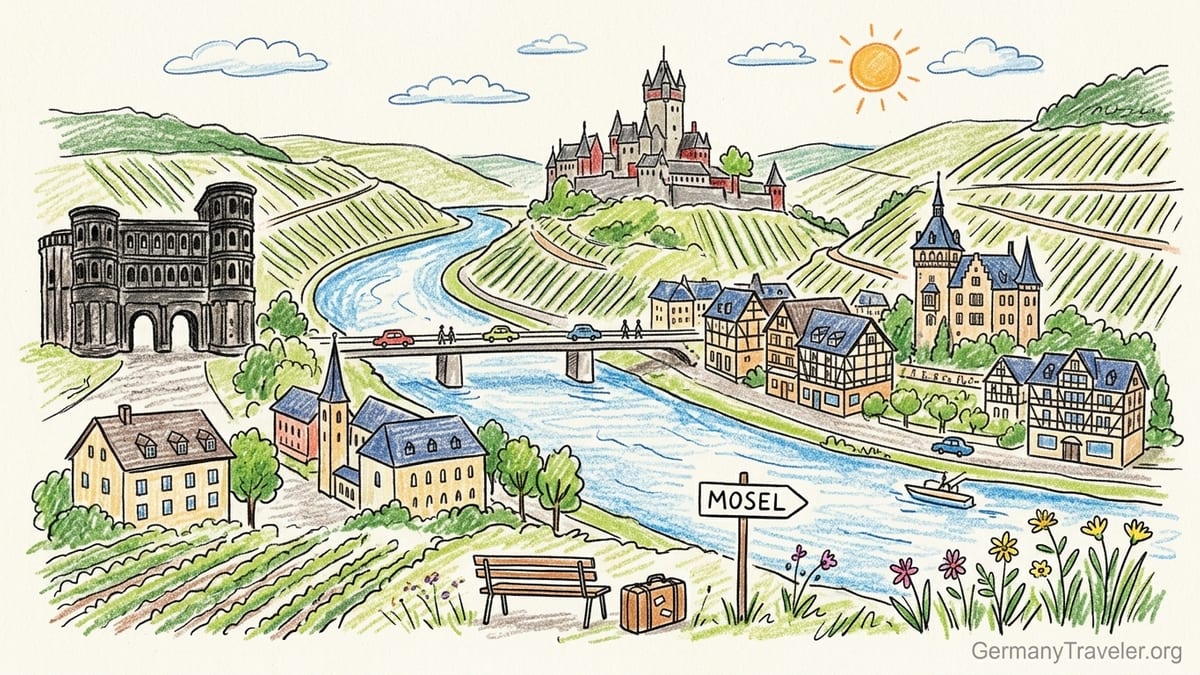
Trier and the Lower Moselle: Historic Base With Urban Comfort
Trier, close to the Luxembourg border, is the largest city on the Moselle and makes a practical base if you want a mix of Roman history and wine country. Hotels here are less likely to sit directly in the vineyards, but several upscale options give you quick access to the river, good public transport and strong dining scenes. Prices for 4 star hotels in Trier typically start around the low to mid 100 euro range per night in shoulder season, rising on summer weekends and during major events.
For travelers who prioritize wellness and gastronomy, Blesius Garten in Trier-Olewig is a notable choice. Official Moselle tourism lists it among the top accommodations for its combination of craft brewery, refined regional restaurant and wellness area with pool and saunas. Rooms look toward gardens and village roofs rather than directly onto the Moselle, but the upside is a quieter residential setting just a short bus or taxi ride from the old town and riverfront. Parking is straightforward, which matters if you are touring wineries by car.
If you prefer to stay within walking distance of Trier’s Roman monuments and the river promenade, several centrally located 4 star hotels cluster around the pedestrian zone. While these properties often have more compact wellness facilities, they compensate with easy access to restaurants, shopping and the main station. From here, frequent regional trains and boats run along the Moselle, so you can spend the day tasting Riesling in villages like Schweich or Leiwen and return to a city-style hotel with reliable services, 24 hour reception and multilingual staff.
Compared with smaller wine towns deeper in the valley, Trier’s hotels are less about balcony views over vineyards and more about convenience and culture. That makes the city a good starting or ending point for a Moselle trip. Many travelers fly into Luxembourg or Frankfurt Hahn, pick up a rental car and spend the first or last night in Trier before continuing downriver toward Bernkastel-Kues, Traben-Trarbach or Cochem, where the classic postcard river scenery and resort hotels begin to dominate.
Bernkastel-Kues and Mülheim: Classic Moselle Views and Wine-Focused Hotels
Bernkastel-Kues sits roughly in the middle of the Moselle Valley and is one of its most recognizable wine towns, with steep slate vineyards such as Bernkasteler Doctor rising straight above half-timbered squares. Here you find a dense cluster of hotels and guesthouses, many within a few minutes’ walk of riverfront promenades and boat piers. Official local tourism puts a strong emphasis on 4 and 5 star hotels, historic properties and wellness-focused stays, and you will see that reflected in the range of options on both banks of the river.
Right in Bernkastel-Kues, DEINHARD’s is a good example of how traditional wine culture and contemporary design can be blended. The hotel occupies historic 17th century buildings but has modern interiors and, crucially, a rooftop wellness area and lounge with views over the old town, river and vineyards. You will not get private balconies in every room, but guests can head up to the roof for sunset, spa time and a glass of local Riesling. Walkability here is excellent: tasting rooms, restaurants and boat departures are just a few minutes away on foot, and parking is possible in nearby garages or hotel spaces for those arriving by car.
A few kilometers downriver on the opposite bank, Mülheim an der Mosel offers a slightly quieter base with some of the region’s most established spa hotels. Hotel Weisser Bär is a four star property that regional tourism highlights among the area’s wellness and luxury stays. Set right by the river, it combines themed interiors with a comprehensive spa, including pools, saunas and treatments that reference the local wine culture. Many rooms come with balconies facing the Moselle or the garden, and terrace dining in warm months means you can watch boats slide past while you eat. It is a strong choice if you want resort-style facilities and free parking, with Bernkastel-Kues just a short drive or taxi away for sightseeing.
Nearby, Schloss Lieser ups the luxury level again. This restored riverside castle now operates as a five star hotel with grand historic architecture, high ceilings and period details. The castle has been promoted as a flagship example of luxury accommodation along the Moselle, with a fine dining restaurant, bar, spa area and manicured grounds facing the river. Here the emphasis is on atmosphere as much as on wellness, and it suits travelers who want a romantic, almost fairy tale stay that still offers modern comforts like indoor pool, saunas and well equipped rooms. Parking is available on site and you can walk from the castle down to the river paths, although you will likely use a car or taxi for winery visits or boat trips starting in Bernkastel-Kues.
Traben-Trarbach: Spa Resorts and Art Nouveau Romance
Traben-Trarbach, about half an hour downriver from Bernkastel-Kues, has a distinct character thanks to its Art Nouveau heritage and history as a wealthy wine trading center. The twin towns face each other across the river, linked by a bridge, and the waterfront is lined with elegant villas and hotels. It is especially strong for travelers who want adult oriented spa hotels and romantic stays that mix architecture, wellness and views.
The leading example is Moselschlösschen Spa & Resort, an adults only 4 star superior hotel that has become a reference point for high end wellness on the Moselle. The resort occupies historic buildings along the Traben waterfront and has been extensively modernized, with contemporary rooms, a serious culinary program and a spa area of roughly 2,500 square meters. Facilities include an infinity pool facing the river, multiple saunas, a snow room, relaxation zones and private spa suites for couples. Many rooms offer river views, and landscaped terraces allow you to sit above the promenade with a glass of wine. Parking is typically available for hotel guests, and you can walk directly from the lobby onto the riverfront path or to nearby boat piers.
Just upriver on the Traben side, Romantik Jugendstilhotel Bellevue is another standout, especially for couples who enjoy historic character. The hotel occupies a listed Art Nouveau building designed in the early 20th century, and its interiors preserve stained glass windows, carved woodwork and period details. At the same time it offers modern comforts such as a spa area with a panoramic sauna overlooking the Moselle, steam room and relaxation deck. Some rooms have river view balconies or bow windows that let you watch the changing light on the vineyards across the water. Bellevue also offers on site bicycle and canoe rental, which is ideal if you plan car free days exploring towpaths, hillside trails and nearby wine villages.
Traben-Trarbach is also home to smaller boutique hotels and guesthouses that tap into the wellness theme with yoga, vinotherapy and quiet garden spaces. Compared with more compact medieval towns like Bernkastel-Kues or Beilstein, the streets here feel wider and slightly less crowded, especially outside peak summer weekends. Walkability is excellent on both banks of the river, with supermarkets, wine bars and restaurants close to most central hotels. There is a railway station with connections toward Trier and Bullay, so it is one of the best places in the valley for travelers who prefer to rely on trains and boats rather than a car.
Cochem and the Central Moselle: Castles, River Views and Family Resorts
Cochem, about midway between Trier and Koblenz, is another of the Moselle’s headline towns, dominated by Reichsburg Castle on a hill above the river. The town has a lively waterfront with boat piers, cafes and wine bars, and a wide choice of accommodation from simple guesthouses to polished 4 star hotels. It is particularly appealing for mixed groups or families who want classic river scenery, castle visits and easy transport rather than a pure spa retreat.
Among the higher end options, Moselromantikhotel Kessler-Meyer on the outskirts of Cochem is frequently highlighted in regional accommodation lists. This four star property combines comfortable rooms, many with balconies facing the vineyards or river valley, with a well regarded wellness area including pool, saunas and treatment rooms. Being slightly removed from the old town means you have quieter surroundings and good on site parking, while still being able to drive or take a taxi into central Cochem in a few minutes for dinner or boat trips. It suits travelers who appreciate the option of a spa session after a day of sightseeing or hiking up to the castle.
In and around the town center you will also find a number of modern boutique and traditional hotels directly on the riverbank. These typically offer front row balcony views but more limited wellness facilities, perhaps a small sauna or relaxation room rather than a full spa. They win on walkability: you can step out of the lobby straight onto the riverside promenade, reach boat piers in minutes and wander to wine bars and restaurants without worrying about driving. This style of base is particularly popular in summer, when evening light on the river and illuminated castle make a simple balcony with two chairs and a bottle of Riesling feel like luxury, even if the official star rating is more modest.
If you are traveling by train, Cochem is one of the most practical towns in the valley. Regional trains run frequently up and down the Moselle line, and many hotels are located within rolling suitcase distance of the station. That makes it realistic to plan a car free trip, combining Cochem with a second base in Traben-Trarbach or Bernkastel-Kues reached by train and boat. When comparing hotels here, pay close attention to whether your room type guarantees a balcony and direct river view, as some cheaper categories face the street or inner courtyards.
Smaller Villages: Beilstein, Brauneberg and Other Quiet Wine Towns
Beyond the main hubs, the Moselle Valley is dotted with small villages that offer atmospheric stays for travelers who prioritize peace and vineyard scenery over nightlife or big spa complexes. Places like Beilstein near Cochem, Brauneberg near Bernkastel-Kues, and riverside hamlets such as Enkirch or Zeltingen-Rachtig provide a more intimate experience of wine country. Accommodation ranges from traditional family run hotels and guesthouses to a handful of design oriented suites and wellness focused properties.
Beilstein, perched on a curve of the river just upriver from Cochem, is often described as one of the prettiest Moselle villages, with a compact medieval core and castle ruins above. Here you find a few characterful hotels right on the main square or by the river, many with half timbered facades and flowered balconies. Views are more about village roofs, church spires and steep vineyards than about wide open river panoramas, but the sense of stepping back in time is strong. Walkability is excellent because the village is tiny, although parking can be tight in high season and train access requires a short bus or taxi ride from larger towns.
Near Bernkastel-Kues, Brauneberg and neighboring villages host a mix of traditional wine estates with rooms and more contemporary options. One particularly notable modern property is a set of design suites with panoramic views and spa facilities on the hillside above Brauneberg, which frequently appears in booking platforms’ lists of top rated wellness stays in the area. Here the emphasis is on floor to ceiling windows facing the river bend and vineyards, private saunas or whirlpool baths in some suites, and a quiet location away from through traffic. You will need a car for the steep approach roads, but in exchange you wake up to sunrise over vine rows rather than town noise.
Across the valley, smaller places such as Enkirch, Traben’s upstream neighbor, or Kobern-Gondorf closer to Koblenz offer similar patterns: family run hotels and B&Bs, some with river view balconies and others tucked into narrow lanes behind the waterfront. These villages usually have a handful of wineries where you can taste and buy bottles directly, one or two quality restaurants and easy access to hiking trails that climb into the Hunsrück hills. Compared with the main hubs, prices can be a little lower and parking less stressful, but you sacrifice frequent public transport and large scale spa facilities. They are ideal as a second or third base for travelers who have already seen the main sights and now want to slow down.
How to Choose: Views, Wellness, Transport and Wine Access
When comparing hotels along the Moselle, it helps to be clear about which factors matter most to you: balcony and vineyard views, spa and wellness quality, restaurant standards, parking, train access and how easily you can walk to wineries or boat piers. In practice, only a few properties tick every box, so many travelers choose two contrasting bases, for example a full service spa resort in Traben-Trarbach combined with a smaller riverfront hotel in Cochem or a castle stay near Bernkastel-Kues.
For uninterrupted river views and balconies, look at hotels that sit directly on the waterfront, such as Moselschlösschen Spa & Resort and Romantik Jugendstilhotel Bellevue in Traben-Trarbach, riverside properties in Cochem, and upscale hotels like Weisser Bär or Schloss Lieser near Bernkastel-Kues. In these cases, higher category rooms typically offer the best outlook and outdoor space, while cheaper categories may look toward the village or courtyard. If sunrise light on the vineyards matters to you, it is worth checking which bank of the river the hotel sits on and whether your balcony faces east or west.
Wellness seekers should focus on hotels with dedicated spa branding and substantial facilities, not just a single sauna. Moselschlösschen in Traben-Trarbach, with its adults only policy and large spa area including infinity pool and snow room, is one of the strongest choices. In the Bernkastel-Kues area, Weisser Bär, Schloss Lieser and wellness focused properties such as Lifestyle Resort Zum Kurfürsten stand out for comprehensive pools and sauna worlds. These hotels often sell multi night spa packages that bundle treatments, half board dining and late check out, which can represent better value than booking everything separately, especially outside peak summer.
If you plan to travel mostly by train and boat, prioritize towns with stations close to the river, such as Traben-Trarbach, Cochem and Trier. Hotels here give you the freedom to explore without a car, walking from your room to boat piers in a few minutes and catching regional trains for day trips. On the other hand, if you are driving, you might prefer properties on the village edges or in nearby hamlets where parking is straightforward and the roads are less congested. In all cases, staying within easy walking distance of at least a couple of wineries or taverns makes tasting more relaxed, since you do not need to worry about driving after dinner.
The Takeaway
The Moselle Valley is compact enough that you can drive from Trier to Koblenz in a few hours, but varied enough that your choice of hotel will strongly shape your experience. Stay in Trier for Roman ruins and city comfort, Bernkastel-Kues or nearby Mülheim for classic wine town charm and luxury castle hotels, Traben-Trarbach for serious spa resorts and Art Nouveau romance, Cochem for castles and family friendly river life, and smaller villages if you want vineyard quiet and lower key stays.
Across the region, official tourism bodies highlight 4 and 5 star hotels, historic properties, wellness resorts and luxury accommodation, and those are indeed where you will find the best combinations of river views, spa facilities and polished dining. Yet some of the most memorable Moselle nights still come from simple pleasures: sitting on a small balcony above the river with a bottle from a local cellar, walking back from a vineyard tasting as church bells ring, or watching evening light slide down slate terraces from a castle terrace. With a little planning around views, wellness, transport and proximity to wineries, it is easy to find a Moselle hotel that fits both your travel style and your budget.
FAQ
Q1. When is the best time of year to visit the Moselle Valley for a hotel stay? The main season runs from roughly May to October, with vines in leaf, frequent boat services and many wine festivals. July and August are warmest and busiest, while September and early October combine harvest atmosphere with more stable weather, making them especially popular for wine focused trips.
Q2. Which Moselle town is best as a first base for first time visitors? For a classic introduction, many travelers choose Bernkastel-Kues or Cochem. Both offer postcard river views, a range of hotels in different price brackets, easy boat access and plenty of restaurants and wine bars within walking distance, making them convenient if you do not yet know the region well.
Q3. Are Moselle spa hotels suitable for families with children? Some major spa hotels, such as Moselschlösschen Spa & Resort in Traben-Trarbach, are adults only and explicitly designed for quiet wellness breaks. Others, including several 4 star properties around Cochem and Trier, welcome families and may offer family rooms and child friendly pools, so it is important to check each hotel’s policy before booking.
Q4. Do I need a car to enjoy the Moselle Valley and its hotels? A car gives you the most flexibility for exploring small villages and hillside wineries, but it is not essential. Towns such as Trier, Traben-Trarbach and Cochem have train stations, and many river towns are linked by boat services and buses, so it is entirely feasible to plan a car free trip if you choose your hotel locations carefully.
Q5. How expensive are 4 and 5 star hotels in the Moselle region? Prices vary by town and season, but as a broad guide many 4 star hotels start in the low to mid 100 euro range per night in shoulder season for a standard double, with river view and balcony rooms costing more. Five star and castle hotels can be significantly higher, especially on summer weekends and during major wine festivals.
Q6. What should I look for if balcony or terrace views are a priority? Focus on hotels that sit directly on the riverbank or on open slopes above the vineyards, and check room descriptions carefully to confirm that your category includes a balcony and specifies a river or vineyard view. In some hotels only a portion of rooms offer this, and entry level categories may face courtyards or side streets instead.
Q7. Are Moselle hotels open year round? Larger city hotels in Trier and many of the bigger river towns operate all year, while some smaller seasonal hotels and guesthouses in villages may close for part of the winter. If you are traveling between roughly November and March, it is wise to check opening dates and restaurant hours in advance.
Q8. How easy is parking at Moselle hotels? Many 4 and 5 star properties in or near wine towns provide on site parking, sometimes for a modest daily fee, and rural hotels nearly always have free spaces. In compact medieval centers like Bernkastel-Kues or Beilstein, parking can be tight in high season, so choosing a hotel with reserved spaces or a nearby garage can reduce stress.
Q9. Can I stay directly at a winery along the Moselle? Yes, several wine estates in villages such as Brauneberg, Enkirch and other small towns offer rooms or apartments on site, often with breakfast and the opportunity to taste their wines in the evening. These tend to be smaller and more personal than full service hotels, with limited spa facilities but very close contact with local wine culture.
Q10. How far in advance should I book popular Moselle hotels? For peak weekends between late June and early October, and for major events like wine festivals or Christmas markets, it is sensible to book favored hotels several months ahead, especially if you want specific room types such as river view balconies or suites. Outside these periods, you will usually find more last minute availability and sometimes better rates.