


Northern Germany stretches from the North Sea to the Baltic coast in a chain of red-brick ports, elegant islands and low-key beach towns. For travelers, the region can feel overwhelming at first glance: should you base yourself in big-city Hamburg, chase Baltic sunsets on Rügen, splurge on Sylt, or dive into Hanseatic history in Lübeck and Stralsund? This guide compares key destinations in northern Germany and helps you match cities, beaches, islands and historic towns to your own style of trip, whether you are planning a romantic weekend, a family holiday or a nature-focused road trip.
How to Choose Your Northern Germany Base
Think of northern Germany in four clusters. Hamburg, Bremen and Kiel are your main urban bases, with good rail links, big-city services and plenty of rainy-day options. Lübeck, Rostock and Stralsund are compact Hanseatic towns, rich in medieval brick architecture and maritime museums, ideal if you like history and walkable old towns. Sylt and Rügen are island escapes with dunes, chalk cliffs and long beaches. Finally, the broader Baltic and North Sea coastlines are dotted with smaller resorts that work well for slower seaside stays.
Travel times are shorter than many visitors expect, which makes combining places easy. High-speed trains link Hamburg to Bremen in about 1 hour and to Lübeck in around 45 minutes. Hamburg to Sylt by train via the Hindenburgdamm causeway typically takes about 3 to 3.5 hours, and Hamburg to Stralsund for Rügen is often around 3.5 to 4 hours with at least one change. That means you can feasibly pair a two-night city break with three to five days on the coast in a single week.
Budget is another deciding factor. City hotels in Hamburg and Bremen often start at roughly 100 to 140 euros per night for mid-range doubles outside major trade fairs, while rooms on Sylt in summer frequently climb above 200 euros and up into luxury territory in Kampen or on the Westerland seafront. On Rügen or in smaller Baltic resorts like Kühlungsborn, you can often find apartments or pensions from around 80 to 120 euros in shoulder season, which makes them attractive for families and longer stays.
Season matters more here than in many European regions. On the North Sea, even July and August can feel cool and windy, with typical daytime highs often in the high teens Celsius. Beach trips are less about tropical sunbathing and more about bracing walks, beach chairs and sauna sessions. Spring and autumn are excellent for city and culture trips, with lighter crowds and lower prices, while high summer is best if you want to swim and rely on frequent ferries and seasonal attractions on the islands.
Hamburg vs Bremen: Urban Northern Gateways
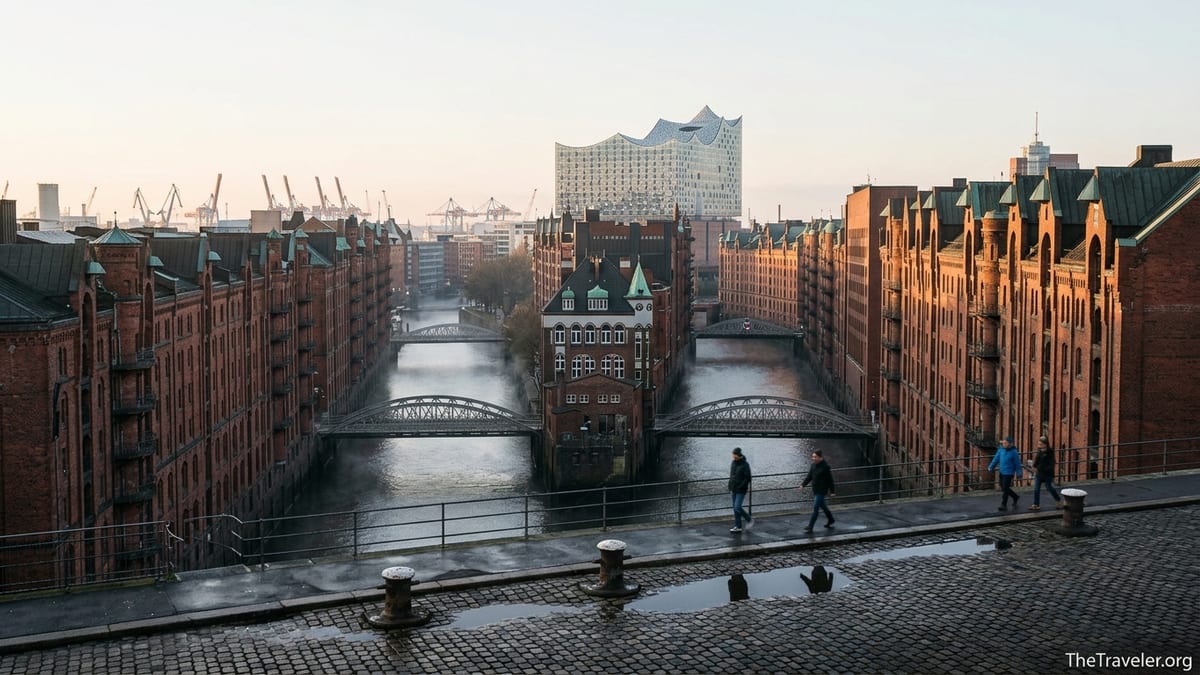
Hamburg is by far the biggest city in northern Germany and the main hub for international flights. It pairs an enormous working port with a polished cultural scene. Travelers are usually drawn to the red-brick Speicherstadt warehouse district and the Elbphilharmonie concert hall in HafenCity, whose public viewing platform looks out over container ships and the Elbe River. You can spend a day just moving between the Miniatur Wunderland model railway exhibition, boat trips from the Landungsbrücken piers and strolls around the Alster lakes ringed by elegant townhouses and shopping streets.
For couples or friends on a first northern Germany trip, Hamburg works well as a base for three or four nights. Neighborhoods such as St. Georg and Sternschanze offer mid-range hotels and a mix of bars and restaurants within easy U-Bahn reach of the center. Food lovers typically split time between harbour fish stands serving fresh matjes and fischbrötchen, weekly markets like the Isemarkt, and contemporary restaurants in districts such as Eimsbüttel or Ottensen. If you want nightlife, the Reeperbahn and surrounding streets in St. Pauli are busy with clubs, live music and late-opening cafes.
Bremen feels gentler and more compact. Its Marktplatz is framed by a richly decorated town hall, the Roland statue and the narrow lanes of the Schnoor quarter, where historic houses now host small shops and cafes. You can walk from the center to the Weser riverfront in a few minutes and join locals along the Schlachte promenade for outdoor drinks on summer evenings. The city is a good choice for travelers who prefer a quieter, more manageable base than Hamburg but still want museums, galleries and a university-town atmosphere.
For families, Bremen’s Universum Science Center and the Märchenschiff fairy-tale boats that appear in the run-up to Christmas add appeal. For couples, the city combines well with a day trip to Bremerhaven for maritime museums and North Sea breezes. If your trip is more about smaller Hanseatic towns and the coast, you might treat Bremen as a one- or two-night stopover, then move on to the Baltic or North Sea islands.
Hanseatic Charm: Lübeck, Rostock and Stralsund
If your main interest is history, medieval streetscapes and old ports, Lübeck is often considered the highlight of the north. The entire Old Town is a UNESCO World Heritage site thanks to its role as a leading Hanseatic trading city. You enter through the imposing red-brick Holstentor gate, then wander past stepped gable houses, Gothic churches such as St. Marien and quiet courtyards tucked behind narrow alleyways. Marzipan lovers seek out traditional cafes where Lübeck-style marzipan cakes and chocolates are sold by the slice or box.
From Hamburg, Lübeck is an easy day trip or an overnight stay, as direct trains run frequently and the walk from the station to the Old Town is short. Travelers who enjoy slower exploration often stay one or two nights to experience the city after day trippers leave, when church towers glow in evening light and riverfront restaurants by the Trave fill with locals. For couples, it is a particularly atmospheric stop on a wider route that might include Hamburg and Rügen.
Rostock and Stralsund, further east on the Baltic, are slightly different in character. Rostock is a university port city whose restored brick churches and town hall line up with GDR-era streets and a busy ferry harbor. A tram ride connects the city with Warnemünde, a traditional Baltic resort with a wide sandy beach, lighthouse and promenade dotted with fish stalls and ice cream stands, making the pair attractive for families who want both culture and easy beach access without a car.
Stralsund feels smaller and more intimate, with ornate gabled facades on its Alter Markt and views over to Rügen across the Strelasund. The city shares a UNESCO World Heritage listing with Wismar for its brick Gothic architecture, and its Ozeaneum and Meeresmuseum attract visitors interested in the Baltic’s marine life and maritime history. Stralsund is also the main gateway to Rügen by road and rail, so it is natural to combine one night in the old town with several more on the island.
Kiel, Schwerin and the Baltic Coast Resorts
While Kiel is best known for its major ferry connections and its annual sailing regatta week, Kieler Woche, it can also serve as a practical base if you prioritize ferries to Scandinavia or want an under-the-radar city with maritime flair. The waterfront promenade, shipyards and lock at the Kiel Canal provide a constant backdrop of shipping traffic. Visitors interested in naval history can tour museum ships in the harbor, then continue by bus or regional train to nearby Baltic beaches such as Laboe or Schönberger Strand for day outings.
Schwerin, inland between Hamburg and the Baltic coast, offers a different experience again. Its centerpiece is Schwerin Castle, rising from an island in the city’s lake with turrets and landscaped gardens. Many travelers visit on a day trip from Hamburg or Rostock specifically to tour the castle interiors and stroll lakeside promenades. The compact center mixes 19th-century buildings with cafes and small boutiques, and boat tours on the lake provide relaxed views of villas and parkland. Schwerin works especially well for couples and culture-focused travelers who enjoy grand architecture and quiet evenings.
Beyond the larger cities, the Baltic coast between Lübeck and Rostock is lined with resorts that have been popular since the 19th century. Places such as Timmendorfer Strand, Boltenhagen, Heiligendamm, Kühlungsborn and Warnemünde share a similar formula: long sandy beaches, seafront promenades with beach chairs, piers for evening strolls and a cluster of hotels and apartments just behind the dunes. In high season, family-oriented attractions like mini-golf, small amusement rides and bike rentals are common, while in shoulder season the same towns feel sleepier and suited to fresh-air walks and spa weekends.
For travelers deciding between these resorts, think about how car-free you want to be. Timmendorfer Strand and Travemünde near Lübeck and Warnemünde near Rostock have direct rail connections, making them easy beach add-ons to city stays. Smaller places like Heiligendamm or Graal-Müritz can usually be reached by regional trains and buses but require a little more planning. Prices for seafront hotels vary widely by date, but apartment rentals slightly back from the beach can be more affordable for families staying a week or more.
Islands and Beaches: Rügen, Sylt and Coastal Escapes
Rügen in the Baltic Sea is Germany’s largest island and one of the most versatile. On the Jasmund peninsula, chalk cliffs such as the Königsstuhl rise above beech forests in a national park, with walking trails that lead to viewpoints over turquoise water on sunny days. Elsewhere on the island, classic seaside resorts like Binz, Sellin, Göhren and Baabe offer restored resort architecture, long sandy bays and wooden piers stretching into the Baltic, where families and couples wander in the evening with ice creams or drinks in hand.
Rügen suits travelers who like variety. In one day you could cycle along quiet tree-lined avenues, visit a submarine museum in Sassnitz harbor, ride the narrow-gauge steam railway known as the Rasender Roland, and end with a sauna session in a beachfront wellness hotel. Many visitors choose self-catering apartments or holiday houses, and supermarkets are well distributed across the island, which keeps costs in check on longer stays. In peak summer, traffic can be heavy near the causeway to the mainland, so arriving by train to towns like Binz or Bergen can be less stressful.
Sylt on the North Sea is a different proposition: more exclusive and often more expensive, but with spectacular dune landscapes and almost continuous sandy beaches stretching roughly 40 kilometers along its western shore. Towns such as Westerland, Kampen and Wenningstedt are best known to German visitors, combining chic boutiques and high-end restaurants with traditional thatched houses in older villages like Keitum. The island is connected to the mainland by the Hindenburgdamm causeway, with frequent trains, including car-carrying shuttles, bringing visitors in all year.
Couples who enjoy design hotels, gourmet dining and wind-swept walks often favor Sylt, particularly Kampen and its Red Cliff area, while families may gravitate to Westerland and Wenningstedt for their playgrounds, beach infrastructure and indoor facilities that help on cool or rainy days. Beach chairs, known as Strandkörbe, are a signature of both Sylt and the Baltic coast and can usually be rented by the day or half-day in summer via local stands along the sand, providing shelter from prevailing winds. For a more low-key and budget-friendly North Sea experience, consider smaller islands and Halligen in Schleswig-Holstein, or mainland resorts like St. Peter-Ording with its vast tidal flats and stilt houses.
Best Choices for Couples, Families, History and Nature
If you are traveling as a couple and looking for atmosphere, culture and good food, a classic combination is Hamburg plus either Lübeck or a Baltic resort. Spend two or three nights in Hamburg exploring the Elbe waterfront, Speicherstadt and modern HafenCity, then move on to Lübeck’s Old Town for cobbled streets and marzipan cafes, or to a seaside town like Timmendorfer Strand, Binz on Rügen or Westerland on Sylt. In each, you can find hotels with spa areas and on-site restaurants, making it easy to settle in for long evenings without needing a car.
Families tend to appreciate destinations with varied weather-proof activities. Hamburg stands out with attractions like major interactive museums, the harbor boat trips and large city parks where children can run around. Pairing Hamburg with Rügen works well: children can alternate between building sandcastles on long beaches in Prora or Sellin, visiting animal parks and climbing forest trails above the chalk cliffs. Bremen combined with nearby Bremerhaven or Rostock paired with Warnemünde are other family-friendly routes that keep daily logistics relatively simple while offering both city and sea.
For travelers primarily interested in history, the Hanseatic towns form a natural route. Lübeck’s UNESCO-listed Old Town, Wismar’s marketplace and harbor, Rostock’s city walls and Stralsund’s ornate gabled facades can be visited in series by rail or car over a week. Many churches and town halls host small exhibitions on the Hanseatic League and maritime trade. Combined tickets sometimes cover multiple museums in one city, and guided walking tours typically depart from central tourist information offices, providing context that enriches otherwise quiet squares and alleys.
Nature-focused visitors will likely be happiest on Rügen, in the national parks along the Baltic and on the wilder stretches of the North Sea coast. Days here are about coastal hiking, birdwatching on mudflats, renting bicycles to follow dike paths and seeking out quiet coves away from main resorts. Even in peak season you can often escape crowds by walking further along the beach or heading into interior forests. Visiting outside school holidays, in May, June, September or early October, usually delivers a good balance of open facilities, fewer people and milder weather.
Practical Tips for Planning Your Northern Germany Trip
Public transport is generally reliable and makes car-free travel straightforward between the main cities and larger coastal towns. For example, direct or one-change trains commonly link Hamburg with Lübeck, Kiel, Bremen and Rostock, while regional trains cross from the mainland to islands like Rügen and Sylt. Once in resorts, local buses and rental bikes bridge the gap between stations, beaches and nearby villages. If you plan to travel mostly by regional trains, state day tickets can offer savings for couples or families traveling together on the same itinerary.
Accommodation types differ by destination. In Hamburg, Bremen and Kiel, you are likely to use standard hotels, from international chains around stations to boutique properties in historic neighborhoods. On islands and in Baltic resorts, holiday apartments, known as Ferienwohnungen, and small guesthouses are more common, often requiring minimum stays of several nights in peak season. Booking ahead for July and August is wise, particularly for Sylt, Rügen and well-known Baltic towns, while in spring and autumn you can often find last-minute options at lower prices.
Weather across the region is changeable, so packing should focus on layers, waterproof jackets and comfortable shoes rather than beachwear alone. Even on warm days, evenings by the sea can feel cool with onshore winds, and light scarves and sweaters are useful. Outside the height of summer, many travelers are happy to sit in sheltered beach chairs with blankets rather than swim for long periods, making saunas and hotel wellness areas an important part of the experience. In winter, some coastal villages quieten significantly, but weekends around Christmas markets in cities like Hamburg, Bremen and Lübeck remain lively.
Food is a highlight if you enjoy seafood and hearty northern dishes. Local specialties include pickled herring, smoked fish from harbor stalls, Labskaus made from corned beef and potatoes, and seasonal dishes built around white asparagus in spring or kale in winter. Bakeries and cafes are fixtures in every town, with northern-style bread, Franzbrötchen pastries in Hamburg and marzipan cakes in Lübeck among the standouts. On the islands, particularly Sylt, you will also find a range of contemporary restaurants and bistros, from informal beach bars serving simple fish dishes to fine-dining venues that require advance reservations in high season.
The Takeaway
Choosing where to go in northern Germany comes down to how you like to travel. Hamburg and Bremen anchor the urban experience with big-harbor energy, museums and nightlife. Lübeck, Rostock and Stralsund layer that with Hanseatic brick and medieval alleys, while Kiel and Schwerin add sailing harbors and lakeside castles. Rügen, Sylt and the lattice of Baltic and North Sea resorts offer the beach element, not in the tropical sense but as a mix of dunes, long walks and spa culture.
For a first visit, a week that combines a major city with either a Hanseatic town or an island will give a clear sense of the region’s character. Return trips can go deeper, staying longer on a single island, following the Hanseatic trail from Lübeck to Stralsund, or exploring quieter stretches of coastline. With short distances, robust public transport and a steady rhythm of working ports and relaxed seaside towns, northern Germany invites you to slow down, breathe the sea air and let your itinerary be shaped as much by the wind and tide as by the guidebook.
FAQ
Q1. Is Hamburg or Bremen better as a base for exploring northern Germany?
Hamburg is better if you want a large cultural city with many rail links, major museums and nightlife, while Bremen suits travelers who prefer a smaller, more relaxed base with a historic center that is easy to explore on foot.
Q2. Should I choose Rügen or Sylt for a first-time island visit?
Rügen usually offers better value and more variety, with chalk cliffs, several resort towns and family-friendly attractions, while Sylt is more exclusive, pricier and best for visitors who prioritize long wild beaches, upscale dining and design hotels.
Q3. Which destinations are best for families with children?
Hamburg paired with Rügen or a Baltic resort like Warnemünde works very well, as does Bremen combined with Bremerhaven. These combinations provide a mix of beaches, boat trips, interactive museums and parks that keep different ages entertained.
Q4. Where should couples go for a romantic short break?
Popular choices include a weekend in Hamburg with an evening at the Elbe waterfront, a night or two in Lübeck’s Old Town, or a few days in Binz on Rügen or Kampen on Sylt, where you can combine long walks with spa time and dinners by the sea.
Q5. Are northern Germany’s beaches suitable for swimming?
Yes, both Baltic and North Sea beaches are suitable for swimming in summer, but water temperatures are usually cool. Many visitors alternate short swims with long walks, beach chairs and sauna visits rather than expecting very warm bathing conditions.
Q6. Do I need a car to visit Rügen, Sylt and the Baltic coast?
No, you can reach major towns on Rügen, Sylt and the Baltic coast by train and bus, and then use local transport and rental bikes. A car adds flexibility for exploring smaller villages and remote coves but is not essential for a satisfying trip.
Q7. How many days do I need for a good overview of northern Germany?
In about seven days you can combine one major city such as Hamburg or Bremen with either a Hanseatic town like Lübeck or Stralsund and a coastal stop like Rügen, Sylt or a Baltic resort, without feeling overly rushed.
Q8. When is the best time to visit northern Germany?
Late spring, summer and early autumn are best, with May, June, September and early October offering a good balance of milder weather, open seasonal services and fewer peak-season crowds compared with school holiday weeks in July and August.
Q9. Are the Hanseatic towns like Lübeck and Stralsund walkable?
Yes, Lübeck, Rostock, Wismar and Stralsund all have compact historic centers where most sights are within walking distance. Many visitors leave their car at the accommodation and explore on foot, sometimes joining guided walking tours for extra context.
Q10. Is northern Germany expensive compared with other parts of the country?
Cities like Hamburg and especially island destinations such as Sylt can be relatively expensive for accommodation and dining, while inland cities, smaller Baltic resorts and Rügen often offer more moderate prices, especially outside the peak summer weeks.