


Northern Germany feels like a different country from the Alpine clichés many visitors picture when they hear the word "Germany." Here wind-swept islands, Hanseatic brick-gothic skylines and working harbors replace mountain chalets. This guide focuses on first-time visitors planning a trip to Hamburg, Bremen, Lübeck, the Baltic and North Sea coasts, plus the islands of Rügen and Sylt and the Wadden Sea. It is designed to be practical, with concrete examples of where to go, how to move around, where to stay and what to eat, so you can turn an idea into a real itinerary.
Understanding Northern Germany and When to Go
For this guide, “Northern Germany” broadly means Hamburg and Bremen, the Baltic coast of Schleswig-Holstein and Mecklenburg-Vorpommern, and the North Sea coast along Lower Saxony and Schleswig-Holstein, including islands such as Rügen and Sylt and the Wadden Sea national parks. Distances are manageable by rail. Hamburg to Bremen is about 1 hour by regional train, Hamburg to Lübeck around 45 minutes, while Hamburg to Stralsund, the gateway for Rügen, typically takes around 3 to 3.5 hours with a change in Rostock.
Weather is Atlantic-influenced and can feel cool compared with Southern Europe. In summer (June to August) daytime highs are often in the low 20s Celsius (around 68–75°F) along the coasts, with cooler evenings, especially in the wind on islands like Sylt. Spring (April and May) and early autumn (September) can be ideal for city and coastal walks, with milder temperatures and fewer crowds. Winter is perfectly possible but means short days, frequent drizzle, stormy North Sea conditions and limited seasonal services on beaches and islands.
For a first visit that combines cities and sea, a 7 to 10 day trip between May and September usually works well. For example, you might spend 3 nights in Hamburg, 2 in Bremen, 2 in Lübeck and 2 on Rügen or Sylt. If you come in July or August, book coastal accommodation and popular concert tickets, such as at Hamburg’s Elbphilharmonie, several months ahead, as these can sell out quickly.
Budget-wise, Northern Germany sits between Southern Europe and Scandinavia. A mid-range couple staying in small city hotels or guesthouses, eating one restaurant meal a day and using public transport can expect to spend in the region of 160 to 230 euros per day in 2026 prices, depending on season and location, with Hamburg and the North Sea islands usually at the upper end.
Hamburg: Gateway to the North
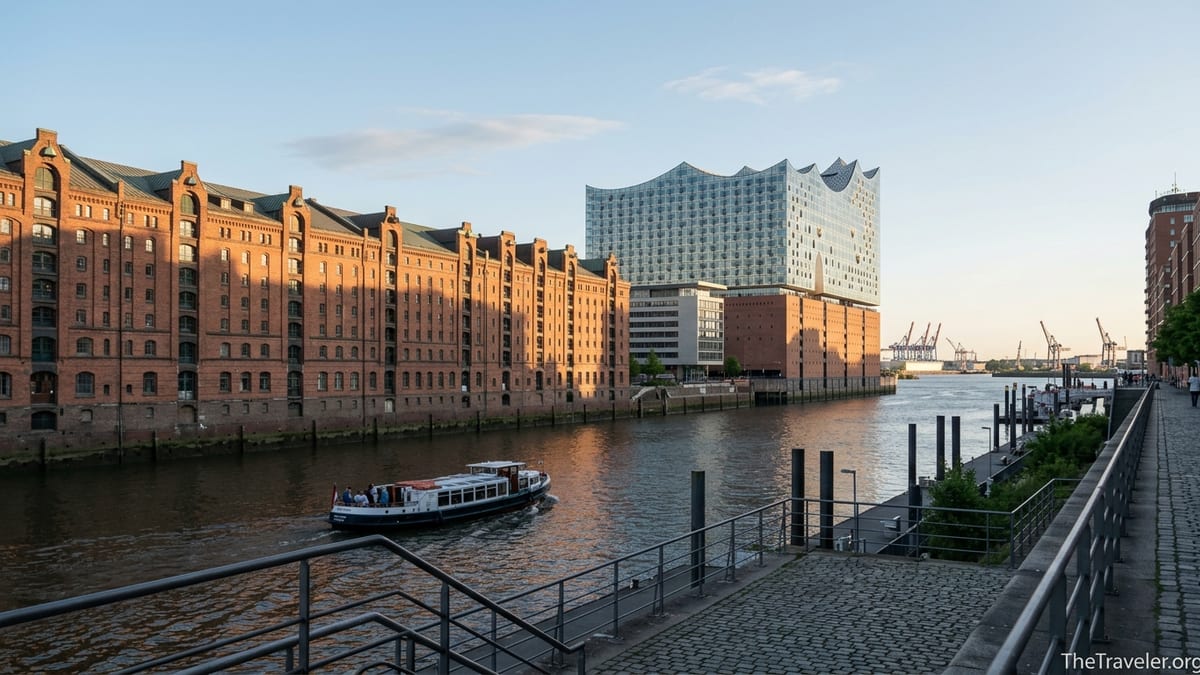
Hamburg is the natural starting point for many itineraries, with a major international airport and high-speed rail links to Berlin, Cologne and Copenhagen. The city blends maritime industry with culture; a typical first day might combine a harbor walk at Landungsbrücken, a visit to the historic Speicherstadt warehouse district and an evening drink overlooking the Elbe River.
The Elbphilharmonie concert hall, perched on top of a former brick warehouse in HafenCity, has become the city’s symbol. Even without a concert ticket, you can visit the public plaza for panoramic views across the port. Concert tickets usually include free use of the local public transport network on the day of the event, which is a practical perk if you are staying in another district and taking the U-Bahn or S-Bahn into HafenCity.
First-time visitors usually base themselves in central quarters like St. Georg (just behind the main station), the area around Rathausmarkt, or HafenCity/Speicherstadt if they want modern hotels close to the water. A typical mid-range hotel room near the central station or Rathaus might run around 120 to 180 euros per night for two in high season, while newer design hotels in HafenCity can be somewhat higher, especially on summer weekends.
For transport inside Hamburg, day tickets on the HVV public transport network are good value, especially if you use the harbor ferries that operate as part of the system. Many visitors combine a ride on ferry line 62 from Landungsbrücken with a walk in the St. Pauli or Altona districts. If you plan intensive sightseeing, you can consider city passes sold by the local tourism board; for example, a 2- or 3-day card often bundles unlimited public transport with discounted entry to attractions, harbor tours and museums, something worth comparing against your planned activities.
Bremen and Lübeck: Classic Hanseatic Atmosphere
Bremen and Lübeck are the two key historic Hanseatic cities in this region beyond Hamburg. Both are compact, walkable and easy to explore in one or two days, making them ideal additions to a city-focused itinerary.
Bremen’s old town clusters around the market square, where the town hall and Roland statue recall its trading wealth. Just a few minutes’ walk away is the Schnoor quarter, the oldest part of Bremen, a tangle of narrow streets and small houses now filled with cafés and craft shops. Visitors often start at the cathedral and stroll via Böttcherstraße, a brick expressionist alley of museums and galleries, before wandering into Schnoor for coffee and cake or a traditional Bremen dish in a small restaurant.
In Lübeck, the skyline of brick-gothic churches and the iconic Holstentor city gate signal the city’s Hanseatic past. First-time visitors typically arrive by train at Lübeck Hauptbahnhof and then walk, or take a short bus ride, into the old town island. A realistic walking route for a day trip might include the Holstentor, St. Mary’s Church, the old hospital complex of Heiligen-Geist-Hospital and the waterside promenades. Many travelers also sample marzipan from one of the historic confectioners, an easy edible souvenir.
Both cities are reachable as day trips from Hamburg. A return regional train ticket Hamburg to Bremen or Hamburg to Lübeck usually costs in the general range of 25 to 40 euros per person at standard flexible fares, though advance or regional offers can be cheaper. For a more relaxed pace, staying one night in Bremen or Lübeck allows you to experience the towns early in the morning or after day-trippers have left, when narrow streets and riverside promenades are noticeably quieter.
Baltic Coast and the Island of Rügen
The Baltic Sea coast of Mecklenburg-Vorpommern feels gentler than the wild North Sea, with sandy beaches sheltered by bays and backed by resort towns that first grew up in the 19th century. Many visitors base themselves in seaside resorts such as Kühlungsborn or Warnemünde, reachable by train via Rostock, and then continue east toward the island of Rügen.
Rügen, Germany’s largest island, is famous for its white chalk cliffs in Jasmund National Park and its classic seaside architecture in towns like Binz and Sellin. For a first visit, Binz works well as a base thanks to its direct rail connection to the mainland and its long promenade with hotels, guesthouses, restaurants and beach access. A typical mid-range double room in a pension or small hotel on or near the beachfront in peak July or August might cost around 150 to 220 euros per night, with lower prices in May, June and September.
A popular day excursion on Rügen is to the Königsstuhl, the best-known chalk cliff in Jasmund National Park. Visitors generally travel by local bus or car to the National Park Centre and then follow marked trails through beech forest to viewing platforms over the Baltic Sea. Cruise excursions and local boat tours also approach the cliffs from the water, giving a different perspective on the white walls rising from the sea. Opening times at the visitor center vary seasonally, but you can expect extended hours in summer and reduced hours in winter, with indoor exhibits about the geology and ecology of the national park.
Beyond the chalk cliffs, first-timers often use one full day to explore resort towns by the historic narrow-gauge “Rasender Roland” heritage railway, which links places like Putbus, Binz and Göhren, and another day for cycling routes along the coast or inland lakes. Bike rentals are widely available in resort towns, commonly costing around 10 to 15 euros per day for a standard bicycle and more for e-bikes. Trains from Berlin and Hamburg to Stralsund or Bergen auf Rügen connect conveniently with local services, making Rügen accessible without a car.
North Sea Coast, Sylt and the Wadden Sea
The North Sea side of Northern Germany has a very different character from the Baltic. Here tides constantly reshape the coastline, and vast mudflats emerge at low tide. This intertidal zone, known as the Wadden Sea, is protected in several national parks in Schleswig-Holstein and Lower Saxony and recognized as a UNESCO World Heritage natural site. The sea recedes dramatically twice daily, exposing sand and mud flats that are important feeding grounds for migratory birds.
Sylt, one of the best-known North Sea islands, is reached by train crossing a long causeway from Niebüll on the mainland. The island combines long sandy beaches on its western side with calmer Wadden Sea shores to the east. Towns like Westerland, Kampen and Keitum offer a mix of hotels, apartments and traditional thatched-roof houses. A first-time visitor might spend three days on Sylt, using one for beach walks, one for a mudflat hike along the Wadden Sea and one for exploring villages and dune landscapes by bicycle.
Mudflat hiking is a classic North Sea experience. On Sylt and other parts of the Schleswig-Holstein Wadden Sea National Park, guided tours are offered in season by certified guides, often lasting 1.5 to 2 hours. These walks, timed to low tide, introduce visitors to the tidal rhythms, birdlife and the small animals that live in the mud. Sturdy shoes that can get dirty, or going barefoot in warmer months, are typical. Because tides and weather conditions change daily, it is important to join a guided excursion rather than attempting to walk on the mudflats alone, especially as channels fill quickly when the tide returns.
Accommodation on Sylt and the North Sea coast is generally more expensive than on much of the Baltic or inland cities, especially in peak summer, school holidays and long weekends. A simple double room in a guesthouse in Westerland in July can easily exceed 180 euros per night, and self-catering apartments are popular with German families who book week-long stays many months in advance. If your budget is tighter, consider shoulder-season travel in May, June or September, or look at mainland towns such as Husum or Büsum and visit the islands on day trips by ferry or train.
Getting Around: Trains, Ferries and Local Transport
Northern Germany is relatively straightforward to navigate without a car thanks to an extensive rail and bus network. Hamburg serves as the main hub. From Hamburg Hauptbahnhof you can reach Bremen, Lübeck, Kiel, Rostock, Stralsund and Westerland on Sylt by direct or one-change trains. Intercity and regional services vary in speed and comfort but are generally punctual and clearly signposted; platform displays and announcements usually switch between German and English in major stations.
Typical journey times in 2026 give a sense of how compact the region is. Hamburg to Bremen takes about 1 hour on a regional express. Hamburg to Lübeck is around 45 minutes. Hamburg to Westerland on Sylt is often roughly 3 hours with intermediate stops in smaller North Sea towns, while Hamburg to Rostock tends to be around 2 hours. Advance rail tickets bought online or at machines can be noticeably cheaper than flexible walk-up fares, especially on intercity services, and regional day tickets covering a whole federal state or group of states can be cost-effective if you make several journeys in one day.
On islands and in resort towns, local transport is a mix of buses, ferries, and in some places heritage railways. Rügen’s narrow-gauge railway, for example, acts as both an attraction and a useful link between seaside resorts and inland towns. On Sylt, buses run along the length of the island between Westerland, Kampen, List and Hörnum, and many visitors also rent bicycles to move between beaches and villages. Rental prices for a basic city bike typically sit around 10 to 15 euros per day, with discounts for multi-day hires.
Within cities, day tickets for public transport often represent good value. In Hamburg, a day ticket for the main urban zones typically lets you use U-Bahn, S-Bahn, buses and harbor ferries. In Bremen and Lübeck, tram and bus networks cover key tourist areas, and old towns are compact enough that you can walk most of the time. Taxis are available but comparatively expensive for short trips; ride-hailing services operate in larger cities but less so on islands and in small coastal towns, where pre-booked taxis and buses are more common.
Where to Stay: City Neighborhoods, Coasts and Islands
Accommodation choices in Northern Germany range from business hotels near train stations to family-run guesthouses on quiet islands. For a first-time city-focused trip, a practical strategy is to book centrally located hotels in Hamburg, Bremen and Lübeck and then switch to a coastal base for a few nights at the end of your itinerary.
In Hamburg, St. Georg and the area around the main station are convenient if you are arriving or leaving by rail and plan to make day trips. This area has a wide range of mid-range chain hotels and independent properties, as well as more budget-friendly hostels and simple hotels. If you prefer a more scenic base, HafenCity and Speicherstadt feature upscale hotels overlooking the water and renovated warehouses, while St. Pauli and the Karolinenviertel appeal to travelers who want nightlife, bars and live music within walking distance.
In Bremen, staying within or just beside the old town gives you easy access to the market square, cathedral, Böttcherstraße and Schnoor quarter. The area between the main station and the historic center has several mid-range hotels that suit short city breaks. In Lübeck, most visitors want to be on the old town island itself or just across one of the bridges, as this allows you to explore the historic streets, churches and river views by foot from early morning to late evening.
On the coasts and islands, many German visitors favor Ferienwohnungen, self-catering holiday apartments rented by the week, especially in high season. On Rügen and the Baltic coast, these range from simple studios a few blocks from the beach to multi-room apartments in restored seaside villas along promenades. On Sylt and North Sea islands, holiday homes and apartments with kitchens are very common and can help reduce food costs if you are happy to cook some meals. For shorter stays of two or three nights, look for guesthouses (Pension or Gästehaus) that include breakfast, which can simplify mornings before day trips or walks.
Food, Drink and Coastal Specialties
Food in Northern Germany is shaped by its maritime climate and trading history. Fish and seafood are prominent along both Baltic and North Sea coasts. In harbor areas and seaside resorts you will often see stands selling Fischbrötchen, fresh fish sandwiches made with pickled herring, fried fish or smoked fish, usually costing roughly 4 to 7 euros depending on fillings and location. These are a simple, filling lunch option between walks or sightseeing.
In Bremen and Hamburg, hearty dishes like Labskaus, a mashed mixture of corned beef, potatoes and beetroot traditionally served with a fried egg and pickles, reflect seafaring roots. In many traditional restaurants a plate of Labskaus or a generous fish dish might run in the range of 15 to 25 euros. Along the North Sea, you will also encounter Krabben, small brown shrimp often served peeled on bread or in salads. Inland, standard German fare such as schnitzel, sausages with sauerkraut and potato dishes is common, but even in the north you will also find plenty of international food, from Turkish döner kebab to Vietnamese and Italian restaurants.
Sweets and baked goods are another highlight. Lübeck is especially famous for marzipan, and many visitors buy small boxes or figures from long-established shops as gifts. In Bremen, cafés in the Schnoor quarter or along the riverside promenades are good places to try cakes and regional pastries with coffee. In Hamburg, independent bakeries in neighborhoods like Eimsbüttel and Ottensen offer excellent bread and breakfast pastries, and many locals start the day with Brötchen, small bread rolls with cheese, cold cuts or jam.
When planning a food budget, a basic breakfast in a bakery or café might cost in the region of 5 to 9 euros per person, while a sit-down main course and soft drink in a mid-range restaurant often ends up around 18 to 30 euros. Self-catering is straightforward thanks to large supermarket chains that stock everything from fresh fish and produce to prepared salads. In smaller island villages, shops can be more limited and close earlier, so it is worth checking opening hours on arrival, especially on Sundays and public holidays when many places either close or operate with reduced hours.
First-Time Planning Tips and Sample Itinerary
For a first visit, start planning at least three to four months ahead if you intend to travel in July or August or want specific events, such as a particular concert in Hamburg, to anchor your trip. Begin by deciding how you want to balance cities and coast. For example, if you only have a week, you might choose one major city and one coastal base rather than trying to fit everything in.
One realistic 10-day route for 2026 might look like this: arrive in Hamburg for 3 nights, allowing two full days to explore the harbor, Speicherstadt, Elbphilharmonie plaza, St. Pauli and local museums; then take the train to Bremen for 2 nights to see the market square, Schnoor quarter and riverside walks; continue by rail via Hamburg to Lübeck for 2 nights to soak up the Hanseatic atmosphere, churches and marzipan; and finish with 3 nights on Rügen or the Baltic coast, using local buses and trains to see the chalk cliffs, seaside promenades and inland villages.
If you want the North Sea instead of the Baltic, you might swap Rügen for Sylt or another Wadden Sea base. In that case, consider 3 nights Hamburg, 2 nights Lübeck as a Baltic day trip hub, 2 nights Bremen, and 3 nights on Sylt, reached by train via Hamburg and Niebüll. On Sylt, plan for at least one guided mudflat walk booked a day or two in advance, one day of coastal cycling and one more flexible day for weather-dependent choices like beach time or visits to local museums and lighthouses.
Practical details matter. Check tide tables when planning Wadden Sea excursions, verify seasonal opening hours for national park centers and outdoor attractions, and book long-distance trains and popular accommodations before committing to non-refundable flights. Pack layers, including a windproof jacket even in summer, and waterproof shoes or sandals suitable for wet conditions, especially if you will be spending time near the North Sea. With thoughtful planning, Northern Germany rewards visitors with a mix of lively ports, quiet brick alleys, sweeping beaches and subtle, often under-the-radar charm.
FAQ
Q1. How many days do I need for a first trip to Northern Germany?
Many first-time visitors find 7 to 10 days sufficient to see at least one major city such as Hamburg plus a combination of Bremen or Lübeck and either the Baltic or North Sea coast. With a week you might spend 3 nights in Hamburg, 2 in Bremen or Lübeck and 2 on Rügen or Sylt; with 10 days you can slow down and add extra coastal time or a second island.
Q2. Is it better to visit the Baltic Sea or the North Sea on a first visit?
Both coasts have appeal but offer different moods. The Baltic Sea around Rügen feels gentler, with sheltered bays and classic resort towns like Binz and Warnemünde, while the North Sea and islands such as Sylt are windier and more dramatic, with strong tides and the Wadden Sea mudflats. If you prefer calm swimming and long promenades, the Baltic is often easier; if you are drawn to wilder weather and mudflat hiking, the North Sea is a strong choice.
Q3. Do I need a car to get around Northern Germany?
A car is not essential for most first-time itineraries. Major cities and many coastal areas are well served by trains and buses, including direct or one-change routes between Hamburg, Bremen, Lübeck, Rostock, Stralsund and Westerland on Sylt. Local buses and, in some places, heritage railways connect resort towns and national parks. A car can be convenient for reaching very small villages or making spontaneous detours, but parking in city centers and on islands can be costly and limited.
Q4. When is the best time of year to visit Northern Germany?
Late spring and early autumn, roughly May, June and September, offer a good balance of mild weather, long days and fewer crowds than peak summer. July and August are warmest and best for beach swimming but also the busiest and most expensive on coasts and islands. Winter visits can be atmospheric in cities like Hamburg and Bremen, especially around Christmas markets, but come with short daylight hours, cooler temperatures and more frequent rain or storms on the coasts.
Q5. How expensive is Northern Germany compared to Southern Europe?
Costs in Northern Germany generally sit between Southern Europe and Scandinavia. City hotel rates in places like Hamburg often range from about 120 to 180 euros per night for a mid-range double room in high season, with more on North Sea islands. Simple meals such as fish sandwiches might cost 4 to 7 euros, while a main course in a mid-range restaurant commonly falls between 18 and 30 euros. Using public transport and occasionally self-catering can keep daily budgets under better control.
Q6. Can I swim in the sea, and is the water warm enough?
Swimming is common along both Baltic and North Sea coasts, especially from late June through August, though water temperatures are cooler than in the Mediterranean. On the Baltic, sheltered bays often feel more comfortable for swimming, while on the North Sea, tides and currents are stronger and designated swimming areas are clearly marked. Many beaches have lifeguard stations in peak season, and it is wise to follow local advice about currents, jellyfish and changing weather.
Q7. Is English widely spoken in Northern Germany?
In major cities such as Hamburg and Bremen and in popular tourist areas on the coasts and islands, you can generally manage with English. Staff in hotels, restaurants aimed at visitors, transport hubs and attractions typically speak at least basic English, and information boards at major sights often include English translations. In smaller villages and older local venues, English may be less common, so a few German phrases and an offline translation app are helpful.
Q8. How should I dress for the weather in Northern Germany?
Weather can change quickly, especially near the North Sea, so layers are important even in summer. Pack a light but windproof and waterproof jacket, closed shoes suitable for wet pavements or trails, and a sweater or fleece for cooler evenings. On islands and coasts, a scarf or buff and a hat that stays on in the wind can make long beach walks more comfortable. In winter, add a warm coat, gloves and a hat, as damp cold by the water can feel sharper than inland temperatures suggest.
Q9. Are the Wadden Sea mudflats safe to explore on my own?
It is strongly recommended to join a guided tour when exploring the Wadden Sea mudflats. Tides shift rapidly, and channels can fill with water more quickly than expected, leading to potentially dangerous situations for unguided walkers. Certified guides know safe routes, timing and how to read local conditions, and many tours also explain the area’s wildlife and ecology. Walking alone far out on the mudflats, especially without local knowledge or tide information, is not advisable.
Q10. What are typical souvenirs to bring back from Northern Germany?
Popular souvenirs include marzipan from Lübeck, tins or vacuum-packed portions of smoked fish from coastal towns, local beers or grain-based spirits from Bremen or Hamburg, and ceramics or textiles from island craft shops. Postcards and prints of brick-gothic skylines or chalk cliffs are widely available, as are practical items like enamel mugs printed with maps of the coasts or islands. Food items packed properly for travel are usually the easiest and most appreciated gifts.