


Northern Germany is made for road trips. Distances are manageable, roads are well maintained, and a string of historic Hanseatic cities and wide sandy beaches line both the Baltic and North Sea coasts. With a rental car and a flexible plan, you can link together Hamburg, Lübeck, Rügen, Stralsund, Bremen and classic seaside resorts into one memorable loop, with options to extend toward Denmark by ferry or along quieter coastal byways.
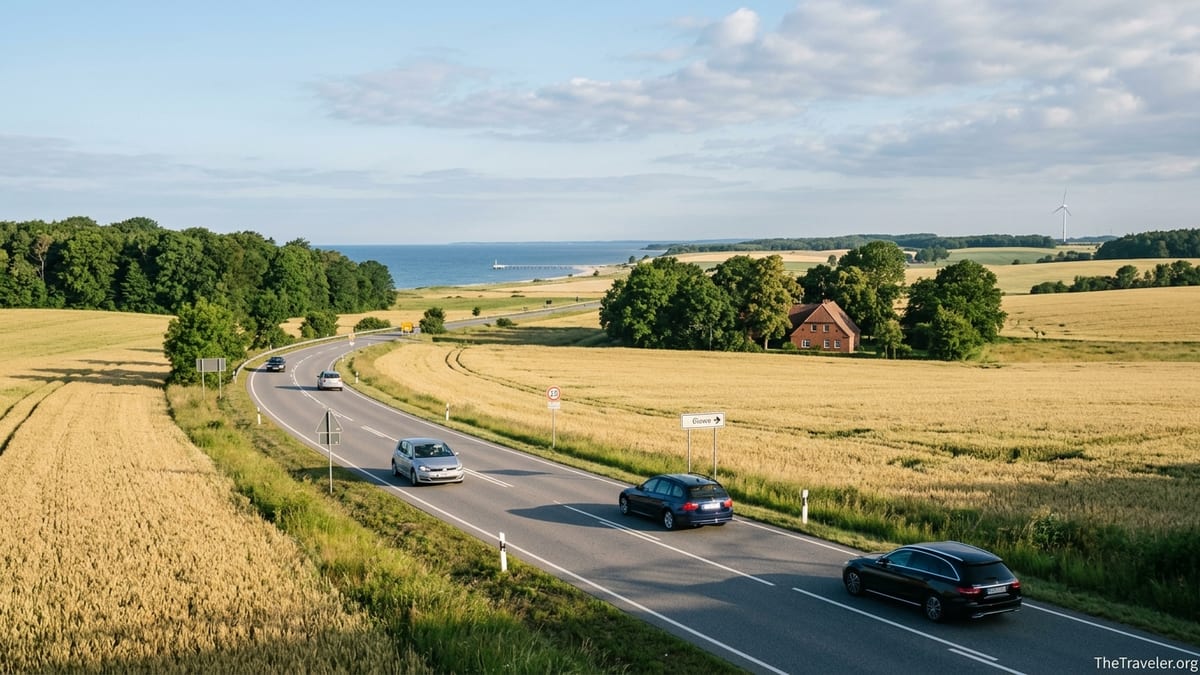
Planning Your Northern Germany Road Trip
For most travelers, Hamburg is the easiest starting point. Hamburg Airport has direct flights from many European hubs and several North American cities, and all major rental brands operate there, including Sixt, Europcar, Hertz, Avis and Budget. Booking a compact or mid-size car with automatic transmission and unlimited mileage is common; in recent searches, mid-size automatics for a summer week often start around the low three-digit euro range, rising during German school holidays. Drivers from outside the EU should carry an International Driving Permit along with their home license, as some rental counters and police checks expect it.
Unlike neighboring countries, Germany does not require vignettes or toll stickers for private cars on highways, so outside of a few specific tunnels and private bridges your main costs will be fuel and parking. Fuel prices change frequently, but many locals use comparison apps to time refueling at larger stations on the outskirts of cities such as Hamburg or Lübeck rather than at small village pumps. Most rentals are diesel or efficient petrol models; fully electric vehicles are increasingly offered, and high-speed chargers are available along main routes such as the A1 between Hamburg and Lübeck and the A20 near Rostock.
Traffic patterns matter when planning your daily drives. The A1 corridor from Hamburg toward Lübeck and Fehmarn is notorious for congestion at the start of major school holidays and summer weekends, when German clubs like ADAC regularly warn of long jams on the approaches to Hamburg and toward the Baltic coast. Allow extra time if you are traveling on Friday afternoons in July and August or around Easter, Ascension Day and Pentecost. To avoid sitting in stationary traffic, try to pass Hamburg’s ring roads before 7 a.m. or later in the evening, or build in a stop in a suburb such as Bergedorf and roll onward once rush hour subsides.
A classic loop for first-time visitors covers roughly 1,000 to 1,300 kilometers over 8 to 10 days: Hamburg to Lübeck and the Bay of Lübeck, on to Wismar and Rostock, then Stralsund and Rügen, looping back inland via Greifswald and the Mecklenburg Lake District before cutting across to Bremen and the North Sea coast. You can shorten this into a one-week itinerary by skipping some inland detours, or stretch it to two weeks by adding island time on Norderney or Sylt.
Driving In and Around Hamburg
Hamburg itself is a major city with complex traffic, so many road trippers choose to pick up their car at the airport but spend the first day or two exploring the city on foot and by public transport before driving further. Central areas such as the Speicherstadt, Elbphilharmonie, St Pauli and the Alster are within a fairly compact radius, and day parking in underground garages in the city core can easily cost the equivalent of several dozen euros. It is usually cheaper to stay at a hotel slightly outside the very center, in districts like Sternschanze, Altona or St Georg, where accommodation sometimes includes a guest parking space or discounted garage rates.
When you are ready to leave Hamburg by car, several key routes fan out toward the coasts. To reach Lübeck and the Baltic quickly, take the A1 northeast; to head toward Bremen and the North Sea, follow the A1 and then A27 southwest; for slower rural scenery along the Elbe marshes or the Lüneburg Heath, switch to smaller regional roads such as the B5 or B75. Be prepared for frequent construction zones around the Elbe bridges and interchanges south of the city, and keep an eye on variable speed limits, which drop quickly in rain or heavy traffic.
Hamburg operates low emission rules consistent with wider German and EU regulations, but there is currently no citywide congestion charge for private cars as you find in some European capitals. Most rental cars meet modern emissions standards and are allowed into all central districts. Nevertheless, navigation systems sometimes route you through busy bottlenecks, so it pays to preview your route in the morning and choose one of the ring roads rather than cutting through the port area at peak times when trucks line up for the container terminals.
A popular warm-up drive from Hamburg before tackling longer distances is a short loop along the Elbe to the historic towns of Stade or Lauenburg. This gives you a chance to get used to German road signs and right-of-way rules on rural roads. In many residential areas around Hamburg, the default speed limit is 30 km/h even if not obvious at first glance, while main urban arteries are 50 km/h. Speed cameras are common, particularly on the way out of town toward the airport and on the A7 and A1 corridors.
Hamburg to Lübeck and the Baltic Coast
The quickest drive from Hamburg to Lübeck is just under 70 kilometers via the A1, usually taking about an hour in light traffic. Many travelers, however, turn this into a half-day scenic drive by peeling off toward Bad Segeberg or Timmendorfer Strand. One option is to follow the A1 and then the A226 toward Travemünde, the seaside suburb of Lübeck, where wide sandy beaches and a long promenade give a first taste of the Baltic. Public parking lots line the approach roads behind the dunes, with digital signage indicating available spaces during busy summer weekends.
Lübeck itself is one of northern Germany’s most atmospheric historic cities, its brick Gothic skyline and salt warehouses a reminder of its Hanseatic past. The medieval core is compact enough to explore on foot, so it makes sense to park your car in one of the edge-of-center garages, such as those near the Holsten Gate or on the western side of the island old town, and leave it for the day. Hourly rates are generally more reasonable than in Hamburg, and several garages offer a capped daily rate to encourage full-day parking while visitors wander the cobbled streets or take boat trips on the Trave River.
From Lübeck, a rewarding coastal route hugs the Bay of Lübeck toward smaller resorts like Scharbeutz, Haffkrug and Grömitz. Rather than jumping straight back onto the A1, follow regional roads that run closer to the beachfront; these are slower but lined with beach access points, holiday apartments and small marinas. In peak season you may encounter one-way systems in the village centers, so watch for temporary signage. Many beach towns operate ticketed parking zones with automated machines that accept cards and mobile payments, and some stretch parking fees into the evening on warm days when locals stay late by the water.
Travelers with more time can continue along the peninsula of Priwall and the coast toward Boltenhagen and Wismar, crossing the border into Mecklenburg-Western Pomerania. This stretch offers a mix of restored spa architecture and wide rural vistas, and it acts as a natural bridge between the better-known cities of Lübeck and Rostock. If you are visiting outside school holidays, you may find quieter roads and easier street parking even in popular spots, which can make an April or September trip appealing compared with high summer.
Stralsund and Rügen: Bridges, Scenic Roads and Island Parking
The drive from Rostock to Stralsund and onward to Rügen is one of the highlights of a northern Germany road trip. From Rostock, most drivers take the A20 east before switching to the B96 toward Stralsund. The city itself sits on a narrow strip of water facing Rügen and is connected to the island by the modern Rügen Bridge alongside the older Rügen causeway, which together form the main road link to the island. There is currently no separate toll for private cars on these bridges, so access is straightforward, although traffic can back up around changeover days when holiday rentals on Rügen have fixed arrival and departure schedules.
Stralsund’s historic center is a worthwhile stop in its own right, with red-brick churches, a maritime museum and harborfront promenades. Parking is concentrated in signed lots ringing the old town and around the harbor. Some hotels in restored merchant houses have a handful of reserved spaces but may charge extra per night, so checking in advance is wise. Given the narrow medieval street grid, it is usually easier to park once and explore on foot. Many visitors arrive mid-morning from Rostock and continue to Rügen in the late afternoon, but staying overnight lets you experience the evening atmosphere after day-trippers have left.
On Rügen itself, scenic driving is part of the attraction. The B96 and then B196 form the island backbone, branching off to peninsulas pointing in all directions. Popular seaside resorts such as Binz, Sellin and Göhren on the southeastern coast line up along a string of fine sandy beaches, piers and turn-of-the-century villas. Parking here is a mix of municipal lots on the outskirts and smaller private spaces attached to guesthouses. In peak season, day parking in the main lots can cost the equivalent of several cups of coffee, and spaces close to the beach often fill up by late morning. It can be smarter to arrive early, park slightly further inland and walk through the residential streets to the seafront.
Northern Rügen offers a wilder feel, with the famous chalk cliffs in Jasmund National Park and the windswept landscapes of the Wittow peninsula. Access to the most fragile coastal areas is carefully managed; for example, car access to the Königsstuhl viewpoint area is restricted, with visitors directed to park in designated lots inland and continue by shuttle bus or on foot. On the Wittow peninsula, many drivers use the short car ferry across the Wittow sound near the town of Wittower Fähre, a quick crossing that cuts off a longer land route. Services are frequent in summer, and tickets are purchased directly at the slipway, with prices varying by vehicle size and passenger numbers.
North Sea, Bremen and Classic Coastal Routes
After exploring the Baltic side, many travelers loop back to the North Sea to experience a very different coastline. From Hamburg, you can reach Bremen in roughly an hour and a half via the A1 and A27, a mostly straightforward highway run. Bremen’s UNESCO-listed market square and riverside Schlachte promenade sit on the Weser River, and several multi-storey car parks around the old town allow easy access on foot. Some offer evening tariffs that make it affordable to park while enjoying dinner by the water before continuing to a hotel on the outskirts with free parking.
From Bremen, coastal routes fan out toward destinations such as Bremerhaven, Cuxhaven, Büsum and Husum. The North Sea coast is characterized by tidal mudflats, known locally as the Wadden Sea, and several stretches are protected as national parks. Towns like Cuxhaven and Büsum serve as jumping-off points for ferries to islands such as Heligoland or the Halligen. Car ferries to popular islands like Sylt embark from the mainland near Niebüll or via a causeway used by auto trains. In practice, many visitors park on the mainland at dedicated long-stay lots and cross as foot passengers or on the car trains, especially during busy holiday weeks when space for vehicles on the islands is limited.
Driving along the North Sea dike roads between Husum and the Eider estuary gives a sense of the open, wind-swept landscape that defines this region. Expect frequent cattle crossings, narrow paved embankments and strong crosswinds. Speed limits are often lower than on inland routes, and overtaking opportunities are limited. Small harbor towns such as Tönning and Friedrichstadt are ideal for a lunch stop, with central parking lots near historic squares and canals. In stormy weather, check local advisories, as some low-lying access roads and parking areas directly behind the dikes may be temporarily closed.
If your priority is combining city culture with sea air, you might structure your route as a triangle: Hamburg to Lübeck and the Baltic resorts, across to Rostock and Stralsund, down to Bremen and back to Hamburg. This avoids doubling back on the same roads and gives a good mix of urban, coastal and rural scenery. It also leaves flexibility to add day trips, such as a drive from Bremen down the scenic Deutsche Märchenstraße inland or a hop over to the East Frisian islands from the ports of Norddeich or Emden, where secure parking facilities allow you to leave your car on the mainland.
Ferries, Cross-Border Options and Scenic Detours
One of the pleasures of a northern Germany road trip is the ease of adding short ferry hops. On Rügen, the Wittow car ferry is a practical shortcut, but even on the mainland you will find small Elbe river ferries near Glückstadt and Wischhafen that carry cars across to Schleswig-Holstein, letting you bypass some stretches of motorway when driving between Bremen, Hamburg and the North Sea. These local ferries usually run frequently in daylight hours, with payment taken at the ramp in cash or by card, and they add a maritime flavor to what might otherwise be a standard highway segment.
For longer cross-border adventures, consider combining your northern Germany loop with a visit to Denmark. Ferries run between the Baltic ports of Rostock and Gedser and between Puttgarden on the island of Fehmarn and Rødby on the Danish island of Lolland. Typical crossing times are around two hours on the Rostock to Gedser route and roughly three-quarters of an hour on the Puttgarden to Rødby route, with frequent daily departures in both cases. Many drivers book a specific departure time in advance, especially in summer, then arrive at the port at least half an hour before sailing to check in and queue for boarding.
These ferry routes are widely used by holiday traffic traveling between Germany and Scandinavia, which means that outside the immediate port areas the connecting roads are well developed and include service areas with fuel, food and basic shopping. For example, the A1 north of Lübeck toward Fehmarn has several modern rest stops where you can grab a quick meal before boarding a ferry, while the Danish side offers direct highway access onward toward Copenhagen. Some companies sell combined tickets that bundle ferry crossings with access to larger fixed links like the bridge between Sweden and Denmark, which can be convenient if you are planning a longer Scandinavian loop starting and ending in Hamburg.
Within Germany, scenic detours along secondary coastal roads can be more rewarding than the straight-line highway options if you are not in a hurry. On the Baltic, one classic stretch runs between Wismar and Rostock via the resort of Kühlungsborn, with winding roads that crest low hills and drop back toward the sea, offering glimpses of piers, lighthouses and chalky cliffs. Another pleasant detour follows the Fischland-Darß-Zingst peninsula north of the A20, a long ribbon of forest, dunes and villages where many accommodations are tucked down side roads requiring a short drive on sandy or cobbled tracks. In such areas, low-speed driving and care with passing oncoming vehicles is essential.
Rental Cars, Parking Etiquette and Practical Driving Tips
Choosing the right rental car for northern Germany is largely about balancing size and comfort. Urban parking garages in Hamburg, Lübeck and Bremen can be tight, with narrow ramps and compact spaces, so a mid-size car is often easier to handle than a large SUV. At the same time, long stretches of highway and potential cross-border drives into Denmark or Sweden mean you will appreciate decent luggage space and comfortable seating. Many German rentals include basic collision damage waivers with deductibles; adding extra coverage to reduce your liability can be worthwhile on a trip where you will be navigating unfamiliar streets and crowded holiday parking lots.
Parking regulations are generally clear but can vary from town to town. Blue zones in residential areas may require a parking disc indicating your arrival time, which you can usually pick up cheaply at petrol stations if one is not in your rental car. In coastal towns, look for signs that indicate whether a parking ticket is required only during certain hours or months. For example, a seafront lot might charge during the day in summer but be free in the off season. Ignoring these rules can lead to on-the-spot fines or a ticket left under your wiper, and in extreme cases vehicles blocking driveways or emergency access may be towed.
Speed limits shift frequently, particularly near villages and at the edges of built-up areas. On many stretches of autobahn, there is no fixed maximum beyond the recommended 130 km/h, but segments in northern Germany are increasingly governed by variable limits to reduce noise and emissions or to protect wildlife near nature reserves. Portable and fixed speed cameras enforce these limits, especially at the transitions from higher-speed rural roads to 50 km/h village entries. A cautious approach is to match the pace of local traffic and immediately reduce speed when passing village signs.
Finally, it is worth noting some local driving habits. On multi-lane highways, German drivers expect the left lane to be used primarily for overtaking, not cruising, and you should always move back to the right when safe. On narrow coastal dike roads, locals often know the blind corners and may drive confidently; take your time, use passing places and do not feel pressured to match their speed. In popular tourist areas like Rügen or around the North Sea resorts, cyclists and pedestrians often share or cross the road unexpectedly, particularly near campsites and holiday parks, so extra vigilance is essential at dawn and dusk when visibility is lower.
FAQ
Q1: How many days do I need for a northern Germany coastal road trip?
Most travelers find that 8 to 10 days is enough to link Hamburg, Lübeck, the Baltic coast, Rügen, Stralsund, Bremen and a taste of the North Sea without rushing, though you can condense the route into a busy 7 days or stretch it to 2 weeks with extra island time.
Q2: Is it better to pick up a rental car at Hamburg Airport or in the city?
Picking up at Hamburg Airport is usually more convenient, with longer opening hours and a wide choice of vehicles, but if you plan to spend several days in the city first, it can be cheaper and less stressful to collect the car later from a downtown branch near your accommodation.
Q3: Do I need to book ferries in advance for routes like Rostock to Gedser or Puttgarden to Rødby?
In peak summer and on weekends it is wise to reserve a space in advance, choosing a flexible ticket if you are unsure of timing, while in shoulder seasons you can often buy a ticket on the day as a drive-up passenger, especially outside the busiest departure times.
Q4: Are there tolls on the roads in northern Germany?
For private cars there are currently no general motorway tolls in Germany, so you can drive the main highways around Hamburg, Lübeck, Rügen and Bremen without paying road charges, though you will pay separate fares on ferries and certain private bridges or tunnels.
Q5: Is parking difficult in seaside towns like Binz, Travemünde or Kühlungsborn?
In high season parking close to the beach can be tight by late morning, but most resorts operate larger peripheral lots within a short walk of the seafront, and arriving early in the day or in the late afternoon usually makes finding a space much easier.
Q6: Can I visit both the Baltic and North Sea coasts in one trip?
Yes, with a car you can comfortably combine Baltic highlights like Lübeck, Rügen and Stralsund with North Sea spots near Cuxhaven or Husum in a single loop, especially if you allow at least 9 or 10 days for the itinerary.
Q7: What kind of car is best for a northern Germany road trip?
A compact or mid-size car with good fuel efficiency and enough luggage space is ideal, as it will be more comfortable on highways yet easier to maneuver into tight parking garages and village spaces than a large SUV or van.
Q8: Do I need an International Driving Permit in Germany?
EU and UK license holders do not generally need an International Driving Permit, but visitors from many non-European countries are often advised to carry one alongside their home license, and some rental companies specifically request it during pickup.
Q9: Is it easy to charge an electric car on this route?
Fast-charging stations are increasingly common along major highways like the A1 and A20 and near larger towns, so it is practical to road trip this region in an electric car if you plan your charging stops ahead of time.
Q10: When is the best time of year to drive northern Germany’s coastal routes?
Late spring and early autumn offer a good balance, with milder weather, fewer crowds and easier parking than peak summer, though July and August provide the warmest beach conditions if you are prepared for busier roads.