


Northern Germany combines big port cities, quiet brick Gothic towns and wide, windswept coastlines along both the North Sea and the Baltic. With efficient rail links and compact historic centers, it is an easy region to explore in a week or two, especially if you focus on Hamburg, Lübeck, the Baltic Coast in Mecklenburg Vorpommern, Bremen and a handful of North Sea resorts. This guide lays out realistic 5, 7, 10 and 14 day itineraries with concrete overnight suggestions so you can match your route to your time and travel style.
How to Structure a Northern Germany Trip
Most trips to northern Germany start or end in Hamburg, which has one of Europe’s busiest airports and fast rail connections to Berlin, Cologne and Copenhagen. From Hamburg you can reach Lübeck in about 45 minutes by regional train, Bremen in around an hour, and North Sea or Baltic resorts in 1.5 to 3 hours, which makes it a practical hub for both short and long itineraries. For first timers, combining two cities and one coastal base is usually enough for a 7 day trip, while a 14 day route can comfortably include both seas and several Hanseatic towns without feeling rushed.
Public transport is generally the easiest way to move between these destinations. Regional day passes from the local transport associations and Deutsche Bahn often cap daily costs to a moderate level for unlimited regional travel in one state, which works well if you base yourself in Hamburg or Lübeck and take coastal day trips. Renting a car becomes more attractive once you add rural stretches in Mecklenburg Vorpommern or smaller North Sea islands, where rail coverage thins out and buses are less frequent in the shoulder season.
Season matters more here than in many other parts of Germany. July and August bring the warmest swimming weather on the Baltic and North Sea but also higher hotel rates and crowded family resorts. May, June, early July and September are popular shoulder months with long days and milder temperatures that suit cycling and city walking. From late October through March, many seaside hotels reduce services, but city stays in Hamburg, Lübeck and Bremen can be good value, especially around Christmas markets.
When planning your route, think in clusters rather than single points: Hamburg with Lübeck and the nearby Baltic, Bremen with the lower Weser and North Sea, and Mecklenburg Vorpommern with its island resorts. Each cluster works as a two to four day module. The itineraries below stack these modules in different combinations, with overnights chosen to minimize backtracking and keep daily travel times realistic.
5 Day Northern Germany Itinerary: Cities and a First Taste of the Sea
For five days on the ground, it is sensible to limit yourself to Hamburg and Lübeck with one coastal excursion. A typical pattern is to arrive in Hamburg, spend two full days in the city, then shift to Lübeck as a base for two nights, using the final day either as a relaxed Lübeck day or a quick Baltic Coast visit. This keeps hotel changes to a minimum while still introducing three distinct flavors of the north.
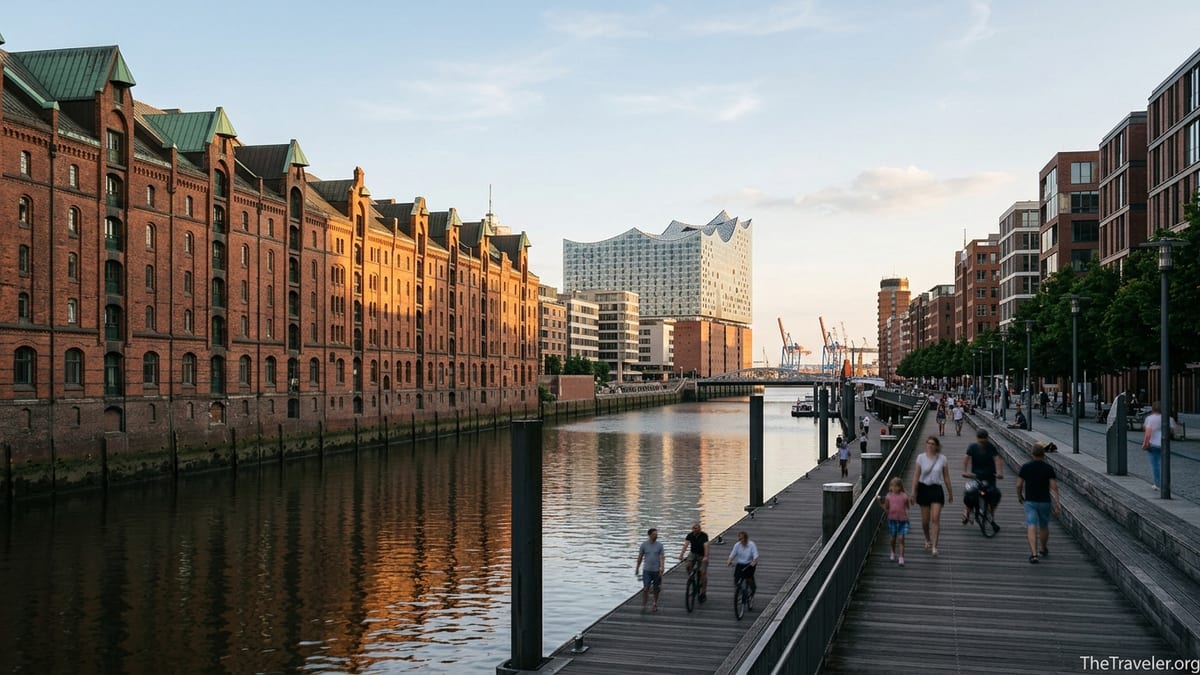
Plan nights 1 and 2 in Hamburg. Base yourself around St Georg, the Speicherstadt / HafenCity edge, or Sternschanze to balance access to the central station with livelier food and nightlife. With only two days, focus on landmarks that define the city’s maritime character such as the Elbphilharmonie plaza views, the brick warehouses of the Speicherstadt and a harbor ferry ride on the public boats along the Elbe. In the evening, the Portuguese Quarter near Landungsbrücken and the bars around Sternschanze are practical areas for dinner without needing taxis.
On day 3 take a morning regional train to Lübeck and overnight there for days 3 and 4. The historic old town sits on an island and has been recognized as a UNESCO World Heritage site, with its seven church towers, brick facades and merchant houses that recall the city’s Hanseatic past. Once you drop your bags, you can walk from the Holstentor city gate through the pedestrian core to St Mary’s Church and the town hall square in under 15 minutes, making it easy to cover the essentials in an afternoon.
Day 4 is your chance to see the Baltic Coast. From Lübeck’s main station, frequent trains run to Travemünde, which is part of Lübeck’s municipality and has a long urban beach, promenade and a historic lighthouse. Travel time is roughly 20 to 30 minutes, which keeps the outing relaxed. Return to Lübeck for a second evening in one of the compact old town hotels before heading back to Hamburg or on to your next destination on day 5. If your departure flight is early, you can use the fifth day to travel back to Hamburg and stay near the airport or central station.
7 Day Route: Hamburg, Lübeck and Bremen with Baltic & North Sea
A full week allows you to add Bremen and get a first contrast between the Baltic and the North Sea. The most efficient pattern is a triangle: Hamburg to Lübeck and the Baltic, then across to Bremen, then back to Hamburg. This keeps intercity legs under two hours and avoids doubling back through the same station unnecessarily.
Nights 1 and 2 work as in the 5 day plan, based in Hamburg with a focus on harbor, Speicherstadt and modern HafenCity, plus perhaps a canal boat tour or a visit to one of the large city parks. On day 3, relocate to Lübeck for two nights, combining old town sightseeing with a Baltic afternoon in Travemünde or the nearby resort town of Timmendorfer Strand, which you can reach in roughly half an hour by regional train. These resorts have broad sandy beaches, promenade cafes and typical seasonal beach chairs that define the Baltic coastal look.
On day 5, travel from Lübeck to Bremen, often via Hamburg with a change at the main station, and base yourself there for nights 5 and 6. Bremen’s compact old town makes it easy to arrive around midday and still see a lot. The market square with its UNESCO listed town hall and Roland statue, the narrow lanes of the Schnoor quarter with colorful small houses and cafes, and the expressionist Böttcherstrasse are all within a short walk of each other. In the evening, the Schlachte riverside promenade along the Weser offers river views and a line of restaurants and beer gardens.
Use day 6 for a lower Weser or North Sea taster. One common day trip from Bremen is to Bremerhaven on the estuary, which takes roughly 35 to 45 minutes by regional train and offers a maritime museum cluster and harbor walks rather than a classic beach. If you prefer dunes and wide tidal flats, look at North Sea resorts such as Cuxhaven or Sahlenburg, typically reached in around two hours from Bremen with a change. Return to Bremen for a final night, then take a direct train back to Hamburg on day 7 to connect with your onward travel.
10 Day Itinerary: Adding Mecklenburg Vorpommern’s Baltic Coast
With 10 days, you can extend your route east along the Baltic Coast into Mecklenburg Vorpommern, adding classic seaside towns and allowing slower days by the water. A practical pattern is to allocate three nights to Hamburg, two to Lübeck, three to a Baltic coastal base and two to Bremen at the end. This keeps each region to manageable chunks and reduces the number of one night stays.
Spend nights 1 to 3 in Hamburg, which gives you time to explore beyond the obvious waterfront. You can fit in a half day on the Elbe beaches at Övelgönne, stroll through the early 20th century canals of the Kontorhaus district and visit at least one of the larger museums or the Miniatur Wunderland model worlds, which absorb several hours even for adults. Having three nights also lets you plan an evening at the Elbphilharmonie if you secure tickets in advance, or at least a sunset visit to the public plaza.
On day 4 move to Lübeck for nights 4 and 5, using the first afternoon for the core old town and the second for a more relaxed Baltic excursion. Rather than returning to the same resort you saw on a shorter itinerary, consider a longer half day in Travemünde combined with a ferry hop across the Trave river for a different perspective on the harbor, or a side trip further up the coast to resorts in Mecklenburg Vorpommern. Many travelers opt to continue east after Lübeck and base themselves in cities such as Wismar or Rostock, both of which have brick Gothic old towns and act as gateways to beaches.
For nights 6 to 8, choose a Baltic Coast base in Mecklenburg Vorpommern. Rostock with the nearby seaside district of Warnemünde is a common choice because you can stay in the city but reach a broad sandy beach by local train in around 20 minutes. Alternatively, one of the resorts on the island of Rügen or on the Fischland Darß Zingst peninsula offers more nature and long hiking or cycling options, though you should allow extra travel time by train and bus to reach them. Plan at least one completely unscheduled day to walk the promenade, rent bikes or simply watch the changing light along the water.
On day 9, travel from your Baltic base to Bremen. From Rostock, for example, you can generally reach Bremen in around three to four hours with a change, so it makes sense to arrive by afternoon and spend nights 9 and 10 there. Use your remaining time for another look at the market square and Schnoor, or add a visit to the Viertel district, which is known for its independent shops, bars and late night food scene. On day 10, return to Hamburg or continue south by rail, depending on your onward plans.
14 Day Grand Circuit: Both Seas and More Hanseatic Towns
A two week trip opens up the full range of northern Germany’s coastal and Hanseatic landscapes. You can comfortably combine Hamburg, Lübeck, multiple Baltic bases in Mecklenburg Vorpommern, Bremen and at least one classic North Sea area without sacrificing rest days. A reasonable structure is three nights Hamburg, two Lübeck, four on the Baltic, three on or near the North Sea and two in Bremen, with travel days balanced so that no single leg dominates a day.
Begin with nights 1 to 3 in Hamburg to settle in and adjust to the rhythm of the region. Then move to Lübeck for nights 4 and 5, taking advantage of the compact old town layout to explore on foot and maybe adding one of the city’s museums dedicated to Hanseatic trade or marzipan. Keeping Lübeck to two nights avoids duplicating too much of what you will see later in Wismar, Rostock or Stralsund, which share the brick Gothic architectural tradition but each have their own waterfront setting.
Nights 6 to 9 belong to the Baltic Coast of Mecklenburg Vorpommern. A common pattern is to split time between an urban base such as Rostock or Stralsund and a quieter resort, perhaps on Rügen or the nearby peninsulas, to experience both harbor life and open seascapes. Using trains and regional buses, you can visit places like Warnemünde for a classic resort promenade, or head to lesser known stretches of sand and dunes for long walks and low key evenings. Aim to keep any single transfer between bases under three or four hours, which is usually feasible along this coast.
For nights 10 to 12, shift focus to the North Sea. From Rostock or Stralsund you will usually route through Hamburg toward coastal towns in Lower Saxony or Schleswig Holstein. North Sea resorts differ from the Baltic in their strong tides, mudflats and dike landscapes, and many travelers come specifically for walks on the tidal flats with a local guide. Bases such as Cuxhaven or St Peter Ording offer broad beaches, compact town centers and a range of guesthouses and mid range hotels. Expect windier, more changeable weather than on the Baltic, which is part of the appeal for walkers and photographers.
Finish with nights 13 and 14 in Bremen. After days of small resort towns, Bremen’s old town will feel lively but still manageable compared to Hamburg. You can spend a final afternoon sitting at a cafe in the Schnoor quarter or along the Schlachte, revisit the town hall square at different times of day, and perhaps fit in a last museum or a match if the local football team is at home. On your final morning, Hamburg’s airport and long distance rail hub are easy to reach, often in about an hour by frequent trains.
Choosing Bases and Planning Overnights
Picking the right overnight bases in northern Germany comes down to balancing logistics with the atmosphere you want each evening. Hamburg almost always deserves at least two or three nights at the start or end of a trip because it concentrates major rail connections and offers a wide range of hotels, from business chains near the central station to design properties around HafenCity and smaller guesthouses in neighborhoods such as St Pauli or Eimsbüttel. If your flight arrives late, staying near the main station for one night can be practical before moving to a quieter quarter for the rest of your Hamburg time.
Lübeck works best as a two night base rather than a rushed day trip from Hamburg. Staying inside or just outside the old town island lets you enjoy the streets after day visitors leave, and sunrise or late evening walks under the brick church towers have a very different feel from midday. Because the train to Travemünde and other Baltic spots is quick, you can still use Lübeck as a springboard for a half or full day by the sea without moving hotels.
On the Baltic Coast in Mecklenburg Vorpommern, think about whether you prefer a single base for three or four nights or a split between two shorter stays. Cities such as Rostock give you more restaurant choices and wet weather options, while quieter resorts and islands provide stronger immersion in coastal nature. For example, basing in Rostock or Stralsund for two nights, then moving to a resort on Rügen or a smaller peninsula for another two or three nights, gives a mix of harbor towns and quieter beaches. If you are traveling in high season with a car, booking well ahead in the most popular resorts is advisable because they can fill up.
Bremen is best treated as a two or three night city stop, either mid trip between Hamburg and the North Sea or at the end of a circuit. Hotels in or near the old town let you walk everywhere and enjoy the Schnoor and market square without late night tram rides. For North Sea overnights, coastal towns such as Cuxhaven tend to have a range of modest hotels, apartments and guesthouses, many a short walk from the dike or shore, and you can decide between staying directly at the water or in a town center a bit inland where prices may be lower.
Practical Tips: Transport, Costs and Seasons
Traveling between Hamburg, Lübeck, Bremen and the coastal areas is straightforward by rail. Regional trains link Hamburg and Lübeck in under an hour and Hamburg and Bremen in a similar time frame, with departures generally at least every hour. From Lübeck, local lines reach Baltic towns like Travemünde quickly, while Hamburg and Bremen act as gateways to longer routes toward Mecklenburg Vorpommern and the North Sea. Many visitors use a mix of advance purchase long distance tickets for the longest legs and flexible regional day passes for shorter hops and spontaneous side trips.
Daily costs depend heavily on the season and how you eat. In cities such as Hamburg and Bremen you can find snacks and casual meals for a modest amount, especially at bakeries, Turkish snack bars and simple bistros, while sit down dinners with drinks in the more central districts will cost more. At the coast, beachfront cafes and promenade restaurants in peak season often charge a premium compared to backstreet places a block or two inland. Many travelers balance splurge dinners on one or two evenings with simpler meals on longer days of walking or sightseeing.
Weather on both coasts is changeable, so planning layers and wind resistant outerwear is more important than any specific temperature expectation. Even in July and August, evenings on the North Sea can feel cool, especially with sea breezes, while early season days in May or late September often alternate between bright sun and short showers. Shoulder season can be particularly attractive for city segments, when you can walk around without heat and crowds, while still having sufficiently long daylight for excursions.
Language and payment are generally straightforward for international visitors. English is widely understood in hotels, restaurants and transport hubs, especially in larger cities and touristy coastal towns. Cash is still useful for smaller bakeries, kiosks and rural guesthouses, but cards are widely accepted in chain supermarkets, urban restaurants and many attractions. Booking key rail segments and at least your coastal accommodation in advance is wise in July and August, as popular trains and seaside properties can fill up during school holidays.
The Takeaway
Northern Germany rewards travelers who move at a measured pace, linking brick Gothic Hanseatic towns with long, low coastlines on both the Baltic and North Sea. With 5 days you can combine Hamburg and Lübeck with a first look at the Baltic, in 7 you can add Bremen and a taste of the North Sea, and over 10 or 14 days you can build a full circuit through Mecklenburg Vorpommern’s seaside towns and quieter islands. By choosing a handful of smart bases, relying on efficient trains and allowing rest days by the water, you will come away with a nuanced sense of how these cities and coasts connect.
Rather than racing between landmarks, think in terms of a few well chosen overnight stops and short train rides that leave time for cafe breaks in Lübeck’s lanes or walks on a nearly empty beach at dusk. That combination of historic merchant power and understated seaside atmosphere is what sets northern Germany apart, and it is best experienced with an itinerary that favors depth over sheer distance.
FAQ
Q1. Is it realistic to visit both the Baltic and North Sea in one week?
Yes, if you focus on one main city base such as Hamburg, add Lübeck and the Baltic for a day or two, and take a single North Sea day trip or overnight, but you should accept that coastal time will be limited.
Q2. Should I rent a car for this itinerary or rely on trains and buses?
For Hamburg, Lübeck and Bremen plus major Baltic towns, public transport is usually sufficient and often more convenient, while a rental car becomes useful if you want to spend several days in smaller North Sea or Baltic villages with limited bus service.
Q3. When is the best time of year to follow these routes?
Late spring and early autumn are often ideal, with May, June, early July and September offering long days and milder temperatures, while July and August have the warmest sea conditions but also the highest prices and busiest beaches.
Q4. How many nights should I plan in Hamburg itself?
Most travelers do well with two or three nights in Hamburg, which leaves enough time for the harbor, Speicherstadt, a couple of museums or attractions and at least one evening in a neighborhood like St Pauli or Sternschanze.
Q5. Is Lübeck better as a day trip or overnight stay?
Lübeck can be seen on a long day trip from Hamburg, but staying one or preferably two nights lets you experience the old town streets in the quieter early morning and evening hours and take a more relaxed Baltic excursion.
Q6. How crowded are Baltic and North Sea resorts in peak season?
In school holiday periods many Baltic and North Sea resorts are busy, with higher room rates and fuller promenades, so booking coastal hotels early and planning some inland or city days for balance is advisable.
Q7. Can I swim comfortably in the sea during summer?
Water temperatures in both the Baltic and North Sea are generally cool but swimmable for many people in July and August, with sheltered Baltic bays often feeling slightly warmer and calmer than exposed North Sea beaches.
Q8. Are these routes suitable for traveling with children?
Yes, the combination of walkable old towns, accessible beaches and frequent trains works well for families, though it is wise to keep individual travel days short and choose accommodations with easy access to parks or waterfronts.
Q9. How far in advance should I book accommodation?
For trips in peak summer or around public holidays, booking key city hotels and especially coastal stays several weeks or months in advance is prudent, while in shoulder season you often find more last minute options.
Q10. Is it easy to continue from northern Germany into Denmark or other countries?
Yes, Hamburg in particular has good international rail links toward Copenhagen and other Scandinavian destinations, so you can treat these itineraries as the northern German section of a longer Baltic or Nordic journey.