

Northern Germany’s islands stretch in a loose arc from the wild North Sea to the gentler Baltic, offering long beaches, spa towns, dunes, chalk cliffs and sleepy villages. Choosing between Sylt, Rügen, Usedom, Fehmarn and the Frisian Islands can feel overwhelming, especially when you are balancing budgets, kids, bikes, kitesurf gear or the wish for quiet time as a couple. This guide compares the main islands using on-the-ground examples of beaches, resorts and accommodation styles so you can decide which one fits your style of trip.
North Sea vs Baltic Sea: How the Islands Really Differ
The first big decision is whether you want the drama of the North Sea or the softer climate and waters of the Baltic. Sylt and the Frisian Islands face the North Sea, which means bigger waves, stronger winds and wide tidal flats where the sea withdraws for hours. Summer highs usually sit in the high teens to low twenties Celsius, so even in July and August you are more likely to wear a windbreaker than a bikini all day. This is the right choice if you like bracing walks, surf, kites and wild dunes rather than poolside heat.
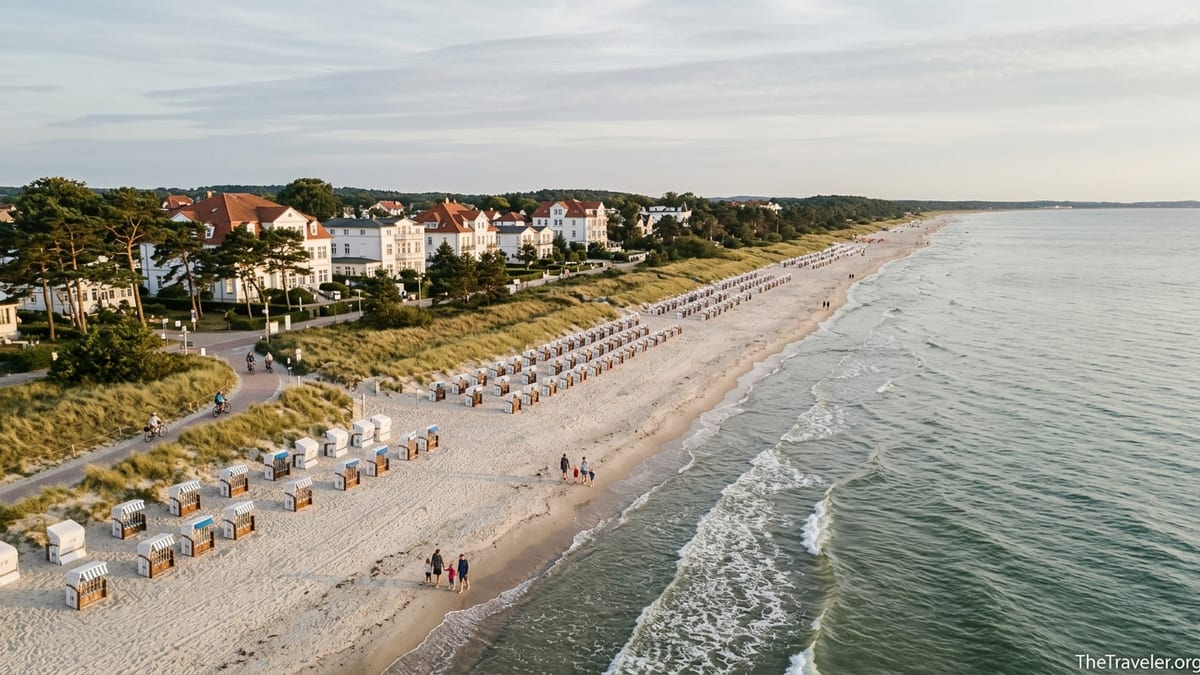
Rügen, Usedom and Fehmarn sit on the Baltic Sea and feel noticeably calmer. The water is less salty, waves are smaller and shallow bays like Prorer Wiek on Rügen or the south coast of Fehmarn warm up quicker in summer. Families with small children often prefer these beaches because paddling is easier and there is less sudden surf. Baltic spa towns like Binz, Heringsdorf or Burg auf Fehmarn also have long flat promenades with cafés and ice cream stands close to the sand, which suits prams and grandparents.
Travel logistics differ too. Sylt is unusual in Germany because it is linked to the mainland by the Hindenburgdamm rail causeway, so most visitors roll their cars onto the car train at Niebüll or take direct passenger trains from Hamburg. Fehmarn is reached via the Fehmarnsund Bridge, while Rügen is connected to the mainland at Stralsund, again by road and rail. The East and North Frisian islands are more remote: Borkum, Norderney, Langeoog, Spiekeroog, Amrum and Föhr all require ferries, in some cases from small ports with limited daily sailings. That remoteness is a big part of their charm.
Weather is a deciding factor. On Sylt and Norderney you can easily get four seasons in one day, with strong wind that delights surfers but makes sunbathing feel chilly. On Usedom, which markets itself as one of Germany’s sunniest regions, you stand a better chance of several calm, warm days in a row in July and August. If your absolute priority is near-guaranteed beach weather, you might even shorten a North Sea stay and combine it with time inland in Berlin, Hamburg or Copenhagen for flexibility.
Sylt: Glamour, Waves and Dunes for Active Couples
Sylt is Germany’s most famous North Sea island, known for its 40 kilometers of west coast sand, reed-thatched villas and a mix of high-end boutiques and rustic thatched villages. Towns feel distinct: Westerland is the busy hub with apartment blocks, chain shops and the classic promenade, Kampen is the upmarket village of designer stores and celebrity hangouts, while List in the far north has a more relaxed harbor feel and access to the nature reserve at Ellenbogen. Couples who enjoy good food, long walks and people-watching will find plenty to fill a long weekend.
For beaches, picture the red cliffs near Kampen, the wide Brandenburger Strand in Westerland with rows of blue-and-white strandkörbe, and quieter stretches like Rantum and Hörnum in the south. Many beaches have daily strandkorb rental in summer, typically for a modest fee that covers a full day of shelter from wind and sun. On the east side, towards the Wadden Sea mudflats, guided walks explore the tidal ecosystem at low tide and are a good option if the surf side feels too rough. Beginners trying surf or kitesurf will find schools operating near Westerland and Hörnum in season, taking advantage of the North Sea swell.
Accommodation on Sylt ranges from simple guesthouses in Westerland to five star hotels and spa resorts in Kampen and List, plus a strong market of holiday apartments and thatched holiday houses. Prices peak in July and August and around school holidays, and the island has a reputation as expensive. To soften the costs, many travelers visit in shoulder seasons such as late May or September, when air and water are still pleasant but overnight rates drop and restaurant reservations are easier. Camping is restricted and highly regulated, so do not plan to wild camp; instead book ahead in official sites or look at apartments in less-hyped villages like Tinnum or Morsum.
Sylt is particularly well suited to active couples and adults who want a combination of nature and dining. Cycle paths run almost the entire length of the island, and it is realistic to ride from Westerland to List or Hörnum in a day on rental bikes picked up in town. In the evenings, beach clubs near Westerland host sundowner drinks when the weather allows, while quieter thatched villages like Keitum offer sunset walks along the mudflat shore followed by dinner in Frisian-style restaurants. Families can enjoy the island too, especially with teenagers who appreciate surf and nightlife, but if you are looking for playgrounds directly on the promenade you might find Rügen or Usedom more convenient.
Rügen: Classic Baltic Resorts, Chalk Cliffs and Family Variety
Rügen is Germany’s largest island and offers an almost overwhelming variety of landscapes: the white chalk cliffs of Jasmund National Park, tranquil inland lakes, long sandy bays and historic resort towns. For a first visit, many travelers base themselves in Binz, Sellin or Göhren on the southeast coast. These Baltic resorts have restored 19th century villas with ornate balconies, long piers stretching into the sea and child-friendly beaches with shallow entry. In peak summer, Binz’s main beach is lined with strandkörbe, and ice cream stands and bakeries sit just back from the promenade.
Nature lovers are drawn to the chalk cliffs north of Sassnitz in Jasmund National Park, a UNESCO World Heritage site for its beech forests and dramatic coastline. The famous Königsstuhl viewpoint is accessible via a visitor center and walking paths, while lesser-known viewpoints along the cliff edge offer quieter photo stops. Further south, the narrow peninsula of Mönchgut provides a more rural feel, with thatched villages and smaller bays that are ideal for walking and cycling. Many visitors rent bikes in Binz or Sellin and spend a day riding out across Mönchgut’s dykes and headlands before returning by local train.
Rügen is among the most flexible islands for families. Resorts like Binz have a full range of mid-range hotels, self-catering apartments and campsites within short walking or cycling distance of the beach. You can find beachfront family hotels with small indoor pools and playrooms near the promenade, which is useful if a stormy day keeps you off the sand. Attractions such as the Rasender Roland narrow-gauge steam railway, which links several seaside towns, double as both transport and entertainment for children, turning a simple move between beaches into an outing in itself.
Compared to Sylt, Rügen feels less exclusive and more spread out, with more options at moderate price points if you book early for July and August. It suits travelers who want a blend of nature and classic seaside atmosphere with easy day trips. You can spend one day hiking the chalk cliffs, another on a sandy bay such as Prora or Baabe, and a third exploring the harbor in Sassnitz or the historic park and theatre in Putbus. For couples, smaller hotels in Sellin or in rural corners like Vitt near Kap Arkona offer quieter bases away from the busier promenades.
Usedom: Sun, Spa Towns and Easy Cycling for All Ages
Usedom straddles the German Polish border and markets itself as one of the sunniest regions in Germany, with long sandy beaches backed by pines and a string of elegant spa towns. On the German side, the best known are the so-called Kaiserbäder of Bansin, Heringsdorf and Ahlbeck, whose seafronts are linked by a nearly continuous promenade. The promenade continues east into Świnoujście in Poland, making an impressive cross-border coastal walk or bike ride with sea views, piers and villas along the way.
The beaches on Usedom are broad, with gentle slopes into the Baltic, which makes them excellent for children and less confident swimmers. In the Kaiserbäder, life on a summer day revolves around renting a strandkorb, stocking up on snacks from the nearest bakery, and alternating between dips in the water and strolls along the promenade. In bad weather, indoor facilities such as thermal baths and small local museums provide back-up entertainment. Compared to Sylt, the overall tone is more low-key and family focused, with fewer celebrity restaurants and more traditional fish smokehouses and ice cream cafés.
Usedom is also popular with cyclists. The flat terrain and well-marked routes mean you can ride from resort to resort without needing to be particularly fit. Families often rent bikes or cargo bikes directly from shops in Heringsdorf or Ahlbeck for a day or longer. A classic itinerary is to follow the promenade and coastal paths in the morning, stop for lunch at a beach café in Bansin, then loop back through the quieter inland lakes and forests in the afternoon. Those on longer cycling holidays sometimes approach Usedom via the Berlin Usedom cycle route, arriving on the island after several days of largely traffic free riding.
In terms of where to stay, you will find a range of family-run pensions, modern spa hotels with wellness areas, and holiday apartments that can be more economical for a week-long stay. Prices in peak season reflect the island’s popularity, but outside school holidays you can often find good value, particularly in smaller resorts on the northern stretch of the island beyond Zinnowitz. Couples seeking quieter evenings might choose a guesthouse there or in the Polish town of Świnoujście, while still using the Kaiserbäder for daytime beach time and promenades.
Fehmarn: Surf, Campsites and Laid Back Baltic Vibes
Fehmarn sits in the western Baltic, connected to the mainland by the Fehmarnsund Bridge and known for its open coastline, wind sports and casual atmosphere. The island’s shape means you can almost always find a beach with wind from the right direction, which is why kitesurfers and windsurfers flock here from spring to autumn. Spots such as Wulfener Hals in the south or Gold and Lemkenhafen on the east coast host surf schools and rental centers, with shallow lagoons where beginners can practice in relatively safe conditions while more experienced riders head out into open water.
Beyond water sports, Fehmarn is excellent for bikepacking and relaxed cycling. A paved or compacted path circumnavigates most of the coastline, and it is realistic for an average cyclist to ride around the island in a day, perhaps breaking the loop with a long lunch in Burgstaaken harbor or a swim at the south coast beaches. The modest size of the island means nothing is far away, and even if you base yourself in Burg, the main town, you can reach several different beach types by bike in less than half an hour.
Accommodation on Fehmarn leans strongly towards camping and self-catering. Several large campsites line the southern and eastern coasts, often with direct beach access, on-site surf schools and play areas for children. These sites can feel like small villages in summer, with supermarkets, cafés and evening entertainment programs, which suits families who want everything within walking distance. There are also small guesthouses and a handful of hotels in Burg and scattered through the countryside, but if you dislike camping you will need to book early for high season to secure indoor rooms on attractive terms.
Fehmarn is best suited to travelers who care more about being active outdoors than dressed up in the evenings. After a day on the water or cycling, evening entertainment might be as simple as grilled fish at a harbor restaurant or barbecue outside a caravan. Couples who enjoy surf culture or want a budget friendly Baltic base with plenty of space may find Fehmarn more relaxed than the showpiece promenades of Binz or Heringsdorf. For families with sporty teenagers, the island’s surf schools and camps offer structured lessons while parents enjoy long walks along the dykes.
Frisian Islands: Quiet Escapes and Nature Focus
The Frisian Islands stretch in a chain off the coasts of the Netherlands, Lower Saxony and Schleswig Holstein. In Germany, they are often divided into East Frisian islands such as Norderney, Langeoog, Spiekeroog and Borkum, and North Frisian islands like Amrum and Föhr that share the North Sea with Sylt but feel quite different. What unites them is their relative remoteness, slower pace and strong connection to the Wadden Sea National Park, where tides shape daily life.
Norderney is the most visited of the East Frisian islands, with a lively town, spa facilities and several kilometers of sandy beach that attract both families and younger adults. The town has a concentration of cafés, bars and shops, yet it is a short bike ride to quieter dunes and bird-rich salt marshes. In contrast, Langeoog and Spiekeroog are smaller and quieter, with fewer cars and more emphasis on peace and nature. Visitors here often come for long walks on the almost empty beach, birdwatching and a sense of being away from the mainland bustle. Borkum, further out at sea, has a more exposed feel, with dune landscapes and a noticeable maritime climate that can feel wilder outside summer.
In the North Frisian group, Amrum and Föhr offer an alternative to Sylt. Amrum’s Kniepsand beach is an enormous swath of sand that makes even busy summer days feel spacious, and the island has a network of boardwalks through dunes and heathland that appeal to walkers and photographers. Föhr is greener and more sheltered, with low fields, hedgerows and Frisian villages that feel almost rural, plus beaches that are especially popular with families due to their gentle slopes and relatively calm water. Access to both islands is via ferry from the mainland, with sailings that are frequent in summer but still require a bit more planning than driving onto a bridge or causeway.
Accommodation across the Frisian islands is dominated by holiday apartments, guesthouses and a smaller number of hotels. Many German families book the same apartment on the same island each year, which means prime summer weeks can sell out many months in advance. Prices can be moderate if you stay in simple pensions away from the seafront, but in high season and in hotter properties such as sea view apartments in Norderney, rates rise sharply. Campsites exist on some of the islands but are fewer than on Fehmarn, so camping enthusiasts should research specific islands in advance.
These islands suit travelers who prioritize open skies, birds, long walks and reading in a strandkorb over nightlife or shopping. For couples, a week in a thatched cottage on Amrum or Spiekeroog can feel like a true retreat, with evenings spent cooking at home and strolling along the dike. Families with younger children may prefer Föhr or Norderney, where playgrounds, mini golf and family-friendly cafés balance the wilder beach time. If you are very sensitive to wind and changeable weather, keep in mind that the North Sea can be brisk even in midsummer, and pack layers accordingly.
Which Island for Beaches, Bikes, Nature, Couples and Families
If your main priority is long, lifeguarded beaches with facilities right behind the dunes, all five island groups deliver, but in different flavors. Sylt offers wild North Sea surf and famous stretches like Westerland and Kampen, plus family-oriented sections near Rantum and Hörnum. Rügen and Usedom provide warmer, shallower Baltic water and classic resort promenades where you can step from café terrace to strandkorb in a few minutes. Fehmarn’s beaches are more varied and wind-exposed, ideal for surf and kitesurf. The Frisian islands offer some of the emptiest beaches in Germany, particularly on Amrum and Langeoog, where walking for half an hour can take you to near solitude.
For cycling, consider how confident you and your group are. Usedom and Fehmarn are excellent for casual riders and families with children, thanks to flat terrain and well-marked coastal loops that can be broken into short, manageable sections between beach breaks. Rügen’s cycling is more varied, with some hills and longer distances between highlights, but the combination of chalk cliffs, inland lakes and peninsulas rewards anyone willing to pedal further. Sylt has a clear north south cycle path network, which makes day trips from Westerland to List or Hörnum straightforward on rental bikes, though wind can be strong. On the Frisian islands, cycling is more about everyday mobility between village, harbor and beach, with car-free islands like Langeoog emphasizing slow, short-distance riding.
Nature enthusiasts may lean towards Rügen, the Frisian islands or Sylt. Rügen’s Jasmund National Park and the Mönchgut peninsula offer dramatic chalk cliffs, beech forests and birdlife. The Wadden Sea around the Frisian islands and the east side of Sylt is a UNESCO listed ecosystem, and guided mudflat walks at low tide reveal its shifting sands and rich marine life. Amrum’s dune landscapes and Kniepsand, or the heathlands of northern Sylt near List, make especially good photography locations at sunrise or sunset. Fehmarn has its own bird reserves and fields of rapeseed and wheat that turn vivid yellow in spring, but its headline attraction remains wind and water sports.
For couples, Sylt and selected corners of Rügen and the Frisian islands stand out. Sylt combines top-tier restaurants, beach clubs and high-end hotels with dramatic seascapes, particularly around Kampen and the Ellenbogen. On Rügen, small boutique hotels in Sellin or remote guesthouses near Kap Arkona offer quieter bases with access to both sea and countryside. On the Frisian side, a cottage on Amrum, Föhr or Spiekeroog can deliver deep quiet. Families, by contrast, may find Rügen, Usedom and Föhr easiest, with broad, gentle beaches, promenades with playgrounds and plenty of apartments that can house grandparents and children under one roof. Fehmarn Nabi suits sporty families who want surf lessons and bikepacking more than formal kids’ clubs.
Accommodation Types, Budget Expectations and Booking Tips
Across all these islands, accommodation tends to cluster in three broad types: hotels and spa resorts, private holiday apartments and guesthouses, and camping or holiday parks. Sylt, Rügen and Usedom have the widest choice of hotels, from traditional spa hotels with half-board dining to modern design-led properties. On Sylt, five star addresses in Kampen or List cater to guests who arrive by premium car train or helicopter, while Westerland and smaller villages provide mid-range hotels and pensions that are more affordable. Rügen’s Binz and Sellin have elegant seafront villas converted into hotels, often with breakfast included, while inland villages offer farm stays and simple inns.
Holiday apartments dominate on the Frisian islands and are also common on Rügen and Usedom. These range from compact one-bedroom studios above shops to multi-bedroom thatched houses with large gardens. Many come with minimum stay requirements in high season, typically a week, and are booked long in advance by repeat visitors. If you are planning a family holiday in school holidays, it is wise to begin searching many months ahead, especially for popular weeks in July and August. For couples or off-season travelers, last minute gaps can appear, particularly in shoulder seasons such as late April, early June or September.
Camping and holiday parks are especially prominent on Fehmarn and parts of Rügen and Usedom. Large sites on Fehmarn’s south shore may have direct beach access, surf schools, small supermarkets, playgrounds and even simple restaurants or snack bars, creating a semi self-contained environment that suits families with children who can roam between caravan, beach and play area. On Rügen, some campsites sit by lakes or on quieter bays, offering a more low-key, nature-focused experience. On North Sea islands, camping options are more limited and tightly regulated because of the delicate dune ecosystems and potential storm surges, so always check in advance and never assume wild camping is tolerated.
Budget wise, expect Sylt and the most famous Baltic resorts to sit at the top end of German coastal pricing, especially in high season. A simple hotel room or apartment near the promenade in Sylt’s Westerland or Rügen’s Binz in late July usually costs noticeably more than an equivalent inland stay on the mainland. The Frisian islands, despite their quieter image, can also be expensive at peak times because supply is limited and repeat visitors fill rooms. Fehmarn and smaller Baltic resorts on Usedom or northern Rügen generally offer better value, particularly for campers and self caterers. Booking early, being flexible on exact dates and considering shoulder season travel are the most effective ways to keep costs manageable across all islands.
The Takeaway
Choosing between Sylt, Rügen, Usedom, Fehmarn and the Frisian islands is ultimately about matching your priorities to each island’s character rather than finding an objectively best destination. If you want dramatic North Sea waves, a hint of glamour and long duneside walks, Sylt is the obvious pick. For classic Baltic resort charm, chalk cliffs and family-friendly promenades, Rügen is hard to beat. Usedom suits sun seekers who enjoy spa culture and flat, easy cycling. Fehmarn is perfect for surfers, campers and anyone who prefers a relaxed, informal atmosphere. The Frisian islands are ideal if you crave space, quiet and strong connections to the Wadden Sea landscape.
All of these islands reward staying long enough to slow down. Even a busy resort promenade feels different if you have time to wander away from the main streets and watch the tides or clouds change. Whether you rent a strandkorb for a week on a Baltic promenade, pedal along Sylt’s dune paths, or board a ferry to a small Frisian island with only a book and a rain jacket, you will be stepping into a coastal culture that Germans have cherished for generations. With realistic expectations about weather, early planning for accommodation and a clear sense of whether you want surf, spa or solitude, you can pick the island that will feel like your own stretch of northern sea.
FAQ
Q1. Which island is best for a first-time visitor to northern Germany?
For a first trip, Rügen or Usedom usually work best. Both offer classic Baltic beaches, promenade life, easy cycling and a wide range of mid-range hotels and apartments without Sylt’s higher prices.
Q2. Is Sylt worth the extra cost compared to other islands?
Sylt is worth it if you value dramatic North Sea scenery, upscale dining and a lively atmosphere. If your focus is simple beach time on a budget, Rügen, Usedom or Fehmarn can offer similar sand for less.
Q3. Which island is most suitable for families with small children?
Usedom, Rügen and Föhr are particularly family friendly, thanks to their shallow Baltic or sheltered waters, promenades with playgrounds and many holiday apartments close to the beach.
Q4. Where should active travelers who love cycling and watersports go?
Fehmarn and Sylt are top choices for surfers and kitesurfers, while Fehmarn, Usedom and Rügen all have well-marked cycle routes suitable for day tours or multi-day trips.
Q5. Are the Frisian islands too quiet for a week-long holiday?
Not if you enjoy nature and slow days. On islands like Amrum, Föhr, Langeoog or Norderney, a week passes quickly with walks, cycling, reading and exploring small villages, but nightlife is limited.
Q6. When is the best time to visit these islands for beach weather?
July and August offer the warmest conditions, though even then the North Sea can feel cool. Late June and early September are good compromises with fewer crowds but still pleasant temperatures.
Q7. Do I need a car on the islands?
On Sylt, Rügen and Fehmarn a car can be convenient but is not essential if you use trains, buses and bikes. Several Frisian islands are car free or restrict vehicles, so walking and cycling dominate there.
Q8. How far in advance should I book accommodation?
For peak summer weeks on Sylt, the Frisian islands and in major Baltic resorts, it is sensible to book many months ahead. Shoulder seasons often allow more flexibility and last minute options.
Q9. Are there good options for spa and wellness stays?
Yes. Sylt, Rügen and Usedom all have established spa traditions, with seafront hotels offering saunas, pools and treatment programs that combine well with bracing walks on the beach.
Q10. Which island is best if I do not like strong wind or rough seas?
If you prefer calmer conditions, choose a Baltic island such as Rügen, Usedom or Fehmarn, where the water is generally gentler and winds less intense than on the North Sea coast.