


Northern Germany is a compact region with a surprisingly diverse coastline: a major port city in Hamburg, the resort towns of the Baltic Sea, and the tidal flats of the Wadden Sea. At the same time, the old Hanseatic cities of Lübeck, Wismar and Stralsund sit within day-trip distance of each other. This makes it an ideal area to experience on structured tours, but also tempting for independent exploration by train, rental car or bike. This guide compares concrete options and prices for Hamburg excursions, Baltic Coast tours, Wadden Sea experiences, island trips and Hanseatic city walks, and weighs up when it pays to book a guided trip and when you are better off going on your own.
How Northern Germany Fits Together for Travelers
For trip planning, it helps to see Northern Germany as four overlapping zones. Hamburg is the obvious entry point, with a major airport and high-speed rail connections. To the east lies the Baltic Coast, including Kiel, Lübeck, Wismar, Rostock and the islands of Rügen and Usedom. To the west you reach the North Sea and the UNESCO-listed Wadden Sea, with hubs such as Cuxhaven and Büsum and islands like Sylt and Neuwerk. Threaded through all of this are the historic Hanseatic cities, which can be visited as half-day walking tours or used as bases for longer stays.
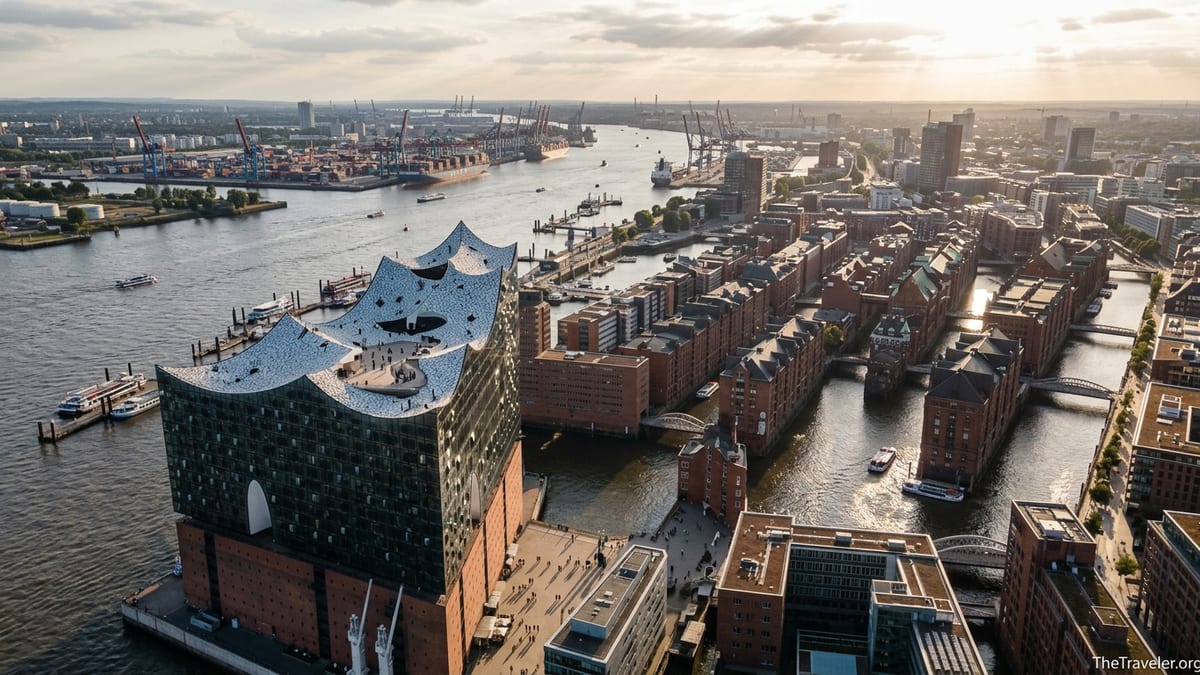
From Hamburg, many travelers choose day tours that bundle several themes. A typical small-group walking tour of the Speicherstadt warehouse district and HafenCity with an exterior visit to the Elbphilharmonie Plaza costs around 20 to 30 euros per person in 2025, with some operators offering private versions from roughly 150 to 200 euros for a two-hour slot for a small group. Longer full-day shore excursions from cruise ports like Kiel or Warnemünde to Hanseatic cities such as Lübeck usually start around 140 to 220 euros per person, reflecting the added transport and guiding.
The geography means you can base yourself in one place and reach multiple regions. For example, staying three nights in Hamburg allows for a city sightseeing day, a train trip to Lübeck, and a North Sea or Baltic shore excursion. With a week, travelers often combine three days in Hamburg with three to four days on either the Baltic or the North Sea, using local ferries and regional trains. The decision then becomes whether to structure these segments with guided tours or explore independently with point-to-point tickets.
Hamburg Excursions: Harbor, Elbphilharmonie and Neighborhoods
Most visitors start with a general introduction to Hamburg. Hop-on hop-off bus tours, often marketed as “City Sightseeing,” run circular routes connecting the central station, Town Hall, St. Michael’s Church, Speicherstadt, HafenCity and the harbor piers. A classic 24-hour bus ticket typically costs around 20 to 25 euros for adults as of 2025, and is best used on arrival to get the lay of the land before diving into specifics. Travelers who prefer a more focused approach often opt for a two-hour guided walking tour in the historic center and Speicherstadt for roughly 18 to 25 euros per person.
The Elbphilharmonie concert hall has become Hamburg’s icon and is heavily featured in excursions. Public guided tours that access the building and its foyers, but not necessarily the main hall, are sold directly by the venue and by partners. As of the 2024 to 2025 season, guided plaza visits commonly start in the range of 15 to 25 euros per adult depending on whether a separate plaza ticket is included and whether the tour adds a walk through the warehouse district. Independent travelers can still visit the Elbphilharmonie Plaza on their own by reserving a free or low-cost time-slot ticket, then using a self-guided audio app or printed map instead of joining a group.
Neighborhood tours fill in the picture. Guided walks through the Speicherstadt and HafenCity that end near or inside the Elbphilharmonie are popular among visitors who want architectural context. Small local companies in Hamburg offer private two-hour Speicherstadt plus Elbphilharmonie exterior tours from about 180 to 200 euros total for groups of up to eight or ten people, which can work out cheaper per person for families or friends traveling together than booking individual group tickets. Evening tours of the St. Pauli district and the Reeperbahn nightlife strip, often including a drink stop, typically cost 25 to 35 euros per person and are best booked with a guide for safety and local insight.
For harbor experiences, traditional barge cruises depart from the Landungsbrücken piers. A one-hour harbor tour in English usually runs around 20 euros, while a two-hour extended version that reaches container terminals and the Elbphilharmonie waterfront may be 25 to 30 euros. These cruises can be joined independently on the day in normal weather, but in peak summer or for specific departure times it is worth reserving. Travelers on a tighter budget sometimes use regular harbor ferries included in local transit day passes to gain similar views at a fraction of the cost, though without commentary.
Baltic Coast Tours: Seaside Resorts and Island Hopping
The Baltic coastline east of Hamburg offers a gentler maritime experience, with sandy beaches, spa towns and a string of UNESCO-listed old towns. Lübeck is the most common first step. From Hamburg, hourly regional trains reach Lübeck in about 45 minutes, with standard one-way fares often around 20 euros, while day tickets and regional passes can lower costs. Once there, a one-and-a-half-hour guided walking tour of Lübeck’s historic city center typically costs about 18 to 25 euros per person on major platforms, or from roughly 250 to 280 euros per group for a private version tailored to specific interests such as architecture or food.
Shore excursion operators bundle Lübeck with other Baltic sights. For example, full-day tours from Kiel cruise port to Lübeck often include transportation in a minivan, a guided old-town walk and some free time for marzipan shopping and lunch. Prices vary, but sample listings show starting rates around 150 to 220 euros per person, with discounts for larger groups. Similar offerings exist from Rostock and Warnemünde, where tours might combine Rostock’s historic center with nearby seaside resort Warnemünde for approximately 60 to 100 euros per person for half-day programs.
Farther along the coast, Wismar and Stralsund provide quieter alternatives with strong Hanseatic character. Travelers based in Rostock or Lübeck can reach Wismar and Stralsund by regional train in one to two hours. Typical old-town tours of these cities last 60 to 120 minutes, with shared group walks often priced from 15 to 25 euros per person, and private guiding commonly starting around 90 to 300 euros per group depending on length and language. These tours focus on red-brick Gothic churches, town halls and former merchants’ houses that tell the story of the Hanseatic League.
For island experiences, organized day trips to Rügen or Usedom from larger cities like Rostock and Stralsund often combine bus transfers, coastal viewpoints and short walks on chalk cliffs or piers. Prices for full-day group bus tours to Rügen, including stops at the Königsstuhl cliffs and seaside resorts like Binz or Sellin, typically fall between 70 and 120 euros per person in high season. Independent travelers can replicate much of this using regional trains and local buses if willing to manage timetables, often saving money but investing more time.
Wadden Sea Experiences and North Sea Island Trips
The Wadden Sea on Germany’s North Sea coast is a tidal landscape where mudflats, channels and sandbanks appear and disappear with the tides. It is a UNESCO World Heritage site, and many experiences here are tied to tide times and safety rules, which makes guided options especially relevant. Towns such as Cuxhaven, Büsum and Husum act as gateways to the Wadden Sea national parks of Lower Saxony and Schleswig-Holstein. From Hamburg, Cuxhaven is reachable by train in about two hours, making it a realistic day-trip or an overnight stop for North Sea activities.
One of the most distinctive excursions is the journey from Cuxhaven to the tiny island of Neuwerk across the tidal flats. Traditional “Wattwagen” tours use horse-drawn carriages that travel across the seabed at low tide. Local operators out of Cuxhaven’s Sahlenburg district offer these trips as round-trips or as one-way rides combined with a boat return on vessels such as the MS Flipper. Prices for carriage journeys are typically listed per person and vary by route, but travelers can expect to pay on the order of several tens of euros for a combined carriage and boat experience, with higher rates during summer and on weekends. Because conditions depend on exact tide times, these tours must be reserved in advance and are not feasible without guidance for most visitors.
Guided mudflat walks are another signature Wadden experience. National park guides in Cuxhaven, Büsum and on islands like Föhr and Amrum lead groups onto the tidal flats to observe marine life and learn about the ecosystem. Short family-friendly walks of around two hours often cost roughly 10 to 20 euros per person, with discounts for children, while longer hikes to offshore sandbanks can be more expensive. Safety is a serious concern in the Wadden Sea due to rapidly changing tides and channels, so independent walks should be limited to signed routes near shore at safe times, or better yet replaced with guided tours for first-time visitors.
Farther north, the island of Sylt is reachable by train via the Hindenburgdamm causeway from Niebüll, which itself connects to Hamburg by regional and intercity trains. Once on Sylt, travelers can choose between independent cycling and walking or organized half-day tours that circle the island by bus. Guided panoramic bus tours are often priced at around 30 to 50 euros per person, highlighting dunes, reed-thatched villages and long beaches. Boat trips to neighboring islands and sandbanks where seals can be observed add another 20 to 40 euros depending on duration. Independent travelers may instead rent bicycles for roughly 10 to 20 euros per day and follow marked coastal routes.
Exploring the Hanseatic Cities: Lübeck, Wismar, Rostock and Stralsund
The Hanseatic League, a medieval trading network of port cities, has left a dense cluster of brick-built towns across Northern Germany. For visitors, this translates into highly walkable historic cores where distances are short but the stories are layered. Lübeck is the standout, with its Holstentor gate, seven church towers and riverside warehouses. Introductory walking tours through Lübeck’s old town typically last about 90 minutes and focus on highlights such as St. Mary’s Church, the Town Hall, and the narrow courtyards behind merchant houses. Public group tours commonly cost around 18 to 25 euros per person, while specialized options such as culinary or courtyard-themed tours run a bit higher.
Wismar and Stralsund, both listed as UNESCO World Heritage sites, attract fewer crowds but offer rich Hanseatic architecture. In Wismar, an express one-hour city walk with a local guide is often marketed around 90 to 100 euros for small groups, while two-hour in-depth private tours may reach 250 to 300 euros depending on season and language. Stralsund’s old town lends itself to evening tours led by guides in historical costumes, which create a different atmosphere and are typically priced similarly to standard walks, with public tours around the 15 to 20 euro mark.
For cruise passengers arriving in Rostock or Warnemünde, organized Hanseatic city excursions bundle transport and guiding. A common format is a two-hour walking tour of Rostock’s university quarter and churches followed by free time in Warnemünde. These shore excursions, often sold through cruise lines or booking platforms, usually cost between 60 and 120 euros per person depending on group size and inclusions. Independent travelers can replicate much of the experience using regular trams and buses, then joining only the local walking tour element, which reduces costs but requires more planning.
Multi-city Hanseatic itineraries are viable by rail. A traveler with a week could base in Lübeck, then take day trips to Wismar and Rostock on alternate days, using regional train day passes. In such cases, it can be cost-effective to book just one or two guided city tours, for example a historical deep-dive in Lübeck and a shorter orientation in Wismar, while exploring the remaining cities with printed maps and museum audio guides. This hybrid approach balances budget and interpretation without the structure of a full package tour.
Guided Tours vs Independent Travel: Costs, Convenience and Depth
Choosing between guided tours and independent exploration in Northern Germany comes down to three factors: budget, comfort with logistics and depth of interpretation. Guided day tours, whether in Hamburg, along the Baltic Coast or in the Wadden Sea, generally command higher per-person prices than doing the same routes on your own using public transport. For example, a full-day private Lübeck shore excursion from Kiel might cost over 150 euros per person including driver-guide and coach, while an independent traveler could spend under 50 euros on regional train tickets and a public walking tour in Lübeck. The price difference reflects not only transportation but also the guide’s time and the convenience of a pre-arranged itinerary.
Private tours in Hamburg illustrate this trade-off on a smaller scale. A two-hour private Speicherstadt and Elbphilharmonie exterior tour for a group of five might be advertised around 190 euros total, which equates to roughly 38 euros per person. By comparison, joining an open group tour covering similar ground might cost around 20 to 25 euros per person. For couples and solo travelers, group tours are usually better value. For families or friends traveling together, private guiding can become competitive, especially if it allows for custom starting times and specific interests such as photography or maritime history.
Logistics also matter. On straightforward city routes like Hamburg’s inner districts or Lübeck’s compact old town, independent travelers using smartphone maps and printed brochures can navigate easily. In contrast, the Wadden Sea experiences demonstrate where guided arrangements are almost essential. Tide-dependent carriage rides from Cuxhaven to Neuwerk, or long mudflat hikes between islands, require expert timing and local knowledge to be safe. Here, the cost of guiding is directly tied to risk management. Similarly, full-day island circuits on Rügen or Sylt by public transport are possible but can be stressful on tight schedules; a guided bus tour simplifies connections at the cost of flexibility.
Depth of experience is the third dimension. Walking through a Hanseatic old town independently, you might admire the red-brick churches and stepped-gable houses without fully understanding what you see. A local guide can explain how Lübeck’s merchants once controlled Baltic trade or how Wismar’s gabled facades signaled status, adding context that is hard to glean from signs alone. For travelers who enjoy stories and historical detail, one or two well-chosen guided city tours can significantly enrich a Northern Germany trip, even if they explore other days independently.
Practical Itineraries: Combining Hamburg, Coast and Hanseatic Cities
For a first-time visitor with one week, a practical itinerary might start with three nights in Hamburg and four nights on either the Baltic or North Sea coast. In Hamburg, day one could be devoted to a hop-on hop-off bus circuit and an evening harbor cruise, both of which can be booked independently for a combined cost of around 40 to 50 euros per person. Day two could then focus on a two-hour guided Speicherstadt and Elbphilharmonie tour in the morning and self-guided museum visits in the afternoon. Day three would remain flexible for a St. Pauli evening walk or a second harbor-focused excursion depending on interest.
From Hamburg, taking the train to Lübeck for a one- or two-night stay adds a concentrated Hanseatic element. A 90-minute guided walking tour on arrival day provides orientation, after which travelers can explore churches, courtyards and the riverside independently. For those continuing to the Baltic coast, onward trains to Wismar, Rostock or Stralsund are straightforward, allowing a few nights in a seaside base like Warnemünde or on the island of Rügen. Here, one full-day guided bus tour to cover dispersed sights, such as chalk cliffs and spa architecture, can be combined with a free day for beach time or cycling.
Alternatively, travelers more interested in tidal landscapes than classic beaches might continue from Hamburg to Cuxhaven or Büsum and base there for the remainder of the week. In that case, a guided mudflat walk on the first full day and a carriage and boat combination to Neuwerk on the next day would anchor the program. A remaining day could be dedicated to a ferry ride or regional connection to an island such as Heligoland for cliff walks and seabird viewing, booked through local boat operators in advance.
Multi-week trips allow for more experimentation with independent segments. A traveler with two weeks might combine three nights in Hamburg, three nights on the Baltic near Lübeck or Rostock, three nights on the North Sea near Cuxhaven or Husum, and two or three nights on an island such as Sylt or Rügen. In such a plan, it is often efficient to book one or two guided tours in each base: one city walk, one natural excursion (such as a mudflat hike or cliff walk), and leave remaining days unstructured. This blend keeps the total tour cost manageable while ensuring that the most complex or information-rich experiences are guided.
The Takeaway
Northern Germany’s compact geography lends itself remarkably well to a mix of guided tours and independent exploration. Hamburg works as both a standalone city break and a springboard for coastal and Hanseatic excursions, with a spectrum of offerings from 20 euro walking tours to higher-priced private itineraries. The Baltic Coast adds seaside resorts and islands that can be navigated by train and bus, complemented by targeted day tours for harder-to-reach highlights.
The Wadden Sea introduces a wilder, more technical environment where tide tables and safety considerations tilt the balance in favor of guided experiences, particularly for mudflat hikes and horse-drawn carriage journeys to islands like Neuwerk. Meanwhile, the brick-built Hanseatic cities reward at least one in-depth guided walk to unlock their history, with additional days easily filled by independent wandering through courtyards, churches and harbors.
For most travelers, the most satisfying Northern Germany itinerary mixes formats: use independent travel for straightforward train or ferry routes and general city exploration, but invest in guided tours where interpretation or logistics are complex. By comparing concrete prices and products in advance and reserving key experiences that depend on tides or limited capacities, visitors can enjoy the full range of Hamburg, the Baltic Coast, the Wadden Sea and the Hanseatic cities without feeling locked into a rigid package.
FAQ
Q1. Is it worth booking a guided tour of Hamburg, or can I explore the city independently?
For confident independent travelers, central Hamburg is easy to explore alone using maps and public transport, but a two-hour guided walk around the Speicherstadt, HafenCity and Elbphilharmonie area can give useful context and orientation at a relatively modest cost, so many visitors start their stay with at least one guided city tour.
Q2. How much should I budget for day tours in Northern Germany?
As a rough guide, short walking tours in cities like Hamburg, Lübeck or Wismar typically cost about 15 to 30 euros per person, harbor or river cruises around 20 to 30 euros, and full-day excursions to Hanseatic cities or islands generally 70 to 150 euros per person, with private or custom tours costing more depending on group size.
Q3. Can I visit the Elbphilharmonie in Hamburg without joining a tour?
Yes, it is possible to visit the Elbphilharmonie Plaza independently by reserving a time-slot ticket and using the public escalators, but guided tours add background on the architecture, acoustics and history, and many travelers choose a combination of a short guided visit and independent time on the viewing platform.
Q4. Is it safe to walk in the Wadden Sea without a guide?
Short strolls on signed tidal flats close to shore at low tide are usually safe if you follow local advice and posted times, but longer mudflat hikes to islands or sandbanks should only be undertaken with certified guides who understand tide patterns and weather, since conditions can change quickly and disorientation is a real risk.
Q5. Do I need to book Wadden Sea and Neuwerk carriage tours in advance?
Because these tours depend on specific low-tide windows and have limited capacity, advance booking is strongly recommended, especially in summer or on weekends, and many operators will not accept walk-up guests once a departure is full or if conditions change on the day.
Q6. Are the Hanseatic cities of Lübeck, Wismar and Stralsund suitable for independent day trips by train?
Yes, these cities are well connected by regional trains and their historic centers are compact and walkable, so independent visits work very well, and many travelers simply add a one- or two-hour local walking tour on arrival for orientation before continuing on their own.
Q7. What is the best base for exploring both Hamburg and the Baltic Coast?
For short trips, staying in Hamburg and taking a day trip to Lübeck or the Baltic shore is efficient, while for longer itineraries many travelers split their stay between Hamburg and a secondary base such as Lübeck, Rostock or a nearby resort like Warnemünde to reduce backtracking and enjoy evenings by the sea.
Q8. How far in advance should I book guided tours in peak season?
In July and August, it is sensible to book popular experiences such as Elbphilharmonie tours, island bus excursions on Rügen or Sylt, and Wadden Sea mudflat walks at least a few weeks ahead, while standard city walking tours in larger places like Hamburg often still have space closer to the date, especially on weekdays.
Q9. Is renting a car necessary for Northern Germany tours?
A car is not strictly necessary for most itineraries, since the region has good rail and bus connections, but a rental car can be advantageous for travelers who want to string together small coastal villages, rural stretches of the Baltic or North Sea coast, or remote trailheads without being tied to public transport schedules.
Q10. How can I keep tour costs down without missing key experiences?
One practical approach is to prioritize paid guiding for the most complex or interpretation-heavy activities, such as a Wadden Sea excursion and one or two Hanseatic city walks, while exploring straightforward segments like central Hamburg, beaches and short island walks on your own using regional train tickets and local transit passes.