


Northern Germany has two very different seas sharing one coastline. To the west, the wild North Sea with its tides and endless sandbanks. To the east, the gentler Baltic Sea with sheltered bays and historic spa towns. Both regions offer strong infrastructure, family friendly resorts and good rail connections from Hamburg and Berlin, yet the experience on the ground is surprisingly different. This guide compares the two coasts in practical detail so you can decide which is better for your style of holiday, budget and season.
North Sea vs Baltic Sea at a Glance
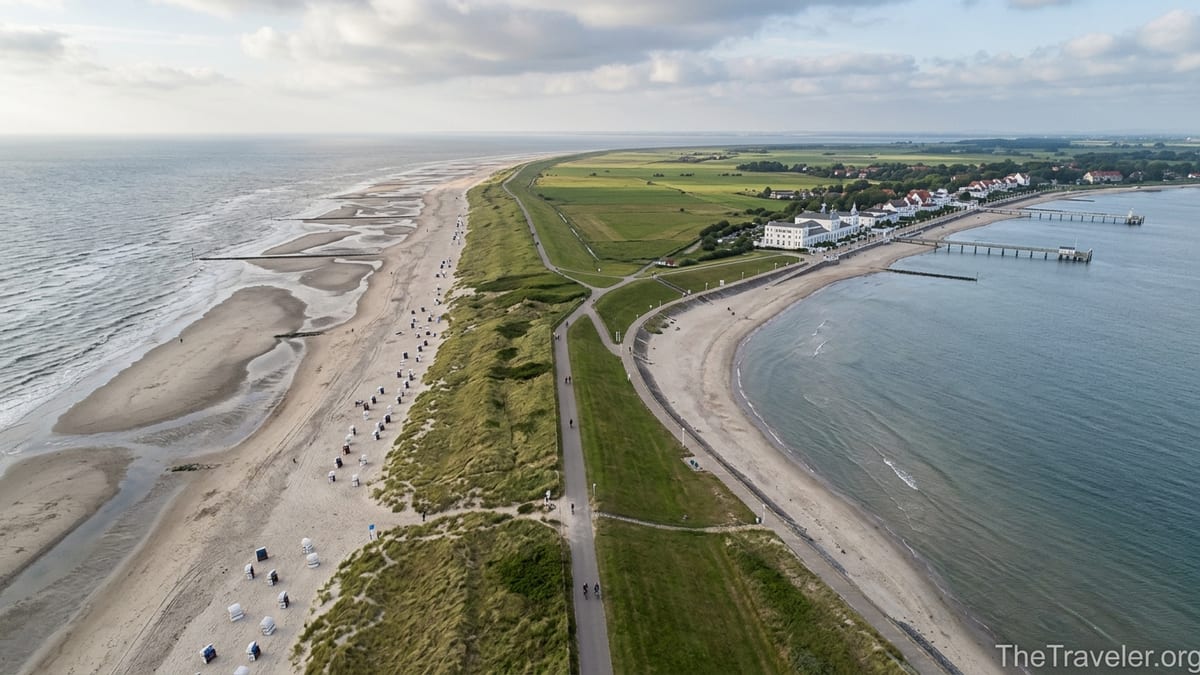
If you look only at a map, the German North Sea and Baltic Sea coasts appear similar. In reality they feel like two different worlds. The North Sea in Schleswig Holstein and Lower Saxony is part of the Wadden Sea, a UNESCO-listed tidal landscape famous for mudflats, strong winds and very long, flat beaches. Classic North Sea bases include Sankt Peter-Ording on the Eiderstedt peninsula, the island of Sylt, and the East Frisian islands such as Norderney. Trains from Hamburg reach many of these hubs in roughly two to three hours, with frequent summer services and combined rail-and-ferry tickets to the islands.
The Baltic Sea coast by contrast lies on a calmer inland sea. Popular stretches run from Lübeck Bay with resorts such as Timmendorfer Strand and Travemünde, through the cliffs and chalk coast of Rügen, to the broad sandy beaches of Usedom near the Polish border. Here the sea is tideless, bays warm up faster and the general mood is less rugged, more relaxed. Hamburg to Timmendorfer Strand typically takes around one hour by local train via Lübeck, while Berlin to the Rügen or Usedom region usually takes between three and four and a half hours depending on connections.
Broadly speaking, the North Sea is better if you want dramatic nature, wide horizons, kite buggies and long walks at low tide. The Baltic Sea suits travellers who value swimming-friendly water, pretty seaside promenades, classic spa architecture and easier conditions for young children. Both coasts cover the full spectrum of budget hostels to five-star wellness hotels, but the North Sea islands in particular tend to price a little higher at peak times.
Beaches, Water and Weather: What It Really Feels Like
The most important difference for many visitors is the water itself. On the North Sea, tides rule your day. Around places such as Sankt Peter-Ording or Norderney the sea retreats far out twice a day, exposing kilometres of mudflats and sandbanks. At low tide you walk where your map still shows open water, often on guided mudflat tours organised by local tourist offices. When the flood returns, the surf can be choppy with strong currents, which is why swimming is usually restricted to lifeguard supervised zones. Even at the height of summer, average water temperatures around the North Sea islands tend to peak around the high teens in Celsius and feel brisk when you first go in.
The Baltic Sea tells a different story. Without tides and with many shallow bays, water along stretches like Lübeck Bay or around Usedom usually warms up a little more in summer. In sheltered spots such as Timmendorfer Strand or the Greifswalder Bodden behind Rügen, typical peak temperatures in July and August often reach the high teens to low twenties in Celsius. On a calm day that feels noticeably milder than the open North Sea. Waves are usually small and predictable, which is ideal for stand up paddling, pedalo boats and relaxed swimming. For visitors who are nervous in rough water or travelling with inexperienced swimmers, this calmer character can be decisive.
Weather along both coasts is dominated by maritime influences, meaning summers are rarely extremely hot and evenings often feel cooler than inland cities. The North Sea, more exposed to Atlantic weather, tends to be windier and a bit cooler than the Baltic. On Sylt or Sankt Peter-Ording, you should expect days with strong onshore winds in July and August and pack windbreakers and layers even in high season. The upside is glorious fresh air and dramatic skies. The Baltic coast has more sheltered microclimates. A summer afternoon in Kühlungsborn or Binz might reach the mid twenties in Celsius with little wind, so you can comfortably sit in a beach chair into the evening.
Islands and Iconic Resorts on Each Coast
When travellers imagine the German North Sea, they often picture the long thin outline of Sylt, reached by train across the Hindenburgdamm causeway. Sylt combines wide beaches, heather covered dunes and a reputation as a playground for Germany’s affluent visitors. Westerland offers large hotels, restaurants and nightlife, while the quieter northern villages like Kampen focus on upscale holiday homes and thatched cottages. Further south, Sankt Peter-Ording stretches along a vast sandy beach lined with wooden stilt houses that host cafes and restaurants. It feels airy and open, with big skies and a slightly Bohemian sports scene built around kite-surfing and beach sailing.
The East Frisian islands such as Norderney and Langeoog provide a more low-key version of the North Sea. Norderney has a 19th century spa town atmosphere with grand Kurhaus buildings and a mix of family hotels, guesthouses and apartments. Most cars stay on the mainland, and visitors move around by bicycle or on foot. These islands are reachable via ferries from ports like Norddeich Mole, with direct rail connections from cities such as Bremen or Hanover to the ferry terminals, making them practical even without a car.
On the Baltic coast, the islands feel softer and more classical. Rügen, Germany’s largest island, is known for its white chalk cliffs in Jasmund National Park and for historic seaside resorts like Binz and Sellin, where you stroll along promenades lined with ornate villas and spa hotels dating from the early 20th century. Many of these properties offer modern wellness facilities while keeping an elegant, slightly nostalgic character. To the east, Usedom markets itself as the “sun island,” claiming one of the highest sunshine hour counts in Germany. Its three imperial spas, Ahlbeck, Heringsdorf and Bansin, share a continuous beachfront promenade lined with hotels that often include half-board dining and spa access.
If you prefer a base on the mainland, the Baltic also has compact resorts like Timmendorfer Strand or Kühlungsborn. Timmendorfer Strand in particular is popular with weekenders from Hamburg because frequent regional trains bring you from Hamburg main station to the nearby stations at Timmendorfer Strand or Scharbeutz in about an hour. The town mixes a lively beachfront with family oriented hotels, rental apartments and a small aquarium, making it easy to fill a short break without a car.
Families, Couples and Different Travel Styles
For families with young children, the Baltic Sea is usually the easier choice. The absence of strong tides, the gentle slope of many beaches and the slightly warmer water make life simpler for parents. Resorts such as Grömitz, Boltenhagen and the bays around Rügen and Usedom offer long stretches of shallow water where children can splash safely under supervision. You will find many playgrounds directly on the sand, small amusement parks and mini golf facilities. Family hotels on the Baltic often advertise kids’ clubs, indoor pools and all weather playrooms to cover cooler days outside the main summer weeks.
The North Sea also works well for families, but it suits those who enjoy nature and movement rather than long hours swimming. Children often love the adventure of guided mudflat walks, where park rangers point out crabs, lugworm tracks and small channels created by the tide. On Sankt Peter-Ording, families rent beach carts and bicycles to explore the huge expanse of sand, while on islands like Föhr or Amrum most accommodation comes with access to garden space or nearby dunes. Parents should pay close attention to lifeguard advice, because currents can change quickly when the tide turns. Many families opt for a mix of beach play at low tide and visits to indoor pools or adventure farms inland when the weather turns rough.
Couples and adults looking for quiet often gravitate to the Baltic spa towns. Places like Heiligendamm, Ahrenshoop or the quieter ends of Rügen and Usedom pair beach time with wellness facilities, good local restaurants and a strong cultural calendar of classical concerts and festivals, especially in late summer. Strolling the promenades in the evening, stopping for a drink at a beachfront bar and watching calm seas is part of the appeal. Prices in high season can be substantial in the best located hotels, but outside school holidays many properties offer attractive midweek packages including spa use and breakfast.
By contrast, couples who like a slightly wilder feel may enjoy the North Sea more. Long hikes along the dike, brisk cycling into the wind and evenings in cosy thatched roof restaurants serving local shrimp and fish create a very different atmosphere. Some small North Sea islands have only a handful of bars and a quiet nightlife, making them better suited to walkers, bird watchers and those who simply want to read on a balcony with a sea view. For a more upscale scene with boutiques and beach clubs, Sylt stands out, though you should factor in peak season prices for seafront accommodation and dining.
Nature, National Parks and Outdoor Activities
Northern Germany’s North Sea coast offers one of Europe’s most distinctive natural landscapes in the Wadden Sea. Large sections of shoreline and the offshore islands are protected in national parks where birdlife and marine ecosystems are strictly managed. Guided walks across the mudflats, boat trips to observe seal colonies and ranger led excursions are everyday activities in summer. Around Husum, Büsum and Sankt Peter-Ording, dikes and salt marshes create nesting grounds for thousands of migratory birds in spring and autumn, attracting bird watchers from across Europe. The constantly changing play of light on water, sand and sky is one of the main reasons many visitors return each year even when the weather is unpredictable.
The Baltic coast hosts a different kind of nature. Rügen’s Jasmund National Park protects beech forests and chalk cliffs that drop dramatically into the sea. Well maintained hiking trails lead to viewpoints above the cliffs, and small excursion boats allow visitors to see the coastline from the water. On the Fischland-Darß-Zingst peninsula, wide beaches back onto pine forests and lagoons, ideal for cycling and quiet hikes. Inland lakes and gentle hills create a softer landscape than the flat North Sea marshes. For many travellers, this variety allows a mix of beach time, forestry walks and boat trips within a compact area.
Water sports are possible on both coasts, but they differ. The windy North Sea attracts kite surfers, windsurfers and sailors who enjoy challenging conditions. In Sankt Peter-Ording and on islands such as St. Peter-Ording’s offshore sandbanks or the northern tip of Sylt, you will find schools offering courses in kite surfing and land sailing across firm sand at low tide. The Baltic favours stand up paddling, sea kayaking and relaxed sailing, especially around sheltered bays like Lübeck Bay, Rügen’s Bodden lagoons or the backwaters of Usedom. Rental centres cluster around main resorts and usually operate from late spring to early autumn.
Cycling is excellent in both regions, though the feeling differs. North Sea routes often run along the dike with open views and frequent wind, sometimes strong enough to influence your choice of direction. The Baltic offers more sheltered forest and cliff top trails, for instance between the seaside towns on Rügen, or along the coastal cycle paths in Mecklenburg-Vorpommern where you move between fields, woods and beach sections in a single day.
Accommodation, Prices and Practicalities
Beds are plentiful on both coasts, but availability and prices shift sharply with school holidays. On the North Sea, particularly on Sylt and some of the smaller islands, peak summer and long weekends can see seafront hotel rates climb to levels comparable with popular Mediterranean destinations. A midrange double room in a central area of Westerland or Kampen in July often costs noticeably more than a similar standard room in a Baltic resort, and minimum stay requirements of several nights are common in apartments. Budget conscious travellers look for guesthouses slightly inland from the beach or choose larger mainland towns such as Husum, which offer better value and daily access to the coast by bus or train.
The Baltic Sea coast generally offers a broader range of mid priced options. In towns like Timmendorfer Strand, Kühlungsborn or Binz, you can expect everything from simple pensions and holiday apartments to four star spa hotels. Sea view rooms in prime locations still command high prices in July and August, but you will often find reasonable deals a few streets back from the waterfront or by visiting in June or early September. On islands such as Rügen and Usedom, fully equipped holiday apartments are common, appealing to families who prefer self catering. Many properties include access to wellness facilities, especially in the spa towns where saunas and indoor pools help extend the season beyond the warmest weeks.
Getting to both coasts without a car is straightforward. From Hamburg, frequent regional and intercity trains run to North Sea hubs like Husum, Büsum and Westerland on Sylt, some of them continuing seasonally from Berlin. Combined rail and ferry tickets make reaching islands such as Norderney or Föhr relatively simple, with luggage transfers sometimes available through local agencies. The Baltic side benefits from direct rail routes from both Hamburg and Berlin to ports such as Rostock, Stralsund and Sassnitz, plus regional trains from Lübeck to beach towns along Lübeck Bay. Once in the resorts, local buses and an excellent network of cycling paths mean many visitors choose to leave their car parked for most of their stay.
Everyday costs such as restaurant prices and beach taxes are comparable across both coasts, though very small Baltic towns and inland villages might feel marginally cheaper. Many seaside municipalities charge a daily visitor tax which grants access to the main beach and sometimes includes discounts on local attractions or public transport. Travellers should factor these modest fees into their budget and keep the issued card with them, as it is often checked by wardens at beach entrances during the day.
Which Coast Is Better for You?
No single coast is objectively better. The right choice depends mainly on how you imagine your ideal seaside day. If your priority is relaxed swimming, predictable conditions and a classic promenade lined with ice cream stands and spa hotels, the Baltic Sea is likely to make you happier. Families who want their children to play safely in shallow water, older travellers who appreciate shorter walking distances between hotels, cafes and the beachfront, and couples looking for wellness weekends often gravitate here. Towns like Binz, Timmendorfer Strand, Kühlungsborn and the imperial spas on Usedom deliver exactly that experience.
If instead you are attracted by big skies, the drama of tide and wind and a feeling of being close to unspoiled nature, the North Sea stands out. Walks across the mudflats, watching storms roll in across the Wadden Sea and cycling along dikes past sheep and salt marshes create a powerful sense of place. Active travellers, nature lovers and anyone seeking a slightly rugged, less polished atmosphere might choose North Sea bases such as Sankt Peter-Ording, Husum or one of the smaller islands. The trade off is colder water, more variable weather and greater need to plan around tide times.
Season matters too. In shoulder seasons such as May, June and September, the Baltic’s slightly higher water and air temperatures can extend your comfortable beach time, and spa hotels remain lively even when days are cooler. The North Sea in these months can be fantastic for long walks and bird watching, but you should not count on swimming. In peak summer, both coasts can feel busy in popular spots, yet even then it is usually possible to find quieter stretches by walking a little further from main access points or staying in smaller villages.
For many travellers with enough time, the ideal solution is not to choose at all. Rail lines linking Hamburg, Lübeck and Kiel make it practical to spend a few days on each coast in a single trip, for example combining a Baltic spa town with a North Sea island. Experiencing both landscapes back to back underlines how varied Northern Germany’s shoreline really is and helps you decide which one you might want to return to for a longer stay in future.
The Takeaway
Standing on a dike at the North Sea as the tide recedes, revealing shining mudflats out to the horizon, feels a world away from a calm Baltic bay at sunset where beach chairs line a neatly laid promenade. Yet both belong to the same stretch of Northern Germany, connected by efficient trains, shared maritime culture and a fondness for windproof jackets. Choosing between them is less about right and wrong and more about matching expectations to their distinct characters.
Pick the North Sea if you want elemental landscapes, big weather and long walks, and if swimming is only one small part of your holiday. Choose the Baltic if you value gentle water, swimming friendly beaches, spa architecture and an easygoing rhythm that suits families and couples alike. With that in mind, you can confidently book a base that fits your style, pack accordingly and let Northern Germany’s coastlines show you two very different faces of the same sea-bound region.
FAQ
Q1. Is the water warmer on the North Sea or the Baltic Sea in Northern Germany?
The Baltic Sea is usually slightly warmer in summer, especially in sheltered bays and lagoons, while the more exposed North Sea tends to stay a few degrees cooler.
Q2. Which coast is better for families with small children?
The Baltic Sea generally suits young families better thanks to gentler waves, shallow beaches and tideless conditions, although the North Sea offers great nature activities if you plan carefully around tides.
Q3. Can you swim safely in the North Sea with its strong tides?
Yes, but you should only swim in designated lifeguard supervised areas and respect local advice, because currents and water depth can change quickly as the tide turns.
Q4. Are North Sea or Baltic Sea beaches easier to reach by train from Hamburg?
The Baltic resorts in Lübeck Bay, such as Timmendorfer Strand, are extremely easy to reach in about an hour, while North Sea destinations like Sankt Peter-Ording or Sylt typically take closer to two to three hours.
Q5. Which coast is more affordable in peak summer?
Both coasts become more expensive in school holidays, but the North Sea islands, particularly Sylt, are often pricier than many Baltic resorts; inland or less central areas on either coast offer better value.
Q6. Where will I find more dramatic natural landscapes?
The North Sea’s Wadden Sea, with its mudflats, tidal channels and stormy skies, feels more dramatic, while the Baltic offers softer scenery with forests, cliffs and calm bays.
Q7. Do both coasts have good options for wellness and spa breaks?
Yes, but the Baltic spa towns, especially on Rügen and Usedom, have a particularly strong tradition of seaside wellness hotels with saunas, pools and treatment programs.
Q8. Is it realistic to visit both coasts on one trip?
It is quite realistic if you have at least a week; many travellers combine a few days on a North Sea island with time in a Baltic resort using rail links through Hamburg or Lübeck.
Q9. Which coast offers better conditions for water sports?
The windy North Sea is better for kite surfing, windsurfing and land sailing, while the calmer Baltic is ideal for stand up paddling, relaxed sailing and family friendly kayaking.
Q10. When is the best time of year to visit Northern Germany’s coasts?
Late June to early September offers the most reliable beach weather, though May, early June and September can be excellent for walking and cycling, especially on the North Sea.