


The German North Sea coast is not a single destination but a patchwork of islands, harbor towns and endless tidal flats, each with a very different feel. Picking the right base can make the difference between a windswept wellness retreat, a car free nature escape or a kid focused beach holiday with ice cream on every corner. This guide compares Sylt, Amrum, Föhr, St. Peter-Ording, Büsum, Cuxhaven, Norderney, Borkum, Juist and Greetsiel so you can match your travel style with the right stretch of coast.
Mainland vs Islands: How Your Base Shapes the Trip
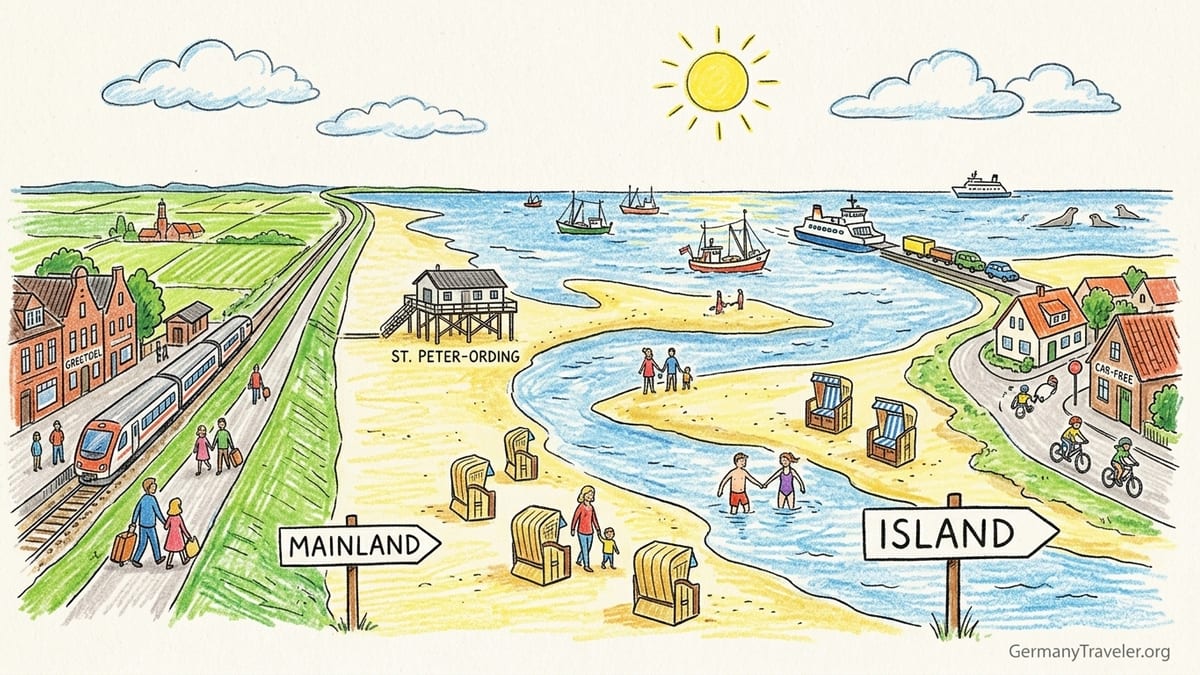
The first big decision is whether to stay on the mainland or on an island. Mainland resorts such as St. Peter-Ording, Büsum, Cuxhaven and Greetsiel are easier to reach by train or car, usually with a straight drive from Hamburg or Bremen and no need to watch ferry timetables. For example, Hamburg to St. Peter-Ording takes roughly three hours by regional train with a change in Husum, and drivers simply roll over the Eiderstedt peninsula and park behind the dike. This convenience appeals to first time visitors, families with lots of luggage and anyone planning a shorter stay of two or three nights.
The islands require a bit more logistics but reward the effort with a stronger sense of “away.” Sylt is the outlier, connected by the Hindenburgdamm rail causeway. Passengers travel by regular train to Westerland, while drivers load their cars onto a car train in Niebüll for a 35 minute crossing, remaining in the vehicle during the ride. Other islands, including Amrum, Föhr, Norderney, Borkum and Juist, are fully dependent on ferries from ports such as Dagebüll and Norddeich. Sailings are coordinated with the tide and may be reduced in winter, which means planning specific arrival times and leaving some buffer on travel days in case of wind or delays.
Once you factor in ferry tickets and parking at the harbor, islands are usually a little more expensive and less spontaneous than the mainland. A family driving from Hamburg to Föhr might pay for motorway fuel, parking at Dagebüll and a roll on roll off ferry crossing, which quickly becomes a significant travel budget line. Yet those same families often find the trade off worth it when they step off the boat into traffic calmed island villages, where children can cycle to the beach without crossing busy roads and evening walks are accompanied only by wind and seabirds.
If you are planning a week or more focused on sea air, walks and slow exploration, and you are comfortable locking in fixed travel times, an island is usually the better choice. If you want to combine the coast with day trips to Hamburg, Bremen or inland attractions, or you are unsure about the notoriously changeable North Sea weather and want the option to bail out early, a mainland resort offers more flexibility.
Best Beaches: Wide Sands vs Compact Strands
For classic big sky beach drama, St. Peter-Ording and Sylt are in a league of their own. St. Peter-Ording is famous for its up to two kilometer wide sandy beach with iconic wooden stilt houses perched on the tidal flats. On sunny summer weekends you find kite surfers, beach buggies and families renting traditional Strandkörbe, the hooded wicker beach chairs that block the wind. Drivers can even take their car onto designated sections of the sand at low tide, while long boardwalks over the dune belt make access easy for strollers. This feels more like a wild, Atlantic style beach than the gently shelving Baltic coast elsewhere in Germany.
Sylt offers variety rather than sheer width. The west coast by Westerland is lined with a long sandy strand backed by dunes and a lively promenade with cafes and beach clubs, while the southern Hörnum Odde and northern Ellenbogen headland feel much more secluded. Regular beach cleaning, lifeguard posts in season and rental beach chairs every few meters create a polished resort atmosphere. The trade off is that parts of the beach can feel busy in July and August, especially near Westerland and Kampen, where visitors pay a small daily spa tax that helps fund infrastructure.
Amrum and Norderney hit a sweet spot between raw space and accessibility. Amrum’s Kniepsand is a huge, mostly undeveloped sandbank west of the island that can feel almost empty even in summer, but the access paths from the villages are longer and you need to be comfortable walking over boardwalks and dunes for 15 to 20 minutes. Norderney, by contrast, packs several distinct beach sections into a relatively compact area around town, with separate zones for families, surfers and dog owners. This makes it easy to adjust on the fly. You can have an early morning walk past quiet dunes, then shift to a serviced beach bar with showers and snack stands once the kids wake up.
If you prefer intimate strands and harbor atmosphere to huge open beaches, Borkum and Büsum are better fits. Borkum has smaller, gently shelving beaches just a few minutes’ walk from town, along with a long promenade lined with historic resort villas. Büsum’s beach is narrower and partly grassed, with a sea swimming pool and Wadden Sea access that works well for young children under close supervision. These compact settings mean you can pop back to your guesthouse for a forgotten toy or an extra sweater in ten minutes, a practical detail on windy days.
Family Trips: Where Kids and Parents Both Relax
For family holidays, the most important ingredients are short walking distances, easy meal options and weather independent activities. Föhr, Norderney, Borkum and St. Peter-Ording tick these boxes especially well. On Föhr, the main town Wyk clusters bakeries, supermarkets, beach sections and playgrounds within a flat, walkable radius. Many apartments sit just behind the promenade, so parents can carry a sleeping toddler home without negotiating steep hills. In summer, you see wagon pulling families heading to the shallow south shore with buckets and nets to explore the tidal flats at low tide under the eye of local guides.
Norderney combines a compact, almost urban center with classic seaside pursuits. You might spend the morning at the beach, retreat in the afternoon to the family friendly sections of the island’s large spa complex with indoor pools and saunas, then pick up takeaway fries and fish sandwiches from a snack bar on the way back to your holiday apartment. During peak season there are children’s programs, guided mudflat walks and surf schools that rent kids’ wetsuits so they can stay in the chilly North Sea longer without getting cold too quickly.
St. Peter-Ording stands out for its dedicated family infrastructure. Behind the main dike, a purpose built Erlebnis-Promenade bundles play areas, a family oriented stilt house and interactive nature exhibits within a pedestrian zone. This gives children room to run even on stormy days when the beach feels too exposed. Parents appreciate that most restaurants and cafes in the Bad and Dorf districts are used to sandy feet and offer simple kids’ menus alongside local North Sea dishes, letting the adults still taste regional shrimp or fish soup while youngsters stick to familiar pasta or schnitzel.
Borkum, reached by ferry from Emden or Eemshaven, is another strong family option because cars are allowed but speed limits are low and the town is compact. You can load the trunk with beach toys and groceries, then forget about long drives for the rest of the week. Many holiday flats include basic laundry facilities, which is a quiet but important bonus when children come back covered in sand and mud after a guided Wadden Sea walk.
Nature, Quiet Escapes and Car Free Islands
Travelers seeking silence, birdlife and long walks will gravitate to Amrum, Juist and parts of Föhr and Greetsiel. Amrum feels particularly remote once the last day trippers leave on the evening ferry. The island’s landscape shifts from pine forest to heather to massive dunes and the open Kniepsand, providing varied walking routes without ever leaving sight of the sea. With no through traffic and a small permanent population, night skies are dark and wind and surf provide the main soundtrack. Even in summer the village streets go quiet by late evening outside a handful of pubs and restaurants.
Juist has built much of its identity around being car free. Visitors arrive by ferry from Norddeich, leave their vehicles on the mainland and move around on foot, by bicycle or in horse drawn carriages that serve as mini taxis and luggage shuttles. The absence of engines changes the whole character of the place. Children play freely in the sand streets between red brick houses, and the clip clop of hooves replaces traffic noise. For many repeat guests, simply stepping off the ferry and hearing only gulls and wind is the moment they feel on vacation.
On Föhr, especially in the smaller villages such as Nieblum and Utersum, the mood is more rural than resort like. Thatched farmhouses sit behind hydrangea hedges, dairy cows graze inland and narrow lanes lead to small, shady village churches. Cyclists share the roads with tractors and local schoolchildren, and it is common to combine an afternoon bike ride with coffee and cake in a farmhouse café. Greetsiel, although on the mainland, delivers a similarly tranquil vibe with its historic twin windmills, shrimp trawlers in the harbor and cobblestone alleys lined with brick houses.
If you crave nature but still want straightforward arrival logistics, consider Büsum outside peak school holidays. It is reachable by direct regional train from Hamburg and offers easy access to guided Wadden Sea walks, birdwatching around the Speicherkoog wetland and boat trips to the seal sandbanks. In the quieter shoulder seasons of April, May, September and October you can often walk long stretches of the sea wall with only a few dog walkers in sight.
Cycling, Food and Luxury: Where to Indulge
Flat landscapes and dedicated bike paths make almost the entire North Sea coast ideal for cycling, but some areas stand out. Föhr brands itself as a bicycle island, with a well signposted network of paths between its villages and relatively little car traffic on the narrow country roads. A common routine for visitors is to rent city bikes or e bikes for a week, often bundled with child trailers or cargo bikes from local rental shops, then use them as the primary means of getting around. Because gradients are minimal, even casual cyclists can comfortably manage 20 to 30 kilometer loops linking farm cafes, village churches and viewpoints over the Wadden Sea.
On the mainland, St. Peter-Ording and Büsum plug into the longer North Sea Cycle Route, which runs along the dikes and through coastal marshes. Many guesthouses cater to touring cyclists with secure bike storage and simple repair tools. A realistic day trip from St. Peter-Ording might involve following the dike out onto the Eiderstedt peninsula in the morning, stopping for lunch at a village inn serving local labskaus or fried fish, then returning via minor inland roads to avoid headwinds in the afternoon.
For food and a certain level of luxury, Sylt remains unrivaled along the German North Sea. Towns such as Kampen and Keitum are dotted with fine dining restaurants that focus on North Sea seafood, seasonal vegetables and modern German cuisine, often with set tasting menus that justify dressing up for the evening. Beach clubs along the west coast serve chilled drinks and share plates on terraces overlooking the surf, and upmarket hotels in Westerland, List and the southern part of the island combine spa facilities with gourmet kitchens. Prices reflect this positioning. A dinner with wine in a well known Sylt restaurant can easily approach what you might pay in major German cities.
That does not mean other destinations lack culinary interest. In Greetsiel and Büsum, working harbors bring in North Sea shrimp and fish that often appear on menus the same day, whether as simple shrimp rolls sold from harbor kiosks or as more elaborate plates in waterfront restaurants. Norderney and Borkum support a lively mix of beach bars, ice cream parlors and bakeries that fuel days spent outdoors. These towns strike a middle ground, where you can have one special dinner with sea views during your stay but rely on more casual, budget friendly options the rest of the time.
First Time Visitors: Easy Wins and Learning the Rhythm of the Tide
If this is your first encounter with the German North Sea, it helps to choose a base that combines straightforward arrival, clear tourist infrastructure and a range of activities. St. Peter-Ording and Büsum on the mainland, plus Norderney and Föhr among the islands, are especially forgiving choices for newcomers. All four have visitor centers, multilingual signage in many spots and accommodation ranging from simple guesthouses to modern apartments and spa hotels, so you can calibrate comfort and cost without feeling out of your depth.
On the islands, Norderney is an excellent first step into the rhythm of ferry travel and tidal life. The sailing from Norddeich usually takes under an hour, and the port connects smoothly with regional trains that arrive right at Norddeich Mole station. Once on the island, you can spend a day learning about the Wadden Sea at local museums, then book a guided mudflat walk to safely experience the shifting sands and tidal channels. Guides explain where it is safe to walk and why currents can become dangerous, a lesson valuable for anyone planning to explore the intertidal zone independently later in their trip.
Föhr, reached by ferry from Dagebüll, often appeals to first timers who want an island feel without giving up too much convenience. The ferry slips between sandbanks and smaller Halligen islets, providing a mini cruise as an introduction to the Wadden Sea. Once you dock in Wyk, everything from supermarkets to bike rentals and the tourist office is within walking distance. New visitors quickly adjust to checking tide tables posted in town when planning beach days or mudflat excursions.
On the mainland, Cuxhaven suits those who like a slightly larger town with multiple neighborhoods. You can choose between the resort district of Duhnen, with its promenade and beach, or the working harbor areas where large ships pass close to shore. Regional trains run to Cuxhaven from Hamburg and Bremerhaven, and the town works well as a base for day trips to the island of Neuwerk by horse cart across the mudflats or by boat, adding a sense of adventure without fully committing to an island stay.
Matching Destinations to Travel Styles
With so many options packed into a relatively small stretch of coast, a simple way to choose is to focus on what matters most to you. If your priority is wide sandy beaches with lots of activity and easy mainland access, St. Peter-Ording should be high on your list. If you want polished resort amenities, upscale dining and varied beaches, Sylt delivers a high end, somewhat urban island experience that feels closer to a small city by the sea than to a quiet village.
For families who want a gentle introduction to island life, Föhr and Norderney stand out. Both combine manageable travel routes with compact towns and plenty of all weather activities. If quiet nature and car free streets define your perfect break, especially outside school holidays, Amrum and Juist are compelling, with limited nightlife but abundant fresh air, birdlife and stargazing. Travelers who need or prefer to keep a car at hand, whether for mobility reasons or simply for convenience, might lean toward Borkum, Cuxhaven or Büsum, where on island driving is still part of daily life.
Budget also plays a role. Sylt and, to a lesser extent, Norderney tend to carry higher accommodation and dining prices, particularly in July and August. Greetsiel, Büsum and parts of Cuxhaven often offer better value, especially in shoulder seasons. These smaller mainland towns still provide that distinctive North Sea feeling of wind, tidal change and low slanting light, but with more modest guesthouses and vacation rentals that suit longer stays.
Whichever base you choose, remember that the coast is compact enough to allow day trips. From Föhr you can book boat excursions to the seal sandbanks or neighboring Amrum. From Büsum you can sail to the offshore bird colonies or join a harbor tour that explains how shrimp fishing still shapes local life. Building in at least one boat trip, one guided mudflat walk and several long dike walks will give you a rounded sense of how land and sea intertwine along this edge of Germany.
FAQ
Q1. Which German North Sea destination is best for a first time visitor? St. Peter-Ording, Büsum, Föhr and Norderney are excellent first choices because they combine straightforward access with clear tourist infrastructure, varied beaches and plenty of accommodation options, making it easy to adjust plans around changing weather.
Q2. Where should I go for the widest and most impressive beaches? St. Peter-Ording offers some of the widest beaches on the German North Sea, with huge tidal flats and iconic stilt houses, while Sylt and Amrum provide long, dramatic strands with a wilder feel, especially along Amrum’s Kniepsand.
Q3. Which places are best for families with young children? Föhr, Norderney, Borkum and St. Peter-Ording work particularly well for families thanks to shallow, supervised beach areas, short walking distances between accommodation and the sea, reliable access to supermarkets and casual restaurants, and family friendly attractions like indoor pools and playgrounds.
Q4. What are the quietest islands for a peaceful nature escape? Amrum and Juist are among the quietest choices, especially outside peak school holidays, with limited nightlife, car free or low traffic environments, extensive dunes and tidal flats, and dark night skies that suit stargazing and slow evening walks.
Q5. Which destinations are truly car free? Juist is fully car free for visitors, relying on walking, bicycles and horse drawn carriages, while Amrum and parts of Föhr are effectively low traffic, allowing you to leave your car on the mainland or in a harbor parking lot and rely mostly on cycling and local buses.
Q6. Where will I find the best food and more luxurious stays? Sylt is the top pick for upscale dining and luxury hotels, particularly around Kampen, Keitum and Westerland, with fine dining restaurants, stylish beach clubs and spa hotels, while Norderney also offers a growing number of modern spa resorts and well regarded restaurants at slightly more moderate prices.
Q7. Is it better to stay on the mainland or on an island? The mainland is better if you want easy arrival, flexibility and the option for quick getaways, while islands suit longer, slower trips where you do not mind planning around ferries or trains and want a stronger sense of separation from everyday life.
Q8. Which destinations are best for cycling? Föhr is particularly good for cycling thanks to its network of flat bike paths between villages, while St. Peter-Ording, Büsum and Cuxhaven connect directly to long dike routes along the North Sea Cycle Route, making them ideal bases for day tours or multi day rides.
Q9. How should I plan around the tides and ferries? When visiting islands such as Amrum, Föhr, Norderney, Borkum or Juist, check ferry timetables in advance and aim to arrive at the harbor with extra time before departure, and once there, get a local tide table so you can plan mudflat walks, swimming and boat trips safely around high and low water.
Q10. Are North Sea resorts a good choice outside the summer season? Yes, spring and autumn often deliver quieter beaches, lower prices and dramatic weather that suits walking, spa visits and birdwatching, especially in places like Büsum, Föhr, Norderney and Sylt, provided you pack windproof clothing and remain flexible with outdoor plans.