


I have visited Germany’s Black Forest three times in the last decade, each in a different season: once in midsummer around Titisee and Feldberg, once in early autumn near Triberg, and once in deep winter based in Baden-Baden with drives along the Schwarzwaldhochstrasse. Those trips changed how I think about the “best time” to visit. The same lakes, spa towns and forest trails felt almost like three different regions, shaped by daylight, color, temperature and how it felt to drive and walk through the mountains.
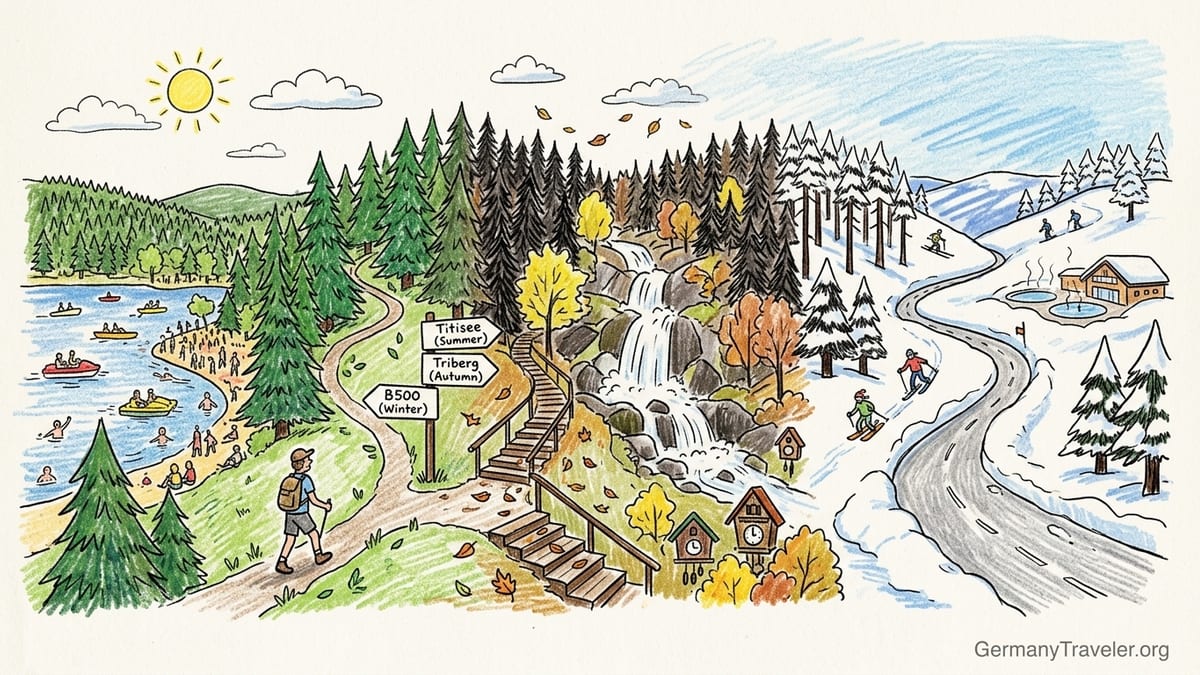
Understanding Black Forest Seasons From the Ground
Guidebooks often summarize the Black Forest as green in summer, golden in autumn and snowy in winter. That sounds neat, but reality is messier and much more interesting when you are actually on the trails and roads. My summer visit was in late July, staying near Titisee at around 850 meters. Afternoon highs were warm enough for T-shirts, but twenty minutes into the forest the temperature dipped noticeably and the air felt damp and resinous under the spruce canopy. My hiking photos from the popular lake circuit look almost overexposed compared to the soft, filtered light in the deeper forest.
In early October around Triberg, the forest had already started to shift. The Black Forest is dominated by dark conifers, yet the mix of beech, maple and other deciduous trees bursts into yellow and copper along valley edges. On the well-known trail system around Triberg’s waterfalls, I remember sections of almost tunnel-like evergreen suddenly breaking into wide, bright clearings scattered with leaves. The ground was drier than I expected for shoulder season, but wooden bridges were slick where spray from the falls settled.
Winter shifted the focus again. Based in Baden-Baden, most of my daytime hours were spent above town on the B500 Schwarzwaldhochstrasse, which runs roughly between 800 and 1000 meters. The road surface could change within minutes. Starting from town it was just damp tarmac, but by the time I reached high points near the Black Forest National Park, plowed snow rose in walls along the guardrails and shaded curves lingered with packed ice. The forest that in summer had felt like a cool, green refuge turned into a stark landscape of dark trunks, white ground and long blue shadows in the low sun.
Those three trips gave me a personal baseline. Where I mention summer, autumn or winter here, I am writing from what I directly experienced. Where I reference conditions in spring, I am relying on researched climate data and local tourism information rather than first-hand visits.
Summer in the Black Forest: Green Trails and Busy Lakes
On my July trip based near Titisee, the prevailing color was an almost saturated green. Underfoot, popular trails like the approximately 8-kilometer circuit around the lake were firm but not dusty. Morning walks started cool, with a light fleece, but by late morning I was in short sleeves. In more open sections near the shore, the sun felt strong and I was grateful for long stretches shaded by spruce and fir. The forest floor was dry enough that I never needed waterproof boots on signed loops around Titisee or short hikes near Feldberg’s lower slopes, though a brief mountain storm one afternoon turned exposed gravel paths slick for a few hours.
Rain in summer tended to arrive as fast showers or short thunderstorms rather than steady all-day drizzle. One July afternoon I watched dark clouds build over Feldberg while the shore promenade in Titisee-Neustadt stayed busy with families renting pedal boats. When the storm finally hit, rain hammered the lake for less than an hour. By early evening, pavement was already dry in sunny sections, but tree roots on forest shortcuts remained slippery. Good grip on shoes mattered more than heavy waterproofing.
Daylight transformed planning. In July, sunrise comes early and sunset is late, which meant easy 10- or 12-hour windows for hikes and scenic drives. I could combine a morning walk up to Feldberg’s cable car station, a lazy lunch at a mountain hut, and a late-afternoon swim in Titisee without racing the dark. The long evenings also made lakeside towns feel lively. On my stay, restaurant terraces along Titisee’s north shore were still full after 9 p.m., and last boat rentals went out not long before that on clear days.
The lakes were central to the summer atmosphere. Titisee itself was busy, sometimes very busy, with tour coaches and day visitors, but the water was clean and inviting. I paid a moderate fee for a small rowboat from one of the kiosks on the northern shore and shared the lake with stand-up paddlers and the slow tour boats that cross from promenade to far shore. Just a short walk away from the main strip, forest trails climbing above the lake were suddenly quiet. Once I turned inland toward Hinterzarten, I could walk for twenty or thirty minutes and hear only distant bells and wind in the trees. That contrast between crowded shoreline and calm forest felt very specific to summer.
Autumn in Triberg: Waterfalls, Color and Increasing Rain
My autumn visit centered on Triberg in early October. The town itself sits in a narrow valley, and the famous waterfalls are just above the center. The first difference from summer was the light. Mornings started later and felt cooler, with low sun breaking in stripes through the spruce. I wore a light jacket starting out, often keeping it on all day in the forest. Afternoon highs were comfortable for hiking, but it cooled quickly in shade or when clouds trapped moisture in the valley.
Trail conditions around the waterfalls were mixed. Main paths are well-built, with gravel or paving and secure railings, but constant spray from the falls creates permanently damp sections. In summer this had felt refreshing. In October it meant slick metal handrails and mossy edges that asked for more attention. Wooden steps in heavier shade accumulated wet leaves, so my pace was slower, especially on the steeper options that climb above the lower viewing platforms. I never needed full winter gear, but I appreciated walking poles more than I had in July.
Rain was more of a factor. On my first day, light drizzle moved in mid-afternoon and never became a downpour, but the cloud ceiling lowered and stayed put. The forest shifted from bright green to a darker palette, with occasional clearings where deciduous trees flamed yellow and orange. Color was surprisingly concentrated along stream edges and in lower meadows. Higher slopes remained mostly evergreen, so expectations of a fully “golden” Black Forest should be tempered. Still, specific sections along the waterfall circuit and the small viewpoints above town offered remarkable contrast between dark conifers and glowing foliage.
The town atmosphere changed with the season as well. Triberg’s main street is lined with cuckoo clock shops and cafes, and in October it felt busy on weekends but not packed. Day-trip coaches still arrived, but queues for the waterfall entrance were short, and cafes had spare tables mid-morning. In the evenings, once the day visitors left and dusk settled quickly after 6 p.m., the valley grew very quiet. That calmer rhythm made it easier to enjoy indoor stops such as the Schwarzwald Museum or a long dinner featuring local dishes instead of squeezing every last minute outdoors.
Winter Above Baden-Baden: Snow, Spas and Mountain Roads
For winter, I chose Baden-Baden as a base and focused on the northern Black Forest and the B500 Schwarzwaldhochstrasse. Down in town, many days stayed snow-free, with wet pavements and breath misting in the air but no accumulation. A short drive up the mountain road, the season changed almost abruptly. Between roughly 800 and 1000 meters, snowplows carved corridors through heavy snowbanks, and parking areas at trailheads became packed rectangles of churned slush.
Driving felt fundamentally different from summer or autumn. The Schwarzwaldhochstrasse winds enough that you are always adjusting, and in winter each bend required more attention. Sections exposed to sun during the day could be clear and wet, while shaded corners held compacted snow polished by traffic. I rented a car that came with winter tires by default, and on a couple of days I was glad for them when light snow began falling over existing ice. Speed limits might suggest faster travel, but in practice I drove below them, especially on descents toward the Rhine plain where temperatures could hover around freezing and meltwater refroze at dusk.
The forests themselves felt quieter and more austere. On a short signed loop close to the Black Forest National Park, groomed winter walking tracks paralleled cross-country ski trails. Underfoot, packed snow alternated with patches of ice where daytime thaw and overnight freeze had worked in cycles. In the trees, snow loaded lower branches while upper needles glowed against a pale sky. Sound carried differently in this cold, muffled landscape. Apart from occasional skiers gliding past, the only noise was the crunch of boots and the distant hum of cars on the B500.
Back in Baden-Baden, winter reshaped the spa experience. Outdoor pools at the modern Caracalla Spa steamed in the cold air, and on my December visit they were busier in the late afternoon and evening than in the morning. Visitors moved quickly between hot pools, saunas and indoor relaxation areas to avoid lingering outside in wet swimsuits. Inside, the atmosphere felt both social and calm. On days when the mountain roads seemed risky due to forecast freezing rain, I chose to stay in town and spend more time in the baths or walking the Lichtentaler Allee rather than insist on reaching higher viewpoints.
Triberg Waterfalls Across the Seasons
Triberg’s waterfalls illustrate why season matters in very concrete ways. On my October trip, all main paths were open. The sound of the falls dominated the valley, and spray created a constant fine mist, especially near the lower platforms. I visited in the morning, when temperatures were cool but above freezing, and had no issues accessing both lower and upper sections, beyond needing to tread carefully on wet steps and leaves.
In winter, conditions change. I have not personally climbed the paths during heavy snow, so my understanding of midwinter access is based on local authorities and recent visitor reports. Triberg promotes the waterfalls as open year-round, but in cold months the upper routes can close temporarily because of ice, snow or freezing rain. It is common for only the lower section to remain accessible at times, both for visitor safety and to protect infrastructure. Barriers or signs can go up quickly when surfaces become dangerously slick.
This matters in planning. A traveler imagining a full circuit with multiple viewing platforms in January might arrive to find just the initial stretch open. The scenery can still be impressive, with ice building around the cascades and snow on surrounding branches, but it is a different experience from the multi-level routes of summer and autumn. Footwear with very solid traction becomes much more important, and some visitors choose small traction aids for their boots when ice is likely.
My autumn visit also highlighted how daylight interacts with the falls. In October, shadow reached parts of the gorge by mid-afternoon, cooling them quickly. In winter, with even shorter days and lower sun, certain sections remain in shade for most of the day, which increases the chance of persistent ice. The falls may operate on the same schedule on paper, yet the practical window of comfortable walking can shrink to a few central hours around midday.
Daylight, Weather and Practical Planning
Even before thinking about prices and crowds, it helps to anchor a Black Forest trip in two basics: daylight hours and typical temperatures. In midsummer, high points around Titisee and Feldberg offer long days that can stretch toward sixteen hours of usable light. That allows for relaxed starts and late returns, plus detours to viewpoints or lakes without worrying about sudden darkness. Heat can be noticeable in open sections and in the Rhine plain, but forest shade moderates it, and evenings cool enough for comfortable sleep are common in higher villages.
By October, the balance changes. Days are shorter and more variable, and I found I needed to pick a clear priority for each day: waterfalls and forest paths, or a longer drive with multiple stops. Starting a hike at 2 p.m. left less margin if rain moved in or if wayfinding took longer than expected. I also packed an extra layer even for short walks, since temperatures dropped quickly once the sun slipped behind the valley rim.
Winter brings the narrowest window. Around the northern Black Forest, daylight can feel compressed into a bright band in the middle of the day. Driving mountain roads is far more comfortable in this window than in the dim, potentially icy periods shortly after sunrise or before full dark. On my December stay, I adopted a rhythm of leaving Baden-Baden late morning, spending a few hours at viewpoints or short winter trails along the B500, then returning before dusk either to town or to a lower-altitude restaurant.
Weather variability overlays these patterns. Summer storms can be intense but brief, leaving trails steam-scented and lakes refreshed. Autumn can serve up strings of clear, crisp days or long weekends of drizzle. Winter mixes bluebird days with fog and heavy snow. Rather than chase an idealized forecast, I found it more useful to plan a flexible mix of outdoor and indoor options within each base, such as pairing a possible high-level walk with a museum or spa visit in the same town.
Lakes, Spas and Seasonal Demand
Across my three trips, lakes and spas formed a kind of seasonal heartbeat. In July at Titisee, the lakefront was the main stage. The promenade thrummed with ice cream stands, souvenir shops and boat kiosks. Families queued for pedal boats, and people swam from designated areas when lifeguards were present. Many lakeside hotels and guesthouses were near or at capacity, and parking lots filled by late morning on clear days. Water-based activities defined the midday hours, while hikes became a morning or evening choice.
In October, lake energy shifted. When I drove past Titisee on the way to Triberg, the promenade was still active but noticeably quieter. Boat rentals operated on reduced hours or closed midweek, and more visitors strolled in jackets rather than bathing suits. The lake’s mood moved from recreational to reflective: still water, muted colors and a calmer soundscape. Accommodation availability improved compared with high summer, and lakeside cafes offered window seats without much waiting.
Winter put spas at the center. Baden-Baden’s Caracalla and Friedrichsbad baths turned into primary attractions instead of optional extras. On cold days and especially near Christmas and New Year, many visitors structured their entire schedule around spa sessions, arriving midmorning and staying until evening. The combination of hot thermal water and frosty air made outdoor pools especially appealing, but capacity limits and popular time slots meant I sometimes needed to be flexible about when I visited. Hotels with direct spa access or bundled wellness packages were in stronger demand than simple guesthouses without wellness facilities.
This seasonal demand also influenced prices and availability. My July stay near Titisee came at a noticeable premium, reflecting school holidays and the region’s reputation for summer lake vacations. October around Triberg offered better value and more last-minute room options. December in Baden-Baden was mixed: weekdays before the holiday period were quieter, but weekends connected with Christmas markets and winter events filled quickly. For travelers whose priorities are flexible, targeting early summer or early autumn can balance favorable weather with more manageable spa and lakefront crowds.
Driving Mountain Roads in Different Seasons
Driving is one of the pleasures of the Black Forest, but my comfort level changed with each season. In summer, scenic roads like the B500 between Titisee and the northern sections near Baden-Baden were straightforward, though busy in places. Dry tarmac, good visibility and long days meant that even winding segments felt relaxed. I could pull off at signed viewpoints, walk to nearby lookouts and rejoin traffic without feeling rushed. Occasional summer storms demanded attention, but road surfaces dried quickly afterward.
In autumn, road conditions remained generally good, but leaves introduced a new variable. On my drives around Triberg and toward the higher parts of the central Black Forest, wet leaves accumulated in certain corners and on smaller side roads. Combined with drizzle, they reduced traction and made tight bends more slippery than they looked. Fog could settle without much warning in valleys, creating pockets of low visibility while higher stretches remained clear. I learned to trust local speed recommendations and to give myself extra time between towns.
Winter created the starkest contrast. The B500 Schwarzwaldhochstrasse is maintained year-round, but that does not mean it always feels easy to drive. On my December trip I encountered sections where the road narrowed due to snowbanks, passing slower vehicles required patience, and overtaking was unappealing on icy surfaces. Plows and gritters worked steadily after fresh snowfalls, yet shaded sections stayed treacherous longer than sun-exposed straights. Descents toward the Rhine plain or down into side valleys demanded particular care, especially near the freezing point where meltwater refroze in the late afternoon.
Despite that, winter driving had rewards. Seeing the dark lines of spruce and fir cutting through white hillsides, or climbing from foggy lowlands into clear blue sky above an inversion layer, felt memorable in a way summer could not match. The key difference was mental bandwidth. In summer I could enjoy the scenery while driving. In winter I often chose to stop more frequently at pullouts or small parking bays, so that I could look properly without compromising attention on snow and ice.
The Takeaway
My own trips to the Black Forest in summer, autumn and winter convinced me that there is no single “best” season, only better fits for different travelers. Summer around Titisee offered ideal conditions for long hikes, lake swimming and flexible days, at the price of higher demand and busier promenades. Early autumn in Triberg combined comfortable temperatures, some colorful foliage and manageable crowds, with a greater chance of rain and slick paths near waterfalls. Winter near Baden-Baden delivered a striking contrast between snowy highlands and spa warmth in town, but required respect for short days and challenging road conditions.
Where I have not yet visited, particularly in spring, my understanding relies on researched climate patterns and local tourism information rather than memory. Those sources suggest a shoulder season of melting snow, emerging greenery and more variable weather, with some higher trails still affected by late snow patches. Until I experience that directly, I treat it as informed context rather than a personal recommendation.
If you prioritize hiking and high trails, summer and the very start of autumn usually offer the most stable underfoot conditions and longest daylight. If you are drawn to waterfalls, forest color and a more local everyday rhythm in towns, the weeks around early October can be rewarding. For travelers whose main goals are spas, quiet walks and winter landscapes rather than long hikes, a winter base in a spa town combined with cautious day trips along maintained roads can be deeply satisfying.
What my trips have in common is how quickly the Black Forest shifts character with the season. The same lake can be a buzzing July resort, a reflective October mirror and a quiet December backdrop to steam rising from a nearby spa. Choosing your timing in light of how you like to walk, drive and rest will shape your memories at least as much as which specific town you pick on the map.
FAQ
Q1. Is summer really the best time to visit the Black Forest for hiking?
Summer gave me the longest days, firmest trails and easiest driving, especially around Titisee and Feldberg, so it worked very well for hiking-focused trips.
Q2. What are trail conditions like around Triberg’s waterfalls in autumn?
In early October I found the main paths open and well maintained but often damp, with wet leaves and spray making wooden steps and railings noticeably slippery.
Q3. Can I visit Triberg’s waterfalls in winter?
Yes, the waterfalls remain accessible in winter, but access can be reduced to lower sections and upper paths may close temporarily when ice, snow or freezing rain create hazards.
Q4. How different does driving feel on the Schwarzwaldhochstrasse in winter?
In winter, the same road that feels leisurely in summer demands slower speeds, careful braking and attention to icy patches, snowbanks and changing visibility.
Q5. Are Black Forest lakes still enjoyable outside of summer?
In autumn I enjoyed Titisee as a quiet place for shoreline walks and views rather than swimming, with calmer promenades and fewer boats on the water.
Q6. Is winter in the Black Forest only for skiers?
No, my winter trip focused more on spa days, short signed winter walking loops and scenic drives than on skiing, and it was still very rewarding.
Q7. How busy are Black Forest spas in winter compared with summer?
On my December visit to Baden-Baden, spa demand was higher in the late afternoon and evening, especially around weekends and holiday periods, than on comparable summer weekdays.
Q8. Will I need special footwear for autumn and winter visits?
In autumn, waterproof shoes with good grip were enough for me, while in winter I preferred insulated boots and was glad for strong tread on snow and ice.
Q9. How much does daylight influence daily planning in winter?
Daylight felt like the main constraint in December, so I concentrated mountain drives and outdoor walks in a tight midday window and left early mornings and evenings for spa or town time.
Q10. If I want both hiking and spa time, which season balances them best?
For my preferences, early autumn around places like Triberg or Titisee combined comfortable hiking weather with less-crowded spas and lakeside towns, offering a good overall balance.