


The Moselle Valley is one of Europe’s classic wine rivers, but what makes a trip here unforgettable is not only what is in your glass. It is where you sleep. Between Trier and Koblenz, steep slate vineyards tumble down to half-timbered villages, and many of the families who farm these slopes now welcome guests into Weingut guesthouses, Winzerhöfe and vineyard-view apartments. Choosing between a bed at a working winery and a polished wine hotel can define the mood of your Mosel escape. This guide focuses on Mosel-specific stays, especially around Bernkastel-Kues, Piesport, Brauneberg, Leiwen, Kröv and the Cochem area, and explains exactly what to expect from each style of accommodation.
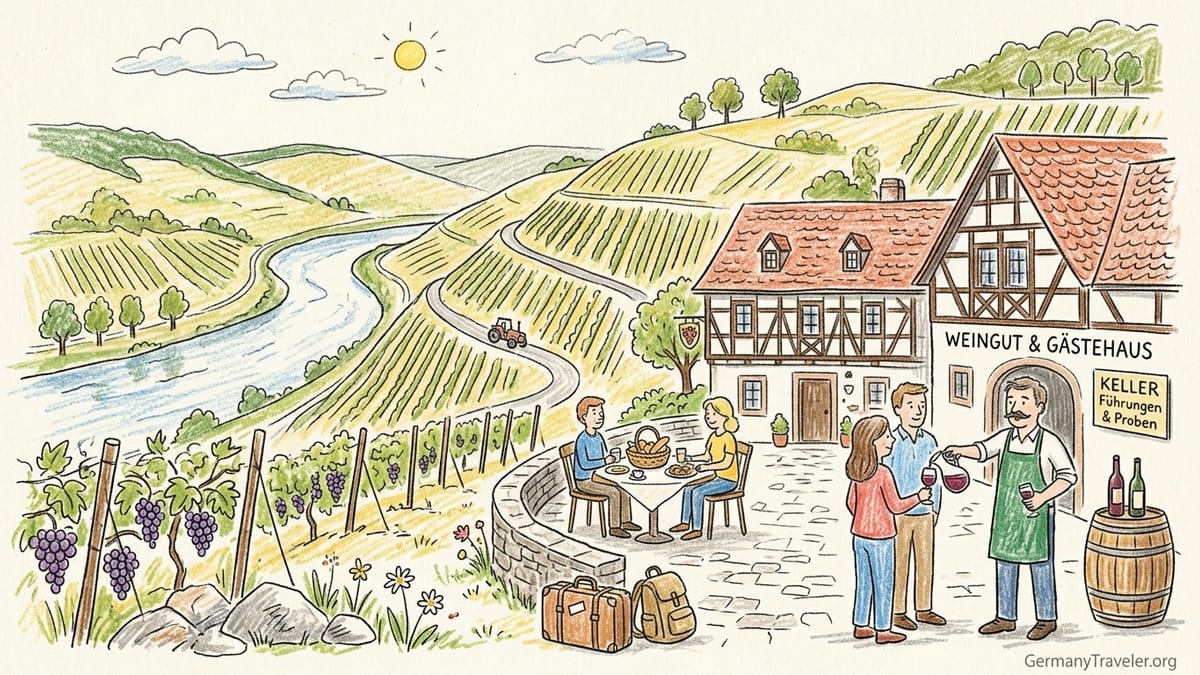
Why Mosel Winery Stays Are Different
Staying in the Moselle Valley is not just a matter of picking a hotel with a wine list. The regional tourism board maintains a dedicated category for overnighting at wineries, highlighting that many properties include tastings, cellar tours or other behind-the-scenes experiences as part of the stay. These are places where you might fall asleep to the sound of a press running in autumn or wake to tractors climbing the slate slopes above your window. Compared with a generic riverfront hotel, a Mosel winery stay folds production, people and place into your trip.
The classic Mosel Weingut is still family-run, often in its third, fourth or even seventeenth generation. Around Bernkastel-Kues, Piesport and Leiwen, it is common for the winemaker to pour your tasting personally after breakfast or in the early evening, with their parents or adult children handling check-in and breakfast service. In many cases, the guesthouse is built into the same courtyard as the cellar and press house, so the distance between bed and barrel can be only a few steps. That intimacy is what sets these stays apart from conventional hotels that happen to sit in wine country.
On the practical side, winery accommodations can be surprisingly good value. In smaller wine villages near Bernkastel-Kues or downriver towards Cochem, you may still find double rooms in a Weingut Gästehaus in the range that many travelers would pay for a standard chain hotel in a German city. Monthly or harvest-season rates fluctuate, but overall pricing tends to reflect direct, owner-operated businesses without big-brand overheads. What they may lack in facilities such as elevators or large spas, they usually make up for in atmosphere and access.
Understanding Weingut Guesthouses and Winzerhöfe
Weingut guesthouses and Winzerhöfe are the backbone of Mosel wine stays. A Weingut Gästehaus is typically a small cluster of rooms attached to a working estate. In Erden, close to Bernkastel-Kues, the guesthouse at Weinhof St. Anna offers exactly this kind of setup: a modest number of rooms inside a traditional courtyard, with the family’s winemaker’s kitchen serving simple evening dishes to in-house guests on most days. Breakfast is normally a hearty German spread of breads, cheeses, cold cuts and house jams, with coffee poured by someone who may have been in the vineyards that morning.
Winzerhof is a broader term that covers winegrowers’ farms with accommodation, often a little more rustic and personal. Around Brauneberg and Piesport, many Winzerhöfe still combine winegrowing with a mixed farm background. You can expect creaking staircases, low-beamed ceilings and tiled breakfast rooms decorated with old vineyard photos and prize certificates. The trade-off for this charm is that soundproofing may be light and room decor traditional rather than design-led. Yet for travelers who want to feel part of village life, this is exactly the appeal.
One of the practical advantages of these properties is direct contact. Bookings are usually made by email or phone, sometimes via simple online forms. Hosts answer questions about harvest timing, cellar visits and allergy-friendly breakfasts themselves. Many also provide on-site parking in the courtyard or in designated guest spaces near the house, which is valuable in older river villages where streets can be narrow and public parking scarce. For travelers driving the Mosel route between Trier, Bernkastel-Kues and Cochem, that assurance can shape the night’s stop.
Vineyard Apartments and Self-Catering Stays
The Moselle has seen a marked rise in self-catering vineyard apartments, particularly in villages like Leiwen and Piesport where farms had space to convert old barns or attics. Properties listed through the regional tourism board include multiple holiday apartments attached to estates, such as those in Leiwen where former farmhouses now house modern flats with balconies facing the river or rows of vines. These apartments are popular with travelers who want a longer base for cycling, hiking or visiting multiple wineries without packing and unpacking every night.
A vineyard apartment typically offers a kitchenette or full kitchen, a living area and one or two bedrooms, sometimes with direct access to a terrace overlooking the Mosel curve. Bed linens and final cleaning are usually included in the nightly rate, while breakfast is either self-catered or optional. At some estates in Leiwen and Piesport, guests can order a breakfast basket delivered to the door, packed with fresh rolls from the village bakery, butter, ham, local cheeses and a small bottle of estate juice. This keeps the stay flexible while still connecting you to regional flavors.
Compared with winery guest rooms, vineyard apartments offer more independence but slightly less structured contact. Tastings are often available on request in the estate’s tasting room or vinotheque. Guests might receive a voucher for one free tasting flight during their stay, with any further visits charged at standard rates and offset against purchases. For families or small groups of wine enthusiasts, the ability to cook simple suppers, store bottles in a cool hallway and use the apartment as a relaxed tasting base is a major advantage over a typical hotel room.
Wine-Focused Hotels on the Mosel
Alongside intimate Weingut stays, the Moselle Valley also has a small number of wine-focused hotels that blend professional hospitality with strong vineyard connections. These are often mid-size properties that grew out of a family winery or aligned closely with one. In the Cochem region, for example, hotels such as Weinhaus Fries pair on-site vineyards with a fully-fledged hotel operation. Guests can expect a proper reception, breakfast room, dedicated wine tavern and scheduled opening hours for the restaurant and Winzerküche, along with facilities like bike storage and river views.
Further up the river, the wider Mosel region showcases “excellent wine host” hotels recognized by local tourism bodies. These hotels emphasize wine in every part of the guest journey: curated wine lists that highlight local estates, guided vineyard walks, and sometimes spa or wellness concepts built around grapes and grape seed oils. They are aimed at travelers who want comfort and services similar to a conventional hotel, but with a clear focus on regional wine culture.
In practice, staying at a wine-focused hotel feels different from sleeping above a cellar, even if the address is surrounded by vines. Daily life is less tied to the harvest calendar and more to guest schedules. Breakfast might be a generous buffet with sparkling wine, offered over a broad time window. Tasting options can be more structured, such as scheduled wine evenings or guided flights served in a lounge at fixed times, with prices displayed like a restaurant menu. For travelers new to the Mosel or those who prefer hotel-style predictability, these properties can be a comfortable middle ground.
Bernkastel-Kues and Middle Mosel Villages
Bernkastel-Kues, with its timber-framed market square and famous steep vineyards such as Bernkasteler Doctor, is often the first stop for Mosel wine travelers. Within a short drive, villages like Wehlen, Graach and Erden offer numerous Weingut guesthouses tucked inside narrow lanes. Here, staying at a winery usually means waking to church bells, seeing slate roofs outside your window and watching tractors navigate the lanes at harvest. Many estates run simple tasting rooms in the same building, where you can sample Kabinett and Spätlese Rieslings before dinner.
Just downriver, Piesport and Brauneberg offer a slightly quieter version of the same experience. Piesport, known as one of the largest winegrowing communities on the Mosel, curves along a broad river bend backed by terraced vineyards. Brauneberg’s slopes rise almost straight up from the river, with small guesthouses and Winzerhöfe lining the waterfront road. In both villages, winery accommodations often include parking spaces behind the house or in small courtyards, which is a practical advantage when exploring by car. Some properties provide storage for bicycles and e-bikes, a nod to the popularity of the Mosel cycle path that threads through the villages.
When comparing places here, pay attention to how closely the rooms are integrated into the working parts of the winery. Some guesthouses have rooms directly above the pressing area, which can be atmospheric but noisy during harvest weeks. Others separate living quarters and production buildings, offering quieter nights but still easy access to tastings. In any case, booking early for September and October is wise, as these are prime months both for harvest and tourism.
Leiwen, Kröv and the Cochem Area
Leiwen sits on a wide Mosel curve and is one of the valley’s major wine villages, with hundreds of hectares under vine and a long tradition of hospitality. Besides larger holiday parks on the hillsides, the village is dotted with winery guesthouses and vineyard apartments. Staying at a Weingut here often means a short stroll to multiple other estates’ tasting rooms, as well as to seasonal wine festivals and the local wine museum that explains how grapes travel from hillside to bottle.
Kröv, a little further downriver, is known for its long-established estates such as Staffelter Hof, which trace their history back centuries. While not every historic winery offers accommodation, several do, often in buildings that combine thick stone walls with modernized rooms. Guests may sleep in former farm wings or lofts above barrel cellars, with tastings available in vaulted rooms or village-front vinotheques. Evenings tend to revolve around the courtyard or village taverns, and parking is usually within the property walls or in small dedicated lots nearby.
Near Cochem, where the valley narrows and castles crown rocky spurs, wine-focused hotels and guesthouses sit side by side with more conventional riverfront properties. In the surrounding Ferienland Cochem area, guesthouses belonging to wineries share space with independent hotels whose only connection to wine is an extensive list in the restaurant. Travelers keen on immersion often prefer estates that specify cellar access, tastings and vineyard tours in their descriptions, rather than simply styling themselves as romantic hotels near the vines.
What Is Typically Included: Tastings, Breakfast and Access
One of the main advantages of choosing a Weingut guesthouse or Winzerhof is that tastings are either included or offered on particularly favorable terms. The Mosel tourism board highlights winery stays where guests can expect at least one curated tasting flight during their visit, sometimes bundled into multi-night packages that also feature cellar tours or vineyard walks. At many estates, a welcome tasting of several wines is complimentary, with the option to expand into a longer, paid session that is partially refunded against purchases.
Breakfast is normally included at traditional guesthouses and wine hotels, served in a communal room lined with bottles and harvest photographs. Expect plates of cold cuts, cheeses, eggs, yoghurt, muesli and baskets of bread rolls, often with a carafe of estate apple juice or grape juice alongside coffee and tea. In some wine hotels, a small selection of local sparkling wine may be available at breakfast on weekends. Vineyard apartments, by contrast, are more flexible: some offer optional breakfast for a fee, while others provide bakery delivery services or starter packs.
Access to the winery itself varies. In smaller estates, the cellar may be just a door off the courtyard, and informal tours can happen whenever the winemaker has time. During quieter months, guests may be invited to walk into the vineyards with the owner to see pruning or tying work up close. In busier periods, access is usually limited to scheduled tours, sometimes organized through local tourism offices as part of packages titled along the lines of “visiting the winery.” For many travelers, these glimpses behind the scenes are the key reason to sleep on site.
Parking, Restaurants and Practicalities
Driving is still the easiest way to explore multiple Mosel villages, so parking can make or break a stay. Many wineries and wine hotels advertise free on-site parking, often directly in the courtyard or adjacent lots. Properties like wine hotels in the wider Mosel region explicitly list complimentary spaces, making them attractive to guests touring with rental cars. In very tight riverfront villages, a few guesthouses rely on nearby municipal parking, sometimes with guest cards that reduce or waive fees, so it is worth checking in advance.
Restaurant access is more uneven. Some Weingut guesthouses, especially around Bernkastel-Kues and Erden, have their own small winemaker’s kitchen, serving a short menu of regional dishes such as Flammkuchen, sausages and seasonal specials in the early evening. Opening hours can be limited, perhaps only Tuesday to Sunday early evenings or restricted to in-house guests on some days. Wine hotels, by contrast, generally operate full restaurants with fixed daily hours and broader menus, though countryside kitchens may still close earlier than urban diners expect.
Travelers also need to factor in local guest contributions or tourism taxes, which some Mosel municipalities levy per person and night. These small charges are usually payable on site and sometimes include local public transport tickets. They are common across the region and should not be mistaken for hidden hotel fees. When comparing nightly rates, it is worth checking whether breakfast, parking and tastings are baked into the quoted price or listed separately, as this can shift the value comparison between a simple guesthouse and a more polished wine hotel.
Sleeping at a Working Winery vs a Wine Hotel
The key difference between sleeping at a working winery and checking into a conventional wine hotel comes down to rhythm and proximity. At a Weingut or Winzerhof, you are living alongside the production cycle. During harvest, that might mean early-morning activity in the courtyard, hose lines running past your door and the smell of fermenting must seeping through old stone walls. Outside harvest, you may see pruning, bottling or label work, all visible from your balcony or breakfast table. Conversations tend to be informal, and questions about the wines quickly turn into discussions about family history and local politics.
In a wine hotel, the wine experience is more curated. Instead of glimpses of daily vineyard work, you are offered structured tastings, wine flights paired with menus, and perhaps a few organized walks through nearby vineyards. Staff may be passionate and well trained, but not necessarily directly involved in making the wines. The environment is calmer and more controlled, with housekeeping and front office teams running on hotel timetables rather than harvest deadlines. For some travelers, especially those who prefer quiet evenings and consistent service, that can be ideal.
Choosing between the two is a question of temperament. If you want to step out of your room into a courtyard smelling of slate dust after rain, chat with the winemaker in jeans at breakfast and accept that the press might hum late during harvest, a Weingut guesthouse or vineyard apartment is the better fit. If you would rather slip back to a quiet lounge after a scheduled tasting, book a massage and know that restaurant and bar hours will be observed regardless of weather in the vineyards, then a wine-focused hotel near Bernkastel-Kues or in the Cochem area will likely suit you more. Many travelers mix both styles on a longer trip to experience the full range of Mosel hospitality.
The Takeaway
The Moselle Valley rewards travelers who treat their bed for the night as part of the wine experience rather than a neutral base. Official tourism listings now make it easier to identify Weingut guesthouses, Winzerhöfe, vineyard apartments and wine hotels that place wine at the center of the stay, whether through included tastings, cellar tours or simply the presence of vines outside every window. Around Bernkastel-Kues, Piesport, Brauneberg, Leiwen, Kröv and the Cochem area, you can choose between intimate family estates, self-catering flats with vineyard balconies and full-service hotels with well-stocked vinotheques.
Whichever option you pick, the essentials remain similar: generous breakfasts, ready access to tastings, and the chance to walk into the vineyards in minutes. The main decision is how closely you want to live alongside the work of making Mosel Riesling. Some will relish the bustle of a working courtyard and the unpredictability of farm life; others will gravitate towards quiet rooms and scheduled wine evenings. In either case, the Mosel’s combination of slate slopes, river light and serious yet unpretentious hospitality makes it one of Europe’s most rewarding regions for staying where the wine is grown.
FAQ
Q1. What is the main difference between a Mosel Weingut guesthouse and a wine hotel?
The key difference is proximity to production. A Weingut guesthouse is part of a working winery, where you live alongside vineyard and cellar activity. A wine hotel focuses on comfort and curated tastings, often with a broader range of services but less daily contact with winemaking.
Q2. Are wine tastings usually included in the room rate at Mosel wineries?
Many winery guesthouses include at least a small welcome tasting or offer discounted tastings for in-house guests, while extended flights are often charged and offset against purchases. Wine hotels may include tastings in packages or offer them as paid add-ons.
Q3. Do Mosel winery accommodations typically include breakfast?
Yes, most Weingut guesthouses and wine hotels include a buffet-style breakfast in the rate. Vineyard apartments are more mixed, sometimes offering optional breakfast baskets or bakery delivery instead of a communal buffet.
Q4. How important is on-site parking when choosing a place to stay in the Mosel Valley?
On-site or reserved parking is very useful, especially in older river villages with narrow streets. Many wineries and wine hotels provide free courtyard or private-lot parking, which makes touring by car much easier.
Q5. Can I visit the cellar and vineyards if I stay at a working Weingut?
In many cases, yes. Smaller estates often offer informal cellar visits or scheduled tours, and vineyard walks may be included in packages or organized on request. Availability can depend on the season and workload.
Q6. Are winery guesthouses suitable for travelers who do not speak German?
Generally yes. In major wine villages like Bernkastel-Kues, Piesport and Cochem, many hosts speak at least some English. Communication about check-in times, breakfast and tastings is usually straightforward, though a few basic German phrases are appreciated.
Q7. What is the best time of year to stay at a Mosel winery?
Late spring through early autumn is most popular, with September and October attractive for harvest atmosphere. Outside peak months, you may find quieter estates, more personal attention and lower rates, though some smaller guesthouses close in winter.
Q8. Do Mosel winery stays work well for families or non-wine drinkers?
Yes, as long as expectations are aligned. Vineyard apartments are particularly good for families due to extra space and kitchens, and non-drinkers can enjoy river walks, cycling and castle visits while others taste. It is wise to choose properties with outdoor areas or nearby activities.
Q9. How far in advance should I book a Mosel winery stay?
For September and October, booking several months ahead is sensible, especially in popular villages like Bernkastel-Kues or Cochem. At other times of year, a few weeks’ notice is often enough, though weekends and festival dates can fill quickly.
Q10. Is it necessary to have a car to enjoy winery accommodations in the Mosel Valley?
A car provides maximum flexibility for visiting multiple villages and estates in one day, but it is not essential. Trains, buses, riverboats and cycling paths connect many villages, and some winery packages include local public transport tickets for guests.