


Southern Germany gives travelers a tough but enjoyable dilemma: spend your days among the dark fir slopes and lakes of the Black Forest, or wake up to jagged snow‑dusted peaks in the Bavarian Alps. Both regions pack in superb hiking, photogenic villages, scenic drives and hearty food, but they deliver very different moods and experiences. Choosing the right one can shape your trip, especially if you are planning with kids, on a romantic escape, or hoping for serious winter snow.
Black Forest vs Bavarian Alps at a Glance
Think of the Black Forest as a broad, rolling highland carpeted in dense spruce and fir, dotted with farmhouses, spa towns and medium‑sized peaks. The highest summit, Feldberg, reaches about 1,493 meters and anchors a cluster of ski and hiking areas above lakes such as Titisee and Schluchsee. The region stretches along the Rhine in Baden‑Württemberg and is easy to pair with Freiburg, Baden‑Baden, Strasbourg in France or even Basel in Switzerland.
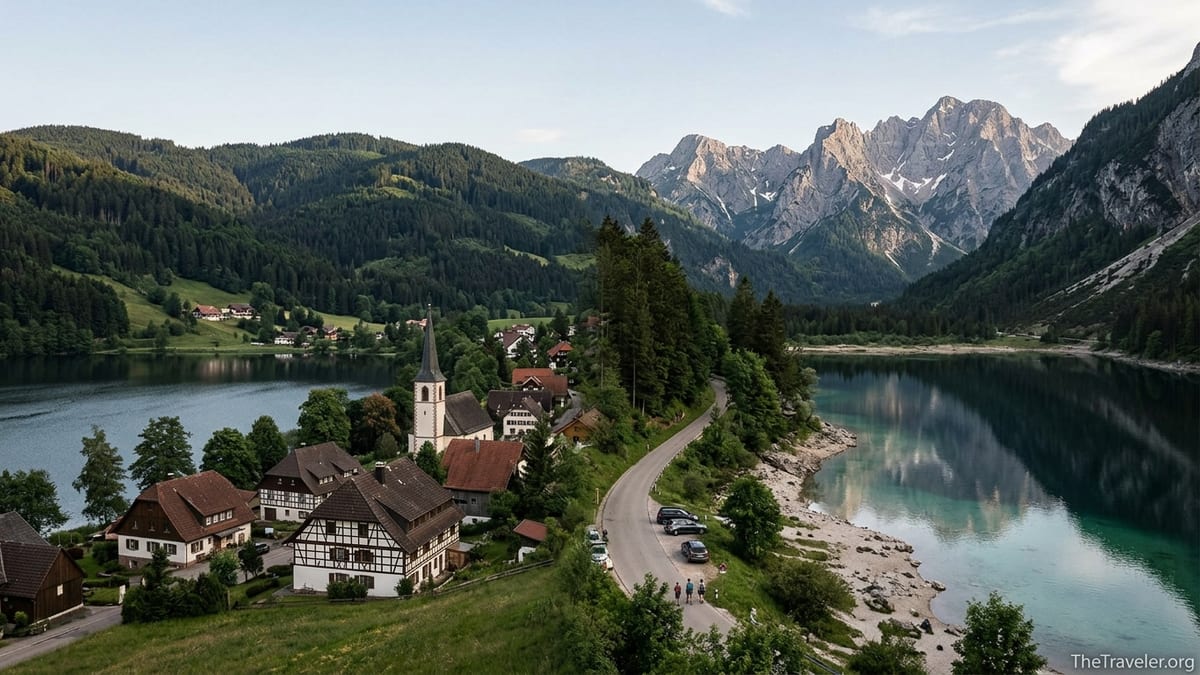
The Bavarian Alps feel dramatically different. Here, sharp limestone ridges rise more than 2,000 meters above deep valleys, with Germany’s highest mountain, the Zugspitze, topping out near 2,962 meters above Garmisch‑Partenkirchen. Further east around Berchtesgaden, sheer cliffs plunge into emerald Lake Königssee, while Tegernsee and Chiemsee offer gentler lake landscapes framed by mountains. It is a classic Alpine postcard scene, and noticeably more rugged than the Black Forest.
In practical terms, the Black Forest generally means gentler gradients, shorter distances between villages and an emphasis on forests, farm culture and spa traditions. The Bavarian Alps are stronger on big‑view panoramas, serious mountain sports and more intense winter snow. Both regions have family‑oriented infrastructure and accommodation in every price bracket, from farm stays and pensions to high‑end wellness hotels.
For many travelers, the decision comes down to what you want on your doorstep. If you picture walking straight from your guesthouse into dark woods and around quiet farm tracks, the Black Forest is hard to beat. If your dream is watching sunset from a high mountain terrace with glaciers in sight, the Bavarian Alps deliver more of that drama.
Landscape, Lakes and Classic Views
The Black Forest is about atmosphere: long ridges, deep wooded valleys and soft horizons rather than skyscraper peaks. Around the Upper Black Forest, Feldberg overlooks Lake Titisee and the larger reservoir of Schluchsee, both ringed by easy lakeside walking and boat rentals in summer. Smaller spots such as Mummelsee in the north sit right below the crest roads, offering quick access to viewpoints without strenuous hikes. In autumn, these forests turn shades of copper and gold, and mists often hang in the valleys.
In comparison, the Bavarian Alps focus attention upward. Around Garmisch‑Partenkirchen, the twin landmarks of Zugspitze and Alpspitze rise abruptly above the town. Cable cars whisk visitors from valley stations to panoramic platforms such as the Zugspitze summit or the AlpspiX viewing deck, where you stand on glass‑floored walkways high over a vertical drop. Berchtesgaden’s scenery is even steeper, with Lake Königssee hemmed in by near‑vertical walls and the Watzmann massif looming above, often still streaked with snow well into spring.
Lakes feel different too. Titisee, Schluchsee and smaller Black Forest tarns such as Feldsee are forest‑rimmed, intimate and easily combined with half‑day walks or bike rides. In summer, families rent pedal boats, paddleboards and small electric boats and then walk a flat circuit around the shore. In the Bavarian Alps, Lake Eibsee below the Zugspitze and Lake Königssee near Berchtesgaden provide iconic Alpine water scenes with turquoise shallows, island chapels and long fjord‑like views. Boat trips on Königssee, in particular, are more of a set‑piece excursion than a casual outing.
If your idea of beauty leans toward moody forests, low clouds and traditional farmhouses mixed with timber towns, the Black Forest usually wins. If you come for soaring, high‑contrast mountain silhouettes and big open skies, the Bavarian Alps will likely leave a stronger impression.
Hiking, Outdoor Activities and Road Trips
Hiking is central to both regions, but the style and difficulty differ. In the Black Forest, a dense network of waymarked trails criss‑crosses the ridges, including long‑distance routes that run from Freiburg toward Lake Constance and others radiating around Feldberg, Schluchsee and the Black Forest National Park. Trails often combine farm tracks, woodland paths and open ridge sections with huts serving cakes and sausage plates. Elevation gains tend to be moderate, and many circuits are suitable for older children or less experienced walkers.
In the Bavarian Alps, you can still find gentle valley paths, but the terrain lends itself to more vertical adventures. Around Garmisch‑Partenkirchen, there are classic day hikes through gorges such as the Partnachklamm and Höllentalklamm, and steeper routes up to huts on slopes of the Zugspitze region. Berchtesgaden offers everything from relatively easy walks around Hintersee to demanding ridge routes above Königssee. Many summits can be approached partly by cable car or cog railway, then finished on foot, which makes proper Alpine vistas accessible to non‑experts but still requires comfort with heights and uneven trails.
Road‑trip travelers will notice a contrast as well. The Black Forest High Road and other panoramic routes weave along open ridges with regular pull‑outs for valley views and short walks. It is easy to string together stops at waterfalls such as Triberg, small towns like Gengenbach and lake viewpoints, all in one day. In the Bavarian Alps, the German Alpine Road links Lake Constance to Berchtesgaden through a chain of mountain resorts, passing near places like Garmisch‑Partenkirchen, Füssen, Tegernsee and Chiemsee. Distances on the map look similar, but twisty Alpine roads, pass crossings and photo stops generally make driving days a bit slower and more demanding.
Beyond hiking, both regions serve up plenty of outdoor pursuits. In the Black Forest, summer brings mountain bike routes, treetop adventure parks and summer toboggan runs near Feldberg and other ski hills. The Bavarian Alps, on the other hand, excel at alpine climbing, via ferrata routes, paragliding and high‑altitude skiing. If your group mixes casual strollers with ambitious mountain athletes, base yourselves where both options are close; around Garmisch‑Partenkirchen and Berchtesgaden this usually means one person can take a cable car up while another enjoys lakeside walking below.
Villages, Culture and Where to Stay
Culturally, the Black Forest and Bavarian Alps share plenty of southern German staples: half‑timbered houses, onion‑domed churches, hearty regional food and a proud sense of local identity. Yet each has its own flavor. Black Forest towns such as Freiburg’s surrounding villages, Titisee, Schluchsee, Baiersbronn, Triberg and Gengenbach lean into forest folklore, cuckoo clocks, traditional farmhouses and spa culture. Several areas hold “family holiday” certifications, actively marketing kid‑friendly attractions, farm stays and accessible forest trails.
In the Bavarian Alps, villages like Garmisch‑Partenkirchen, Mittenwald, Berchtesgaden and Tegernsee feel more overtly Alpine. Facades are often decorated with frescoes, balconies spill with geraniums in summer and you see locals in traditional dress at festivals or weekends. Mountain culture is prominent, with ski clubs, mountaineering history and cable car stations anchoring the town layout. Berchtesgaden mixes this with a national park gateway feel, while Mittenwald is known for painted houses and violin‑making heritage.
Accommodation is abundant in both regions, but the patterns differ slightly. The Black Forest has a wide spread of guesthouses, pensions and farm stays, often in quieter villages or on hillsides between towns. Around Feldberg, Titisee and Schluchsee, many mid‑range hotels include access to small pools, saunas and regional transport cards that cover local buses and trains. In the Bavarian Alps, Garmisch‑Partenkirchen and Berchtesgaden offer a similar range of family‑run guesthouses and apartments, alongside large resort‑style hotels near ski areas and lakes. Around Tegernsee, there is a notable cluster of higher‑end spa and lakefront properties aimed at couples and wellness travelers.
In price terms, both regions have budget and luxury options, though high‑season stays at scenic lakes or prime ski villages in the Bavarian Alps can feel noticeably more expensive. Travelers willing to base in secondary towns or on the outskirts often find better value, especially around the Black Forest where car access makes quiet rural bases practical.
Families, Couples and Different Travel Styles
For families, the Black Forest has subtle advantages. Its topography suits shorter, easier hikes, and many attractions are specifically designed for children, from animal parks and treetop walks to themed family trails and summer toboggan runs. Regions around Feldberg and Titisee promote themselves heavily as family holiday zones, bundling free public transport with discounts for attractions. Parents with younger children often appreciate being able to combine a morning on a gentle forest trail with an afternoon at a lake beach or family‑friendly pool without long transfers or big elevation changes.
The Bavarian Alps also cater well to families, especially active ones. Around the Zugspitze, for example, mountain operators highlight family offers that combine high viewpoints, short hikes, playgrounds near cable car stations and winter sledging areas. Garmisch‑Partenkirchen’s winter hiking network includes many groomed paths suitable for children, and places like Lake Eibsee have level lakeside promenades where strollers can roll comfortably. The difference is that much of the signature scenery involves higher exposure, cable cars and more rugged trail options, which can be thrilling for older kids and teenagers but may be less relaxing with toddlers.
Couples and small adult groups often gravitate to the Bavarian Alps if mountain views and dramatic sunsets are priorities. A romantic weekend might mean staying in a lakefront hotel at Tegernsee, taking a cable car up for a ridge walk, then returning for spa time and a long dinner with mountain panoramas. Berchtesgaden’s combination of dramatic landscapes and quieter valleys also suits slower, scenic getaways outside peak school holidays.
The Black Forest lends itself to laid‑back, slow‑travel itineraries. Couples who enjoy long forest walks, wine tasting in nearby Rhine valley villages, and spa afternoons in towns like Baden‑Baden or smaller wellness hotels will find plenty to fill a week without repeating activities. Road‑trippers who want to mix Germany with quick forays into France or Switzerland also find the Black Forest a convenient base, avoiding some of the long backtracking that an Alpine‑only itinerary can require.
Winter Travel: Snow, Skiing and Christmas Atmosphere
Winter is where differences become more pronounced. The Bavarian Alps have higher elevations and more reliable deep snow on upper slopes, making them the better choice for dedicated skiers and snowboarders. Garmisch‑Classic, the Zugspitze glacier area and nearby resorts offer groomed runs for intermediates and above, plus snow parks and race courses. Around Berchtesgaden, smaller ski areas sit above the valley, and cross‑country tracks snake across quieter plateaus. Many visitors combine downhill skiing with winter hikes on prepared trails, accessible via cable car or valley paths.
The Black Forest cannot match the vertical drops or snow security of the high Alps, but it still offers a network of small ski hills and a significant amount of cross‑country skiing and winter hiking, particularly around Feldberg and the surrounding highlands. Families who prefer gentle slopes, sledging and forest snowshoeing often find this atmosphere less intense and more forgiving, especially when some members of the group are beginners or unsure on skis. On days when snow is thin, it is usually still possible to shift plans toward hiking, spa visits and town exploration without feeling the trip is compromised.
Both regions shine during Advent, when Christmas markets, decorated villages and seasonal food appear. In the Black Forest, markets in towns large and small combine with traditional farmhouses lit by candles, and it is easy to tuck into cafes for slices of Black Forest cake between strolls. In the Bavarian Alps, mountain backdrops add a cinematic feel to town squares strung with lights, and many hotels offer festive packages that include guided winter walks and mulled‑wine evenings. If your main goal is a guaranteed snowy Christmas scene, the Bavarian Alps hold a weather advantage, though in some Decembers the higher pockets of the Black Forest also turn convincingly white.
Travelers who need to rely on public transport in winter should factor in that both regions have rail and bus coverage, but mountain weather can slow Alpine services more often than Black Forest routes that stay mostly below 1,500 meters. When driving, the Black Forest’s ridge roads can also be snowy and narrow, so in either case proper winter tires and flexible planning are essential.
Practicalities: Access, Costs and Itinerary Ideas
Reaching either region from major entry points is straightforward, but route choices differ. For the Black Forest, common gateways include Frankfurt, Stuttgart, Basel and Zurich, with direct trains to cities such as Freiburg, Offenburg and Baden‑Baden. From there, regional trains and buses climb into the hills, and certain guest cards provide free use of local public transport for overnight visitors. This can make a car‑free holiday realistic, especially if you focus on one subregion such as the Upper Black Forest.
The Bavarian Alps are usually accessed via Munich, sometimes Salzburg for Berchtesgaden. Fast trains run from Munich to Garmisch‑Partenkirchen in roughly an hour and a half, and similar services connect to Rosenheim and on toward Chiemsee and Berchtesgaden by regional lines. While you can absolutely visit with public transport, especially in summer, a car adds flexibility for stringing together lake stops, mountain trailheads and smaller villages in a single day along the German Alpine Road. Parking near headline sights such as Lake Eibsee and Lake Königssee can be busy in high season, so arriving early or using buses from town bases is often less stressful.
In terms of trip structure, many travelers give the Black Forest three to five nights, focusing around one or two hubs such as Titisee, Schluchsee or a smaller village close to Feldberg, then adding a night in Freiburg or Baden‑Baden for urban contrast. The Bavarian Alps often justify a week split between two bases: perhaps Garmisch‑Partenkirchen for high mountains and Eibsee, then Berchtesgaden or Tegernsee for lakes and different hiking terrain. Those on longer trips sometimes thread both regions into a loop, for example flying into Frankfurt, spending several days in the Black Forest, then continuing to Munich and down to the Alps before departing.
Season also matters. Spring and autumn in the Black Forest feel green and relatively quiet, ideal for walking, spa visits and road trips without crowds. In the Bavarian Alps, late spring into early autumn offers the broadest range of hiking and lake options, whereas late autumn can be a shoulder period between summer hiking and full ski operations. Summer school holidays bring more families and higher prices to both regions, with lakes and major gorges busiest in the middle of the day.
Which Region Is Better for You?
There is no universal winner between the Black Forest and the Bavarian Alps; the better region is the one that matches your priorities and travel style. If you want gentle landscapes, dense forests, shorter hikes, lots of kid‑friendly activities and easy pairing with nearby cities or France and Switzerland, the Black Forest edges ahead. It is especially well suited to families with younger children, slow‑travel couples and road‑trippers who like varied days mixing lakes, small towns, forest viewpoints and spa stops without needing high‑altitude thrills.
If your dream of southern Germany centers on towering peaks, dramatic viewpoints, cable cars, serious skiing and classic Alpine villages, the Bavarian Alps are likely to feel closer to your imagination. Active couples, groups of friends and families with older children who enjoy big mountain outings will generally be happier based around Garmisch‑Partenkirchen, Berchtesgaden or one of the lakeside towns along the German Alpine Road. Winter sports are more dependable here, and the visual payoff from even modest walks or cable car rides is substantial.
Travelers who have time for both might consider starting gently in the Black Forest, adjusting to local driving, language and customs while enjoying forest walks and lakes, then carrying on to the Bavarian Alps for a finale of higher peaks and more demanding adventures. Conversely, those returning to Germany after previous Alpine visits might find the Black Forest a fresh alternative: familiar culture, fewer crowds at some viewpoints and a different kind of beauty that rewards slower exploration.
Ultimately, both regions deliver what many visitors come to Germany for: well‑maintained trails, reliable infrastructure, characterful villages and a strong sense of place. The choice is less about right or wrong, and more about whether you want a holiday defined by trees and rolling ridges, or by rock and high sky.
The Takeaway
When you strip away the postcard images, the question “Black Forest or Bavarian Alps?” becomes a question about pace, ambition and mood. The Black Forest is your region if you picture long walks under dark trees, lake swims after breakfast, and evenings in small guesthouses serving local cake and wine. It fits best for families with younger kids, travelers who value moderate hikes over steep ones, and anyone keen to combine nature with nearby cities and cross‑border excursions.
The Bavarian Alps are the better fit if you want your days oriented around peaks and views: cables cars rising into the clouds, ridges underfoot, lakes backed by walls of rock and more intense winter snow. Couples, experienced hikers and snow sports fans will find more of what they love here, along with villages that embrace their Alpine identity in architecture, festivals and food. If you can visit both regions across separate trips, you will experience two distinct but complementary faces of southern Germany.
FAQ
Q1. Which region is better for first‑time visitors to Germany?
For a first‑time visit, the Bavarian Alps slightly edge ahead because they match many people’s mental image of Germany: snow‑tipped peaks, onion‑domed churches, lakes under mountains and easy access from Munich. However, if you are nervous about mountain roads or prefer softer landscapes, starting in the Black Forest can be more relaxing while still feeling distinctly German.
Q2. Is the Black Forest or the Bavarian Alps better for families with young children?
The Black Forest generally works better for families with young children thanks to gentler terrain, short themed hikes, treetop walks, animal parks and numerous small ski and sledging hills in winter. Travel distances between attractions are short, and many hotels near Feldberg, Titisee and Schluchsee offer family‑oriented facilities and free local transport passes.
Q3. Where will I find more dramatic mountain scenery?
The Bavarian Alps are the clear choice for dramatic mountain scenery. Peaks such as Zugspitze and Alpspitze around Garmisch‑Partenkirchen and the cliffs around Lake Königssee near Berchtesgaden create the classic Alpine backdrop, with cable cars and cog railways giving non‑hikers access to high viewpoints.
Q4. Which region is better for hiking beginners?
Both regions offer beginner‑friendly routes, but the Black Forest has a higher concentration of easy, well‑graded trails through forest and along ridges with moderate elevation gain. In the Bavarian Alps, valley walks and lakeside circuits are suitable for beginners, but many headline routes involve steeper climbs, narrow paths or higher exposure.
Q5. How do winter conditions compare between the Black Forest and Bavarian Alps?
The Bavarian Alps typically receive deeper and more reliable snow at higher elevations, supporting larger ski areas and longer seasons. The Black Forest has smaller ski hills and strong cross‑country and winter hiking options, especially around Feldberg, but snow cover can be more variable and focused on the highest ridges.
Q6. Which region is more budget‑friendly?
Both regions can be visited on a range of budgets, but the Black Forest is often slightly more forgiving on costs, especially outside peak school holidays. Accommodation in smaller villages, combined with regional guest cards that include public transport, can make a week here feel better value than staying directly at prime Alpine lakes or famous ski resorts.
Q7. Is it realistic to visit both the Black Forest and Bavarian Alps in one trip?
Yes, if you have at least 10 to 14 days it is realistic to include both. A common pattern is to fly into Frankfurt or Zurich, spend several days in the Black Forest, then travel to Munich and continue to Garmisch‑Partenkirchen or Berchtesgaden. Distances are manageable by train or car, but you should avoid packing in too many bases to keep the trip from feeling rushed.
Q8. Which region has better options for spa and wellness stays?
Both regions offer spa hotels, but the Black Forest has a particularly long spa tradition, with towns like Baden‑Baden and smaller wellness resorts in the hills emphasizing thermal baths and sauna complexes. In the Bavarian Alps, spa hotels are common around Tegernsee, Chiemsee and Garmisch‑Partenkirchen, often paired with lake or mountain views rather than thermal springs.
Q9. If I have no car, which region is easier to explore?
Without a car, both are feasible, but the Black Forest can feel simpler if you focus on one subregion linked by local trains and buses, taking advantage of guest cards that include public transport. In the Bavarian Alps, staying in hubs like Garmisch‑Partenkirchen or Berchtesgaden allows access to many highlights by train and bus, though some trailheads and smaller lakes are less convenient without a vehicle.
Q10. For a romantic long weekend, should I choose the Black Forest or Bavarian Alps?
For a romantic long weekend centered on big views, lakeside strolls and stylish mountain hotels, the Bavarian Alps, especially areas like Tegernsee or around Garmisch‑Partenkirchen, are often the top pick. If your idea of romance leans more toward quiet forest walks, cozy guesthouses and spa evenings in a softer landscape, a Black Forest base near Feldberg, Schluchsee or a spa town will suit you just as well.