


Southern Germany is where storybook Germany comes to life: onion-domed churches above river valleys, pastel Old Towns, castles clinging to Alpine ridges and dark fir forests rolling toward France. For travelers, it is also one of Europe’s easiest regions to tour, with dense rail networks, polished tourism infrastructure and a huge range of guided trips. The challenge is not whether you can explore Bavaria, Neuschwanstein, the Bavarian Alps and the Black Forest, but how: small-group tours, private drivers, multi-day packages or independent travel. This guide breaks down the options using concrete, real-world examples to help you choose the right style for your time, budget and travel style.
Understanding Southern Germany’s Key Regions
Most Southern Germany itineraries start or end in Munich, the capital of Bavaria and a natural hub for day trips across the region. From Munich Hauptbahnhof, frequent trains fan out toward Füssen and Neuschwanstein, Garmisch-Partenkirchen in the Bavarian Alps, Nuremberg and Regensburg to the north, and Lindau on Lake Constance to the west. Travelers often pair three to five nights in Munich with two to four nights elsewhere, such as in Garmisch-Partenkirchen or the Black Forest gateway city of Freiburg, to reduce time lost in transit.
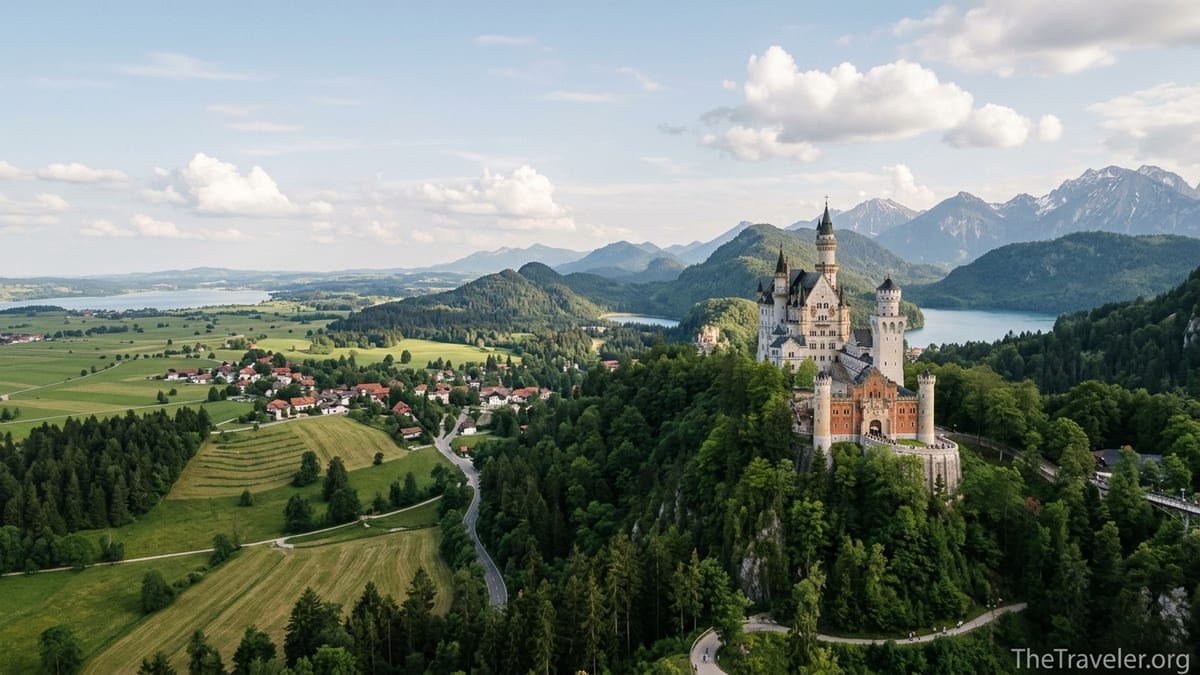
Neuschwanstein Castle, now part of a UNESCO World Heritage listing of King Ludwig II’s palaces, is the headline attraction for many first-time visitors. High above the village of Hohenschwangau near Füssen, it receives up to several thousand visitors per day in summer, which makes advance planning essential. Most visitors either join a structured bus or van tour from Munich, or replicate the same route by train with a pre-booked castle time slot and shuttle bus or uphill walk from the village.
The Bavarian Alps extend from the Allgäu near Füssen east past Garmisch-Partenkirchen to Berchtesgaden on the Austrian border. Garmisch-Partenkirchen, with its ski area at Garmisch Classic and access to the Zugspitze cable cars, is a classic base for organized excursions and guided hiking. Nearby mountain gorges, lakes and cable cars can be visited independently, but English-speaking guided walks and small-group van tours are widely available in summer and over peak holidays.
Farther west, the Black Forest region in Baden-Württemberg offers a different atmosphere: half-timbered farmhouses, cuckoo-clock workshops and rolling wooded hills rather than sheer Alpine peaks. Travelers commonly base in Freiburg, Baden-Baden or small spa towns like Titisee-Neustadt and then join local tours to villages, scenic viewpoints and wineries. Freiburg’s official tourism office coordinates English-language walking tours and Black Forest excursions with certified guides throughout the year, giving a reliable framework for visitors who prefer not to drive.
Neuschwanstein Day Trips: Tours vs Independent Travel
A Neuschwanstein day trip from Munich is the single most popular excursion in Southern Germany, and the choice between a tour and independent travel has a real impact on your day. Independent travelers typically take a regional train from Munich to Füssen, which with standard Bavarian regional tickets and off-peak travel can cost roughly the equivalent of a modest sit-down lunch per person each way, less if using a Bavaria day ticket for multiple travelers. From Füssen station, a short local bus ride brings you to Hohenschwangau, where you pick up pre-booked castle tickets and either walk uphill for about 30 minutes or use the shuttle to reach the castle entrance.
In contrast, classic bus tours marketed through Munich’s official tourism partners bundle transportation and organization in one package. A standard full-day bus tour to Neuschwanstein and nearby Linderhof Palace operates almost daily from central Munich, lasting about ten and a half hours. Recent pricing for the “standard” version shows that you pay the tour operator for coach transport, guide services and skip-the-line management, then settle the combined Neuschwanstein and Linderhof entry charge separately on the bus in cash or card. This structure keeps the headline tour price lower at first glance but means the true total cost is closer to a full mid-range travel day’s budget per person.
Several small-group van tours from Munich appeal to travelers who want a more personal experience and less time in a 50-seat coach. One example marketed as a “Neuschwanstein Castle by train” or “by minivan” small-group tour limits groups to roughly eight to 15 passengers and includes a dedicated English-speaking guide throughout the day. Pricing in 2026 typically falls in the high double-digit to low triple-digit euro range, depending on season and whether castle tickets and lunch are included. Although more expensive than a do-it-yourself regional train trip that might cost roughly 70 to 80 euros all-in with tickets, these tours reduce stress on a tightly scheduled day.
Private Neuschwanstein excursions from Munich are at the top end of the scale. Posters on traveler forums in 2026 describe door-to-door private driver and guide services quoting around the equivalent of 800 to 1200 US dollars for a day trip for a couple or small family, depending on vehicle size and inclusions. For this price you receive hotel pickup in central Munich, a flexible stop pattern that can include the Wieskirche pilgrimage church or Oberammergau village, time-adjusted castle entries managed by your guide and the option to linger for dinner in Füssen before returning to the city. For honeymooners, mobility-limited travelers or groups splitting the cost between four to six people, this can be worthwhile; solo travelers on a budget usually find regional trains and shuttle buses entirely adequate.
Exploring the Bavarian Alps: Garmisch-Partenkirchen and Beyond
The Bavarian Alps invite slower travel than a fast Neuschwanstein day trip. Many visitors take a one-hour twenty-minute regional train from Munich to Garmisch-Partenkirchen and stay at least two nights to access cable cars, mountain trails and lakes. In Garmisch, the local tourism office and partnered operators run an extensive summer program of guided hikes, city walks and bus excursions to attractions such as the Partnach Gorge, Ettal Abbey and nearby lakes. One well-known tourism-oriented resort for eligible US military and NATO personnel in Garmisch publishes a seasonal list of guided tours that often includes day trips to Neuschwanstein, Dachau Memorial Site, and walking tours of the surrounding valleys, which illustrates how structured and varied guided offerings have become.
Independent travelers in the Bavarian Alps benefit from clear trail marking and dense public transport, but there are trade-offs. A cable car excursion to the Zugspitze or other peaks, combined with a restaurant lunch and train fare from Munich, can easily add up to a significant portion of your daily travel budget. Weather flexibility is crucial: in poor visibility, independent hikers may prefer to pivot to a local spa or museum rather than commit to a prebooked summit tour. For this reason, many travelers use a hybrid approach, prebooking one or two big-ticket excursions such as a guided glacier walk or via ferrata and keeping the rest of the stay unstructured.
Organized small-group tours from Munich also reach Berchtesgaden and the Eagle’s Nest, Chiemsee and Herrenchiemsee Palace and the Allgäu Alps. Multi-day itineraries offered by European coach and walking-tour companies often start in Munich, loop through the Bavarian foothills and Garmisch, and then either cross into Austria or turn west toward Lake Constance. Brochures for such tours show travel windows from mid-May through early October, aligning with the main Alpine hiking season and the most reliable weather for lake cruises and high-mountain viewpoints.
For travelers weighing a private driver versus independent rail and bus in the Alps, the question is usually about flexibility and energy. A private driver-guide based in Garmisch or Munich can link several hard-to-reach spots in a single day, such as pairing a morning at Linderhof Palace with an afternoon ferry on Lake Plansee in Austria and a detour to a lesser-known gorge. Doing the same itinerary by public transport would involve multiple transfers and tight rural bus schedules. However, for classic highlights like the Zugspitze, Garmisch Classic ski area or Königssee near Berchtesgaden, trains and well-signed local buses work very well without the cost of a private car.
Black Forest Tours from Freiburg and Baden-Baden
The Black Forest offers a softer landscape than the high Alps, but it can be surprisingly complex to navigate without a car because valleys run at angles and train lines are not always direct. This is where structured tours from Freiburg and Baden-Baden come into their own. Freiburg’s tourism office works with officially certified guides who run city walks and excursions into the surrounding hills, vineyards and villages year-round, in English and several other languages. A half-day small-group tour might visit a high viewpoint above the city, a traditional farmhouse museum and a short forest walk, while a full-day private car tour could add a stop at a lake resort or a Black Forest cake bakery.
Independent travelers use the region’s rail and bus network alongside the value-focused regional day tickets valid across much of Baden-Württemberg. For example, one popular independent route links Freiburg with Titisee, Neustadt and the high plateau around Hinterzarten, where well-marked hiking and cycling trails crisscross the forest. Another follows sections of the long-distance Black Forest Trail between Freiburg and Lake Constance, joining it for a day hike and then returning to a base city by regional train. While these do-it-yourself options are affordable and scenic, they require more time with timetables and less spontaneity than hopping into a pre-arranged tour vehicle.
Travel agencies and specialist operators offer multi-day Black Forest packages that bundle hotel stays, luggage transfers and route notes. One example is an inn-to-inn walking holiday between Munich and Garmisch that then connects onward to the Black Forest, marketed for the May to October season. Similar trips starting in Freiburg combine three to six nights in small guesthouses with a progression of day hikes, leaving luggage to be transported ahead each day. The cost often parallels booking mid-range hotels and meals yourself, but with the added value of pre-vetted routes and transfers that remove the need to interpret every waymark and bus timetable.
Travelers deciding between a rental car and guided tours in the Black Forest should consider both driving confidence and trip goals. The region is filled with winding rural roads, small parking lots and occasional winter snow or autumn fog, which can be stressful if you are not used to European two-lane roads. A private driver-guide will handle navigation, suggest lesser-known viewpoints and manage time to avoid coach-tour bottlenecks. On the other hand, those comfortable behind the wheel can enjoy a deeply flexible itinerary, stopping spontaneously at farm shops, roadside viewpoints and tiny half-timbered villages that scheduled tours might skip.
Comparing Guided Group Tours, Private Drivers and DIY Travel
Across Bavaria, Neuschwanstein, the Alps and the Black Forest, you will encounter five main travel styles: large-group bus tours, small-group tours, private driver-guides, self-guided multi-day packages and fully independent rail or car travel. Large-group bus tours, such as a classic Neuschwanstein and Linderhof day trip from Munich, are typically the most cost-effective guided option. They pack up to several dozen travelers into a coach, follow a fixed schedule and provide a live or audio guide. Typical inclusions are transportation, a guide on board and sometimes skip-the-line arrangements at castles; meals and entry fees are often extra. These tours work best for first-time visitors with limited time who prioritize convenience over maximum flexibility.
Small-group tours operate with minibuses or by train and cap group sizes, sometimes at 8 to 20 people. A small-group “Neuschwanstein Castle by train” tour, for example, might include a local guide who meets you at Munich’s main station, arranges reserved seats, walks the group between Füssen’s station and the bus stop, and times the castle entry. Prices mentioned in 2026 guides show a range from around 70 euros for a basic rail-based small group visit without lunch to 150 to 190 euros for full-day van excursions that include tickets and additional stops. Travelers willing to pay the premium often appreciate the conversational guiding style and quicker boarding and disembarking compared with a 50-seat coach.
Private driver-guides sit at the luxury end of the spectrum. Typical daily rates for a full-day private excursion in Southern Germany, including vehicle and driver-guide, often start in the high hundreds of euros and rise with distance and group size. For example, travelers discussing Neuschwanstein private tours from Munich in 2026 report quotes in the 800 to 1200 US dollar range for a day trip for two to four people. The benefits include hotel-to-hotel transfers, custom itineraries that can blend major sights with quiet corners, and a pace tailored to your group’s needs. These services can be particularly valuable for families with young children, travelers with reduced mobility or those traveling in a group large enough to split the cost.
Self-guided multi-day packages occupy a middle ground. Companies selling “Bavarian Foothills” walking or cycling holidays, often running from mid-May to early October, provide hotel bookings, luggage transfers, route descriptions and sometimes emergency support, but you walk, ride or use local transport independently. The per-night cost is generally comparable to booking mid-range hotels and paying for trains yourself, with the added benefit of logistic support and curated routes. This can be an excellent fit for travelers who enjoy independence but want reassurance that the overall framework of the trip is sound.
Costs, Reservations and Seasonality
Costs for Southern Germany touring vary widely depending on season, level of guidance and how far in advance you book. A bare-bones independent Neuschwanstein day trip in 2026 that combines an off-peak regional train ticket from Munich, a local bus from Füssen and a standard castle entrance time slot can often be arranged for under 100 euros per person, especially when using day tickets valid for multiple travelers. By contrast, a premium small-group van tour with hotel pickup and drop-off, guided commentary, skip-the-line arrangements and entry tickets can approach or exceed 150 to 190 euros per person in high season. Private full-day excursions with door-to-door service generally run several times those amounts, though the per-person cost drops when shared among four to six people.
Reservations have become essential for headline sights. Neuschwanstein in particular now requires timed entry reservations that sell out days or weeks ahead in summer and around public holidays. Many tours bundle guaranteed castle slots into their products and price accordingly, which can justify the higher cost for travelers visiting at peak times. Similarly, favored small-group Black Forest tours and guided hikes around Garmisch-Partenkirchen can fill early in July, August and during major events or school holidays. Multi-day walking and cycling packages often specify a set season, such as from mid-May through early October, when weather and daylight hours are most suitable.
Seasonality affects not just prices but also the character of each region. The Bavarian Alps and Black Forest in winter appeal to skiers and Christmas market visitors, yet some high-mountain trails, smaller cable cars and rural bus routes operate with reduced schedules. Conversely, July and August bring long days and open trails but also higher accommodation prices and more crowded viewpoints. Spring and autumn can be sweet spots for travelers comfortable with cooler temperatures and the chance of rain; mid-September often combines thinner crowds at Neuschwanstein with colorful forests in the Black Forest.
Travelers should also factor in local transport passes and rail disruptions when planning. State-wide day tickets in Bavaria and Baden-Württemberg can greatly reduce per-trip costs if you are making multiple journeys on regional trains and buses in a single day. At the same time, occasional construction projects may bring replacement buses or longer journey times on certain lines, which matters if you are planning tight connections to tours or timed entries. When in doubt, allow additional buffer time, especially on days that hinge on a castle reservation or an early-morning tour departure.
The Takeaway
Choosing how to tour Southern Germany is less about one “best” method and more about matching your travel style to the right combination of guided and independent elements. Large-group bus tours from Munich make classic day trips to Neuschwanstein and Linderhof almost effortless, at the cost of strict timetables and a more standardized experience. Small-group tours strike a balance between structure and intimacy, particularly suitable for travelers who value detailed commentary and easier logistics without paying for full private service.
Private driver-guides and custom multi-day itineraries add flexibility and depth, opening up smaller villages, remote valleys and out-of-the-way viewpoints in the Bavarian Alps and Black Forest. They can be expensive, but for special trips or groups willing to share the cost, they can transform the experience from a checklist of highlights into a connected narrative. Meanwhile, independent travelers using regional trains, buses and occasional rental cars retain maximum control over their schedules and budgets, especially outside absolute peak dates.
For many visitors, the ideal Southern Germany itinerary mixes these approaches. You might take a small-group Neuschwanstein tour that guarantees castle entry on a busy summer day, then spend several days in Garmisch-Partenkirchen or the Black Forest exploring trails and villages at your own pace. By understanding concrete examples of costs, tour structures and seasonal patterns, you can build a trip that feels both efficient and personal, capturing the best of Bavaria, Neuschwanstein, the Alps and the Black Forest.
FAQ
Q1. Is it better to visit Neuschwanstein Castle on a guided tour or independently?
For most first-time visitors with limited time, a guided tour from Munich is the least stressful option because it bundles transport, castle timing and logistics. Independent travel by regional train and bus is more affordable and flexible, but you must manage reservations, transfers and timing yourself, which can be challenging on busy summer days.
Q2. How far in advance should I book Neuschwanstein tickets or tours?
In peak months such as June through August and around public holidays, it is wise to book timed castle tickets and any Neuschwanstein tours at least one to two weeks ahead, and earlier for weekends. Outside those periods, you may find availability closer to the date, but popular time slots still sell out and last-minute travelers risk settling for less convenient entry times.
Q3. Are small-group Neuschwanstein tours worth the extra cost over big bus tours?
Many travelers consider small-group tours worthwhile because smaller groups mean quicker boarding and more personal interaction with the guide. You typically pay more than for a large coach tour, but you gain a more conversational experience, often more flexible pacing and sometimes extra stops or scenic detours that would be impractical with a full-size bus.
Q4. Do I need a car to explore the Bavarian Alps and the Black Forest?
No, you do not strictly need a car, as both regions have extensive rail and bus networks, plus guided tours from hubs like Munich, Garmisch-Partenkirchen, Freiburg and Baden-Baden. A car or private driver does make it easier to link smaller villages and viewpoints in one day, but for major highlights and well-known towns, public transport and organized excursions work very well.
Q5. What is a realistic budget for a Neuschwanstein day trip from Munich?
As a rough guide, a do-it-yourself day using regional trains, local buses and standard castle entry might come to under 100 euros per person, depending on ticket choices and meals. A classic large-group bus tour usually costs more once you factor in transportation and entry, and a premium small-group or private tour can run substantially higher in exchange for convenience and personalized service.
Q6. How many days should I spend in the Bavarian Alps or Black Forest?
To justify the travel time, plan at least two to three nights in either the Bavarian Alps or the Black Forest, with three to four nights ideal if you enjoy hiking, cable cars or spa time. This allows for one or two full days of excursions, plus a buffer for weather or slower-paced exploration of local villages and cuisine.
Q7. Are multi-day guided tours a good idea for Southern Germany?
Multi-day guided coach or walking tours can be very effective if you prefer a fully planned itinerary with hotels, luggage transfers and key admissions included. They are particularly attractive for travelers who are uneasy about driving, traveling with older relatives or simply do not want to manage timetables and bookings. The trade-off is reduced flexibility if you later discover a place where you would like to linger longer.
Q8. Is winter a good time to visit Bavaria and the Black Forest?
Winter can be magical, especially around Christmas markets and in ski resorts like Garmisch-Partenkirchen, but some attractions operate on reduced hours and rural transport may be less frequent. High-mountain hiking routes and certain scenic roads can be inaccessible, so winter trips work best for travelers focused on skiing, snow activities, spa visits and city sightseeing rather than extensive hiking.
Q9. Can I combine Bavaria, Neuschwanstein, the Alps and the Black Forest in one trip?
Yes, many itineraries combine these regions in 10 to 14 days by using Munich and either Freiburg or Baden-Baden as anchors. A common pattern is to spend several nights in Munich with a Neuschwanstein day trip, move on to Garmisch-Partenkirchen or another Alpine base, and then finish with three to four days in the Black Forest before returning to a major airport.
Q10. Should I book private drivers in advance or arrange them after arrival?
For peak-season dates, it is safer to book private drivers or driver-guides well in advance, especially for sought-after routes like Munich to Neuschwanstein or full-day Black Forest circuits. In shoulder seasons you may have more flexibility to arrange services on shorter notice, but availability is never guaranteed, and advance booking allows you to compare options and confirm exact inclusions.