


Southern Germany is dense with storybook castles, romantic ruins and mountain palaces that now rank among Europe’s busiest attractions. Planning a smart route that connects icons such as Neuschwanstein, Hohenschwangau, Linderhof, Heidelberg Castle and Hohenzollern, while staying on top of tickets, crowds and transport, can save you hours of queuing and hundreds of euros. This practical guide focuses on concrete details, from typical ticket prices and pass options to realistic travel times and hotel locations that actually work on the ground.
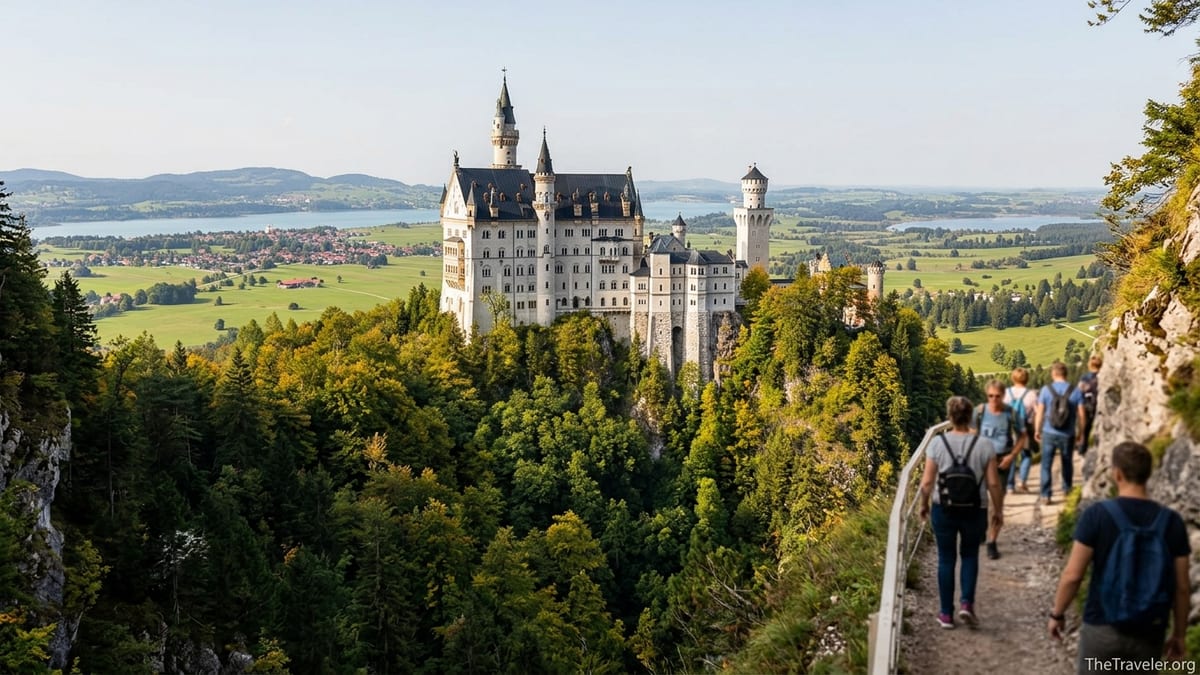
Neuschwanstein & Hohenschwangau: King Ludwig’s Alpine Showpieces
Neuschwanstein is the castle most visitors build their trip around, set above the village of Hohenschwangau near Füssen in southern Bavaria. As of 2026, standard adult tickets for the interior, on guided or audio-guide tours at set time slots, are a little over 20 euros per person when purchased through the official system, with small discounts for youths and students. Same-day tickets at the ticket center in Hohenschwangau often sell out by late morning in summer. It is now common in July and August for all tours to be fully booked days in advance, with travelers resorting to reselling platforms when they mis-book dates, so advance purchase is strongly advised.
Hohenschwangau Castle, just below Neuschwanstein, is frequently overlooked but easy to combine. Many visitors opt for a combination ticket that includes both castles on the same day, paying roughly the equivalent of buying two single admissions with a modest saving. A realistic schedule is Hohenschwangau mid-morning, then Neuschwanstein mid-afternoon, leaving buffer time for the 30 to 40 minute uphill walk to Neuschwanstein or the shuttle bus and carriage options from the village. You can walk the approach road for free and access the courtyard without a ticket, but interior access is only via a timed tour.
From Munich, Neuschwanstein works well as a day trip, either on your own or on an organized tour. Trains from Munich to Füssen typically take about two hours, followed by a short local bus ride to Hohenschwangau. Bayern Ticket regional day passes are a good-value option for couples or small groups if you travel after the morning peak. Several tour operators in Munich bundle a bus transfer with pre-booked castle entry, which can be useful in peak months when the official booking calendar is almost fully taken. Compare the tour price to the sum of a regional train pass plus individual entry tickets to see whether you are mainly paying for convenience.
Overnighting in Füssen or in the small hotels and guesthouses of Hohenschwangau village makes an early or late tour easier to catch. In peak summer, midrange hotels in Füssen often start around the mid-100-euro mark per night for a double room, while simple guesthouses in Hohenschwangau can be slightly higher due to location. Booking a room that includes parking is useful if you are driving, since paid parking near the castles fills up by mid-morning on sunny days.
Linderhof Palace: A Smaller, Calmer Ludwig Experience
Linderhof Palace, tucked in the Ammergau Alps near Ettal, is smaller than Neuschwanstein but was the only one of King Ludwig II’s palaces he actually lived in. Admission tickets in 2026 are in the low-teens of euros for adults and include a guided tour of the ornate interior. Tickets are sold on site and online; while summer weekends can be busy, it rarely reaches the same crush as Neuschwanstein. The palace grounds, with formal gardens, fountains and smaller pavilions, can be visited with the same ticket and are a highlight in late spring and early autumn.
Many travelers combine Linderhof with Neuschwanstein as part of a longer Ludwig-themed circuit from Munich. Driving between the two takes around 1.5 hours via Oberammergau and the Ammergau mountain roads. Organized coach tours from Munich sometimes include both Linderhof and Neuschwanstein in a single long day, with tightly scheduled time slots. If you prefer a slower pace, consider staying one night in Oberammergau or Ettal so you can visit Linderhof first thing in the morning or late in the day after tour buses depart.
Access without a car is possible but requires more planning. One common route is to take a train from Munich to Oberammergau, then connect with local buses toward Ettal and Linderhof. This can easily stretch to 2.5 to 3 hours in each direction with transfers, so many independent travelers still choose to rent a car for a day from Munich, Garmisch-Partenkirchen or Füssen. Pick a rental company with flexible pick-up times so you can start early, aiming to arrive at Linderhof around opening time to enjoy the grounds before they get crowded.
In terms of accommodation, Linderhof itself has no large hotels next to the palace, but family-run guesthouses in nearby Ettal and Oberammergau are within a 15 to 25 minute drive. Expect prices similar to smaller Bavarian alpine towns, with doubles often starting near 100 euros in the shoulder seasons and climbing higher in school holidays. Many places include breakfast and sometimes discounted regional bus passes, which can slightly offset transport costs if you are touring the area without your own vehicle.
Heidelberg Castle: Ruined Romanticism Above the Neckar
Moving northwest into Baden Württemberg, Heidelberg Castle sits in semi-ruin above the baroque Old Town and the Neckar River. It is one of Germany’s most photographed castles, with broad terraces overlooking red-roofed houses and forested hills. Entry is typically via a combined ticket that includes the lower section of the historic funicular railway, admission to the castle courtyard and gardens, and access to the barrel cellar and pharmacy museum. As of 2026, that combined ticket usually costs just under 15 euros for adults, with reductions for children, students and families, though exact amounts can vary slightly with updates to tariffs.
The funicular departs from the Kornmarkt station in the Old Town and makes the climb to the castle terrace in a few minutes, avoiding a steep uphill walk. Most visitors ride up, explore the grounds and terraces, then either ride or walk back down to the city. Separate guided tours inside some of the palace rooms are usually charged as an add-on to the castle ticket, costing the equivalent of a few extra euros. English-language group tours tend to run at fixed times once or twice a day in the high season, so it is worth checking the schedule the day before if you have a particular time in mind.
Heidelberg is more of an overnight base than a quick stop. The city has a large range of hotels, from business chains around the main station to historic townhouses in the Old Town. Expect midrange hotels near the Altstadt to start from around 130 to 180 euros per night for a double in busy months. Given this, many travelers plan at least one evening to experience the Old Bridge, riverfront paths and student bars, treating the castle as part of a wider Heidelberg stay rather than a rushed detour.
From a routing perspective, Heidelberg works well on a north-south line between Frankfurt and Stuttgart or as a side-trip from the Rhine Valley. High-speed trains connect Frankfurt Airport to Heidelberg in under an hour with one change, while regional trains link Heidelberg to Stuttgart in around 80 to 90 minutes. If you are combining Heidelberg with Bavarian castles on one trip, it is often easiest to place Heidelberg at the start or end, using rail to bridge the distance rather than attempting a long day drive.
Hohenzollern Castle: Hilltop Fortress on the Swabian Jura
Hohenzollern Castle, perched on a conical hill south of Hechingen, delivers the classic hilltop fortress silhouette many travelers imagine when they think of German castles. The current 19th-century structure is a memorial to the Hohenzollern dynasty that once ruled Prussia and later the German Empire. Admission in the main 2026 season is in the mid-20-euro range for adults when purchased online, with on-site tickets typically a few euros higher. Children’s tickets are significantly cheaper, usually under 10 euros, and there are reduced rates for students. A family ticket option offers better value for two adults with several children.
Tickets are now sold in timed slots and it is recommended to pre-book online, particularly on weekends and public holidays. The ticket gives access to the castle grounds and state rooms during opening hours. A shuttle bus runs from the parking areas up to the main gate, with its cost now bundled into the admission price rather than sold separately. Many visitors spend two to three hours exploring the ramparts, courtyards and small exhibitions, plus additional time for café stops and photo breaks on the panoramic paths around the walls.
Reaching Hohenzollern without a car involves a mix of regional trains and a local bus or taxi. A common route from Stuttgart is to take a regional train to Hechingen in about one hour, then connect to the shuttle bus that climbs to the parking area below the castle. Schedules can be infrequent outside peak times, so checking the latest bus timetables is important. Renting a car from Stuttgart or Tübingen gives more flexibility, especially if you want to pair Hohenzollern with nearby sights like the Swabian Jura hiking areas or the university town of Tübingen itself.
For accommodation, the small towns around the castle have a handful of guesthouses and country hotels. Many visitors instead base themselves in Stuttgart or Tübingen, where hotel choice is broader and you can add urban sightseeing and dining in the evenings. A practical pattern is to spend two nights in Stuttgart, devote one full day to a Hohenzollern side trip and another to museums, vineyards or Mercedes and Porsche attractions before heading on toward Bavaria or the Rhine.
Transport & Multi-Castle Itineraries: Piecing the Region Together
Southern Germany’s castles spread across several states, so building a coherent route is often the trickiest part of planning. A very common 7- to 10-day circuit begins in Munich, visits the Ludwig castles around Füssen and Ettal, swings west toward the Swabian Jura and Stuttgart for Hohenzollern, then continues to Heidelberg before finishing in Frankfurt for international flights. This route is easiest by rental car, though rail and bus can also work if you are patient with connections.
For independent travelers using public transport, regional day passes are key to keeping costs down. In Bavaria, tickets like the Bayern Ticket allow unlimited regional train travel for a day across the state for one to five people, starting in the mid-20-euro range for a solo traveler and increasing only modestly per extra person. Used well, one such pass can cover a Munich to Füssen round-trip plus local buses, or a series of shorter hops on consecutive days. In Baden Württemberg, equivalent regional passes can cover trains between Stuttgart, Hohenzollern’s gateway towns and Heidelberg, often costing less than buying separate point-to-point tickets.
If you prefer an organized approach, commercial tour operators in Munich, Stuttgart and Frankfurt sell multi-castle day trips and short breaks. From Munich, full-day bus tours that include Neuschwanstein and Linderhof in one itinerary are particularly popular, with prices typically somewhere in the low hundreds of euros per person including transport and basic admission, but often excluding food. From Stuttgart, smaller group tours may combine Hohenzollern with one or two Black Forest or Swabian Jura sights. Always read what is and is not covered: some tours include Neuschwanstein exterior visits only and require you to book interior tickets separately.
Timing and crowds matter as much as distance. At Neuschwanstein in July and August, morning and early afternoon tours often sell out weeks ahead. Travelers who are flexible sometimes deliberately book late-afternoon slots around 4 or 5 p.m. to enjoy slightly thinner crowds and softer light on the mountains. Heidelberg Castle is busiest on sunny weekend afternoons and during festival events in late June and July, when evening concerts take over the courtyard. Hohenzollern can be very popular on local holidays but feels calmer on weekday mornings outside school breaks, when you may share the ramparts mostly with German day-trippers.
Where to Stay: Strategic Bases for Castle-Hopping
Choosing the right overnight bases can transform a rushed castle checklist into a relaxed trip. For Neuschwanstein and Hohenschwangau, Füssen is the most practical hub. It has a walkable old town, a cluster of midrange hotels and guesthouses, and direct bus connections to the castles. Travelers who want to be first on the trails to the Marienbrücke viewpoint often pick small guesthouses in Hohenschwangau itself, at the cost of a quieter evening scene and fewer restaurant options.
For Linderhof, look at Oberammergau, Ettal or Garmisch-Partenkirchen. Oberammergau, known for its Passion Play, offers charming painted houses and plenty of small hotels within a 20- to 30-minute drive of Linderhof. Garmisch-Partenkirchen, a larger alpine resort town about 45 minutes away, works if you want to combine castle visits with a cable car to the Zugspitze or hiking around the Partnach Gorge. Booking lodging that includes free or discounted local transport cards can be helpful for moving between villages without worrying about parking at trailheads and palaces.
Near Hohenzollern Castle, the town of Hechingen has a few modest hotels and pensions, but many visitors base in Tübingen or Stuttgart for more dining and nightlife. Tübingen offers half-timbered houses along the Neckar and a strong student atmosphere, while Stuttgart, around an hour away by car, has a full spread of international hotels. For Heidelberg Castle, staying in Heidelberg’s Old Town or on the opposite riverbank in the Neuenheim district keeps you within walking distance of the funicular station, the Altstadt and evening riverside strolls.
Booking windows vary by season. For July and August, it is sensible to reserve the most in-demand castle bases two to three months ahead, especially in small villages like Hohenschwangau and Oberammergau where room counts are low. In May, June, September and October, you can often secure good options a few weeks in advance, while November through March is generally the quietest period, with lower nightly rates but shorter opening hours and occasional closures for maintenance at some sites.
Practical Ticket Tips, Passes and Seasonal Considerations
Because these castles involve multiple operators and state administrations, there is no single pass that covers all of them. Bavaria’s state palaces, such as Neuschwanstein, Linderhof and several others, are grouped under the Bavarian Palace Administration, which offers regional combination tickets and seasonal passes. These can be worthwhile if you plan to visit three or more Bavarian sites within a short window, but they do not include Heidelberg or Hohenzollern, which fall under different state and private managements. Before you buy, list the exact places you want to see and compare the sum of individual entries with any pass price.
Most castles now encourage or require timed-entry tickets for interior tours. At Neuschwanstein and often at Linderhof, you must join a guided tour at your assigned time, with entry controlled by turnstiles that scan QR codes. Late arrivals risk forfeiting the slot, and it is not always possible to rebook on the day in high season. Heidelberg Castle has more flexible access to its outdoor areas but may still use time-controlled tours for interior rooms. Hohenzollern operates with time windows to prevent overcrowding, with your ticket specifying the earliest entry time to the complex.
Weather affects both the experience and logistics. In winter, snow and ice can make the steep access road to Neuschwanstein and Hohenzollern slippery; shuttle services may be reduced or temporarily halted in severe conditions. Some gardens and outdoor attractions, such as grottos or ornamental fountains at Linderhof, close or operate on limited schedules outside the main tourist season. Conversely, in peak summer heat, midday visits can be physically taxing, especially when climbing stairs inside the castles; booking morning or late-afternoon tours and carrying water is advisable.
Be realistic about mobility. Even with shuttle buses, all four major castles in this guide involve uneven terrain and quite a few steps. Wheelchair access is limited in older sections, though some sites provide lifts to selected floors and offer partial tours or multimedia alternatives. If anyone in your group has difficulty with steep hills, consider prioritizing Heidelberg, which at least allows you to use the funicular to avoid the main climb, and plan extra time for gradual ascents and rest stops at Hohenzollern and Neuschwanstein.
The Takeaway
Southern Germany’s castles reward travelers who combine romantic expectations with practical planning. Neuschwanstein and Hohenschwangau deliver the iconic Alpine views that fill guidebooks, but they demand strict attention to advance tickets and transport timings. Linderhof offers a more intimate look at King Ludwig’s tastes, with shorter queues and lush gardens, while Heidelberg and Hohenzollern showcase different sides of German castle culture, from Renaissance ruins above a student town to a hilltop fortress tied to imperial history.
By anchoring your trip around a handful of well-chosen bases, using regional train passes or a rental car strategically, and reserving key time slots several weeks out in high season, you can turn a potentially stressful checklist into a relaxed, castle-hopping journey. Southern Germany is compact enough that in a single week you can stand on Alpine bridges below Neuschwanstein, stroll baroque terraces in Heidelberg at sunset and watch the sun sink over the Swabian Jura from Hohenzollern’s ramparts, all without feeling rushed.
FAQ
Q1. How far in advance should I book Neuschwanstein Castle tickets? Most travelers visiting in June, July or August should aim to book Neuschwanstein interior tickets several weeks ahead, especially for morning and early afternoon slots. Outside peak season you may still find availability a few days in advance, but for weekends and school holidays it is safer to secure your preferred time as soon as your dates are fixed.
Q2. Is it worth going inside Neuschwanstein, or is the exterior enough? Views of Neuschwanstein from the Marienbrücke bridge and surrounding trails are spectacular and free, and some visitors are satisfied without an interior tour. The inside offers a short but atmospheric glimpse of Ludwig II’s decorative rooms and is worthwhile if you enjoy royal history and elaborate interiors, but it is relatively brief compared to the effort and cost, so travelers on tight budgets sometimes prioritize the outside experience.
Q3. Can I visit Neuschwanstein and Linderhof in one day from Munich? It is possible on a long, structured day, especially with an organized coach tour that manages time slots and transfers. Doing both independently by public transport in one day is more difficult because of train and bus connections, though it can work with careful planning and early starts. Many travelers prefer to focus on one main castle per day to avoid feeling rushed.
Q4. Do I need a guided tour at Heidelberg Castle? The standard Heidelberg Castle ticket lets you explore the courtyard, terraces, barrel cellar and pharmacy museum independently, which is enough for many visitors. Optional guided tours of selected palace interiors add more context and usually cost only a small extra fee, so they are a good choice if you are interested in architectural history or want a structured overview.
Q5. Is Hohenzollern Castle suitable for young children? Families regularly visit Hohenzollern, and children often enjoy the shuttle bus ride, ramparts and open courtyards. However, the steep hill, steps and sometimes crowded interiors can be tiring for younger kids, so a stroller-friendly plan, snacks and breaks at the café are important. The family ticket usually offers better value than buying individual admissions for several children.
Q6. Which town is the best base if I want to see several castles by train? Without a car, Munich is the most practical base for Neuschwanstein and Linderhof, thanks to frequent trains and regional day passes. For Heidelberg Castle, staying in Heidelberg itself is ideal, while Stuttgart or Tübingen work well for Hohenzollern. If you want to see two regions in one trip, a common pattern is a few nights in Munich followed by a few nights in Heidelberg.
Q7. Are there money-saving passes that cover multiple castles? There is no single pass that covers all the castles in this guide, but regional palace passes in Bavaria can reduce costs if you plan to visit several Bavarian sites such as Neuschwanstein and Linderhof in a short period. Regional train day passes in Bavaria and Baden Württemberg also offer good value for multi-leg rail travel, often saving more than individual tickets on days with multiple journeys.
Q8. What is the best time of year to visit southern Germany’s castles? Late spring and early autumn, roughly May to June and September to early October, usually balance moderate crowds with pleasant weather and long daylight. July and August bring the highest visitor numbers and warmer temperatures, while winter can be atmospheric with snow but involves shorter opening hours, reduced services and a higher chance of weather-related disruptions.
Q9. Can I drive to all of these castles, and how is parking? Yes, all of the castles in this guide are accessible by car, with signposted parking areas nearby. Parking at Neuschwanstein, Hohenschwangau and Hohenzollern is paid and can fill quickly on sunny weekends, so arriving early or later in the afternoon helps. Linderhof and Heidelberg also have parking options, though using the funicular in Heidelberg allows you to avoid navigating narrow Old Town streets by car.
Q10. How many days do I need to see Neuschwanstein, Linderhof, Hohenzollern and Heidelberg Castle? A fast-paced traveler could see all four in about five days, with one day each for Neuschwanstein and Linderhof from a Bavarian base and one day each for Hohenzollern and Heidelberg from a Baden Württemberg base. For a more relaxed trip that includes extra sightseeing in Munich, Stuttgart or Heidelberg, consider seven to ten days, allowing for weather changes and some unplanned time in the surrounding towns.