


Southern Germany is compact enough for an unforgettable road trip yet varied enough that choosing the right base can make or break your itinerary. From Munich’s big-city culture to lakeside Lindau, from castle-filled Füssen to the high Alpine peaks above Garmisch-Partenkirchen, each hub offers a different balance of scenery, logistics and atmosphere. This guide compares the main bases used by travelers for castles, mountains and road trips through Bavaria and the Black Forest, with practical examples for couples, families, drivers and car-free visitors.
How to Choose Your Base in Southern Germany
Before you book, think in terms of travel style rather than just famous names on the map. A couple on a romantic long weekend might prioritize walkable old towns and boutique hotels, while a family on a summer road trip may value parking, apartment-style accommodation and easy access to playgrounds, cable cars and lakes. Solo travelers and those relying on trains and buses will often be happiest basing in better-connected cities like Munich, Freiburg or Heidelberg, then using regional transport passes for day trips.
Budget also pushes you toward certain bases. In peak months such as late June to early September and around Christmas markets in December, central Munich and resort towns like Garmisch-Partenkirchen and Berchtesgaden tend to have higher average nightly rates than smaller towns. In practice you might see simple doubles in Munich from roughly 120 to 180 euros in central districts, while in a smaller town on Lake Constance or in the Black Forest you can still find pensions and guesthouses from around 80 to 120 euros if you book early. Apartment rentals and farm stays can offer better value for families needing space and a kitchen.
Transport is the other big filter. If you have a rental car, you can happily base in villages such as Schwangau near Füssen, Grainau near Garmisch or small lakeside places on Lake Constance. Without a car, it is wiser to stick to towns with mainline train stations like Munich, Füssen, Garmisch-Partenkirchen, Freiburg, Konstanz and Heidelberg, or to rely on regions that offer free local transit via guest cards issued by hotels and guesthouses in the Black Forest.
Finally, be realistic about driving times. Distances may look short on the map, but winding Alpine or forest roads, weekend traffic and construction can stretch a two-hour estimate into three. Many visitors try to pack Munich, Neuschwanstein, the Bavarian Alps, Lake Constance, the Black Forest and Heidelberg into one week and spend much of it in the car. A better approach is to pick two or three strong bases, stay at least two or three nights in each and build out day trips from there.
Munich: Best Big-City Base and Rail Hub
Munich is the most practical starting point for many Southern Germany itineraries thanks to direct flights from across Europe and beyond, plus high-speed rail connections to cities like Frankfurt, Berlin and Vienna. The city itself offers plenty to fill two or three days: the old town around Marienplatz, the English Garden, the Residenz museum complex, and major art museums in the Kunstareal. This makes it a natural base if you prefer to unpack once and combine city sightseeing with a couple of classic day trips.
For car-free travelers, Munich is arguably the best hub in Southern Germany. Direct regional trains run to Füssen for Neuschwanstein, to Garmisch-Partenkirchen for the Zugspitze and Alpine hiking, and east toward Salzburg and the Berchtesgaden area. Organized day tours to Neuschwanstein Castle, Linderhof Palace or the Bavarian Alps are easy to book on the ground, so you can skip a rental car entirely. This works well for short trips of four to five nights where you want a taste of the Alps without changing hotels.
Accommodation choice is vast. Around Munich Hauptbahnhof you will find dozens of midrange chain hotels, typically with modern but compact rooms, air conditioning and breakfast buffets. In a typical summer weeknight these might run in the ballpark of 150 to 220 euros for a double in a reputable three or four star property. Travelers who value a quieter, more neighborhood feel often choose districts like Glockenbach, Haidhausen or Schwabing, where you can mix boutique hotels and serviced apartments with local cafes and beer gardens within walking distance.
The main downside of Munich as a base for exploring the wider region is travel time. A return trip to Neuschwanstein from Munich by rail and bus can easily take four to five hours of transport in a day, leaving limited time on site in peak season queues. Likewise, a day return to Garmisch-Partenkirchen for the Zugspitze involves a regional train plus the cogwheel railway or cable car to the summit, which is rewarding but not quick. If mountains and lakes are your top priority, it often makes sense to split your time between Munich and at least one Alpine base instead of commuting back every night.
Füssen & Schwangau: Castles, Lakes and Short Stays
If Neuschwanstein Castle is the centerpiece of your trip, Füssen and neighboring Schwangau make a logical base. The town of Füssen has a compact medieval center with pastel houses, a hilltop castle of its own and a riverside promenade. From Füssen station, buses run to the village of Hohenschwangau at the foot of Neuschwanstein and Hohenschwangau castles, usually in under 15 minutes. Many visitors stay one or two nights here to avoid racing back to Munich after a castle visit.
Couples and families who prefer a quieter, scenic stay often choose guesthouses or small hotels in Schwangau or near the shores of Lake Forggensee. Typical properties might be family-run pensions with balconies facing the mountains, offering doubles in approximate ranges from 100 to 150 euros in high season, often including substantial German breakfasts. In the evenings you can walk or cycle on lakeside paths or dine in village restaurants once the bulk of day-trippers have left.
Füssen works best as a short base rather than a whole-week destination. You can certainly fill an extra day with lakeside cycling, a boat trip on Forggensee, or hikes into the nearby Allgäu Alps, and you can drive to places like Wieskirche, an ornate pilgrimage church in the countryside. However, for more varied mountain experiences and cable car access to high viewpoints, places like Garmisch-Partenkirchen or Berchtesgaden generally offer more options.
In logistical terms, Füssen is particularly convenient for those combining castles with a south-western loop toward Lake Constance or the Black Forest. A common pattern for road trippers is to fly into Munich, pick up a car, drive to Füssen for one or two nights, then continue west to Lindau on Lake Constance and onward toward Freiburg in the Black Forest before looping back toward Munich or Frankfurt. This keeps daily driving times reasonable, usually in the range of two to three hours between successive bases.
Garmisch-Partenkirchen: Alpine Playground for Hikers and Families
Garmisch-Partenkirchen sits in a broad valley framed by the Wetterstein and Ammergau ranges, with the Alpspitze and Germany’s highest peak, the 2,962 meter Zugspitze, rising just to the south. The town has long been one of Germany’s classic mountain resorts, known for hiking, skiing and outdoor sports. For visitors who want a true Alpine base with multiple cable cars, gorge walks and family-friendly trails, it is hard to beat.
From Garmisch-Partenkirchen you can ride the cogwheel Zugspitzbahn and connecting cable cars to the Zugspitzplatt and summit, taking in high-altitude views and even summer snow patches on many days. The Garmisch Classic area of Alpspitze, Kreuzeck and Hausberg is also easily reached by cable cars from the valley and offers a mix of panorama trails, via ferrata routes for experienced climbers and gentle walks suitable for older children. Lake Eibsee, with its turquoise water and loop trail, sits at the base station of the Zugspitze cable car and is reachable by train or bus, making it a popular day out from town.
Accommodation ranges from simple guesthouses and apartments to upscale spa hotels. Vacation apartments in central Garmisch, often in chalet-style houses with mountain views, are especially popular with families staying three nights or more, as they provide kitchens and separate bedrooms. Pricing varies with season, but in busy summer weeks it is common to see midrange hotels in the region of 130 to 200 euros per night for a double, with self-catering apartments spanning a similar range depending on size and location. Nearby villages such as Grainau can be slightly quieter and sometimes a little better value, while still being linked to the same rail and cable car network.
For drivers, Garmisch-Partenkirchen also works as a hub for scenic day trips. You can loop north to lakes like Walchensee and Kochelsee for hikes with broad lake views, or west to Oberammergau, known for its Passion Play and a small but ornate palace. The road options into neighboring Austria add another dimension, but you must pay attention to vignette requirements on Austrian motorways and plan routes accordingly. Overall, Garmisch is ideal for travelers planning at least two full days of mountain activities and who like the feel of a busy yet still traditional Alpine town.
Berchtesgaden & The Bavarian Alps East
On the opposite side of Bavaria, near the Austrian border, Berchtesgaden is a more compact base set amid some of Germany’s most dramatic mountain scenery. The green slopes and limestone cliffs around the town rise steeply above the valley to form the Berchtesgaden Alps, while the deep fjord-like Lake Königssee and the viewpoint at the Eagle’s Nest are among the region’s most famous sights. Many visitors pair a stay here with time in Salzburg, which lies just across the border and is reachable in under an hour by bus or car.
Berchtesgaden suits travelers who want a mix of hiking, lake scenery and historical sites in a tight radius. Boat trips on Königssee to the church at St. Bartholomä, easy lakeside walks, and more challenging hikes in Berchtesgaden National Park are all within straightforward reach. The documentation center on Obersalzberg and the bus ride up to the Kehlsteinhaus viewpoint, often referred to as the Eagle’s Nest, appeal to those interested in 20th century history. Families often appreciate that many trails start from or near bus stops, making car-free exploration quite viable in season.
There is a broad range of lodging, from simple inns in the valley to four-star spa hotels that emphasize wellness and mountain views. Small hotels and pensions in the village center or in neighboring hamlets often provide half-board packages, which can be good value for travelers who do not want to search for a restaurant every night. Rough ballpark rates in summer might see doubles from around 110 to 170 euros, with lakeside or high-view properties costing more. Booking well ahead is particularly important in July, August and around local holiday periods when German and Austrian guests fill much of the capacity.
Compared with Garmisch-Partenkirchen, Berchtesgaden can feel quieter in the evenings, especially away from the main squares, which many couples appreciate. On the other hand, getting here without a car is slightly more involved for travelers arriving from western Germany, since it often requires a change of trains and then a bus from Salzburg. For that reason, some itineraries use Salzburg as the overnight base and visit Berchtesgaden and Königssee on day trips, while others choose to stay in Berchtesgaden itself to soak up the mountain atmosphere after day visitors have left.
Black Forest & Lake Constance: Forest Roads, Lakes and Car-Free Passes
To the west of Bavaria, the Black Forest and Lake Constance region offers a different flavor of Southern Germany. Instead of high Alpine peaks you get rolling wooded hills, spa towns and half-timbered villages, plus wide vineyard slopes and a vast lake shared with Switzerland and Austria. This area works particularly well for road trips, as you can connect the spa town of Baden-Baden in the north with Freiburg in the south via the scenic Black Forest High Road and detour to lakes and waterfalls along the way.
Within the Black Forest, Freiburg is the standout base for many visitors. It combines a lively university atmosphere with an old town dominated by a Gothic cathedral and narrow lanes crossed by the city’s small “Bächle” water channels. Freiburg’s position on the main rail line makes it easy to reach from Frankfurt or Basel and to explore neighboring valleys and lakes by train and bus. Many accommodations in the wider region participate in a guest-card system that provides free local public transport across much of the Black Forest, which significantly reduces costs for car-free travelers and encourages day trips by rail to places like Titisee, Schluchsee or the high trails around Feldberg.
Other bases in the Black Forest suit different tastes. Baden-Baden, in the north, is the classic spa town, with elegant 19th century architecture, thermal baths and easy access to scenic drives. It tends to command higher prices than smaller towns, particularly for grand hotels and spa resorts. Triberg and Titisee are well known for waterfalls and lakes, and have a cluster of cuckoo clock shops and souvenir stores; many visitors find them charming for an overnight stay but quite busy during daytime hours when tour buses arrive. For a quieter stay with strong hiking and food, smaller towns around the Black Forest National Park and Baiersbronn area combine forest access with inns, farm stays and in some cases high-end dining.
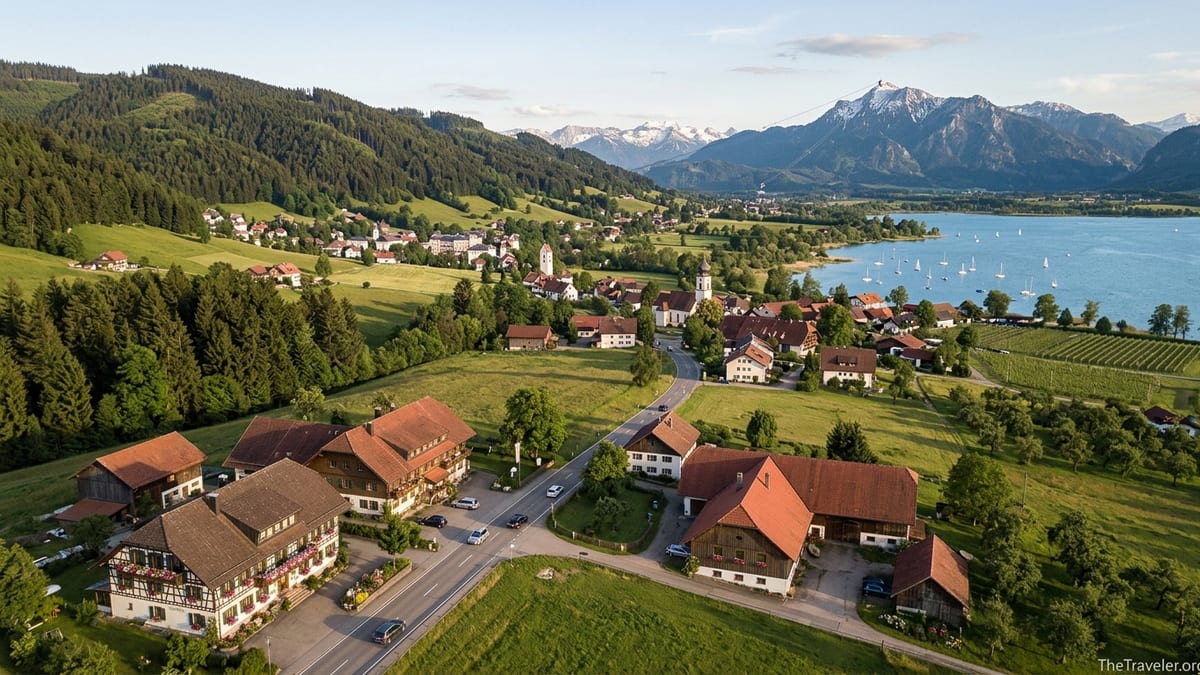
Lake Constance, known as Bodensee in German, stretches along the border of Germany, Switzerland and Austria and offers a string of possible bases. On the German side, towns like Lindau, Meersburg, Konstanz and Überlingen are popular. Lindau and Meersburg appeal to many road trippers thanks to their atmospheric old towns and lake views, while Konstanz, as the largest city on the German shore, offers more shops and services plus strong rail connections. Typical lakeside hotels in summer price above many inland areas, with doubles often starting somewhere in the 130 to 200 euro range in popular towns, especially those directly on the waterfront.
Combining the Black Forest with Lake Constance is straightforward by car. A common loop runs from Freiburg or Baden-Baden to Titisee or Schluchsee for a night near the water, then south toward the lake and along the shore, stopping for one or two nights in a lakeside town. Car-free travelers can also link the regions via regional trains, but should expect changes and slightly longer travel times than on main intercity routes. Overall, this corner of Southern Germany is ideal for travelers who enjoy a mix of gentle walking, scenic driving and village-hopping more than high Alpine hiking.
Heidelberg & Other Flexible Hubs for Road Trips
Heidelberg sits on the Neckar River north of the Black Forest and just west of the Odenwald hills. Although it lies slightly outside the strictest definition of “Southern Bavaria,” it is a frequent inclusion on Southern Germany itineraries thanks to its romantic ruined castle, baroque old town and strong rail links. Heidelberg makes an excellent first or last stop on a loop that includes the Black Forest, Lake Constance and Bavaria, particularly for travelers arriving via Frankfurt Airport.
The city’s appeal lies in its atmosphere as much as in individual sights. The castle terraces provide wide views over the old town roofs and river, while the pedestrian Hauptstrasse is lined with cafes, shops and traditional student taverns. At night, the lit ruins of the castle and bridges make the town particularly attractive for couples. Accommodation ranges from small pensions on the hillside streets below the castle to modern chain hotels closer to the station. Typical central rates for midrange doubles often run in the same broad bracket as Freiburg or Munich’s leafier neighborhoods, with seasonal variation during university and holiday periods.
Heidelberg is also well positioned for short excursions by car. You can drive into the wine villages along the German Wine Route, visiting places such as Neustadt an der Weinstraße and climbing to castles that overlook the vineyards, or head south toward the northern Black Forest for day hikes. For those relying on trains, frequent regional services connect Heidelberg to Mannheim and Karlsruhe, where you can transfer toward the Black Forest and Lake Constance. This makes Heidelberg more of a cultural and historical base than a mountain hub, but it fits neatly into a larger route that includes Alpine segments elsewhere.
Other flexible hubs worth considering include Nuremberg, which pairs well with a northern loop that may also include Rothenburg ob der Tauber, and Stuttgart, which can act as a stepping stone between the Black Forest and Munich. However, if your focus is specifically on castles, mountains and lakes, most travelers will be better served by splitting time between Munich and one or two of the more scenic bases such as Garmisch-Partenkirchen, Berchtesgaden, Füssen, Freiburg or a Lake Constance town.
Planning for Road Trips vs Car-Free Travel
Southern Germany is particularly rewarding for road trips, with well maintained highways, scenic regional roads and a dense network of small towns. Having a car makes it easy to link remote lakes, viewpoints and country inns that would be time consuming to reach by public transport. For example, a two-week loop might start in Munich, swing south to Garmisch-Partenkirchen, west to Füssen, across to Lindau on Lake Constance, north through the Black Forest to Freiburg and Baden-Baden, then east through the Rhine valley toward Heidelberg before returning to your starting point or continuing to Frankfurt.
When driving, it helps to plan realistic stages of about two to three hours of net driving between overnight stops, allowing extra time for unplanned photo stops, lunch breaks and short walks. Weekend and holiday traffic around lakes and Alpine resorts can be heavy, so arriving at new bases by early afternoon is often wise. Many hotels and guesthouses have on-site or nearby paid parking, sometimes included and sometimes charged at a daily rate that can range from a modest few euros at rural inns to more substantial fees in city garages. Always confirm parking options during booking, particularly in old town areas with restricted access.
Car-free travel is equally feasible with some adjustments. For a week focused on castles and mountains without driving, a common pattern is three or four nights in Munich and three or four nights in either Garmisch-Partenkirchen or Freiburg. From Munich, you can day trip to Neuschwanstein and to the Bavarian Alps; from Garmisch-Partenkirchen, you can explore the surrounding peaks and lakes without a car; from Freiburg, the guest-card system plus regional trains open up much of the Black Forest. Another option is to base in Munich and Salzburg, using buses and regional trains to reach Füssen and Berchtesgaden as long day trips.
Guest cards and regional transit passes play a big role for those avoiding a rental car. In parts of the Black Forest many accommodations provide a card that gives free or discounted local bus and train travel during your stay, making it easy and economical to zip between towns and trailheads. Bavaria, meanwhile, offers regional day tickets that allow unlimited use of local trains within certain areas, which can be particularly useful for families moving between Munich, Füssen and Garmisch-Partenkirchen. While schedules and inclusions change over time, it is worth checking current regional tickets when you plan, as they can reduce both costs and decision fatigue.
The Takeaway
There is no single “best” base in Southern Germany, only the right base for your priorities. Munich is unbeatable for first-time visitors who want strong rail links and a rich city experience alongside a taste of the Alps. Füssen and Schwangau are ideal for one or two nights focused on Neuschwanstein and nearby lakes, while Garmisch-Partenkirchen and Berchtesgaden give you deeper immersion into Alpine landscapes, cable cars and hiking.
To the west, Freiburg and other Black Forest towns are perfect for slower trips built around forests, spa culture and scenic drives, with Lake Constance adding big-water views and relaxed lakeside evenings. Heidelberg offers a romantic river-and-castle backdrop that pairs naturally with either a Black Forest or Rhine route. Think about how many times you want to change hotels, whether you are driving or relying on trains and buses, and how much city versus mountain time you want.
For many travelers, the sweet spot is two or three bases over 10 to 14 days: perhaps Munich plus one Alpine town and one forest or lake region. Staying at least two to three nights in each base minimizes packing and unpacking, while giving you the flexibility to shuffle plans around the weather. With thoughtful base choices and realistic travel times, Southern Germany’s castles, mountains and scenic roads become a relaxed holiday rather than a race between highlights.
FAQ
Q1. How many bases should I plan for a 10 day trip in Southern Germany?
For most travelers, two or three bases work best in 10 days. A common combination is Munich, one Alpine town such as Garmisch-Partenkirchen or Berchtesgaden, and either the Black Forest or Lake Constance for a different landscape.
Q2. Is it worth renting a car, or can I rely on trains and buses?
Both options work. A rental car offers maximum flexibility for small villages, lakes and scenic roads. If you prefer car-free travel, basing in well connected towns like Munich, Freiburg, Garmisch-Partenkirchen and Heidelberg allows you to reach most highlights by regional trains, buses and occasional organized tours.
Q3. Which base is best if Neuschwanstein Castle is my top priority?
If Neuschwanstein is central to your trip, staying one or two nights in Füssen or nearby Schwangau is convenient. You can visit the castles without rushing and enjoy the quieter evenings around the lakes once day-trip crowds leave.
Q4. Where should I stay for the best Alpine hiking and cable cars?
Garmisch-Partenkirchen and Berchtesgaden are the strongest bases for varied mountain activities. From Garmisch-Partenkirchen you have easy access to the Zugspitze and Garmisch Classic areas, while Berchtesgaden offers trails and viewpoints around Lake Königssee and the Berchtesgaden Alps.
Q5. What is a good base in the Black Forest for car-free travelers?
Freiburg is usually the best choice for car-free visitors. It has an excellent rail connection, a walkable old town and access to regional trains and buses into surrounding valleys and lakes, often supported by guest cards that include local transport.
Q6. Are Lake Constance towns suitable for families?
Yes. Towns like Lindau, Konstanz and Meersburg are popular with families thanks to safe lakeside promenades, boat trips, nearby playgrounds and a generally relaxed atmosphere. Apartment-style accommodation is widely available and works well for longer family stays.
Q7. Should I stay in Munich the whole time and do day trips?
You can, especially on shorter trips of four to five nights, but travel times to Neuschwanstein, Garmisch-Partenkirchen or Berchtesgaden make repeated long day trips tiring. For stays of a week or more, combining Munich with at least one regional base generally creates a more relaxed itinerary.
Q8. When is the best time to visit Southern Germany for this kind of trip?
Late spring, early summer and early autumn are often ideal. Roughly from May to June and September to early October you can expect milder temperatures, open hiking trails and somewhat fewer crowds than in peak school holiday periods, though weather is always variable.
Q9. How far in advance should I book accommodation in popular bases?
For July, August, major holidays and Christmas market season, booking several months ahead is wise, especially for small guesthouses and apartments in places like Garmisch-Partenkirchen, Berchtesgaden, Füssen and Lake Constance towns. Shoulder season trips may allow more flexibility but still benefit from early planning.
Q10. Is it realistic to combine Munich, Neuschwanstein, the Black Forest and Heidelberg in one week?
It is possible but will feel rushed. In about seven days you would spend a lot of time in transit. If you have only a week, it is usually better to focus either on Munich plus the Bavarian Alps or on a loop that includes Heidelberg, the Black Forest and possibly Lake Constance, rather than trying to see everything.