


Two Rhine rivals, barely 40 kilometers apart, compete fiercely for your limited nights in western Germany. Cologne leans romantic, lived-in and a little rough around the edges. Düsseldorf is polished, compact and quietly stylish. With travel time between the two city centers often under 30 minutes by regional train, many visitors are tempted to split their stay. The harder question is how to divide your time: which city truly deserves more nights?
The Big Picture: Personality, Layout and First Impressions
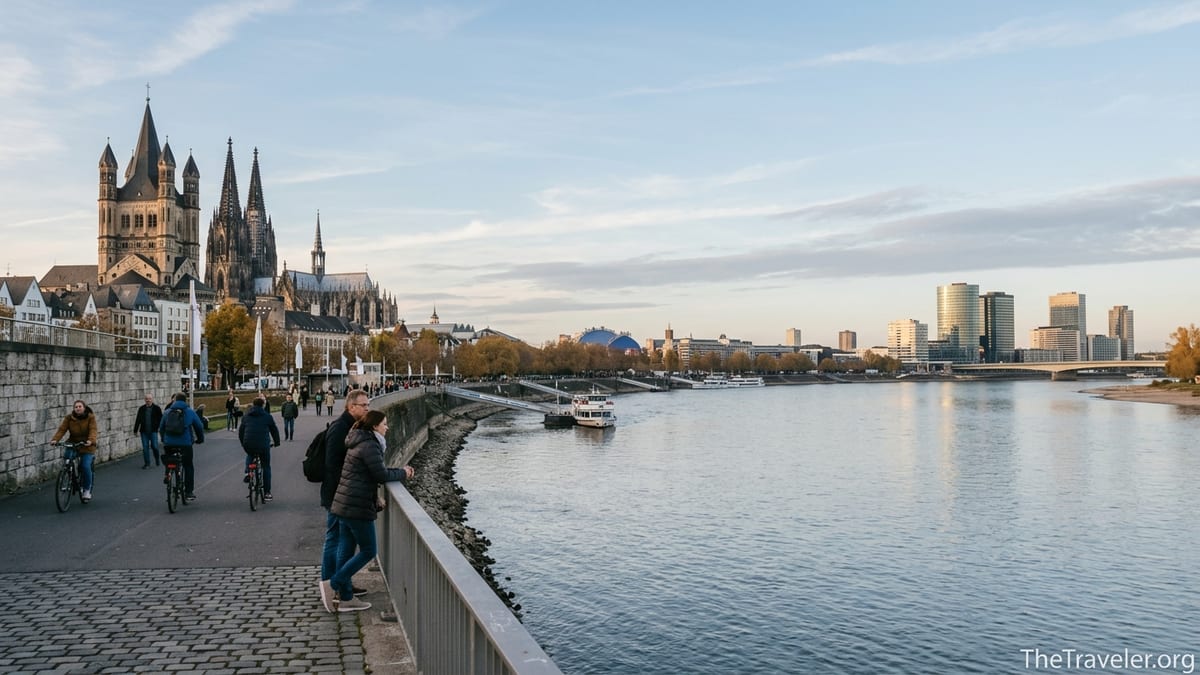
Cologne and Düsseldorf may share the same river and regional trains, but their personalities are strikingly different. Cologne is larger and more visibly historic, with the twin spires of Cologne Cathedral dominating almost every skyline view and freight trains rumbling across the Hohenzollern Bridge. The city feels busy, slightly chaotic and very sociable. You notice street art, students on bikes and the smell of brewery kitchens serving Kölsch and hearty Rhineland dishes.
Düsseldorf, the state capital of North Rhine-Westphalia, feels neater and more curated. The compact Old Town hugs the Rhine, and just a few minutes’ walk away, Königsallee presents a polished boulevard of flagship boutiques, five star hotels and manicured plane trees. Streets are generally cleaner, public spaces feel more choreographed and the overall vibe is calmer, with more of a business-travel and design-forward crowd.
In practical terms, Cologne spreads wider and its main sights are scattered along a long east-west axis, from the Belgian Quarter and Ehrenfeld in the west to Deutz across the river. Düsseldorf’s tourist core is tighter. Most visitors rarely need more than a tram or a short walk to move between the Altstadt, MedienHafen, Königsallee and the Rhine embankment. That compactness makes Düsseldorf easier to “cover” in a shorter stay, while Cologne rewards a bit more time to explore distinct neighborhoods and layers of history.
Because the two cities are linked by frequent regional trains on the Cologne–Duisburg rail corridor, which can take around 25 to 35 minutes between Cologne Hbf and Düsseldorf Hbf with advance fares often under 15 euros each way, it is entirely realistic to base in one city and day trip to the other. For most travelers, the real question is not either-or, but where to sleep and linger in the evenings.
Attractions and Sights: Iconic Views vs Subtle Highlights
Cologne delivers headline sights that justify at least one full day on their own. The Gothic Cologne Cathedral, right outside the main station, is one of Europe’s most recognisable churches, with a treasury and tower climb that can easily fill a morning. Nearby, the Roman-Germanic Museum, Museum Ludwig for modern art and the riverside promenade create a dense cultural cluster. Just walking across the Hohenzollern Bridge at sunset, watching commuter trains pass while couples attach love locks, is a memorable free experience.
Beyond the immediate cathedral area, Cologne rewards wandering. In the Old Town, small squares around Groß St. Martin church, the historic City Hall and the narrow alleys toward the Rhine give flashes of medieval character amid postwar rebuilding. The Belgian Quarter offers independent boutiques and design shops behind facades that still show pre-war elegance. In Ehrenfeld, former industrial buildings have turned into music venues and creative spaces, giving visitors a taste of the city’s alternative culture if they stay long enough to look beyond the postcard view of the cathedral.
Düsseldorf’s sights are quieter but no less appealing, especially if you appreciate modern architecture and contemporary art. The MedienHafen, about a 15 minute walk or short tram ride from the Old Town, is a redeveloped dockland area with striking buildings by architects such as Frank Gehry. It is at its best on a clear late afternoon, when glass facades catch the Rhine’s light and office workers spill into waterfront bars. The Rhine embankment promenade itself is a highlight: families, joggers and cyclists all share a broad riverside path that feels open and breezy even on busy weekends.
Art lovers can fill an entire day in Düsseldorf’s museums. Institutions like the Kunstpalast, K20 and K21 showcase everything from classical collections to large scale contemporary installations, and exhibitions here often tour on to major European capitals. The Altstadt’s cobbled lanes are more about browsing pubs and cafés than ticking off monuments, although the Burgplatz with its Schlossturm tower and views toward the river has atmospheric charm at golden hour.
Hotels, Neighborhoods and Value for Money
Both cities offer wide hotel ranges, but the feel of popular bases differs. In Cologne, many first timers choose to stay within a five to ten minute walk of the cathedral, where you find everything from basic two star properties around Breslauer Platz to midrange chain hotels and a few design options tucked into side streets. Expect standard doubles near the station in the 120 to 180 euro range on regular nights, rising significantly on big trade fair or Carnival dates. The benefit is maximum convenience: you can roll your suitcase off a long distance train and be in your room within minutes.
Travelers who want more local character often pick the Belgian Quarter, Friesenviertel or Ehrenfeld. Here, small boutique hotels and serviced apartments sit above cafés and galleries. Prices are similar to the center, but you gain nightlife and restaurant options at your doorstep and a slightly less touristy atmosphere. Public transport back to the cathedral and the Rhine is simple, usually a ten minute tram or subway ride. For budget conscious visitors, hostels and simple pensions cluster both around the station and in residential neighborhoods further out, where savings balance a slightly longer tram ride.
In Düsseldorf, the most convenient area for train travelers is also around the Hauptbahnhof, where you can often find good value business hotels, especially on weekends when conference demand dips. Typical weekend rates for a modern chain hotel can fall into the 100 to 160 euro range for a double, with breakfast sometimes included. Walk ten to fifteen minutes or hop a tram and you reach the Altstadt, where smaller guesthouses and a handful of higher end boutique properties put you in the heart of the evening action.
For splurge stays, Düsseldorf’s Königsallee and nearby side streets host several five star and luxury boutique hotels, some with spa floors and view terraces over the canal or city. Here, double rooms can easily exceed 250 euros per night, especially during fashion and trade fair events, but you are steps from flagship designers, jewelers and refined cocktail bars. The MedienHafen area, by contrast, offers design hotels in converted warehouses or glass towers, appealing to travelers who value style and water views over proximity to historic lanes.
Nightlife, Food and Local Flavour
Cologne has a reputation across Germany for being open, sociable and fond of late nights. Even on an ordinary weekday, traditional breweries around the Old Town such as those serving Kölsch beer are busy with groups of friends and colleagues. The local ritual is to drink small, fresh glasses of Kölsch that are automatically replaced by the server until you signal you have had enough. Plates lean hearty: pork knuckle with sauerkraut, Himmel und Ääd (black pudding with mashed potatoes and apple) or big schnitzels. In student heavy areas like Zülpicher Straße, bars stay open long, and the city’s club scene, while sometimes shifting from venue to venue, is generally livelier than its neighbour’s.
Düsseldorf, for its part, markets its Altstadt as “the longest bar in the world,” thanks to the concentration of pubs and bars in a compact grid of streets between the Rhine and the main shopping axis. Here, the local specialty is Altbier, a copper coloured top fermented beer served in slim glasses in long standing brewpubs. Weekends see stag parties, football fans and visiting business travelers lining up outside popular spots, while nearby side streets hold quieter wine bars and cocktail lounges. The feeling is festive, if slightly more curated than Cologne’s rough and ready brewery halls.
Foodwise, Düsseldorf shines in variety. The city’s sizeable Japanese community near the main station and along Immermannstraße supports ramen shops, izakaya, sushi counters and Asian supermarkets that draw diners from across the region. Korean and Chinese restaurants also cluster nearby, making the area a compelling base for food focused travelers. Cologne’s restaurant scene has grown more diverse in recent years, but Düsseldorf still tends to win when visitors crave high quality East Asian cuisine within walking distance of central hotels.
When it comes to nightlife beyond pubs and beer, the contrast sharpens. Cologne offers more live music venues, LGBTQ+ bars and clubs, and a calendar that includes large events like Carnival and Pride. Düsseldorf has cocktail bars and a few dance clubs, but locals themselves sometimes describe the scene as more limited, especially for underground or late night clubbing. For travelers who want their evenings to be a major part of the trip, Cologne usually deserves the extra night.
Shopping, Culture and Urban Atmosphere
Shoppers will notice the difference between the cities almost immediately. Cologne’s main pedestrian streets, such as Hohe Straße and Schildergasse, are busy, mainstream shopping corridors lined with international fashion chains, electronics stores and department stores. They are lively and accessible but can feel crowded, especially at weekends and in the run up to Christmas. Beyond the core, the Belgian Quarter and Ehrenstraße area add more independent labels, design stores and concept shops, rewarding those who wander a bit further from the cathedral.
Düsseldorf positions itself more clearly as a fashion and shopping destination. Königsallee is the centerpiece, a tree lined boulevard with a central canal and grand stores housing international luxury brands, jewelers and German designer labels. Side streets off the Kö, as locals call it, hold high end multi brand boutiques and concept stores. A few blocks further, more relaxed shopping streets and department stores cater to midrange budgets. For visitors who enjoy window shopping fine watches and tailoring or investing in one special purchase, Düsseldorf is the stronger base.
Culturally, Cologne leans casual and creative. Street festivals, small galleries and grassroots cultural spaces thrive in former industrial areas and working class districts. Murals and stickers cover walls near Ehrenfeld stations. Public events like Carnival spill into every corner of the city, and there is a long standing tradition of local cabaret and satirical theater. For some travelers, that informality is exactly the appeal, even if it comes with graffiti covered underpasses and occasionally scruffy corners.
Düsseldorf’s cultural landscape feels more institutional and polished, with major art museums, an opera house and well curated public art. Parks such as the Hofgarten add greenery and lake views within walking distance of the center, and the overall street environment tends to feel more orderly. If you value clean lines, uncluttered pavements and galleries housed in well designed buildings, Düsseldorf will likely feel comfortable, even if it is less boisterous than Cologne.
Christmas Markets, Seasonal Events and When to Visit
Both cities are attractive in December, and their Christmas markets are a major draw. In Cologne, multiple themed markets spread through the center. The cathedral market turns the square beside the Dom into a classic festive village, while markets along the Rhine and in squares like Neumarkt or Rudolfplatz offer slightly different atmospheres, from family friendly to more alternative and LGBTQ+ focused events. Opening dates generally run from mid or late November until just before Christmas, and on busy evenings, it can feel as if the entire region has arrived for mulled wine under the lights.
In Düsseldorf, the markets have a more compact footprint that lets visitors walk between different themes in a single evening. Stalls in and around the Altstadt, the square near the City Hall and the shopping district create what local tourism boards describe as a kind of “market archipelago,” with lights, an ice rink and a large Ferris wheel on the Rhine embankment offering views over the riverfront. Recent city information shows Christmas activities typically running from the second half of November into late December, with some days closed for national observances and Christmas Day itself.
From a practical point of view, Cologne’s larger total number of markets and crowds means you can easily spend two or even three evenings exploring different corners, especially if you add a daytime side trip to smaller markets in Bonn or nearby towns. Düsseldorf’s tighter layout makes it realistic to experience most of the city’s markets in a single well planned afternoon and evening, leaving the next day free for museums or a relaxed brunch.
Beyond Christmas, timing can sway your choice of overnight base. Cologne Carnival in February or March is one of Germany’s most famous street parties, dramatically increasing hotel prices and filling trains. Staying in Cologne during the peak Carnival days is unforgettable if you enjoy costumes and music from morning until late at night, but some travelers prefer to base in quieter Düsseldorf and dip in for a day. Conversely, Düsseldorf’s summer funfair on the Rhine draws huge crowds to the riverfront with rides, food tents and fireworks; basing in the city for one or two nights during this event can be worthwhile for families who enjoy fairgrounds.
Transport, Ease of Getting Around and Day Trips
Both cities are well connected within Germany and beyond, so your choice of base will often come down to internal convenience and day trip plans. Cologne’s Hauptbahnhof sits right under the cathedral, making it straightforward to step from long distance trains or regional connections directly into the heart of the city. The local public transport network of trams, underground lines and buses is extensive. However, ticket machines and platform layouts can be confusing on first contact, and some routes run through long, ageing tunnels and busy junctions that require a bit of patience.
Düsseldorf’s main station is less visually dramatic but efficient and relatively easy to navigate, with clear signage toward city trams and suburban rail. For airport access, Düsseldorf has an advantage: Düsseldorf Airport is one of Germany’s major hubs, with a dedicated station and frequent trains into the city. This makes it convenient to land and be in the center in roughly 15 to 20 minutes by local rail. Cologne also has its own airport, to the southeast, linked to the regional rail system, but it usually sees fewer long haul and full service connections than Düsseldorf.
When considering day trips, both cities sit in one of Europe’s densest rail networks. From Cologne, popular excursions include Bonn to the south for more relaxed Rhine views and museums, and further afield cities like Koblenz or Aachen. Düsseldorf offers similarly easy access to Duisburg, Essen and the Ruhr area’s industrial heritage sites. Given that regional trains between Cologne and Düsseldorf typically run several times an hour and take under 40 minutes, many travelers ultimately treat the two cities as a single metropolitan area for sightseeing, choosing hotels based on atmosphere rather than logistical constraints.
Within each city, walking is often the most pleasant way to move between central sights. In Cologne, it can take 20 to 30 minutes to walk from the cathedral to the Belgian Quarter or along the river and back; in Düsseldorf, 10 to 15 minutes is often enough to cross from the station area to the Altstadt or from the Kö to the Rhine promenade. For mobility impaired travelers, both cities have been working to improve step free access to public transport and key attractions, although older tram stops and cobbled alleys can still present challenges, so it is worth checking the latest accessibility maps from the respective tourist offices when planning.
Couples, Families and Solo Travelers: Who Should Stay Where Longer?
For couples, the choice often comes down to atmosphere. Cologne offers romantic river views and the drama of the cathedral, paired with a casual, lively bar scene. Evenings can be spent wandering from a brewery dinner to riverside walks and small wine bars in the Belgian Quarter. If you enjoy slightly gritty charm and do not mind some noise around nightlife streets, Cologne is a natural choice for at least two or three nights, with perhaps a day trip to Düsseldorf for shopping and a sunset on the Rhine promenade.
Düsseldorf suits couples who prefer polished design hotels, stylish bars and leisurely shopping. A long weekend based near Königsallee or in the MedienHafen can include leisurely brunches, gallery visits and dinners in Japanese or modern European restaurants, all within a compact walkable radius. Because much of Düsseldorf’s appeal can be experienced in a focused 24 to 48 hours, couples on longer itineraries through Germany might give it one or two nights, then allocate more time to Cologne or elsewhere along the Rhine.
Families will find both cities manageable, but Düsseldorf’s flatter, more compact core can be slightly easier with strollers and tired children. The riverside promenade, fairground events in summer and the large Ferris wheel at Christmas create obvious crowd pleasers, and many central hotels cater well to weekend family breaks. Cologne counters with its zoo, chocolate museum on the Rhine and expansive Christmas market programme, which can justify extra nights if you are visiting in December. In either city, apartment style accommodation in residential neighbourhoods can make family logistics smoother.
For solo travelers, Cologne tends to offer more opportunities to meet people casually, whether at brewery tables, music venues or LGBTQ+ events. English is widely spoken in both cities, but Cologne’s reputation for friendliness and its concentration of students and creatives can make it easier to slip into conversation. Düsseldorf, meanwhile, may appeal to solo travelers who value comfort, safety and clear urban structure, and who are more interested in art, design and food than late night clubbing.
The Takeaway: How Many Nights in Each City?
If your time is short and you must choose a single base, Cologne generally deserves more nights than Düsseldorf for most leisure travelers. Its combination of a world class cathedral, dense museum cluster, lively brewery culture and richer nightlife means you can easily fill three nights and still have reasons to linger in different neighbourhoods. Staying near the cathedral or in the Belgian Quarter lets you experience both the classic Rhine skyline and the everyday city without long commutes.
Düsseldorf, by contrast, shines as a highly rewarding one or two night stop. A well planned 24 hour stay gives you time to stroll the Rhine embankment, explore the Altstadt and sample Altbier, shop or window shop along Königsallee, and visit at least one major museum. A second night adds breathing room for a relaxed meal in the Japanese quarter or a sunset wander through MedienHafen. Beyond that, many travelers find diminishing returns compared with adding extra nights in Cologne or other Rhine towns.
For an ideal short itinerary focused on western Germany, a balanced approach might be three nights in Cologne and one or two in Düsseldorf, linked by simple regional train rides. This split allows Cologne to serve as your emotional base, with its cathedral views and easy nightlife, while Düsseldorf adds a contrasting dose of polish, fashion and waterfront architecture. Ultimately, the “right” number of nights depends on whether you are more drawn to Cologne’s big heart and busy streets or Düsseldorf’s calmer, design oriented charm, but for most, the scales tip slightly in Cologne’s favour.
FAQ
Q1. Is it realistic to visit both Cologne and Düsseldorf in a single trip?
Yes, very realistic. The cities are around 40 kilometres apart, linked by frequent regional trains that often take under 40 minutes between main stations, so you can comfortably base in one and day trip to the other or split your stay between them.
Q2. If I only have two nights, should I stay in Cologne or Düsseldorf?
With just two nights, most leisure travelers will get more out of staying in Cologne, using one full day for its cathedral, museums and nightlife, and possibly visiting Düsseldorf on a quick day trip if time and energy allow.
Q3. How many nights does Düsseldorf really need for a first time visitor?
For a typical city break focused on sightseeing, food and a bit of shopping, one or two nights in Düsseldorf is usually enough to cover the Altstadt, Rhine promenade, Königsallee and at least one major museum without feeling rushed.
Q4. When is the best time of year to visit for Christmas markets?
Both cities usually open their main Christmas markets from mid or late November until just before Christmas. For the fullest experience with most markets running and festive lights in full swing, late November to mid December is generally the sweet spot.
Q5. Which city is better for nightlife and LGBTQ+ travelers?
Cologne typically offers a more diverse nightlife scene, with more clubs, music venues and LGBTQ+ bars, as well as large events like Carnival and Pride, so it often deserves more nights if nightlife is a priority.
Q6. Where should families with children consider basing themselves?
Families often find Düsseldorf’s compact, flat centre and riverside promenade easy to manage with children, while Cologne’s zoo, chocolate museum and extensive Christmas markets are strong draws. If you have four or more nights, consider splitting them between both.
Q7. Are hotels cheaper in Cologne or Düsseldorf?
Average prices are comparable, but Düsseldorf sometimes offers slightly better weekend value in business hotels near the station, while Cologne can be more volatile during big events. Checking both cities’ rates for your exact dates often helps decide where to spend more nights.
Q8. Is it worth renting a car to explore both cities?
For most visitors, no. Trains and local public transport between and within Cologne and Düsseldorf are frequent and efficient, and driving into both city centres involves parking costs and traffic that rarely justify a rental car.
Q9. Which city is better as a base for wider Rhine and Ruhr day trips?
Both work well as bases, but Cologne has a slight edge for day trips south along the Rhine to places like Bonn and Koblenz, while Düsseldorf is marginally better positioned for exploring the Ruhr area. Your interests should guide the choice more than small timetable differences.
Q10. How should I split a five night stay between Cologne and Düsseldorf?
A balanced option for many travelers is three nights in Cologne and two in Düsseldorf. This gives time to explore Cologne’s neighbourhoods and nightlife while still enjoying Düsseldorf’s riverfront, museums and shopping at a relaxed pace.