


Western Germany is compact, well connected by trains and riverboats, and packed with river scenery, wine villages and historic cities. With smart overnight bases, you can link Cologne, Düsseldorf, the Rhine Gorge, Koblenz, the Moselle Valley and Trier in as little as five days, or slow down over two weeks without ever needing a car. This guide lays out realistic 5, 7, 10 and 14 day routes, with concrete train times, sensible bases and examples of what a typical travel day actually looks like in 2026.
How Western Germany Fits Together
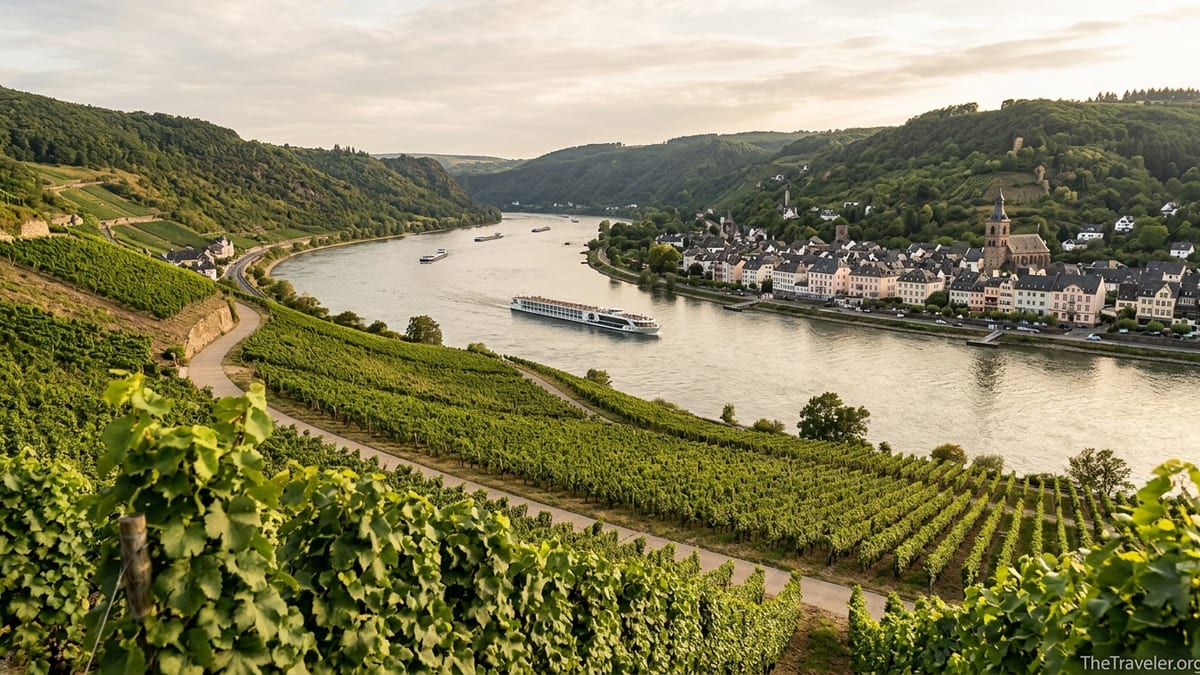
Western Germany’s classic circuit runs broadly north to south, following the Rhine from Düsseldorf and Cologne down through the UNESCO listed Upper Middle Rhine Valley, then swinging west along the Moselle to Trier. Cologne and Düsseldorf sit about 35 to 45 minutes apart by frequent regional and intercity trains, making it easy to treat them as a single metropolitan stop at the start or end of your trip. South of Cologne, the Rhine squeezes into a steep gorge between Koblenz and Bingen, dotted with castles and small wine towns such as Boppard, St. Goar, Oberwesel and Bacharach. Koblenz anchors the north end of this stretch at the confluence of the Rhine and Moselle, with regional trains and boats running in both directions.
The Moselle Valley branches from Koblenz, winding through vineyards and half timbered villages toward Trier near the Luxembourg border. Regional trains along the Moselle connect Koblenz with Cochem, Bullay and Trier in about one and a half hours on the fastest services, with dozens of departures per day according to current Deutsche Bahn schedules. This makes it practical to base in a single town such as Cochem or Trier and day trip by train to neighboring villages, rather than packing and unpacking every night.
For most travelers using public transport, the most efficient pattern is to choose two or three overnight bases and explore out and back from each. A common structure for a week is two nights in Cologne, three nights in a Rhine town such as Boppard or Bacharach, and two nights in Trier. With ten or fourteen days you can add Düsseldorf at the start, or split your river time between a Rhine base and a Moselle base to experience both valleys at a slower pace. Thanks to dense regional rail networks along both rivers and monthly passes such as the Deutschland Ticket, you can keep transfers short and predictable while still seeing a broad mix of cities and small towns.
Key Bases: Cologne, Düsseldorf, Koblenz and Trier
Cologne and Düsseldorf are the main gateways for international travelers, with major airports, long distance train connections and a wide range of hotels. Cologne’s appeal lies in its Gothic cathedral right by the station, lively Old Town and riverside promenade. It also functions as a practical base for quick forays into the Rhine Valley: regional trains on the Left Rhine line run south from Cologne via Bonn and Koblenz, continuing to the small river towns further down the gorge. If you stay near Cologne Hauptbahnhof, you can be on a regional train to Koblenz in under 10 minutes’ walking and reach Koblenz in roughly one hour, then connect further down the valley.
Düsseldorf, roughly half an hour from Cologne by frequent regional trains covered by local transit tariffs, makes sense for travelers interested in nightlife, modern architecture and shopping. Its compact Altstadt, Rhine embankment and MedienHafen district offer a different feel from Cologne’s cathedral focused skyline. Many visitors choose to overnight only in one of the two cities and visit the other on a half day trip, to avoid changing hotels for such a short hop. For example, you might spend two nights in Cologne, dedicate one evening to Düsseldorf’s Altstadt, and return on a late regional train that runs past midnight according to current timetables.
Further south, Koblenz is the main junction between the Rhine and Moselle, and a logical overnight base if you prefer a mid sized city to smaller villages. From Koblenz Hauptbahnhof, regional trains fan out along the Rhine toward Boppard and Bacharach, and along the Moselle toward Cochem and Trier. Fast regional services from Trier to Koblenz currently take around 1 hour 25 minutes at best, with around 40 or more connections daily, giving you flexibility when planning day trips. Koblenz itself offers the Ehrenbreitstein Fortress, a cable car across the Rhine and riverside promenades, which justify at least one full day even if you mainly use the city as a hub.
Trier, often billed as Germany’s oldest city, makes a strong base at the western edge of this itinerary. Its Roman monuments such as the Porta Nigra, Imperial Baths and amphitheater can easily fill a day, while its compact center, university atmosphere and wine taverns make evenings pleasant. From Trier, regional trains along the Moselle allow straightforward day trips to Cochem, Bernkastel Kues via bus, or smaller wine villages. If you are using the nationwide regional rail pass, basing in Trier for two or three nights lets you sample different Moselle stretches without constantly checking hotel availability in tiny villages that may have limited rooms in peak season.
Choosing Your River Base: Rhine vs Moselle Villages
Most travelers will want at least three nights in a river village to slow down between city visits, and the first decision is which river to prioritize. The Upper Middle Rhine Gorge between Bingen and Koblenz is famous for a castle seemingly around every bend, steep terraced vineyards and a highway and railway running on each bank. Towns like Bacharach, Boppard, St. Goar and Oberwesel are all linked by frequent regional trains and seasonal riverboats, so you can wake up in one place and spend the day drifting or training from village to village. Travel writers and recent trip reports often highlight Bacharach for its compact half timbered center and quiet evenings, and Boppard for its broader range of restaurants, chairlift to a viewpoint above the Rhine loop, and more frequent train services.
The Moselle Valley, by contrast, has a softer, more meandering character, with the river swinging through S shaped loops between Koblenz and Trier. Cochem is one of the most popular bases here, with a picturesque old town beneath Reichsburg Castle and easy rail connections. Slightly smaller places such as Traben Trarbach or Bernkastel Kues require a train and bus connection, so they work best for travelers comfortable with local public transport. If you want to combine both valleys on a short itinerary, a practical pattern is to base on the Rhine for two or three nights, then shift to Trier or Cochem for two nights on the Moselle, rather than trying to overnight in very small villages on both rivers.
When choosing between Rhine villages, consider how you plan to get around each day. The left bank railway from Cologne to Mainz, often called the Linke Rheinstrecke, runs directly through Boppard, St. Goar, Oberwesel and Bacharach, with trains typically stopping at least once per hour in each direction. This makes these towns particularly convenient if you rely entirely on trains. If you intend to use riverboats extensively, check which docks your chosen town has and how often scheduled services stop there in the month you are visiting, as frequency is higher in summer than in shoulder seasons. On the Moselle, trains link Koblenz, Cochem and Trier, while some of the prettiest smaller villages require short connecting bus rides, something to keep in mind if you prefer not to switch modes during the day.
Transport, Passes and Realistic Travel Times
Public transport in this part of Germany is integrated and predictable, which makes it suitable for travelers who prefer not to drive. Regional trains along the Rhine and Moselle generally run at least hourly, with extra services at peak times. For example, current schedules show the fastest regional train journeys between Trier and Koblenz taking around 1 hour 25 minutes, while a regional train from Cologne to Koblenz can take roughly 1 hour to 1 hour 20 minutes depending on stops. Short hops between Rhine towns such as Boppard and Bacharach are often 20 to 30 minutes. Build at least a 15 minute connection buffer when changing from long distance to regional trains, particularly at Cologne or Koblenz, to account for minor delays.
For itineraries of a week or longer that lean heavily on regional trains, the nationwide Deutschland Ticket is worth considering. As of early 2026, it is priced at around the low 60 euro range per calendar month and covers regional trains, S Bahns, U Bahns, trams and most local buses across Germany, but not long distance ICE or IC trains. If you plan a 10 or 14 day trip that stays within one calendar month, buying this pass and building your itinerary around regional services can simplify budgeting and encourage spontaneous side trips, such as an unplanned evening in Bonn from Cologne or a spur of the moment Moselle hop from Koblenz to Cochem.
Riverboats provide a slower and more scenic complement to trains, especially along the most dramatic section of the Rhine Gorge between Bingen or Rüdesheim and Boppard or Koblenz. Scheduled services typically ramp up between late spring and early autumn, with extra departures in July and August. A common pattern for a day out is to take a morning regional train from a base such as Boppard to Bacharach, spend a few hours wandering the lanes and castle ruins there, then board a mid afternoon boat back downstream. On the Moselle, boat services connect towns like Cochem, Beilstein and Traben Trarbach in season. Always cross check timetables a few days before you sail, as water levels and seasonal schedules can affect operations.
If you prefer the flexibility of a car, be aware that parking in small Rhine and Moselle villages can be limited and often paid. Roads on both banks of the Rhine are busy trunk routes with frequent trucks, so scenic driving is more relaxing on smaller side roads leading up into the vineyards or across the hills between river loops. Many travelers choose a hybrid approach, renting a car only for a couple of days to explore hilltop castles and remote vineyards that are harder to reach by train or bus, then returning the car in a larger city such as Koblenz or Trier and relying on rail for the rest of the route.
5 and 7 Day Western Germany Itineraries
With just five days, it is wise to focus on two bases and minimize one night stays. A realistic 5 day pattern for a first visit is to spend two nights in Cologne and three nights in a Rhine Valley base such as Boppard or Bacharach. You might arrive in Cologne on day one, explore the cathedral, Old Town and riverfront, and sleep in a hotel within walking distance of the station. On day two, take a half day trip to Düsseldorf for its river promenade and MedienHafen architecture, returning to Cologne in the evening. On day three, travel by regional train to your chosen Rhine base in around 90 minutes, checking into a guesthouse within a short walk of the station so that morning train departures for day trips are easy.
From your Rhine base on days three to five, plan one full day exploring neighboring river towns by train and, in season, by boat. For instance, from Boppard you could take a morning train to St. Goar, hike up to Rheinfels Castle, then continue to Oberwesel or Bacharach before returning by boat or train. Another day could focus on Boppard itself, riding the chairlift to the Vierseenblick viewpoint above the Rhine loop and sampling local Riesling in a wine tavern at dinner. On the final day, allow enough time to travel back to Cologne or Frankfurt for onward flights, factoring in roughly 90 minutes to two hours from most Rhine bases to major airports using regional and long distance trains.
A seven day itinerary allows you to add the Moselle or Trier without rushing. One workable plan is two nights in Cologne, two nights in a Rhine village such as Bacharach, and three nights in Trier. After a similar start in Cologne and the Rhine as above, you could travel from Bacharach to Trier on day four by regional train with a change in Koblenz, taking roughly three and a half to four hours all in with a comfortable connection. Use days five and six for Trier’s Roman sights and a Moselle day trip: for example, a train to Cochem for its riverside promenade and castle, then back to Trier for dinner. Day seven can then be a relatively straightforward return by regional and long distance trains to your departure airport.
10 and 14 Day Routes With Slower Travel
With ten days you can comfortably combine both major cities, the Rhine Gorge, the Moselle Valley and Trier, while still keeping to three or four bases. One example pattern is two nights in Düsseldorf, two nights in Cologne, three nights in a Rhine base, and three nights in Trier. Start in Düsseldorf to shake off jet lag with riverfront walks and a visit to the Kunstsammlung museums, then move to Cologne by a quick regional train. From Cologne, a day trip to Bonn or an extra half day in Düsseldorf is easy. On day five, take the regional train south along the Rhine and base yourself in Boppard or Bacharach, using days six and seven to explore villages and castles by train, boat and short hikes.
On day eight, travel via Koblenz to Trier, detouring for a few hours in Cochem if you wish to see the Moselle before reaching Trier in the evening. With two full days based in Trier, you can devote one to the city’s Roman core and another to a Moselle excursion, perhaps to Bernkastel Kues via train and bus or to a smaller riverside wine village. Because regional trains and buses are covered by current nationwide monthly passes, building in these side trips adds little marginal cost beyond dining and activities. Day ten is then reserved for travel to your onward destination, giving a buffer in case of any delays on the single rail line along the Moselle.
A full two weeks opens space for a deeper, slower itinerary and at least one additional small town base. A 14 day route might begin with two nights in Düsseldorf, two in Cologne, three in a Rhine village, three in a Moselle village such as Cochem and four in Trier. After exploring Düsseldorf and Cologne, move to your Rhine base for leisurely boat rides, short hikes and castle visits. Rather than jumping directly to Trier, you could next relocate to Cochem for three nights, exploring neighboring Moselle villages by train and boat. From Cochem, towns like Beilstein and Traben Trarbach are reachable as relaxed day trips, and evenings are spent enjoying riverside terraces.
Finish the final four nights in Trier, using the city as both a cultural stop in its own right and a flexible springboard for extra Moselle excursions or even a side trip into Luxembourg if you are comfortable adding another country to your plans. Spreading 14 days across five bases does mean more hotel changes, so consider sticking to four bases if you prefer to unpack less often, perhaps dropping either the dedicated Moselle village stay or one of the big city nights and instead visiting those areas on day trips from neighboring bases.
Seasonality, Budget and Booking Practicalities
The Rhine and Moselle valleys are highly seasonal, with the busiest months from late May through September and during autumn wine festivals. In peak summer, expect larger crowds on riverboats and in well known towns such as Cochem, Bacharach and Boppard, particularly on weekends when day trippers arrive from Frankfurt and Cologne. Room rates in guesthouses and small hotels typically rise accordingly, and advance booking of river view rooms is advisable if you care about outlook. Shoulder seasons in April, early May and October can offer a sweet spot of milder weather, operational boats and fewer crowds, though some seasonal services may run less frequently.
Budget wise, Western Germany is often more affordable than larger European capitals, but costs add up quickly in small river towns with a heavy tourist focus. In 2026, midrange double rooms in Rhine and Moselle villages frequently fall in the 90 to 150 euro per night range, depending on location, view and season, while city hotels in Cologne or Düsseldorf can be a little higher during major trade fairs. Meals at casual taverns might run from under 15 euros for a hearty plate of schnitzel or Flammkuchen up to around 25 euros for a main in a more polished restaurant, excluding drinks. Winery tastings in the valleys are often priced per flight, with modest fees sometimes waived if you purchase bottles.
When booking, prioritize walking distance to train stations in every base city or town, particularly if you are traveling with luggage and do not plan to use taxis. In compact Rhine villages such as Bacharach or St. Goar, being within a five to ten minute walk of both station and boat landing makes spontaneous changes of plan easy, since you can switch between train and ship with little effort. In bigger cities like Cologne and Düsseldorf, staying near the main station also means easy access to local S Bahns and trams for airport transfers and evenings out in different districts.
The Takeaway
Western Germany’s combination of dense rail lines, scenic rivers and compact historic centers makes it unusually well suited to trips of 5 to 14 days without a car. By focusing on a handful of well chosen bases such as Cologne, a Rhine village like Boppard or Bacharach, a Moselle stop like Cochem and the Roman city of Trier, you can keep travel days short while still experiencing a wide range of landscapes and atmospheres. Building your route around realistic train times and overnight stays, rather than ambitious checklists of towns, will help ensure your days feel relaxed rather than rushed.
Whether you have just a long weekend plus a couple of days, or a full two weeks, the key is to let the trains and boats set the rhythm. Use cities like Cologne or Düsseldorf as gateways, then slow your pace the moment you reach the river valleys, lingering over viewpoints, vineyard walks and unhurried dinners. With thoughtful planning, Western Germany rewards this slower style of travel with a sense of continuity, as you follow the same rivers from one characterful stop to the next.
FAQ
Q1. Is it realistic to do Western Germany without renting a car?
Yes. The entire area from Düsseldorf and Cologne down through the Rhine Gorge, Koblenz, the Moselle Valley and Trier is well served by regional trains, local buses and seasonal boats, so most visitors can follow these itineraries comfortably by public transport.
Q2. Where is the best base on the Rhine for first time visitors?
For many first time travelers, Boppard and Bacharach are strong options: Boppard offers more restaurants, a chairlift and frequent trains, while Bacharach has a smaller, romantic old town and easy rail access to neighboring villages.
Q3. Should I stay in both Cologne and Düsseldorf?
Not necessarily. The cities are about 35 to 45 minutes apart by frequent regional trains, so many travelers choose one as an overnight base and visit the other on a half day or evening trip to avoid extra hotel changes.
Q4. How many nights should I spend in Trier?
Two to three nights is a good range. This allows a full day for Trier’s Roman sights and old town, plus at least one day trip along the Moselle to places like Cochem or Bernkastel Kues.
Q5. What is a sensible split for a 7 day itinerary?
A practical 7 day split is two nights in Cologne, two nights in a Rhine village such as Bacharach, and three nights in Trier, which balances big city time with river scenery and minimizes one night stays.
Q6. Is the Deutschland Ticket worth it for these routes?
If you are staying a week or longer and mostly using regional trains, S Bahns, trams and buses, the monthly Deutschland Ticket can offer good value and convenience, especially when making multiple day trips along the Rhine and Moselle.
Q7. When is the best time of year to visit the Rhine and Moselle valleys?
Late spring through early autumn offers the most boat departures and long daylight hours. July and August are busiest, while April, May and October can be quieter but still pleasant if you are comfortable with cooler temperatures.
Q8. How far in advance should I book accommodation in small river towns?
For peak season weekends and river view rooms in popular towns like Cochem, Boppard or Bacharach, booking several months ahead is wise. In shoulder seasons, you often have more flexibility, but it is still safer to reserve at least a few weeks in advance.
Q9. Are Rhine and Moselle boat cruises included in train passes?
No. Riverboat tickets are sold separately by the cruise companies and are not covered by rail passes or the nationwide regional ticket, so you should budget extra for any day cruises you plan to take.
Q10. Can I comfortably combine both Rhine and Moselle on a 5 day trip?
It is possible but rushed. With only five days, most travelers are better off focusing on Cologne plus the Rhine Gorge and saving the Moselle for a future visit or a longer 7 to 10 day itinerary.