


Driving through eastern Germany is one of the most rewarding ways to experience the country’s mix of big-city culture, fairy-tale river valleys and sandstone mountains. With Berlin as a natural starting point, you can link Potsdam’s palaces, the canals of the Spreewald, creative Leipzig, baroque Dresden, wine-soaked Meissen, the cliffs of Saxon Switzerland and the film-set streets of Görlitz into one flexible road trip. This guide focuses on the practicalities: renting a car, understanding environmental rules, finding parking and choosing between 5, 7 and 10 day itineraries that make the most of the region’s scenic roads.
Why Drive Eastern Germany: Overview & Best Seasons
Eastern Germany is well suited to a road trip because distances between highlights are relatively short, highways are efficient and many of the most scenic areas, such as the Spreewald and Saxon Switzerland National Park, are easier to explore with a car. For example, the drive from Berlin to Potsdam usually takes about 45 minutes, Berlin to the Spreewald around 1.5 hours, and Dresden to Saxon Switzerland roughly 40 to 50 minutes depending on your exact trailhead. You spend more time sightseeing and less time sitting in the car, which makes this route appealing even for shorter vacations.
Spring and early autumn are generally the most comfortable periods to drive this circuit. From late April to June you can expect mild temperatures, fresh green in the forests and relatively light traffic outside public holidays. Late September and October bring autumn colors in the Elbe Valley vineyards near Meissen and in the beech forests of Saxon Switzerland. High summer can be wonderful for river swimming and beer gardens, but hiking areas and city centers are busier and parking in hotspots like Bastei or Berlin’s Mitte district can fill quickly.
Winter driving is possible, but you should be prepared for shorter days, the possibility of snow and ice and some seasonal closures in rural attractions. Rental cars in Germany are legally required to use winter or all-season tires in wintry conditions, but it is still wise to build in extra time between places. If you are not used to driving on snow, consider focusing on the cities with good public transport and using the car mainly for day trips to the countryside.
Whichever season you choose, it is sensible to avoid peak departure times from Berlin, such as Friday late afternoon on the A10 ring, when traffic can slow. Leaving after breakfast or early afternoon often makes for a calmer start to your road trip, whether you head first to Potsdam, the Spreewald or directly towards Leipzig and Dresden.
Car Rental, Driving Rules & Environmental Zones
Most international visitors pick up a rental car in Berlin, either at Berlin Brandenburg Airport or from major providers in the city such as Sixt, Europcar, Hertz or Enterprise. Compact cars like a VW Golf or similar are usually enough for two or three travelers and luggage, and they are easier to park in older city centers. Automatic transmission is widely available but can cost more than manual; booking several weeks ahead typically keeps daily rates more favorable, especially in summer and around public holidays.
Germany has no general motorway toll for cars under 3.5 tonnes, so you do not need to buy a vignette to use the highways on this route. What you must pay attention to are low-emission environmental zones, known as Umweltzonen, in cities including Berlin and Leipzig. To enter these areas, your car needs a green emissions sticker displayed on the windshield. German-registered rental cars that meet modern emissions standards normally already have this green sticker, so when you pick up the vehicle, look at the lower corner of the windshield and confirm with staff if you plan to drive into central Berlin or Leipzig.
Driving rules are straightforward: you drive on the right, seatbelts are mandatory, and alcohol limits are stricter than in many countries. On federal highways and in towns, fixed speed limits apply, and in many places the limit is 50 km/h in built-up areas and 100 km/h on secondary rural roads unless otherwise signed. Some stretches of the Autobahn have no general speed limit, but for a comfortable road trip, many visitors keep to 120–130 km/h where conditions allow. Speed cameras are common, so it is not worth pushing beyond what feels safe or what signs indicate.
Navigation is easiest with a smartphone app, but it is wise to download offline maps for Brandenburg and Saxony in case you lose signal in forested or rural areas. Many rental cars include built-in GPS, yet a paper overview map of eastern Germany can help you visualize optional detours, such as looping along the Elbe River between Dresden and Meissen instead of taking the faster but less scenic highway.
Berlin & Potsdam by Car: Access, Parking & Exit Routes
Berlin is best approached with a mix of car and public transport. If you are beginning your trip here, it can be easier not to use the car inside the core center on sightseeing days. Many travelers pick up the car only when they are ready to leave Berlin, but if you already have a vehicle, consider using park-and-ride lots on the city’s edge and relying on S-Bahn and U-Bahn trains to reach Museum Island, Brandenburg Gate and Kreuzberg.
Central Berlin lies almost entirely within an environmental zone, so your car must have the green emissions sticker if you drive into neighborhoods like Mitte or Prenzlauer Berg. Street parking is often metered; rates vary by district and can be higher in tourist hotspots. Multi-storey car parks near major train stations and shopping centers can be more straightforward, especially if you are not confident parallel parking in tight spaces. Before heading out each day, check signs carefully for resident-only zones or time-limited bays.
On the first driving leg of your circuit, Potsdam is a natural half-day stop on the way south or west. From Berlin’s western suburbs, it usually takes around 45 minutes to reach Potsdam by car via the A115. Once there, drivers often park near the historic Dutch Quarter or on the edge of Sanssouci Park using paid lots, then explore on foot. Spending a few hours walking between Sanssouci Palace, the New Palace and the Orangery gives you a sense of Prussian royal history before you continue to the next destination.
To leave the Berlin–Potsdam area toward the Spreewald, you typically follow the A10 ring around the south of Berlin and then the A13 towards Cottbus, exiting near Lübben or Lübbenau. If you are instead starting the loop by heading for Leipzig, the A9 southbound from the ring road offers the most direct route, while for Dresden you can take the A13 southeast. Allow extra time on Friday afternoons and during school holiday changeover weekends, when traffic around the ring can be heavy.
Spreewald & Leipzig: Canals, Forest Roads and Urban Culture
The Spreewald is a biosphere reserve of canals and wetlands south of Berlin, and it makes an atmospheric contrast after city streets. Driving from Berlin or Potsdam, you exit the highway near Lübben or Lübbenau and follow smaller roads lined with fields and forest. Villages such as Lübbenau have signed lots for day visitors near the harbor, where traditional flat-bottomed boats depart. Parking is typically paid by the hour; bring coins or be ready to use a card where accepted. Once parked, you can spend a half-day on a boat tour and walking between thatched houses before returning to your car.
If you are traveling in summer or on weekends, arrive before late morning to secure parking close to the canal centers. In peak periods, some visitors choose accommodation with its own small parking area in or near the villages, which removes the stress of competing for daytime spaces. Rural guesthouses often include parking in the nightly rate, but it is still worth confirming this when you book.
From the Spreewald, Leipzig is around two hours’ drive, often using a combination of the A13, A15 and A9 depending on where you started. Leipzig is known for its creative scene, grand 19th-century buildings and musical heritage. Many visitors choose a hotel with underground or courtyard parking near the center, as street parking can be a patchwork of short-stay and resident-only zones. The inner city is compact; once the car is parked, you can explore the Thomaskirche, the market square and former cotton mill turned art hub in Plagwitz by tram or on foot.
Leipzig also has an environmental zone, so again you need a car with a green emissions sticker if you drive close to the heart of town. If you are uncertain, consider leaving the vehicle in a lot near the main station or a park-and-ride on the outskirts and using trams to reach your accommodation. This is often simpler than threading the car through one-way streets and tram lines in the denser neighborhoods.
Dresden, Meissen & Saxon Switzerland: Scenic Routes and Trailhead Parking
From Leipzig it is around 1.5 hours by car to Dresden via the A14 and A4. Dresden’s restored baroque center sits along the Elbe River and is compact enough that, as in Leipzig, you can park once and explore on foot. Many hotels in the inner city offer payable underground parking. Public garages near the Zwinger, Frauenkirche and Altmarkt allow you to leave the car and wander between sights without moving it during the day. Because the core of Dresden is relatively small, driving within it is more stressful than helpful, so rely on trams if you need to cross town.
Dresden makes a handy base for a half-day or full-day excursion to Meissen, around 30 to 40 minutes by car along the river or via the B6. Meissen’s old town perches up a hill above the Elbe, with parking lots signed on the approaches. Drivers often use riverside car parks or lots like those near the old town, then walk up to the cathedral and Albrechtsburg Castle. Meissen is also famous for its porcelain manufacture; factory tours usually have onsite parking included with admission, which simplifies logistics if you plan to buy ceramics or simply learn about the craft.
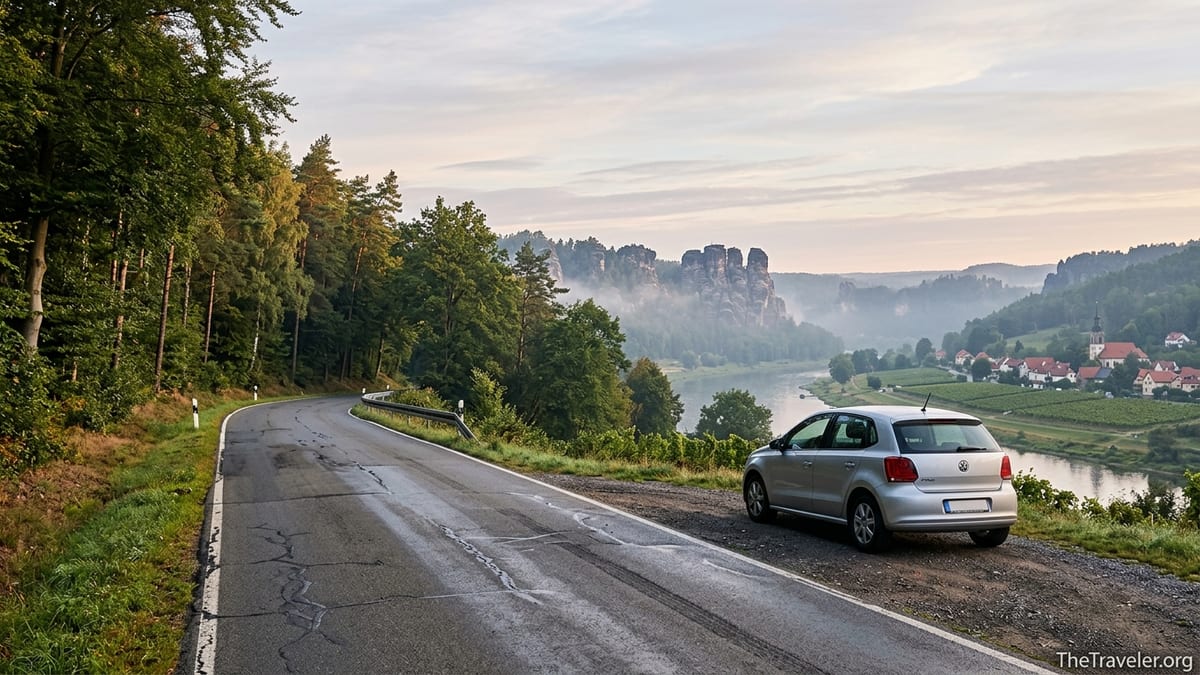
South-east of Dresden, Saxon Switzerland National Park offers dramatic sandstone cliffs, ravines and viewpoints. Popular trailheads and viewpoints around the Bastei Bridge, Königstein Fortress and the Schrammsteine range can be reached by car in 40 to 60 minutes from central Dresden. The national park authority encourages visitors to use public transport where possible, because parking at the main hiking car parks fills quickly on sunny weekends and holidays. When you do drive, expect to pay for parking in designated lots at the edge of villages, then either walk or take shuttle buses further up to major viewpoints.
Parking regulations in and around the national park are actively enforced. Free roadside parking is limited and often restricted; fines and towing are a real possibility if you leave the car on verges or in unofficial spots. Charging stations for electric cars are slowly increasing, but it is prudent to check the latest information through your accommodation or tourist offices if you rely on an EV, particularly in smaller villages along the Elbe.
Görlitz and the Eastern Edge: Old Town Access & Practicalities
From Dresden, Görlitz is roughly 90 to 100 minutes by car along the A4 towards the Polish border. Many travelers break the journey with a brief stop in Bautzen, whose hilltop old town is visible from the highway, before continuing to Görlitz. The reward is one of Germany’s best-preserved historic centers, widely used as a film set for period movies. The old town itself is compact and largely walkable, so it is often easiest to park in a lot or parking garage just outside the tightest streets and explore on foot.
The city provides several central parking options, including multi-storey garages near the station and in the modern center, as well as a large Altstadt parking lot that serves visitors to the historic core. Day tickets in municipal parking areas tend to be reasonably priced compared with larger cities, and there are also park-and-ride style lots further out where you can leave the car and use public transport into town. Recent local decisions have aimed to adjust tariffs in parts of the old town to balance resident needs with visitor demand, so it is wise to check current signs carefully as you enter a lot.
Compared with Berlin or Dresden, traffic volumes in Görlitz are modest, but the mix of cobbled streets, tram tracks and pedestrians in the older quarters means slow, cautious driving is essential. Many accommodations in and around the old town either provide a courtyard space or have arrangements with nearby garages. When booking rooms or apartments, look specifically for information about “Parkplatz” or “Tiefgarage” and, if in doubt, message the host to confirm whether a space is reserved or first-come, first-served.
One advantage of including Görlitz in a road trip is the opportunity to cross the pedestrian bridge over the Neisse River into the Polish sister town of Zgorzelec without moving the car. You can park on the German side, walk into Poland for a meal or a different viewpoint, then return to your vehicle later, all in a single afternoon. From Görlitz, many travelers return to Berlin in about 3 hours via Cottbus, completing a satisfying loop through Brandenburg and Saxony.
Sample 5, 7 and 10 Day Road Trip Circuits
A five-day circuit works best if you focus on the main cities and one nature highlight. One common pattern is Berlin to Dresden, then a day trip to Saxon Switzerland and onward to Görlitz before looping back to Berlin. In practice, that could look like: Day 1 Berlin to Dresden with a stop in Potsdam, Day 2 Dresden’s old town, Day 3 drive to Saxon Switzerland for hiking around Bastei and return to Dresden, Day 4 Dresden to Görlitz via Bautzen, Day 5 return to Berlin. Distances remain modest, but you still experience river scenery, mountains and two of eastern Germany’s most engaging historic centers.
A seven-day trip gives you room to include both Spreewald and Meissen. For example, leave Berlin via Potsdam and stay the first night near the Spreewald so you can enjoy an early-morning boat ride. Then continue to Leipzig for one or two nights of urban culture, travel on to Dresden, and make a side trip to Meissen for half a day. From Dresden, devote a full day to Saxon Switzerland, perhaps staying in a village such as Bad Schandau or Königstein, before driving to Görlitz and finally back to Berlin. This pace allows at least two nights in Dresden or Leipzig rather than changing hotels every day.
A ten-day circuit is ideal if you prefer slow travel and want time for longer hikes or wine tasting. With ten days, you can add a second night in the Spreewald, schedule a free day in Leipzig without any driving, or stay directly in the Elbe Valley near Meissen or in a riverside village between Dresden and the national park. Some travelers also add a loop through smaller towns like Pirna or Radebeul near Dresden for a more local feel. Longer stays also make it easier to fit in rest days where you park the car and rely on trains, trams or ferries instead of driving.
When planning your circuit length, factor in your arrival and departure times in Berlin. If your long-haul flight arrives late in the day, it may be safer to spend the first night in the city without driving, then pick up the car on the second morning. Similarly, consider dropping the car in Berlin the evening before an early departure flight to avoid rushing through traffic while tired or jet lagged.
Parking, Costs & Money-Saving Tips Along the Route
Parking costs vary widely between central Berlin and smaller towns like Meissen or Lübbenau. In big cities, hotels often charge a nightly fee for underground parking, while municipal garages operate on hourly rates. Over several days, these costs can add up, so when you compare accommodations, note whether parking is included or discounted. In Dresden or Leipzig, a hotel slightly outside the tightest center with free or lower-cost parking can be better value than a prime-location property that charges a high daily garage fee, especially if it sits on a tram line into the old town.
In medium-sized towns such as Meissen or Bautzen, municipal lots along the river or on the edge of the old town often offer more affordable day tickets. Check machines for 24-hour or day pass options, particularly if you plan to park for a full day of sightseeing. In Saxon Switzerland, dedicated hiking car parks near major trailheads typically charge a flat day rate. Arriving early not only secures a space but also gives you cooler temperatures on summer hikes.
In Görlitz and some other cities, park-and-ride style facilities or slightly more peripheral garages can be an economical option if you are comfortable walking 10 to 15 minutes into the very center. Make sure to carry small change for older parking machines that do not accept cards, although card and mobile payment are becoming more common. Always display your ticket clearly on the dashboard where required, and set the parking disc (Parkscheibe) to your arrival time in free but time-limited blue-zone areas.
If you are traveling on a tighter budget, aim to minimize one-night stays in inner-city hotels with high parking fees. Instead, cluster multiple sightseeing days from a single base where parking is either free, included or modestly priced. As an example, you could base yourself in Dresden for three nights, leaving the car parked while you visit Meissen by car one day and Saxon Switzerland the next, reducing the number of times you pay for short-stay urban parking.
The Takeaway
An Eastern Germany road trip linking Berlin, Potsdam, the Spreewald, Leipzig, Dresden, Meissen, Saxon Switzerland and Görlitz gives you a compact but varied slice of the country. You move from big-city art and nightlife to canal-laced wetlands, from baroque palaces and porcelain workshops to sandstone cliffs and a movie-set old town, all without punishingly long drives. With attention to environmental rules, smart parking choices and a realistic itinerary length, the route remains practical as well as inspiring.
The key is to treat the car as a tool for accessing nature and smaller towns rather than as your primary way of experiencing each city. Park once, walk or use trams, and let the car shine on scenic stretches along the Elbe Valley or the forest roads towards Saxon Switzerland. Whether you opt for a five-day sprint, a seven-day classic loop or a slow ten-day circuit, careful planning will reward you with a road trip that feels rich rather than rushed.
FAQ
Q1. Do I need an environmental sticker to drive this route?
Most German-registered rental cars that meet modern emissions standards already have the green sticker required for environmental zones in cities like Berlin and Leipzig. Ask the rental company to confirm and check the windshield before you leave.
Q2. Are there motorway tolls on this Eastern Germany itinerary?
For standard passenger cars under 3.5 tonnes there is currently no general motorway toll in Germany, so you do not need a vignette on this route. Separate toll rules apply only to heavy trucks.
Q3. Is it better to rent a manual or automatic car in Germany?
Manual cars are often cheaper and more common, but automatics are widely available from major rental firms. If you are not confident driving a manual, it is worth paying extra for an automatic to reduce stress in city traffic.
Q4. How difficult is parking in central Berlin, Leipzig and Dresden?
Parking in central districts can be tight and mostly paid. Many visitors prefer using hotel garages or park-and-ride lots and then relying on trams and trains for inner-city sightseeing instead of moving the car frequently.
Q5. Can I visit Saxon Switzerland National Park without a car?
Yes, trains and buses connect Dresden with gateway towns like Bad Schandau and Königstein, and local buses link to many trailheads. A car offers flexibility, but public transport works well and avoids parking pressure at popular spots.
Q6. Is driving in winter on this route safe for visitors?
Winter driving is generally manageable, but you should expect shorter days and possible snow or ice, particularly in rural and hilly areas. Rental cars are equipped for winter conditions, yet it is sensible to drive cautiously and allow extra travel time.
Q7. How many days do I need to include all the main stops?
A minimum of seven days is recommended to include Berlin, Potsdam, the Spreewald, Leipzig, Dresden, Meissen, Saxon Switzerland and Görlitz without rushing. Ten days allows slower travel and extra rest or hiking days.
Q8. Are electric vehicle charging points easy to find?
Charging infrastructure is good in larger cities like Berlin, Leipzig and Dresden and is improving in smaller towns and along highways. In rural areas and near trailheads it is still more limited, so EV drivers should plan charging stops ahead of time.
Q9. Is it safe to leave luggage in the car while sightseeing?
It is always safer to avoid leaving valuables in view. If you must leave luggage in the vehicle between accommodations, store it in the trunk, park in busy, well-lit areas such as hotel or municipal garages, and avoid leaving passports or electronics inside.
Q10. Can I easily return the car in a different city from where I picked it up?
Most major rental companies allow one-way rentals, for example picking up in Berlin and dropping in Dresden, but they usually charge a one-way fee. Check this cost when comparing offers, as it can be significant on shorter trips.