

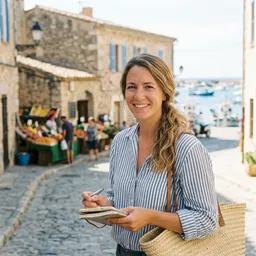
On my first trip to Berlin, I made the classic mistake. I drew up a list of currywurst stands and beer halls, as if the city’s food story stopped at sausages and sauerkraut. A few days on the ground quickly corrected that. Berlin today tastes Turkish and Vietnamese, Palestinian and Syrian, Polish and Swabian as much as it does "old Prussian." You can still find Eisbein and Königsberger Klopse if you want them, but the meals that stayed with me happened in tiled kebab shops, crowded market halls and steam‑fogged noodle cafés, often for under 15 euros a plate.
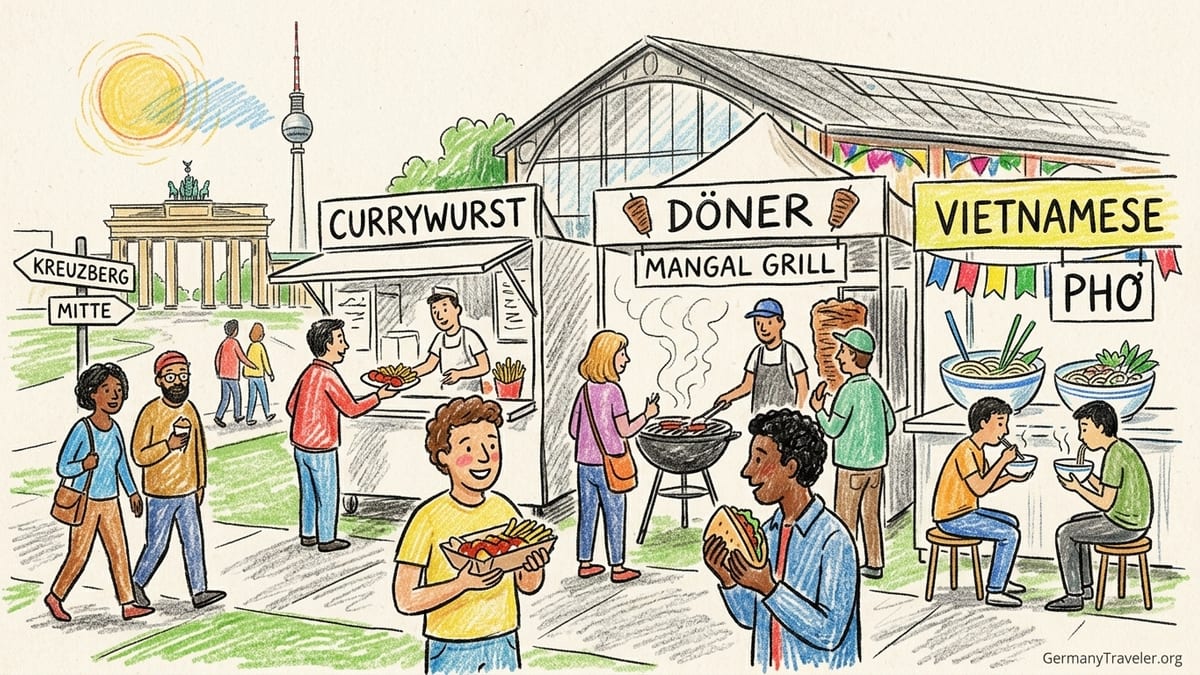
How Berlin Really Eats Now
Ask an older guidebook what to eat in Berlin and you will get a roll call of heavy classics: boiled pork knuckle with sauerkraut, meatballs in caper sauce, thick pea purée and beer in dimpled mugs. Those dishes are still around and still matter to locals, but they are only one strand in a much more complex fabric. Official tourism material from VisitBerlin now talks in the same breath about hearty Berlin “Hausmannskost” and food markets that serve everything from Korean fried chicken to Ethiopian injera. That combination felt accurate the moment I stepped into my first market hall and saw traditional German butchers sharing space with Anatolian meze stalls and natural wine bars.
Part of the reason is demographic. Berlin has one of the largest Turkish communities outside Turkey, a sizeable Vietnamese population rooted in Cold War migration and more recent arrivals from Syria, Lebanon and elsewhere. You feel that diversity most acutely at the table. Döner shops sit under 19th‑century railway arches, Vietnamese snack bars tuck into former GDR corners in Lichtenberg, and a Thursday night in Kreuzberg’s Markthalle Neun feels more like a global street food festival than a German hall. Traditional currywurst is still one of the city’s signature bites, but it now shares that status with a bread‑stuffed döner kebab and a bowl of pho.
For this article, I treated Berlin like a hungry local with a transit pass. I crossed from Neukölln to Prenzlauer Berg for currywurst, detoured to Kreuzberg for Turkish mangal, sought out old‑school German cooking in Mitte and followed friends into Vietnamese canteens in the east. I noted exactly what I ordered, how much it cost, how long I queued and whether it was worth crossing half the city for. Some famous stops were absolutely worth the hype. Others, frankly, were not.
If you only have three or four days, the point is not to tick a list of “German dishes” but to taste how Berliners actually eat in 2026. That means one or two carefully chosen traditional meals, plus time in immigrant‑run kitchens and market halls where the city’s present and future are being cooked in real time.
The Currywurst Reality Check
I started with currywurst because it is impossible not to. Berlin credits itself as the birthplace of this postwar snack: a sliced pork sausage in a spiced tomato sauce with curry powder. You will see it everywhere, from anonymous kiosks at S‑Bahn stations to long‑established stands like Konnopke’s Imbiss in Prenzlauer Berg and Curry 36 in Kreuzberg. Guides routinely rank these two as the big hitters, and even a recent German food magazine test in March 2026 still pitted them against each other.
At Konnopke’s, under the U2 tracks at Eberswalder Strasse in Prenzlauer Berg, I ordered a standard currywurst with fries. The price in autumn 2026 was a little under 6 euros for the plate, plus a few cents deposit if you took your drink in glass. The queue around 1 p.m. on a weekday was roughly ten minutes, a mixture of tourists and locals in office clothes. Portions were generous: one plump sausage, thickly sliced, buried under a blanket of bright red sauce and curry powder, with a proper mound of fries. The taste was nostalgic more than revelatory. The sausage snapped nicely, and the sauce had more depth and warmth than the bottled versions sold in supermarkets, but it still felt like a well‑executed fast‑food snack.
Two days later I repeated the exercise at Curry 36 at Mehringdamm in Kreuzberg, another benchmark often recommended to visitors. Here the pricing was similar, again roughly 4 to 5 euros for a basic sausage and around 2.50 to 3 euros for fries, depending on whether you took the organic or regular option. I joined the queue at 8 p.m. on a Friday, which moved briskly despite the crowd. Waiting time was around five minutes. The atmosphere was lively and a little chaotic: backpackers, clubbers on their way out and an older Berlin couple who clearly treated this as a regular stop. The currywurst itself was slightly smokier, the sauce sweeter and thicker, skewing closer to ketchup with curry spice.
After both tastings, I realised something important. Currywurst is a piece of Berlin history and worth experiencing once, but it was not the dish I wanted to cross town for again. By the second plate, the sweet sauce and starch blanket felt heavy. If your time is tight, plan currywurst as a late‑night snack near wherever you find yourself, not a destination to trek across the city for in its own right. The real excitement is happening elsewhere, particularly in the immigrant‑driven corners of the city’s food scene.
Turkish Berlin: Beyond Late‑Night Döner
In Kreuzberg and Neukölln, Turkish food is not niche. It is the neighborhood baseline. Official city information often mentions that Berlin’s döner kebab, in its modern sandwich form loaded with salad and sauce, was popularised by Turkish workers in the 1970s and then spread across Germany and beyond. Walking down Sonnenallee or Oranienstrasse today, you see what that history produced: a city where a döner shop advertising lamb cooked over charcoal is taken as seriously as a local bar.
My most instructive meal here was at a small mangal restaurant in Kreuzberg, just off Kottbusser Tor. I ordered a mixed grill plate with adana kebab, chicken thighs and lamb chops, plus grilled vegetables, rice and flatbread. The price in late 2026 was around 18 euros, which felt fair given the portion: enough meat for two modest eaters or one very hungry one. There was a short wait for a table of about 15 minutes at 7.30 p.m. on a Saturday. The space was bright and functional, with tiled walls, a glass counter of meze and a constant haze of charcoal smoke from the open grill at the back. This was a meal absolutely worth crossing town for. The lamb arrived deeply charred at the edges but juicy inside, the flatbread puffed and blistered, still hot from the oven, and the plate scattered with grilled onions, peppers and fresh herbs.
For comparison, I tried a classic döner sandwich from a busy stand in Neukölln, near Hermannplatz. In 2026, the going rate for a standard döner in Berlin is usually between 5 and 7 euros, depending on size, meat quality and extras. Mine was 6 euros and came in a thick wedge of toasted flatbread stuffed with sliced veal, crisp lettuce, cabbage, tomatoes, onions and a trio of sauces. The queue at lunchtime snaked down the sidewalk and took about 20 minutes to clear. I ate standing at a metal ledge, dodging the flow of people. This was messy, satisfying food, but not particularly nuanced. For a filling bite between museum visits it was excellent value. As a signature food experience, it sat below the mangal platter, which showcased real cooking skill and a stronger sense of hospitality.
The real surprise, however, came at a Turkish‑run bakery in Neukölln where I ducked in for breakfast. For around 3.50 euros I ordered a slice of still‑warm börek filled with spinach and cheese, plus a glass of strong Turkish tea. There was no queue, just older regulars and a few young freelancers tapping away at laptops. The portion was modest by Berlin standards but rich and satisfying, with flaky pastry and tangy cheese. Of the three Turkish experiences, this was the simplest and, in some ways, the most memorable. It was not worth travelling halfway across the city specifically for, but if you are staying in a southern neighbourhood, seek out a bakery like this rather than defaulting to an anonymous chain café.
Vietnamese Canteens and Berlin’s Comfort Noodles
If Turkish food is woven into the fabric of West and central Berlin, Vietnamese cooking is one of the defining flavors of the city’s east. Berlin’s Vietnamese community grew both from Cold War labour agreements in the former East Germany and later waves of migration. Today, districts like Lichtenberg and parts of Mitte and Prenzlauer Berg have a dense network of Vietnamese eateries, from tiny pho shops to stylish dining rooms. One early pioneer helped introduce pho to a wider Berlin audience, and its success opened the door to hundreds of other venues.
My first bowl of pho on this trip was in Mitte, at a compact dining room a short walk from Hackescher Markt. At lunchtime on a weekday there was a 15‑minute wait for a table. I ordered a medium bowl of pho bo with rare beef and brisket, plus a lime soda. The bill came to just under 15 euros. The portion was generous but not overwhelming, fragrant with star anise and charred ginger, with a clean, clear broth and a plate of herbs and bean sprouts on the side. The atmosphere was buzzy but not frantic: mostly office workers and a few tourists, with Vietnamese families at the big table in the corner. This was easily a “cross‑the‑city” bowl, the kind of meal that warms you from the inside on a grey Berlin afternoon.
To see how the experience changes outside the inner tourist grid, I headed to Lichtenberg, where a larger Vietnamese community has shaped the local food landscape. In a no‑frills canteen tucked behind a supermarket, I ordered bun cha: grilled pork with vermicelli, herbs and dipping sauce. The price was around 10 euros in late 2026. There was no wait, only a steady stream of regulars coming in and out. The portion was large enough that I did not need dinner. The pork carried serious charcoal flavor, the herbs were fresh and abundant, and the dipping sauce leaned more toward savoury and acidic than sweet. Eating here felt less like a curated “experience” and more like borrowing someone else’s neighborhood lunch routine. If you are curious about how global Berlin really eats, this is where to go.
Between these two bowls and a handful of quick snacks, one pattern emerged. Vietnamese food in central, tourist‑heavy areas tends to cost a few euros more, with more polished interiors and shorter menus. In the eastern districts with strong Vietnamese roots, prices are lower, servings bigger and menus longer. Both are worth exploring, but if you only have a handful of meals, at least one should be in a slightly out‑of‑the‑way canteen where the staff switch effortlessly between German and Vietnamese and the specials board is written only in one language.
Traditional Berlin Plates Versus Immigrant Kitchens
To understand what has changed, you need at least one meal that leans into tradition. In Mitte, I booked a table at a long‑running German restaurant that appears in many official dining brochures. The dining room looked the part: wood panelling, white tablecloths, old framed photos. I ordered Königsberger Klopse, meatballs in a white caper sauce often associated with East Prussia but now a staple of Berlin cooking. The plate came with boiled potatoes and beetroot. At around 22 euros in 2026, this was a splurge compared with currywurst or pho, though still moderate by Western European capital standards.
The portion was substantial. Three large meatballs swimming in a silky, cream‑based sauce, studded with capers that cut through the richness, plus a pile of firm potatoes. It was a comforting, old‑fashioned dish, executed very well. Around me, other tables dug into Eisbein, roasted pork knuckle and schnitzel. The atmosphere skewed older, with several multigenerational families and a noticeable number of domestic tourists using the meal as their big “proper German dinner.” This was absolutely worth the reservation if you want to experience the backbone of Berlin cuisine.
Directly comparing this to a Turkish mangal platter in Kreuzberg or a pho bowl in Lichtenberg brings the city’s culinary identity into focus. The traditional plate was structured, heavy, designed for cold winters, and it carried a sense of continuity with Berlin’s past. The immigrant‑influenced meals were more informal, both socially and physically. You ordered at the counter, shared grilled meats family‑style or slurped noodles at formica tables. Prices at the immigrant‑run spots were usually lower for similar or larger amounts of food, and the clientele more mixed by age and background.
If you are choosing where to invest your time and appetite, my advice is to do both. Allocate one evening to a proper traditional restaurant that serves dishes like Königsberger Klopse or Eisbein and another to an immigrant kitchen that means as much to locals as any old Wirtshaus. In three or four days, that mix tells a more truthful story about Berlin than visiting three different currywurst stands ever could.
Market Halls, Street‑Food Nights and Everyday Cafés
Nowhere shows Berlin’s layered food culture more clearly than its market halls. Markthalle Neun in Kreuzberg, opened in 1891 as one of the city’s covered markets and revived in the 2010s, has become a shorthand for Berlin’s new food identity. On an ordinary weekday, you will find permanent traders selling German bread, regional cheeses and traditional cold cuts alongside stands offering Anatolian meze, Italian sandwiches and vegan pastries. Prices vary: a simple sandwich might be 6 to 8 euros, while a lunch plate from one of the hot counters often runs 10 to 14 euros. Seating is communal and you might wait 5 to 10 minutes at peak lunch for a spot at one of the long wooden tables.
On Street Food Thursday, which usually runs from 5 p.m. to 10 p.m., the hall fills with additional vendors and the atmosphere shifts. When I visited, it felt like half the city had turned up. Queues at the most popular stands stretched to 20 or 30 minutes. I tried two plates: a small portion of handmade dumplings from an East Asian stall for about 8 euros and a pulled‑lamb sandwich from a Middle Eastern stand just under 12 euros. Portion sizes were tasting‑menu small compared with a full restaurant serving but perfect for grazing. Noise levels were high, with DJs at one end and children running between tables. It was fun and hectic, but not an efficient way to eat if you dislike crowds.
For a more low‑key take on the same idea, I spent a morning at Marheineke Markthalle in Kreuzberg and another at the market hall near Arminiusmarkthalle in Moabit. Both combine traditional German traders with immigrant‑run counters. At Marheineke, I paid about 4 euros for a slice of dense German cake and 3 euros for a decent cappuccino at a café tucked among vegetable stands, surrounded by pensioners reading newspapers. In Moabit, I ordered a plate of Syrian home‑style cooking, stewed vegetables over rice with salad, for around 9 euros. No queues, no spectacle, just everyday Berlin life under a 19th‑century roof.
Neighborhood cafés round out the picture. In Neukölln, I worked one morning from a Palestinian‑owned café serving strong coffee, labneh toasts and pistachio‑filled pastries. My breakfast plate with coffee came to around 10 euros. The room buzzed with laptop workers, strollers and conversations in German, Arabic and English. A day later in Prenzlauer Berg, I settled into a quieter third‑wave café with Scandinavian‑style interiors, where a flat white cost close to 4 euros and a slice of banana bread another 4. Both felt distinctly “Berlin” in different ways. Neither was tourist‑only, and both rewarded lingering rather than box‑ticking.
What Was Worth the Hype, and What Was Not
Berlin’s food scene has its own mythology, and it does not always line up with reality. On this trip, three experiences stood out as genuinely worth the attention they receive. First, a well‑executed traditional meal of Königsberger Klopse in Mitte delivered exactly what it promised: a taste of Berlin’s older culinary identity in a warm, convivial setting. Second, the Turkish mangal in Kreuzberg showcased the city’s immigrant cooking at its best, with charcoal‑smoky meats, generous portions and fair pricing that made it feel like real value, not a trend. Third, a bowls‑of‑pho lunch in a central Vietnamese spot reminded me why Berlin’s noodle soups have become a form of urban comfort food on par with pizza slices in New York.
On the other hand, some “must do” bites were more about the story than the flavours. Currywurst, even at historic stands with decades of lineage, was an enjoyable snack but not a life‑changing dish. Once you have tried one well‑made plate, trekking across the city to compare minor variations in sauce sweetness or sausage snap quickly feels academic. Similarly, the buzziest stalls at Markthalle Neun’s Street Food Thursday offered tasty food, but the combination of long lines, standing‑room‑only conditions and small portions made it less rewarding than a simpler meal at a neighborhood market hall.
The most surprising highlight was a completely unplanned one. Late on a rainy evening in Neukölln, I ducked into a modest Middle Eastern bakery, lured by the smell of freshly baked bread. For around 2 euros, I bought a still‑warm za’atar manakish folded into a paper bag. There were no queues, no English‑language menus, no social media presence, just a steady trickle of neighbours grabbing bread and pastries on their way home. Standing under a doorway, tearing off pieces of herb‑coated dough, I realised this cheap, quick, unassuming bite captured Berlin’s food character far better than any influencer‑approved flagship restaurant.
That pattern is useful for visitors. Big‑name spots and historic dishes help orient you, but the city often tastes best when you walk two blocks off the main street and trust the smell of grilling meat or baking bread. Time and again, simple neighborhood meals turned out to be the ones that stuck in my memory, long after the last forkful of museum‑district schnitzel had faded.
The Takeaway
If you have three or four days in Berlin, you will not eat everything. The aim is not to chase every trend but to build a small, well‑chosen set of experiences that reflect how the city actually eats. Based on this trip, there are a few priorities that stand out. Reserve one evening for a traditional Berlin or broader German restaurant and order something like Königsberger Klopse, Eisbein or another regional classic. This will ground you in the city’s culinary history and anchor all the modern fusions you taste elsewhere.
Make at least one deliberate journey to an immigrant‑run restaurant that locals talk about when they talk about “real” Berlin food, whether that is a Turkish grill in Kreuzberg or Neukölln, a Vietnamese canteen in Lichtenberg or a Middle Eastern spot near Sonnenallee. Expect to spend around 10 to 20 euros per person for mains at these places in 2026, with portions that comfortably cover your appetite. These meals show you how Turkish, Vietnamese and Arab communities have reshaped the city’s taste buds as profoundly as any royal Prussian chef.
Fit in a currywurst at some point, but treat it as a snack rather than a pilgrimage. If you happen to pass Konnopke’s, Curry 36 or another classic stand and the queue is manageable, order one with fries, enjoy the moment and move on. There is no need to schedule your whole day around it. Use the saved time for a wander through a market hall instead. Markthalle Neun, Marheineke Markthalle or Arminiusmarkthalle will each give you a chance to see old and new Berlin sharing the same roof, and to pick up a casual lunch for 10 to 15 euros without sitting down for a full restaurant meal.
Finally, leave space for serendipity. Grab börek and tea at a Turkish bakery for breakfast, duck into a Vietnamese snack bar when a rainstorm hits, or follow a line of locals to a bakery or café you have never heard of. The foods that a first‑time visitor should actually prioritize are not only “German dishes,” but a deliberate mix of one traditional dinner, one or two immigrant‑kitchen meals, a visit to a market hall, a bowl of Vietnamese noodles and a simple street‑corner snack that happens to smell too good to ignore. Put together, that line‑up will tell you far more about Berlin than three identical plates of currywurst ever could.
FAQ
Q1: Is currywurst still a must‑try food in Berlin?
Currywurst is worth trying once because of its local history, but it is best treated as a snack near where you already are, not a destination meal.
Q2: How much should I budget per meal in Berlin in 2026?
For casual restaurants, expect around 10 to 20 euros per person for a main dish. Street food and bakeries often come in under 8 euros for a filling portion.
Q3: What traditional Berlin dish is most worth seeking out?
Königsberger Klopse, meatballs in a creamy caper sauce, is one of the most satisfying and widely available traditional dishes and showcases Berlin’s classic cooking well.
Q4: Where should I go for Turkish food in Berlin?
Neighborhoods like Kreuzberg and Neukölln have many Turkish grills, bakeries and döner shops. Look for busy mangal restaurants or bakeries filled with locals.
Q5: Is Berlin really known for Vietnamese food?
Yes. Berlin’s Vietnamese community has created a strong network of pho shops and canteens, especially in Lichtenberg and parts of Mitte and Prenzlauer Berg.
Q6: Are market halls in Berlin tourist traps?
Some, like Markthalle Neun during popular events, can be crowded and pricey, but everyday markets such as Marheineke Markthalle still serve as genuine neighborhood food hubs.
Q7: Do I need reservations for traditional German restaurants?
For popular places in central districts, especially on weekends, it is wise to reserve a few days ahead. Smaller neighborhood spots can often take walk‑ins.
Q8: Can I eat well in Berlin as a vegetarian?
Yes. Many Turkish, Middle Eastern and Vietnamese places offer strong vegetarian options, and market halls often have vendors specializing in plant‑based dishes.
Q9: Is street food in Berlin safe to eat?
Street food from established stalls is generally safe. Look for stands with good turnover and visible hygiene practices, and trust your instincts if something feels off.
Q10: If I only have three days, what should my food plan look like?
Plan one traditional German dinner, one or two immigrant‑driven meals (Turkish or Vietnamese), a visit to a market hall for lunch, plus a currywurst or bakery snack along the way.