


Germany’s Christmas markets turn entire historic city centers into glowing winter villages of wooden stalls, spiced wine and twinkling lights. For trip planners, the challenge is not whether to go, but how to choose between legendary markets like Nuremberg’s Christkindlesmarkt, Dresden’s Striezelmarkt, Cologne’s riverside markets, Munich’s alpine-flavored squares, Berlin’s urban mix and fairy-tale towns like Rothenburg ob der Tauber. This guide brings together up-to-date dates, city comparisons, and practical multi-city itineraries to help you build the Christmas market trip that fits your time, budget and travel style.
Key 2024 Christmas Market Dates and How to Time Your Trip
Most major German Christmas markets run from late November until just before Christmas, with a few continuing between Christmas and New Year’s. In 2024, for example, Nuremberg’s Christkindlesmarkt is scheduled roughly from the last weekend of November until Christmas Eve on December 24, while Cologne’s big markets generally start around the third or fourth week of November and wrap up by December 23. Dresden’s famous Striezelmarkt typically runs from late November through December 24 on the Altmarkt, with several smaller markets around the city overlapping for most of that period.
For American and other overseas visitors, a typical 7 to 10 day trip works well between roughly November 25 and December 22. Visiting in the first two weeks of December usually combines full market activity with slightly lower prices and fewer crowds than the final shopping week before Christmas. Weekdays from Monday to Thursday are noticeably calmer than Friday evenings and Saturdays, when hotel rates spike and popular markets like Nuremberg and Cologne’s Cathedral market can feel shoulder-to-shoulder by early evening.
Weather is a factor when choosing dates. In late November, you are more likely to find cool, damp weather with temperatures hovering a bit above freezing, while mid to late December offers a higher chance of frost and occasional light snow, especially in southern and eastern cities like Munich and Dresden. Because winter storms can disrupt flights into hubs such as Frankfurt and Munich, it is sensible to avoid scheduling a tight connection between your intercontinental arrival and your first domestic train ride to a Christmas market destination.
If you hope to see markets after December 25, pay careful attention to local schedules. Many of the largest historic markets close by Christmas Eve. Some cities, including Cologne and Berlin, host smaller “New Year” or winter markets that continue into early January, but these tend to feel more like generic winter fairs than traditional Advent markets. Travelers who want the classic Christmas market atmosphere are better off planning their itinerary to end by December 24 or 26 at the latest.
Nuremberg vs Dresden vs Cologne: Classic Christmas Heavyweights
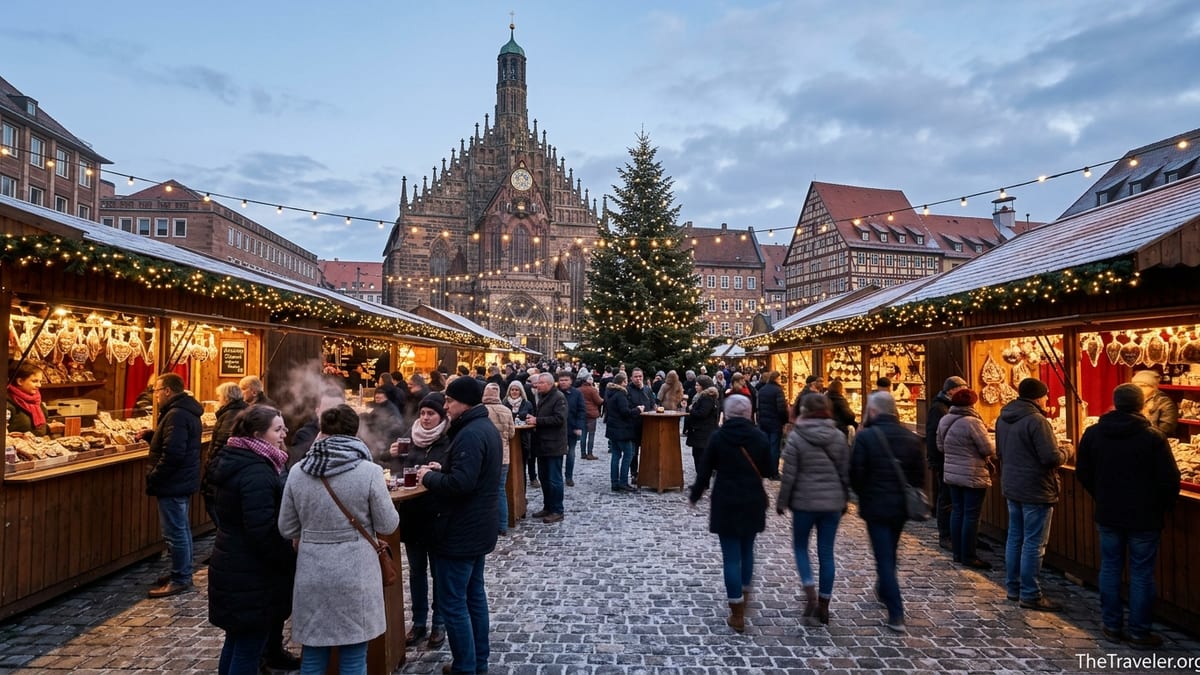
Nuremberg, Dresden and Cologne are often described as the “big three” for a first Germany Christmas market trip, and each offers a distinct flavor. Nuremberg’s Christkindlesmarkt is one of the country’s most famous, centered on the Hauptmarkt square below the Frauenkirche. Wooden stalls selling prune-figure dolls, gingerbread and mulled wine crowd around a towering tree and a stage where the Christkind delivers the opening prologue on the first weekend. Prices here are typical for a major German destination: a mug of Glühwein might cost around 4 to 5 euros plus a 3 to 5 euro deposit for the ceramic mug, while a portion of the city’s signature Nürnberger Rostbratwürste in a bun will usually be around 4 to 6 euros.
Dresden’s Striezelmarkt, held on the Altmarkt, is one of Germany’s oldest continuous Christmas markets and leans into regional Saxon traditions. You will find giant wooden pyramids slowly turning under candlelight, bakers selling stollen fruitcake from local producers, and artisans carving toys from nearby Erzgebirge wood. Food prices are broadly similar to Nuremberg, but hotel rates can be more forgiving if you book a few months in advance. A central mid-range hotel near the Frauenkirche or Altmarkt might run in the vicinity of 120 to 180 euros per night in early December, compared with 150 to 220 euros in Nuremberg for similar quality and location.
Cologne offers not just one but a cluster of major Christmas markets spread across the inner city along the Rhine. The best known is the market at the Cathedral, with red-roofed huts and a huge tree framed by Gothic spires. A short walk away, the Old Town market at the Alter Markt and Heumarkt adds an ice rink and more family-oriented attractions, while Neumarkt tends to draw a slightly more local after-work crowd. Visitors can easily spend two full days market-hopping without leaving central Cologne. Because the city is a major trade fair hub, hotel prices fluctuate sharply: a basic but central hotel near the Hauptbahnhof might be anywhere from 90 euros on a quiet weekday to more than 250 euros during peak Advent weekends or fair dates, so checking your chosen dates against major events is essential.
For a first-timer choosing between these three, Nuremberg is ideal for a picture-book historic feel in a compact old town, Dresden for a slightly calmer but deeply traditional atmosphere with strong regional flavors, and Cologne for travelers who value variety, nightlife and easy transport connections over medieval architecture. Many travelers combine two of the three via the fast ICE trains, spending three nights in one and two in the other.
Munich, Berlin and Rothenburg: Atmosphere, Variety and Fairy-Tale Charm
Munich’s main Christmas market stretches through Marienplatz and along nearby pedestrian streets in the Altstadt, under the neo-Gothic facade of the New Town Hall. The atmosphere blends Bavarian gemütlichkeit with urban energy: brass bands play from the town hall balcony, and stalls sell everything from wooden nativity figures to sheepskin slippers and local cheeses. Classic Munich beer halls such as the Hofbräuhaus or Augustiner can be just a short winter stroll away, making it easy to pair market browsing with hearty indoor dinners. Expect central hotel rooms around Marienplatz and Karlsplatz to cost 150 to 250 euros per night in early December, rising higher on weekends and near popular trade fair or football dates.
Berlin does not center around one single Christmas market but around dozens, ranging from elegant to edgy. The Weihnachtszauber at Gendarmenmarkt (currently relocated to nearby Bebelplatz during construction) pairs historic architecture with a more upscale, curated set of stalls, often charging a small entry fee in the evenings. Other markets such as those at Charlottenburg Palace, Alexanderplatz or the Kulturbrauerei in Prenzlauer Berg offer very different moods, from classic palace backdrop to more local and alternative. Because of Berlin’s size, careful planning around neighborhoods helps minimize time on public transport. Budget-conscious travelers often find better hotel deals here than in smaller, high-demand Christmas market cities, with decent mid-range rooms sometimes under 120 euros per night on weekdays in early December.
Rothenburg ob der Tauber, a walled medieval town along the Romantic Road, hosts the Reiterlesmarkt, a Christmas market that feels straight out of a storybook. The half-timbered houses, cobbled streets and city walls wrapped in warm lighting create perhaps the most fairy-tale setting in Germany. The town is much smaller than Nuremberg or Munich, so one or two nights are usually enough, but staying after the day-trippers leave rewards you with quieter streets and a more intimate market experience. Lodging prices vary by charm factor rather than big-city business demand; it is common to find family-run guesthouses inside the walls for 100 to 160 euros per night including breakfast, though the most atmospheric boutique hotels and historic buildings will be higher.
When weighing these destinations, consider your priorities. Munich suits travelers who want big-city cultural attractions by day and a traditional Bavarian market ambience by night. Berlin is ideal for those who enjoy variety, contemporary culture and the chance to see several very different markets across neighborhoods. Rothenburg is best reserved for travelers who value atmosphere and photo opportunities over sheer market size and can tolerate more limited public transportation access and fewer evening entertainment options.
Trip Planning: Routes, Trains and How Long to Stay
Germany’s rail network makes it easy to string together a multi-city Christmas market itinerary without renting a car. Fast ICE trains link many market centers in roughly 1 to 4 hours. For example, the journey from Frankfurt Airport’s long-distance station to Nuremberg typically takes around 2.5 hours, Nuremberg to Dresden about 3 hours with a change in Leipzig, and Cologne to Berlin roughly 4.5 to 5 hours. Advance-purchase long-distance tickets can be considerably cheaper than last-minute fares, especially if you commit to specific departure times.
One popular 7 to 9 night route starts in Frankfurt and visits Nuremberg, Rothenburg ob der Tauber and Munich. A sample structure might be: arrival in Frankfurt, immediate train to Nuremberg for 3 nights, day trip to nearby Bamberg for its smaller markets, then a train to Rothenburg for 1 or 2 nights, and finally onward to Munich for 3 nights before flying home. Another option is a north-south itinerary: fly into Berlin for 3 nights of urban markets, continue to Dresden for 2 or 3 nights including the Striezelmarkt and nearby castles, then finish with 2 or 3 nights in Nuremberg or Munich.
Travelers focused on the Rhine and western Germany might build a route around Cologne. For example, you could spend 3 or 4 nights in Cologne exploring its many markets, add 2 nights in Düsseldorf or Bonn for smaller but atmospheric markets, and then take a fast train to Berlin or Munich for a contrasting big-city finale. Because December is a busy travel period, especially on Fridays and Sundays, it is wise to reserve seats on long-distance trains even when your ticket does not require it. Seat reservations usually cost a modest fee per journey segment and can make the difference between a comfortable ride and standing in the corridor on a packed pre-holiday train.
As a rule of thumb, plan 2 to 3 nights for large cities like Berlin, Munich, Cologne, Nuremberg and Dresden, and 1 to 2 nights for smaller towns such as Rothenburg. This gives you enough time to see key markets both in daytime and at night, when the lights transform the atmosphere. It also allows flexibility for weather: if one evening is spoiled by freezing rain, you will still have another chance to enjoy the markets at their best.
Where to Stay and How to Avoid Crowd Fatigue
Location matters more than luxury when choosing hotels for a Christmas market trip. In most cities, staying within a 10 to 15 minute walk of the main market square makes it easy to pop back to your room to warm up, drop off shopping or take a short afternoon rest before returning in the evening. In Nuremberg, that might mean focusing on the pedestrian area around Hauptmarkt and Königstrasse. In Dresden, look for accommodation near the Altmarkt, Neumarkt or Frauenkirche. In Cologne, properties around the main train station, Old Town or Neumarkt put several markets within easy reach on foot.
Many mid-range chain hotels that cater to business travelers on weekdays are popular with Christmas market visitors on weekends. Brands such as Motel One, Ibis, NH, Premier Inn or Holiday Inn Express often offer modern rooms at predictable standards, sometimes including breakfast or an early-booking discount. For example, a Motel One near Cologne’s Neumarkt or Munich’s Sendlinger Tor might be priced competitively compared with small independent hotels right on the main squares, while still keeping you an easy stroll from the markets without being directly under your window until late at night.
To reduce crowd fatigue, consider balancing centrality with a slightly quieter side street or neighborhood. In Cologne, staying a 10 minute walk away in the Belgian Quarter allows you to retreat from the busiest areas while still keeping the Cathedral and Old Town accessible. In Berlin, neighborhoods like Prenzlauer Berg or Charlottenburg provide good access to multiple markets but feel more residential once you step away from the immediate vicinity of the stalls. In Rothenburg, you can prioritize smaller guesthouses on side lanes rather than the main market square itself if you prefer quieter nights.
Booking well ahead is crucial. For early December, reserving rooms three to six months in advance usually yields a better choice of locations and rates. For prime weekends and the week before Christmas, particularly in Nuremberg and Cologne, popular small hotels and apartments can sell out nearly a year ahead. Fully flexible rates are often more expensive, but they give you the option to adjust if flight schedules change or if you later decide to tweak the order of cities in your itinerary.
Food, Drink and Budgeting at the Markets
One of the great joys of Germany’s Christmas markets is eating your way from stall to stall. Classic savory options include grilled Bratwurst, especially the small Nürnberger sausages served three to a bun, Flammkuchen (a thin German-French flatbread with toppings such as crème fraîche, onions and bacon), and Käsekrainer or cheese-stuffed sausages popular at many stands. Regional specialties add local flavor: in Dresden and Nuremberg, you will see prominent displays of stollen and Lebkuchen, while Munich markets often highlight pretzels, Obatzda cheese spread and hearty stews suited to alpine winters.
Glühwein, a hot spiced red wine, is the traditional drink of choice. Most stalls charge a per-cup price plus a refundable deposit for the mug, known as Pfand. For example, you might pay 4.50 euros for the drink plus a 3 to 4 euro deposit; when you return the mug, you receive the deposit back. Non-alcoholic Kinderpunsch is widely available for families and non-drinkers, and many larger markets now offer organic or vegan versions of snacks and drinks, particularly in trend-conscious cities such as Berlin and Cologne. In 2024, it is also increasingly common to see card payment terminals at larger stalls, although keeping some cash on hand remains smart for smaller vendors.
Daily food budgets vary with appetite and style, but many travelers find that 25 to 40 euros per person per day covers a generous mix of market snacks and one sit-down meal. A typical evening might include a sausage and bread for around 5 euros, a mug or two of Glühwein at 4 to 5 euros each plus deposit, a shared dessert such as Kaiserschmarrn or crêpes for 6 to 8 euros, and perhaps a late-night beer at a nearby pub. Indoor restaurants in city centers usually charge 15 to 25 euros for a main course such as pork knuckle, schnitzel or seasonal game dishes, with beer and soft drinks extra.
To keep spending under control, it helps to treat the markets as both entertainment and dining, rather than eating a full restaurant meal and then sampling extensively at the stalls on top of that. Many travelers eat a substantial hotel breakfast, snack lightly for lunch, and then plan for a substantial evening of market grazing. If you are traveling as a couple or family, sharing portions allows you to taste more dishes without wasting food or straining your budget. Shopping for ornaments, wooden toys and other souvenirs can add up quickly; setting a rough per-city budget or deciding to limit purchases to items you genuinely cannot find at home can prevent suitcase and credit card overload.
Managing Crowds, Safety and Winter Logistics
Crowds are part of the Christmas market experience, but some simple strategies can keep them from overwhelming your trip. The busiest times in major markets are usually Friday and Saturday evenings between about 6 and 9 p.m., when locals finish work and visitors have arrived for the weekend. If your schedule allows, aim for late afternoon on weekdays, for instance 3 to 6 p.m., when lights are already twinkling but the after-work rush has not yet peaked. Morning visits offer a chance to see stalls without jostling, but the atmosphere is less magical than after dark.
Basic safety precautions go a long way. Pickpocketing can be an issue in very crowded spaces, particularly around central train stations and packed market alleys. Use money belts or cross-body bags that zip, keep phones and wallets out of back pockets, and avoid setting bags on the ground while eating or taking photos. Alcohol consumption is part of the social scene, but markets are generally family-friendly; if you encounter groups that feel rowdy, it is easy to shift to a calmer side street or choose a different cluster of stalls.
Winter logistics deserve attention when packing. Temperatures in December often hover between freezing and a few degrees above, with damp air making it feel colder, especially near the Rhine and Elbe rivers. A warm, water-resistant coat, insulated footwear with good grip, and thin thermal layers under jeans or trousers can make the difference between lingering happily at the stalls and rushing back to your hotel. Hand warmers, a hat that covers your ears and touchscreen gloves are small additions that dramatically increase comfort when you are holding a ceramic mug of Glühwein in one hand and a camera in the other.
Public transport remains the easiest way to get around cities during the market season. Many destinations offer short-term visitor passes covering trams, buses and local trains, which can quickly pay off if your hotel is more than a simple stroll from the markets. Taxis and ride-hailing services may be slower in heavy traffic around central squares, so walking is often the fastest option within historic centers. When booking flights, consider the possibility of winter disruptions and leave several hours buffer between scheduled landing and any non-refundable long-distance train tickets or timed activities on your first day.
The Takeaway
Planning a Germany Christmas market trip in 2024 means juggling dates, cities, budgets and logistics, but the reward is an immersive holiday experience that goes far beyond shopping. Nuremberg, Dresden and Cologne deliver classic big-name markets within historic settings or along the Rhine, while Munich and Berlin add major-city cultural depth and Rothenburg contributes unforgettable fairy-tale charm. Thanks to efficient rail connections, it is feasible to experience two or three very different destinations in a single week without feeling rushed, as long as you build in time to slow down and savor the atmosphere in each place.
The key is to match your route and timing to your travel style. Choose early December weekdays if you want a slightly calmer experience with better hotel values, or lean into peak weekends if you enjoy buzzing crowds and late-night energy. Stay central enough that you can walk to the markets, dress for damp, cold evenings, and think of each night’s stall-hopping as your main meal and entertainment. With realistic expectations about weather and crowds, a bit of advance booking and a flexible attitude, a German Christmas market journey can become a recurring tradition that anchors your winter travel plans for years to come.
FAQ
Q1. When is the best time in December to visit Germany’s Christmas markets?
The first two weeks of December usually balance full market activity with slightly lower prices and smaller crowds than the final shopping days before Christmas.
Q2. How many cities should I include in a 7 to 10 day Christmas market trip?
Most travelers do best with two or three main bases, such as Nuremberg and Munich or Berlin, Dresden and Cologne, adding day trips rather than changing hotels every night.
Q3. Are markets open after Christmas Day?
Many of the largest traditional markets close on or just before December 24, though some cities run smaller winter or New Year markets between Christmas and early January.
Q4. Do I need to book hotels far in advance for 2024?
Yes. For popular weekends and the week before Christmas, especially in Nuremberg, Cologne and Rothenburg, booking three to six months ahead or more gives you better locations and prices.
Q5. Is it easy to visit multiple markets by train?
Yes. Fast ICE and IC trains link major cities like Frankfurt, Nuremberg, Dresden, Cologne, Munich and Berlin in a few hours, making multi-city itineraries practical without renting a car.
Q6. How much should I budget per day for food and drinks at the markets?
If you treat the markets as your main evening meal, many visitors spend roughly 25 to 40 euros per person per day on snacks, Glühwein and one sit-down meal.
Q7. Can I pay by card at the stalls, or do I need cash?
Card payments are increasingly common, especially in larger markets and big cities, but it is still wise to carry some cash for smaller vendors and deposits on mugs.
Q8. What should I wear to stay warm while walking around outside?
Plan on a warm, water-resistant coat, thermal layers, hat, gloves and insulated shoes with good grip, since temperatures hover around freezing and evenings can feel damp and chilly.
Q9. Are the markets suitable for children and families?
Yes. Most markets are very family-friendly, with carousels, children’s areas and non-alcoholic drinks, though parents should keep a close eye on kids in dense crowds and near hot drinks.
Q10. Is it better to fly into Frankfurt, Munich or Berlin for a Christmas market trip?
All three work well; Frankfurt is a central hub with good rail links, Munich pairs easily with Bavarian markets, and Berlin is ideal if you want a mix of many different urban markets.