


Germany rewards both meticulous planners and spontaneous wanderers. From Bavarian fairy tale castles to vineyards above the Rhine and the deep woods of the Black Forest, you can explore with an escorted group, a private driver or entirely on your own. This guide compares the main options for multi-day Germany tours and classic regional trips, using current on-the-ground examples to help you decide when to book a tour and when independent travel makes more sense.
How Germany Tours Are Structured Today
Most multi-day Germany tours aimed at international travelers follow a familiar arc: they connect a gateway city like Frankfurt, Munich or Berlin with a loop through Bavaria, the Rhine Valley and sometimes the Black Forest. Large operators offer 8 to 14 day escorted itineraries that include transport by air conditioned coach, centrally located hotels, daily breakfast and a selection of guided sightseeing. In 2026, sample prices for a 12 day Germany itinerary that hits Hamburg, Berlin, Dresden, Bavaria and the Black Forest tend to start around the mid 3000 US dollars per person, based on double occupancy and excluding flights. That puts an escorted trip squarely in the mid range rather than budget category.
Below that level, you find regional short breaks and theme tours. A typical three night “Best of Bavaria” package starting and ending in Munich might bundle a Neuschwanstein Castle day trip, a walking tour of Munich’s old town and a train excursion to Salzburg or Nuremberg. At the higher end, boutique companies sell small group experiences with a maximum of 12 to 16 guests, pairing historic guesthouses with vineyard dinners on the Rhine or cheesemakers in Allgäu. The price difference can be substantial, but so can the comfort level, especially in peak summer when popular areas are crowded and accommodation is tight.
Independent travelers increasingly buy only the building blocks they need. Many will reserve a Rhine Valley day tour from Frankfurt, a castle tour from Munich and perhaps a private driver for one day in the Black Forest, while arranging their own rail passes, hotels and city sightseeing. The flexibility of this hybrid approach is a good fit if you are comfortable comparing schedules and prices but still want help in regions where local logistics or language barriers can slow you down.
Across all formats, the core decision is less about seeing “the highlights” and more about how much time and mental energy you want to invest in trip planning once you arrive. The same Rhine castle or Bavarian village can be experienced via a 50 passenger coach, a private van or a regional train, and your choice will shape both the price and pace of the journey.
Bavaria Trips: Munich, Alps and Fairy Tale Castles
Bavaria is where many visitors first notice the trade off between organized tours and independent travel. Take Neuschwanstein Castle, set in the foothills of the Alps near Füssen. Standard adult tickets for the castle itself are around 21 euros from early 2025, with an added service fee for advance reservations. Independent travelers still need to factor in the journey from Munich to Füssen, the shuttle or walk up to the castle and timed entry slots that can sell out in high season. It is entirely feasible to arrange this day trip on your own, but it requires early booking and comfort with German rail ticketing.
By contrast, day tours from Munich to Neuschwanstein and nearby sights typically cost in the range of 70 to 120 euros per person, depending on whether transport is by bus or train and whether a guided castle tour, Linderhof Palace or stops in Oberammergau are included. These trips depart from central Munich in the morning, handle all transfers and often come with a guide who keeps the group on schedule. For first time visitors traveling in July or August, or anyone nervous about missing a time slot, the premium over a do it yourself trip can feel worthwhile simply for reduced stress.
Multi day Bavaria itineraries usually combine Munich, the castles region and one other area such as the Romantic Road, Berchtesgaden near Salzburg or the Franconian wine country around Würzburg and Bamberg. A five night “Bavaria focus” trip might look like two nights in Munich, two in Füssen and one in Rothenburg ob der Tauber. If booked as an escorted mini tour, you can expect per person costs that rival a full week of independent travel using regional trains and midrange hotels. The value lies in not having to coordinate baggage transfers, parking in medieval towns with restricted zones or timed entries for popular palaces.
Independent travelers, however, benefit from Bavaria’s extensive rail network and regional day passes that cap costs for pairs and small groups. A Bavaria wide day ticket, for instance, lets two people ride most local trains, buses and trams for a fixed price after the morning rush, which can bring the per person transport cost for a Munich to Füssen round trip down to an appealing level. If you are happy reading timetables and walking from stations, you can cover a great deal of ground without ever stepping on a tour bus.
Germany’s Castle Tours Beyond the Big Names
Neuschwanstein grabs the headlines, but dedicated castle tours in Germany pull in a wider net, often along the Rhine and Moselle or through lesser known fortresses in Saxony and Thuringia. Specialist operators run weeklong small group itineraries that might include Burg Eltz above the Moselle, Marksburg Castle on the Rhine and restored palaces in Würzburg or Heidelberg, sometimes crossing into neighboring countries for variety. Prices for these niche tours are usually higher than mass market escorted itineraries, reflecting smaller group sizes and more inclusive sightseeing.
Shorter castle themed side trips are easy to fold into a broader Germany visit. From Frankfurt, for example, frequent trains reach the river town of Braubach, base for Marksburg Castle, while day tours from Cologne or Koblenz combine several fortresses with wine tastings. Travelers who prefer structure can book medium sized coach tours that advertise “Rhine Castles and Loreley Rock” packages, bundling a guided visit inside at least one castle with scenic cruising past dozens of others. Those with rental cars can be more selective, detouring to ruins above small villages and adjusting the pace to avoid crowds.
One of the main advantages of organized castle tours is access. Some hilltop fortresses require timed shuttle buses or involve limited capacity guided visits, especially when preservation rules are strict. Group tours prebook blocks of slots that can be difficult for individuals to secure at short notice in peak months. In addition, a guide can put centuries of history into context as you move from Roman foundations to medieval battlements and 19th century romantic reconstruction.
On the other hand, castle enthusiasts who enjoy reading up in advance can gain a lot by traveling independently and choosing quieter hours. Arriving at a Rhine fortress right after opening or in the late afternoon can make the difference between sharing the walls with a few other visitors or queuing behind tour groups. For photographers and slow travelers, the flexibility to linger on a terrace or hike between villages is often worth the extra planning time.
Rhine Valley and River Excursions
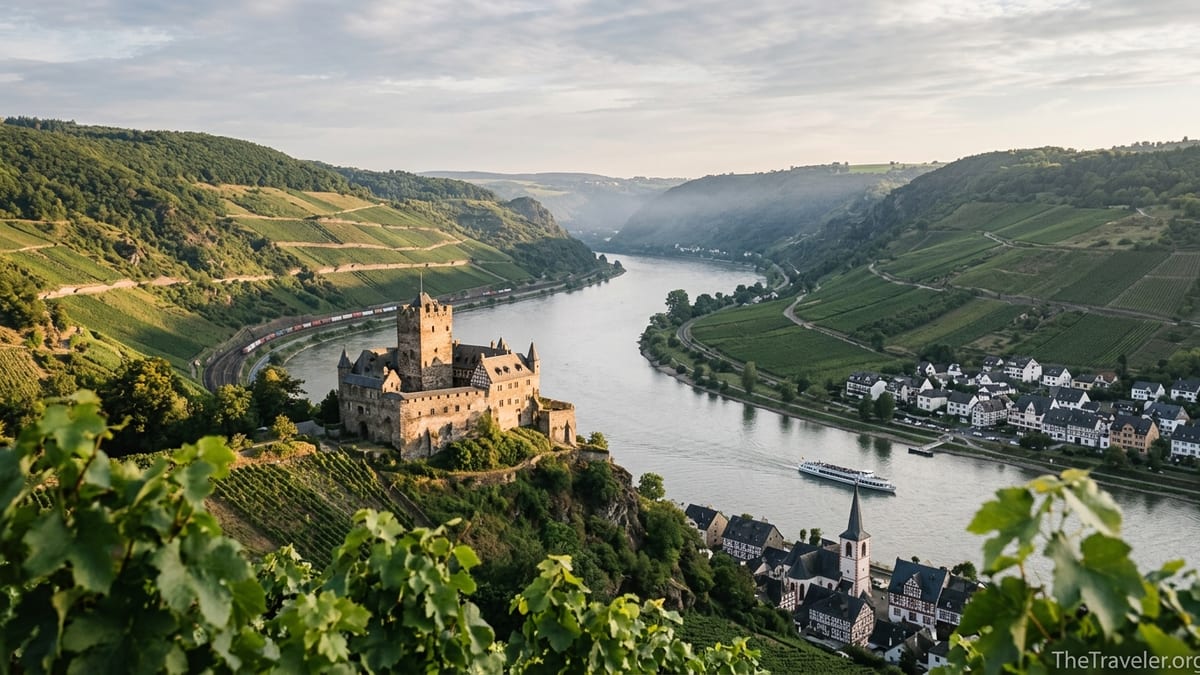
The Upper Middle Rhine Valley, between roughly Bingen and Koblenz, offers one of Europe’s classic river landscapes. Steep vineyards, villages like Bacharach and St. Goar, and more than 40 castles crowd the banks. Many visitors first experience the region on a day tour from Frankfurt that combines a scenic coach ride, a lunch stop, a short river cruise segment and wine tasting. Current full day packages of this type are typically priced around the low to mid 100 euros per person, with departures most days from spring through autumn.
For travelers with more time, multi day Rhine itineraries using regular boats and local trains provide greater flexibility at a lower per day cost. Passenger ferries and scheduled cruise boats let you hop between towns, while the parallel rail lines make it easy to backtrack with a regional ticket. A couple traveling independently can often piece together two or three days in the Rhine Valley, including mid range guesthouses and boat segments, for less than the cost of a single day private tour, provided they are comfortable booking transport and rooms separately.
At the top end, full length Rhine river cruises between Amsterdam and Basel, typically 7 nights, include the castle section of the valley as one highlight among many. These cruises are fully packaged products with shore excursions, dining and entertainment, and the per person cost can rival that of an entire land based week in Germany and neighboring countries combined. They suit travelers who value unpacking only once and having the logistics handled from airport pickup to final transfer.
A hybrid strategy many visitors adopt is to base themselves in Frankfurt, Mainz or Koblenz and book only a single day Rhine coach and boat tour while exploring everything else independently. This way, you get the benefit of commentary on the geology, vineyard culture and history for one concentrated day, then take what you have learned and apply it as you wander on your own.
Exploring the Black Forest: Tours vs Private Drivers
The Black Forest can be surprisingly layered to navigate. Major towns like Freiburg and Baden Baden have good rail links, but some of the most atmospheric valleys and viewpoints lie beyond the reach of fast trains. This is where the choice between a group tour, a private driver and your own rental car becomes more acute. Classic escorted Germany itineraries heading south from the Rhine often make one or two stops in the Black Forest region, perhaps for a short walk among the trees, a visit to a clock workshop or a slice of original Black Forest gateau.
Specialist local companies offer private Black Forest day tours that pick up guests from Basel, Freiburg or even river cruise ports, using comfortable vans and English speaking driver guides. These tours commonly run a full day and are priced per vehicle rather than per person, which makes them economical for families or groups of four to six. They allow access to lesser known spots like mountain coasters, secluded lakes or panoramic farm roads, and they build in time for café stops and short hikes that large coaches cannot always accommodate.
Independent travelers with rental cars can enjoy a similar level of freedom, but must handle mountain driving, parking rules and, in winter, potential snow and ice. The Black Forest High Road and smaller byways offer beautiful views, yet they can be narrow and winding. For some visitors, especially those nervous about right side driving or dealing with German traffic regulations, handing over the wheel to a local driver guide is a worthwhile trade off.
For budget conscious travelers on rail passes, the Black Forest is not out of reach. Regional trains and buses reach spa towns, lakes and trailheads, and guest cards issued by some local accommodations include free local transport. The trade off is time. Reaching that scenic farmhouse café by bus might take twice as long as by car, and returning after sunset may be impractical. In such cases, booking a single private tour day to complement several days of independent exploration can strike a useful balance.
Private Drivers, Rail Passes and Independent Travel
Germany’s rail system is one of the main reasons many visitors choose to travel independently rather than with a tour. Long distance trains connect major cities at high speeds, while regional lines cover secondary towns and tourist areas. Rail passes, saver fares booked in advance and regional day tickets can all lower costs, particularly for couples or small groups traveling in off peak seasons. The price difference compared with an escorted coach tour grows if you are willing to stay in simple family run hotels rather than brand name chains.
Private drivers occupy the other end of the spectrum. In major cities and resort regions, licensed chauffeur services and tour companies offer full day custom itineraries by car or van. A full day with an English speaking driver guide, including vehicle, fuel and tolls, typically runs to several hundred euros per day, but the per person cost falls sharply when shared across four or more travelers. This option is particularly attractive for multi generational families, travelers with mobility limitations or anyone who wants to cover a lot of ground in one day without constant timetable checking.
Self drive rentals sit in the middle. Car hire within Germany is widely available, and daily rates can be competitive, especially outside high demand dates. However, travelers must consider insurance, fuel prices, city environmental zones and parking costs. Many historic centers limit vehicle access or require paid garages, and police enforce speed and parking rules efficiently. Drivers not used to European road signage should allow extra time and avoid overly aggressive schedules that require multiple long motorway legs in a single day.
In practical terms, many visitors blend modes: high speed trains between cities like Berlin and Munich, rental cars in rural regions such as Bavaria’s alpine fringe or the Black Forest, and perhaps a single private driver day for a complex routing like castle hopping along the Rhine. Thinking of these elements as tools in a kit rather than mutually exclusive choices can help you build an itinerary that matches both your budget and your tolerance for navigation stress.
When an Organized Tour Is Worth Booking
Organized tours deliver the most value in three main situations. First, when your time is limited and you want to see several regions. A traveler with ten days total, including flights, who hopes to visit Munich, the Rhine Valley, a slice of the Black Forest and perhaps one other city often benefits from the efficiency of a preplanned coach itinerary. You lose some flexibility, but gain the ability to cover long distances with minimal waiting and to see a curated set of highlights in each place.
Second, organized tours shine in peak summer or during special events, when accommodation and entry tickets in popular areas can sell out or spike in price. Think of festival weeks in Munich, wine festivals along the Rhine or school holiday periods when families crowd Neuschwanstein and Lake Constance. A tour operator that has prebooked hotel blocks and attraction time slots can sometimes offer a more predictable experience than a last minute independent approach.
Third, escorted tours are useful for travelers who prefer social travel and guided interpretation. Having a tour director to handle hotel check ins, language questions and on the spot changes reduces friction, and sharing meals with a small group can be part of the appeal. For solo travelers who value companionship but do not want to organize shared rental cars or hunt for restaurant tables each night, the group framework can be reassuring even if the per person price is higher than a do it yourself route.
On the other hand, independent travel is often preferable when you want to linger in one region, travel slowly or prioritize specific interests. A traveler passionate about hiking, for example, might be better served by a week based in Garmisch Partenkirchen or Freiburg, using local buses and cable cars, rather than joining a general highlights coach tour that stops only briefly in each mountain town. Likewise, food focused visitors can build in long lunches at vineyard taverns or farm guesthouses that fixed schedules seldom allow.
The Takeaway
Germany lends itself to a mix of travel styles. Escorted tours, small group itineraries, private drivers, self drive and rail based independent travel can all work, depending on how much time you have and how much planning you want to do. Bavaria’s castles, the vine clad Rhine Valley and the deep Black Forest are well served by both organized tours and public transport, so the choice is rarely about access and more about pacing and comfort.
If you value efficiency, guided commentary and a single upfront price, a multi day Germany tour that includes Bavaria, the Rhine and the Black Forest can be a solid investment, especially in busy seasons or on a first visit. If you prefer flexibility and do not mind booking trains and hotels, you can often recreate similar routes at a lower cost, using a few targeted day tours or private driver days to smooth out the trickier segments. In the end, the best Germany trip is the one that matches your energy level, budget and curiosity, whether you are arriving by tour bus below a hilltop castle or stepping off a regional train into a half timbered village.
FAQ
Q1. Is a multi day Germany tour worth it for first time visitors
For many first timers with 7 to 12 days, a well planned escorted tour is worthwhile because it links several regions without complex logistics. You trade some flexibility for a predictable schedule and guided interpretation of major sights.
Q2. Can I visit Neuschwanstein Castle from Munich without a tour
Yes. You can travel by regional train or bus from Munich to Füssen, connect to local transport up to the castle and prebook a timed entry ticket. This saves money but requires more advance planning and comfort with German transport.
Q3. How many days should I spend in Bavaria on a Germany trip
Allow at least three full days to see Munich and Neuschwanstein. Five to seven days lets you add alpine towns, the Romantic Road or nearby Salzburg at a more relaxed pace, whether with a tour or independently.
Q4. Is it better to cruise the Rhine on a day trip or take a full river cruise
A day trip with a short Rhine cruise segment is ideal if you have limited time or are based in Frankfurt or Cologne. A weeklong Rhine river cruise suits travelers who want an all inclusive experience and do not mind a higher overall price.
Q5. Do I need a car to explore the Black Forest
You do not strictly need a car. Trains and buses reach many towns and trailheads. However, a rental car or private driver makes it easier to reach remote viewpoints, farm roads and lakes on a tight schedule.
Q6. Are private driver tours in Germany worth the cost
Private driver tours can be very good value for families or groups of four or more, especially for complex days like castle hopping along the Rhine or exploring small villages in the Black Forest. Per person costs drop significantly when shared.
Q7. When do organized tours in Germany sell out
Popular escorted tours often fill up for June to September departures and for dates around major festivals. Booking several months ahead is wise if you want specific itineraries or room types on fixed dates.
Q8. Is independent rail travel in Germany confusing for English speakers
Most long distance and regional stations have clear signage and English language ticket machines. Travelers willing to read schedules carefully usually adapt quickly, though rural bus connections may require extra attention.
Q9. Can I mix organized tours with independent travel on one trip
Yes. Many travelers book a multi day city stay on their own, then add a short regional tour, such as a three day Rhine and Black Forest package, before returning to independent travel. This hybrid approach offers both structure and freedom.
Q10. How far in advance should I book castle and museum tickets
For famous places like Neuschwanstein, it is sensible to reserve tickets several weeks ahead in summer and school holidays. Smaller castles and museums often allow walk in visits, although weekends and holidays can still be busy.