

Germany stretches from windy North Sea sand dunes to jagged Alpine peaks, and most trips naturally tilt either north or south. Both halves of the country pack in historic cities, storybook towns and efficient trains, but the feel on the ground is very different. Choosing between northern and southern Germany is less about which region is objectively better and more about which one matches your travel style, budget and timing.
North vs South: How the Regions Feel on the Ground
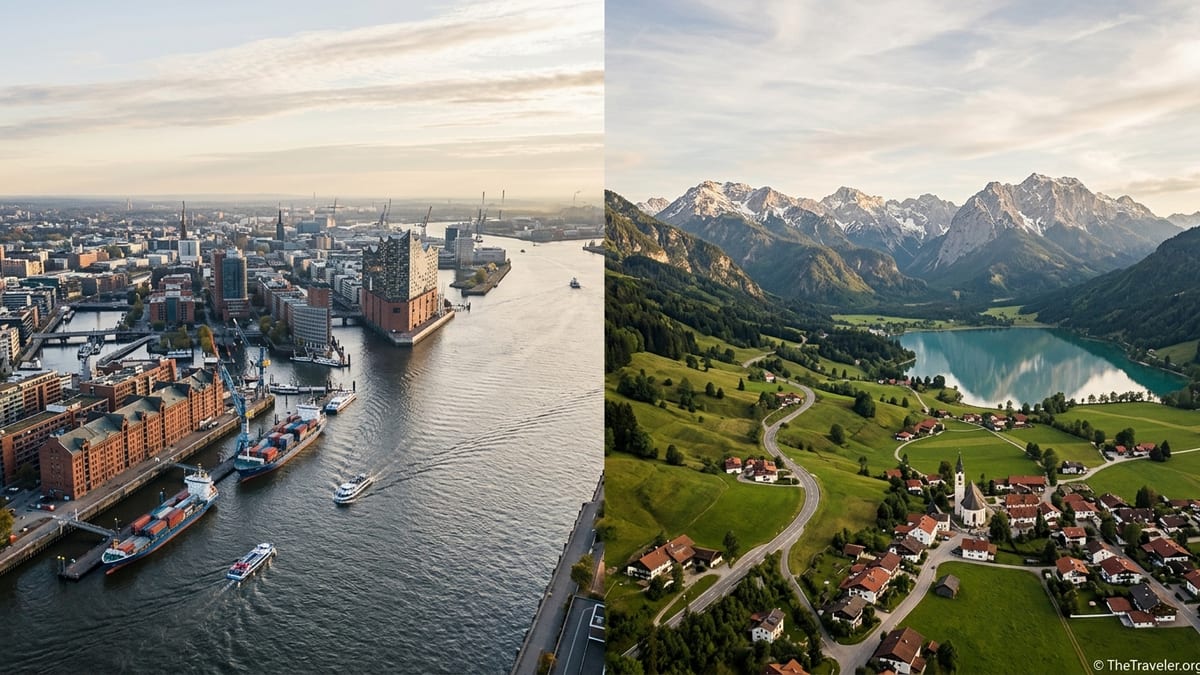
Northern Germany is defined by wide skies, water and brick. From the flat North German Plain and the Baltic and North Sea coasts to the Hanseatic port cities of Hamburg, Lübeck and Bremen, the landscape feels open and maritime. You are never far from a canal, river or harbor, and the architecture is dominated by red-brick Gothic churches, merchant houses and old warehouses repurposed into museums and lofts. The vibe is often more understated and practical, with a strong seafaring and trading heritage.
Southern Germany feels denser, greener and more vertical. The land rises into rolling hills, wine country and finally the Bavarian and Allgäu Alps, where villages like Garmisch-Partenkirchen and Füssen sit under jagged limestone peaks. Cities such as Munich, Nuremberg, Stuttgart and Freiburg mix medieval cores with grand 19th century boulevards and heavy stone churches. Half-timbered houses, onion-domed church towers and castle silhouettes on distant ridges are everyday sights in the south.
On a short trip, these differences shape how your days unfold. In the north you might split time between Hamburg’s harborfront districts and side trips to Lübeck’s UNESCO-listed old town or the dunes of the North Frisian Islands. In the south a Munich base could pair with excursions to Neuschwanstein Castle, lakes like Chiemsee, or Alpine viewpoints such as the Zugspitze reached by cog railway and cable car. Both regions are well connected, but distances between must-see sights in the south are slightly shorter, which suits travelers who want to pack in many highlights.
Culturally there are subtle contrasts. Northern Germany leans toward fish, rye bread, seafaring lore and a cooler, more reserved social style. Southern Germany is the land of beer gardens, wine villages, Catholic baroque churches and highly visible seasonal festivals, from pre-Lent Fasching parades to the Oktoberfest crowds around Munich every late September and early October. Neither is more “authentic” than the other, but the south tends to match foreign expectations of “classic” Germany a little more closely.
Cities: Port Warehouses or Medieval Market Squares
Hamburg is the natural hub for northern Germany. It is a major port city on the Elbe with a huge working harbor, historic Speicherstadt warehouse district of red brick canals, and the glass-topped Elbphilharmonie concert hall dominating the skyline. Travelers often pair Hamburg with nearby Hanseatic cities like Lübeck, with its famous Holstentor gate and marzipan shops, and Bremen, whose UNESCO-listed town hall and Roland statue frame one of the most beautiful market squares in northern Europe. These cities are linked by frequent regional trains, and a three-city circuit is a typical first-time northern itinerary.
Southern Germany instead revolves around large inland cities. Munich is the primary gateway, especially for international flights. Its compact old town centers on Marienplatz, with daily glockenspiel chimes at the New Town Hall, and it is dotted with grand museums such as the Alte and Neue Pinakothek. Nuremberg offers a walled medieval core and a hilltop castle, while Stuttgart balances car-industry attractions like the Mercedes-Benz and Porsche museums with a revitalized center and nearby vineyards. Many travelers also route through Frankfurt, which technically sits on the border between central and southern Germany but serves as a major entry point for trips that continue south by train.
In practice, your choice of region often comes down to the type of city break you enjoy. If you like harbors, contemporary waterfront redevelopments and industrial heritage, Hamburg is hard to beat, especially when combined with day trips by suburban train to Elbe-side beaches such as Blankenese or to Baltic seaside towns like Travemünde. If you prefer historic cores ringed by walls, hilltop fortifications and big city museums, Munich and Nuremberg in the south will feel more rewarding, with easy tram and U-Bahn networks that make them straightforward for first-time visitors.
City costs vary less by region and more by size and event calendar. Hamburg and Munich are consistently among Germany’s pricier cities for hotels and dining. Smaller northern bases like Lübeck or Bremen, and southern mid-size cities like Augsburg or Bamberg, usually come with lower nightly rates and quieter streets while still offering rich architecture and good train connections.
Coast vs Mountains: Landscapes and Outdoor Choices
For sea air and wide, open horizons, northern Germany clearly wins. The Baltic and North Sea coasts offer long sandy beaches, dykes and dunes, and resort towns such as Heiligendamm, Kühlungsborn, Timmendorfer Strand and Sankt Peter-Ording. Islands like Sylt, Norderney, Rügen and Usedom are popular for summer holidays, with traditional seaside villas, thatched-roof cottages and the distinctive hooded Strandkorb beach chairs that shelter you from wind and drizzle. Many coastal communities are reachable from Hamburg within a couple of hours by regional trains or car, which makes them feasible even on a one-week trip.
Southern Germany cannot compete on coastline but excels for mountains and lakes. This is where you find the Bavarian Alps, with peaks like the Zugspitze reached from Garmisch-Partenkirchen by cog railway and cable car, and glassy lakes such as Königssee near Berchtesgaden or Tegernsee a short train ride from Munich. In summer you can combine gentle hikes with swims and lakeside beer gardens, while in winter ski areas around Garmisch, Oberstdorf or the Allgäu host downhill and cross-country skiing. For many visitors, this mountain scenery matches their postcard image of Germany.
Outdoor travelers should consider how they like to be active. The north is superb for easy cycling along flat coastal paths and river routes like the Elbe or Weser, or for long beach walks and bird-watching in the Wadden Sea tidal flats. Accommodation ranges from simple guesthouses in small fishing villages to full-service resorts on islands like Sylt. In the south, hiking trails climb into forested hills in the Black Forest or along the Swabian Alb, and well-marked mountain paths start directly from Alpine resort towns. Here you trade sea breezes for dramatic elevation changes and more intense weather swings.
If you are planning a road trip, landscapes matter for driving enjoyment. Coastal drives in Schleswig-Holstein or Mecklenburg-Vorpommern highlight long, flat stretches along dykes and causeways with views to islands and farm fields. Southern routes, by contrast, bring twisty mountain roads, vineyard-lined valleys along the Rhine and Mosel, and famous panoramic routes such as the Romantic Road linking Würzburg, Rothenburg ob der Tauber and Füssen. Drivers who enjoy curving roads and viewpoints with castle silhouettes will generally find southern itineraries more rewarding.
Castles, History and Scenic Road Trips
Germany’s most famous castles are heavily concentrated in the south. Neuschwanstein near Füssen is the best-known example, perched above the village of Hohenschwangau with snow-dusted mountains behind it in winter and green meadows in summer. Nearby Hohenschwangau Castle, Linderhof Palace in the Ammergau Alps, and the hilltop Hohenzollern Castle between Stuttgart and Lake Constance provide enough variety for a multi-day castle-focused trip. Many travelers combine these sights with the Romantic Road, a signposted route through historic towns like Dinkelsbühl and Rothenburg ob der Tauber that pairs storybook architecture with easy driving distances.
The north cannot match this density of royal castles but has its own architectural highlights and more understated road trips. Brick Gothic town halls and churches line the market squares of Lübeck, Stralsund and Wismar, all former Hanseatic League members with UNESCO recognition for their red-brick merchant architecture. Smaller ducal palaces and hunting lodges dot the countryside, such as Schwerin Palace set on a lake in Mecklenburg-Vorpommern, often surrounded by landscaped gardens and extensive parkland. A northern road trip might link Hamburg with Lübeck, Wismar, Rostock and the chalk cliffs of Rügen, emphasizing maritime landscapes over mountain fortresses.
History-minded travelers should think about which eras interest them most. Medieval trade and Reformation history is very visible in the north, in church spires, merchant guild houses and maritime museums. World War II and Cold War history is prominent in both regions, from Hamburg’s rebuilt districts to Nuremberg’s documentation centers and remnants of the former inner-German border in rural areas. Baroque palace culture and the legacy of small southern kingdoms and duchies show up more consistently in the south, in residence palaces in Würzburg, Munich or Stuttgart and in ornate pilgrimage churches scattered through the countryside.
For a first-time visitor who dreams specifically of palaces on hills and half-timbered old towns, southern Germany has a clear edge. Those who prefer smaller crowds and less scripted routes often find northern road trips more relaxing, especially in shoulder seasons when coastal towns are quiet and the brick facades of Hanseatic centers glow in soft autumn light.
Food, Drink and Everyday Costs
Food stereotypes hold some truth: the south is meatier, the north more maritime. In northern Germany, especially close to the coasts, menus are full of herring, plaice, smoked fish and simple dishes like Fischbrötchen, a fish sandwich sold at harbor kiosks and train-station stands. In Hamburg, you can have a fresh fish sandwich and a soft drink for a modest price compared with sit-down restaurant meals. Rustic northern dishes such as Labskaus, a mix of corned beef, mashed potatoes and beetroot traditionally eaten by sailors, or kale with sausage in winter, reflect the region’s seafaring and farming roots.
Southern Germany leans toward heartier classic dishes like Schweinshaxe, roast pork knuckle with crackling, various kinds of sausage, and cheese-heavy options in the Alpine regions such as Käsespätzle. Beer gardens around Munich serve these staples along with pretzels and liter-sized steins of local lager, while wine taverns in Franconia and the Palatinate pour regional white wines alongside cold plates of cheeses, sausages and salads. Lakeside kiosks around Tegernsee or Chiemsee might sell grilled fish with potato salad, bridging the gap between mountain and water influences.
Everyday costs such as groceries and casual meals are broadly similar across Germany, but visitor spending can skew higher in heavily touristed southern hotspots, especially in Munich during major events or near Neuschwanstein where restaurant prices reflect concentrated demand. Northern beach resorts on islands like Sylt are also known for premium pricing, particularly in high summer, yet many inland northern towns remain more affordable. Travelers on tighter budgets often do best by using city bakeries for breakfast and lunch and reserving restaurant meals for dinner, a strategy that works equally well in both regions.
In terms of drinks, beer is everywhere, but regional preferences differ. The south is famous for its lagers and wheat beers, poured into tall glasses in Bavarian beer halls and village festivals. The north has a stronger tradition of pilsner-style beers and maritime brands associated with port cities. Wine culture is more visible in the south, especially along the German Wine Route and in Franconian and Baden vineyards, where tasting rooms and seasonal wine taverns open to the public. If sampling local wine is a priority, basing yourself in the south offers many more options within short train or car rides.
Weather, Seasons and Best Time to Go
Germany’s climate is temperate overall, but north and south behave differently through the year. The north, influenced by the North Sea and Baltic, tends to be windier and more changeable, with milder winters and cooler summers. Even in July and August, coastal areas may feel fresh, with breezy days and frequent cloud cover. This can be ideal for travelers who dislike heat and prefer layered clothing and brisk walks. The trade-off is that beach weather is never guaranteed, and rain showers can appear quickly, especially outside high summer.
Southern Germany, particularly along the Rhine and in lowland areas between the Black Forest and the Alps, generally sees warmer summers and slightly colder winters. July afternoons in cities like Munich or Stuttgart can be noticeably hotter than in Hamburg, pushing many locals to shaded beer gardens or lakes for relief. Winter in the south can bring snow, especially in higher elevations, making Christmas markets and Alpine villages feel more atmospheric but also introducing the possibility of icy streets and occasional transport delays.
For city-focused trips, spring and autumn are usually comfortable in both regions. April and May bring fresh greenery and longer days, while September and early October balance decent weather with lower hotel demand than peak summer. In the north you might pair shoulder-season city visits with quieter coastal walks, while in the south autumn often coincides with wine harvest festivals and, around Munich, Oktoberfest crowds and higher prices. Winter is more appealing in the south if you are drawn to Christmas markets and skiing; in the north it can feel grey and damp, although cities remain fully functional and less crowded.
When planning, think about what you want from the weather. If cool air, fewer extremes and the option of seaside walks appeal, the north fits well. If you are chasing warm summer evenings on terraces, mountain hikes on snow-free trails or guaranteed snow sports in winter, southern Germany provides more consistent conditions.
Trains, Driving and Accommodation
Germany’s rail network covers both north and south thoroughly, so you can travel without a car in either region. High-speed Intercity Express trains link major cities such as Hamburg, Berlin, Frankfurt, Stuttgart and Munich, while regional trains connect to medium-size towns and many tourist areas. From Hamburg, for example, direct regional services run to Lübeck in under an hour and on to Baltic resorts, making day trips simple. From Munich, direct and frequent trains reach destinations like Nuremberg, Augsburg, Garmisch-Partenkirchen and Salzburg, all popular with visitors.
For coastal villages, islands and Alpine valleys, trains sometimes hand over to ferries, buses or mountain railways. In the north, reaching islands such as Sylt can involve a train that runs on a causeway over the Wadden Sea, or a ferry from mainland ports. In the south, cog railways and cable cars extend the network into the high mountains, allowing non-drivers to access viewpoints and hiking trails. Travelers who plan to make several regional journeys may find that national or regional rail passes provide good value, especially in combination with Germany’s flat-fare monthly ticket products when available.
Driving opens up quieter corners in both regions. In the north a car makes it easy to hop between small harbor towns, lighthouses and nature reserves, following your own timetable instead of bus schedules. In the south, a car is helpful for flexible exploration of the Romantic Road, Black Forest byways or lakes and villages not directly on a rail line. The trade-off is that parking in big cities such as Hamburg or Munich is expensive, so many travelers collect a rental car only when leaving their arrival city, or return it before spending several days in a major urban center.
Accommodation choices also differ subtly between regions. Southern Germany has a dense network of family-run guesthouses and small hotels in Alpine and wine-country villages, many with balconies and breakfast rooms that overlook mountains or vineyards. Northern Germany offers a mix of city hotels, seaside resorts and holiday apartments, particularly along the Baltic and North Sea coasts where self-catering flats are popular for week-long stays. Prices for mid-range hotels in both regions can rise significantly in peak local seasons, such as school summer holidays on the coasts or major trade fairs and festivals in larger cities, so booking early is wise.
Which Region Suits Which Traveler Type
First-time visitors who want the strongest match to classic images of Germany often gravitate toward the south. If your must-see list includes Alpine peaks, fairy-tale castles, beer gardens and walled medieval towns, a route through Munich, Nuremberg, Rothenburg ob der Tauber and Füssen is likely to satisfy. Families can mix city museums and playgrounds with lake days and gentle hikes, while couples may appreciate romantic old towns and candlelit wine taverns in Franconia or along the Rhine and Mosel valleys.
Northern Germany tends to suit travelers who prefer a less scripted, more maritime experience. If you like ports, industrial heritage, modern concert halls and big stretches of uncrowded coast, basing in Hamburg with side trips to Lübeck, Bremen and a Baltic or North Sea resort makes sense. The region can feel more relaxed and less crowded than southern tourism magnets, especially outside peak school holidays. It is also a good choice if you want to combine Germany with Scandinavia by ferry or train, using ports in Kiel, Rostock or Lübeck’s seaside district Travemünde as stepping stones.
Budget-conscious travelers should look beyond the simple north versus south label and instead compare specific cities and seasons. Smaller northern towns away from the most famous islands, and southern secondary cities just off the main tourist trails, often provide better value on accommodation. Solo travelers and rail enthusiasts might favor routes where frequent regional trains make spontaneous day trips easy, which is true for both a Hamburg-centered Hanseatic circuit and a Munich-centered loop through Bavarian and Austrian border towns.
If time is limited to one week or less, focusing on either north or south is more efficient than trying to cross the whole country. Distances between Hamburg and Munich are substantial, and while high-speed trains make the journey manageable in a day, you will spend valuable hours in transit. It often makes sense to fly into the major airport closest to the region that matches your interests, explore that half of the country thoroughly, and leave the other for a future trip.
The Takeaway
Northern and southern Germany both deliver memorable trips, but they excel in different ways. The north is about water, wide skies, Hanseatic brick cities and long, breezy beaches. The south is about mountains, castles, half-timbered towns and the dense tapestry of historic city centers, vineyards and Alpine valleys. Neither is objectively better; each simply tells a different chapter of the same national story.
If your dream Germany involves harbor walks, maritime museums and coastal cycling, focus on a northern itinerary centered on Hamburg and the Baltic or North Sea coasts. If you see yourself clinking steins under chestnut trees, hiking between Alpine viewpoints and castles, or wandering among medieval town walls at dusk, a southern route built around Munich, Nuremberg and the Alpine fringe is the clearer choice.
For many travelers, the decision is also about pacing and personality. Northern Germany rewards curiosity and a taste for open horizons, with fewer must-see icons but plenty of room to breathe. Southern Germany offers more concentrated highlights and the comfort of instantly recognizable sights, which can feel satisfying on a short first visit. Whichever side you choose, Germany’s reliable trains, well-maintained roads and range of accommodations make it easy to build a trip tailored to your style.
If you have the time, of course, the best answer is eventually to experience both. Starting with one region on your first trip and saving the other for a return visit lets you see how distinct they feel. Many travelers are surprised at just how different a windswept walk on a North Sea dyke feels compared with standing under the crags of the Bavarian Alps, even though both moments happen within the same country.
FAQ
Q1. Is northern or southern Germany better for a first-time visitor?
For most first-time visitors, southern Germany edges ahead because it concentrates many of the country’s most famous images, from castles like Neuschwanstein to Alpine peaks and traditional beer gardens. That said, travelers who are more drawn to harbor cities, modern architecture and coastal landscapes may feel more at home starting in Hamburg and exploring the north.
Q2. Where should I base myself in northern Germany with no car?
Hamburg is the most practical base without a car in the north, thanks to its major rail hub and frequent regional trains to nearby cities such as Lübeck, Lüneburg and Bremen, as well as connections to Baltic and North Sea coastal towns. From a single hotel booking in Hamburg you can sample both big-city sights and smaller Hanseatic centers on easy day trips.
Q3. Where should I base myself in southern Germany with no car?
Munich is the best all-round base in the south without a car, with direct trains to places like Nuremberg, Augsburg, Regensburg, Garmisch-Partenkirchen and Füssen. If you prefer a slightly smaller city, Nuremberg also works well, offering its own historic core plus rail links to Franconian wine country and the Romantic Road towns.
Q4. Which region is cheaper, northern or southern Germany?
Overall price levels are similar, but costs for visitors depend more on specific cities and timing than on region. Munich and the Alpine hotspots can be expensive in peak seasons, just as upscale North Sea islands can be pricey in summer. Choosing mid-size cities, traveling in shoulder seasons and booking early generally matters more than whether you go north or south.
Q5. Is the weather better in northern or southern Germany?
“Better” depends on your preferences. The north has milder, more changeable weather with cooler summers and fewer temperature extremes, which suits travelers who dislike heat. The south brings warmer summers and colder, often snowier winters, which is ideal if you want mountain hikes in summer or a classic Christmas market and skiing atmosphere in winter.
Q6. Do I need a car to see the best of either region?
You can see a great deal of both north and south using trains and occasional buses, especially if you base in rail hubs like Hamburg or Munich. A car becomes more useful when you want to string together smaller villages, remote coastal stretches or scenic back roads, such as the Romantic Road in the south or lesser-known North Sea and Baltic inlets in the north.
Q7. Which region is better for families with children?
Both regions work well for families, but in different ways. The north offers long beaches, gentle cycling routes and interactive maritime museums that appeal to children. The south provides castles, lakes, easy mountain walks and many playgrounds integrated into town parks and beer gardens. Families who love the sea may prefer the north, while those excited by mountains and castles may lean south.
Q8. Where will I find more traditional festivals and beer gardens?
Traditional festivals are more visible in the south, especially in Bavaria and Baden-Württemberg, where events range from village wine festivals to large beer festivals and pre-Lent carnival celebrations. Beer gardens are part of everyday life around Munich and many smaller southern towns, making it easy to experience this side of German culture.
Q9. Can I combine northern and southern Germany in a one-week trip?
It is technically possible to visit both regions in a week using high-speed trains, for example combining a few days in Hamburg with a few days in Munich. However, this adds long travel days. For a first visit of seven days or less, focusing on one region typically leads to a more relaxed and deeper experience.
Q10. Which region is better for hiking and outdoor sports?
Southern Germany is stronger for classic hiking, mountain biking, skiing and other Alpine sports, thanks to the Bavarian Alps, Black Forest and lake districts. Northern Germany excels at coastal walks, flat cycling routes and nature reserves along the Wadden Sea and river valleys. Your choice should follow whether you prefer mountain trails or sea breezes.