


Germany rewards travelers who move at a thoughtful pace. High speed trains, compact historic centers and well connected regions make it possible to see a lot without feeling rushed, but only if you plan realistic routes and overnight stops. This guide lays out practical 5, 7, 10, 14 and 21 day itineraries connecting Berlin, Munich, the Rhine Valley, the Black Forest, Bavaria, Hamburg and more, using current train times and typical hotel patterns to keep your trip enjoyable instead of exhausting.
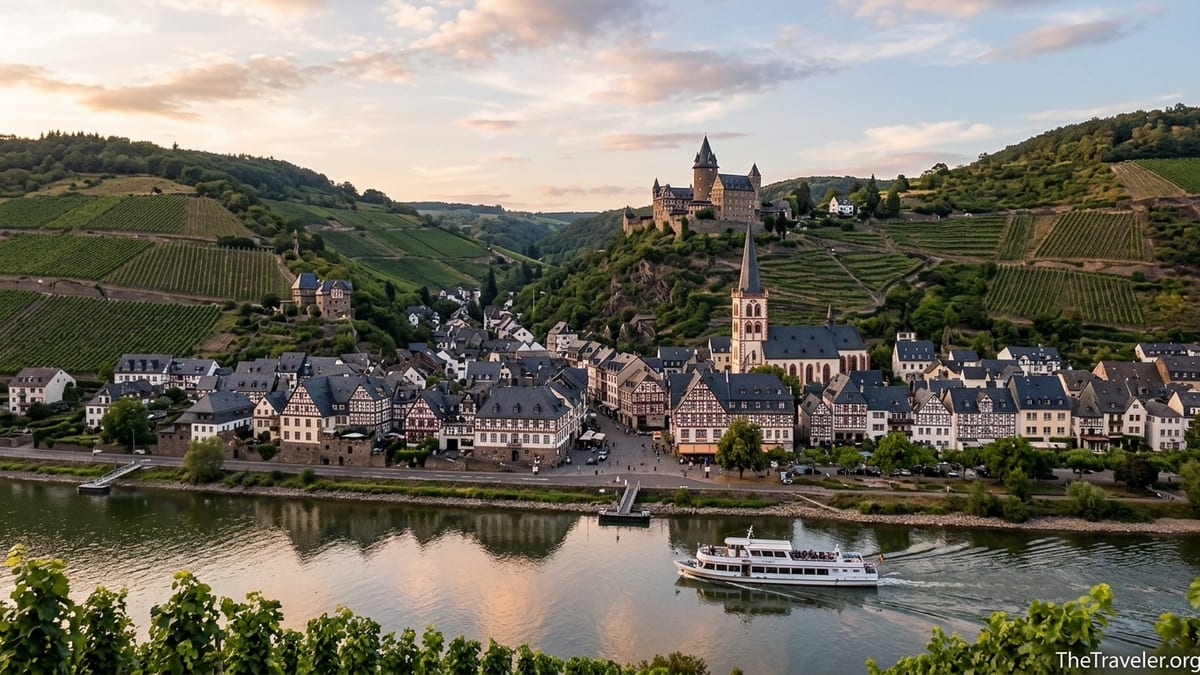
How to Plan a Realistic Germany Itinerary
Germany looks small on a map, but crossing the country can still consume most of a day if you chain together slow connections. At the fast end, Berlin to Munich is about 3 hours 45 minutes on the Sprinter ICE high speed line, while a regional train journey along the Rhine between Koblenz and Mainz can easily take 2 hours with multiple stops. Building your itinerary around a few anchor cities and then adding short regional hops keeps travel days under control.
For first time visitors, a sensible budget is two to four nights per major city such as Berlin, Munich or Hamburg, and one to two nights in smaller hubs like Bacharach in the Rhine Valley or Freiburg in the Black Forest. That pattern gives you at least one completely free day between travel days, which is critical when jet lag and the occasional delayed train are factored in. Many experienced travelers report that the only days they regret are the ones spent mostly on trains.
Transportation costs can stay predictable if you mix advance purchase long distance tickets with flexible local options. For example, a midweek advance fare on an ICE from Berlin to Munich commonly runs in the low double digits in euros if booked several weeks out, while a nationwide monthly regional ticket allows unlimited use of slower trains, S Bahns, trams and buses for a fixed price that is often less than two individual intercity tickets. Using long distance trains only for the truly long jumps and relying on regional lines in focused areas like the Rhine or Black Forest keeps both time and money in check.
Accommodation wise, most travelers pair mid range city hotels near the main station with atmospheric guesthouses or family run pensions in smaller towns. In Bacharach, for instance, you might stay in a timbered inn a 5 minute walk from the platform and board a morning river cruise without ever touching a taxi, while in Berlin it often makes sense to choose a business hotel next to the central station to simplify early departures.
5 Day Germany Itinerary: Berlin and Munich Focus
With five days, you will enjoy the trip far more if you focus on two anchor cities rather than rushing across the whole country. A classic pattern is three nights in Berlin and two in Munich, connected by a single high speed train. On day one, arrive in Berlin and settle into a hotel near Berlin Hauptbahnhof or in Mitte so you can walk to the Reichstag, Brandenburg Gate and Museum Island. Day two can cover Berlin’s headline sights, while day three might be reserved for a specific interest such as the Cold War sites around the Berlin Wall Memorial and Checkpoint Charlie or a modern culture day in Kreuzberg and Neukölln.
On day four, take a morning Sprinter ICE from Berlin Hauptbahnhof to Munich Hauptbahnhof. The fastest direct trains generally take under four hours, so if you leave around 9:00 you can be in central Munich shortly after lunchtime. Booking a reserved seat is worthwhile on this popular corridor, especially on Fridays and Sundays. In Munich, a hotel within walking distance of the main station or near Marienplatz positions you well for city exploring and for day trips.
Your final one and a half to two days in Munich can be split between the historic center and either a beer garden or a nearby excursion. Within the city, many visitors combine a guided visit to the Residenz with time in the English Garden and dinner at a large beer hall like the Hofbräuhaus or a quieter neighborhood place in Schwabing. For a light touch day trip that still feels iconic, the S Bahn out to Dachau Memorial Site or a regional train to the lakes around Starnberg gives you a taste of Bavaria without the long transfers required for Neuschwanstein.
This five day plan is intentionally restrained. Trying to add the Rhine, the Black Forest or Hamburg in such a short window usually leads to one night stops and multiple three to six hour train days in a row. For a first look at Germany from overseas, two major cities with one high speed connection is often the sweet spot.
7 Day Germany Itinerary: Berlin, Munich and a Taste of the Rhine
A week is just enough to add a scenic region to the Berlin and Munich pairing. One practical sequence is Berlin, Rhine Valley, then Munich, using city to region hops of three to four hours each. You could spend three nights in Berlin, two on the Middle Rhine and two in Munich, which gives you five full days on the ground plus two partial travel days.
After two full days in Berlin, use day three as your transfer to the Rhine. A typical route would be Berlin to Koblenz or Mainz by ICE, then a short regional leg to a village base such as Bacharach, Boppard or St Goar. The entire journey usually takes about five and a half to six hours with a single change. Choosing a base along the Upper Middle Rhine means you can arrive by late afternoon, drop your bags and still have time for a riverside walk under the castle above town.
Day four can be devoted to boats and castles. Regional trains run roughly hourly along both sides of the river between Koblenz and Bingen, and scheduled riverboats cover the same stretch with cruises that often last two to four hours between major stops. Many travelers ride a boat in one direction, for example from Bacharach to St Goar under the Lorelei cliffs, then hop a regional train back. Prices for a one way cruise are typically comparable to a modest restaurant meal, which makes it an easy addition rather than a luxury splurge.
On day five, catch a midmorning ICE from a nearby hub such as Koblenz or Mainz to Munich. With one change, the trip is usually around four and a half to five hours, so you can be checking into your Munich hotel by late afternoon. Your remaining two nights allow one full day in the Bavarian capital to visit the Viktualienmarkt, climb the tower at St Peter’s Church and perhaps tour the BMW complex or Nymphenburg Palace. This itinerary keeps each travel day focused on a single long move, which is crucial in a seven day window.
10 Day Germany Itinerary: Classic Cities and the Black Forest
With 10 days, you can add either Hamburg in the north or the Black Forest in the southwest to the core Berlin and Munich route. A satisfying southern focus is Berlin, Munich, the Bavarian Alps and the Black Forest, using a loop that minimizes backtracking. A sample pattern is three nights Berlin, three nights Munich, two nights in the Alps around Garmisch or Füssen and two nights in the Black Forest around Freiburg or Triberg.
After exploring Berlin for three days, head to Munich on day four by high speed train and use days five and six to see the city and take a day trip. From Munich Hauptbahnhof, direct regional trains run to Garmisch Partenkirchen in about one and a half hours and to Füssen in around two hours, making either a viable base for Neuschwanstein and other alpine sights. Booking accommodation near those stations keeps your connection times short when you move again.
On day seven, ride south from Munich into the Alps and settle into your chosen base. A practical approach is to spend the afternoon in town and reserve your castle visit or mountain excursion for day eight, which gives you flexibility if the weather is poor on one day. Many visitors report that a half day around Lake Eibsee or a cable car ride up the Zugspitze can be just as memorable as the more crowded castle interiors, so consider mixing one headline attraction with one quieter natural stop.
From the Alps, day nine becomes your transfer to the Black Forest. One realistic route is Füssen or Garmisch to Munich, then onward to Freiburg by ICE and regional train, arriving by late afternoon. Once in Freiburg, you will find frequent regional trains and buses into Black Forest towns such as Triberg, whose waterfall and cuckoo clock shops are a classic family stop. Driving times between Freiburg and Triberg are roughly one hour, while regional trains and buses take a bit longer but allow you to avoid mountain parking.
On your final day, you can spend a relaxed morning walking Freiburg’s old town lanes and small water channels before boarding an afternoon train to your departure city, often Frankfurt or back to Munich. This 10 day loop delivers big city history, alpine vistas and dense forest landscapes without any single day requiring more than about six hours of door to door travel.
14 Day Germany Itinerary: North to South Highlights
Two weeks opens up the possibility of a true north to south traverse, connecting Hamburg, Berlin, the Rhine, the Romantic Road region and Munich. A practical order that avoids doubling back is Hamburg, Berlin, Rhine Valley, southern Bavaria and Munich, using four main regions and about three moves of four to five hours each. A sample allocation could be two nights Hamburg, three nights Berlin, three nights Rhine, three nights southern Bavaria and three nights Munich.
Start in Hamburg with a hotel near the main station or in the Speicherstadt warehouse district, which lets you walk to the harborfront and Elbphilharmonie district. After two nights and a full day exploring the port, the fish market and perhaps a harbor tour, take a midmorning ICE to Berlin. The journey typically takes around two hours with frequent direct trains. Arriving by early afternoon gives you time to check into a central Berlin hotel and enjoy an evening stroll along Unter den Linden.
After three nights in the capital, move on day six to the Rhine Valley, again using a Berlin to Koblenz or Mainz ICE with a regional add on to your chosen river village. With three nights along the Rhine, you can devote one full day to the core gorge between Bingen and Koblenz, another to side trips such as the Moselle Valley around Cochem or Burg Eltz, and a third to wine tasting or hiking between vineyard villages. Regional trains and buses make it practical to visit two or three small towns in a single day without renting a car.
On day nine, head toward southern Bavaria. One clean solution is to travel to Nuremberg or Würzburg for a one night stop that breaks the journey and gives you a taste of the Franconian region. Old town Nuremberg is a short tram ride from the station and offers a dense concentration of medieval walls, churches and World War II history. The next day, continue south into the foothills, using a base such as Augsburg or a smaller town along the so called Romantic Road. From there, regional trains and buses connect you to Rothenburg ob der Tauber, Dinkelsbühl and other walled towns, though you should expect at least one or two changes on each route.
Finish with three nights in Munich, where you can pace yourself with one city day, one longer day trip and one unstructured day before departure. Day trips such as Salzburg, Nuremberg or the Chiemsee lakes are all popular, but remember that each involves two to three hours of travel each way, so they work best if you enjoy train time as part of the experience rather than treating it as lost time. With 14 days you can afford one or two long outings like this without compressing your city time too much.
21 Day Germany Itinerary: In Depth Regional Exploration
Three weeks allows you to combine Germany’s headline cities with substantial time in less visited regions. A balanced 21 day plan could include Hamburg, Berlin, Dresden, the Rhine and Moselle, the Black Forest, Munich and the Bavarian Alps. Instead of racing through, you can spend three nights in each major stop and still have room for slower movement days and unplanned detours.
One logical route runs Hamburg, Berlin, Dresden, Rhine and Moselle, Black Forest, Munich and Alps. For example, spend three nights in Hamburg, then four in Berlin with a full day trip to Potsdam and its palaces using the S Bahn and regional trains. Continue to Dresden for two or three nights to see the rebuilt Frauenkirche, the Elbe riverfront and nearby Saxon Switzerland, which has hiking trails and rock formations reachable by regional train and bus within about an hour of the city.
From eastern Germany, shift west to the Rhine and Moselle for five or six nights split between two bases. You might choose Koblenz for easy access to both rivers, then a smaller wine village such as Bacharach, Boppard or Cochem for a more intimate stay. With this much time, you can alternate boat trips, castle visits and vineyard hikes with simple village days spent in riverside cafes. A regional travel pass often covers both trains and many local buses in this area, which simplifies logistics and limits out of pocket ticket purchases.
Next, head south into the Black Forest for three or four nights in Freiburg or a spa town like Baden Baden. From Freiburg, regional trains and buses fan out to classic Black Forest stops including Triberg, home to one of Germany’s best known waterfalls and a cluster of traditional woodcarving workshops. Driving between these towns generally takes less than ninety minutes, but trains and buses can be only slightly slower on the main routes, making it reasonable to rely entirely on public transport if you prefer.
Conclude with four to five nights between Munich and an alpine base. With this much time, you can add a night in Regensburg or Augsburg along the way, or spend an extra day wandering Munich’s neighborhoods beyond the old town. In the Alps, splitting time between a busier hub like Garmisch Partenkirchen and a quieter lakeside village gives you the option to chase good weather up high and retreat to relaxed walks on cloudy days. Throughout this 21 day itinerary, keeping most legs under six hours and limiting one night stays to rare exceptions will keep the trip feeling like a series of immersive visits rather than a checklist.
Overnight Strategies, Rail Tips and Seasonal Timing
Choosing where to sleep is as important as choosing which cities to include. In big hubs such as Berlin, Munich and Hamburg, staying within a 10 to 15 minute walk of the main station is often worth a slightly higher room rate because it removes the need for taxis on early departure days. In smaller places like Bacharach or Triberg, nearly all accommodation is within walking distance of the station or village center, so you can focus more on atmosphere, whether that is a room in a half timbered house or a modern apartment with river or forest views.
For rail travel, most visitors mix advance purchase long distance tickets for the long hops with flexible regional options on shorter legs. On routes such as Berlin to Munich, booking a specific ICE departure a few weeks in advance can be significantly cheaper than buying on the day, though it locks you into that train. In contrast, regional day tickets and nationwide passes allow you to hop on and off local trains without seat reservations, which is ideal for a day exploring multiple Rhine villages or Black Forest towns. If you are carrying luggage, reserving a seat on busy intercity segments is highly advisable, especially on Friday evenings and Sunday afternoons.
Seasonally, the main constraint is daylight and crowding. Late spring and early autumn usually offer a good compromise of long days and moderate visitor numbers, while July and August bring higher prices and more tour groups, particularly in the Rhine Valley, Neuschwanstein and Rothenburg ob der Tauber. In winter, some riverboats, mountain lifts and small guesthouses operate on reduced schedules or close completely, but cities like Berlin, Hamburg and Munich remain vibrant, and Christmas markets in places such as Nuremberg and Cologne attract many visitors in late November and December. When designing any of the sample itineraries, it is worth adjusting overnight counts around such seasonal factors.
One subtle but important tip is to treat your arrival and departure days as half days at best. Long haul flights into Frankfurt, Munich or Berlin often land in the morning, but jet lag and airport formalities mean that you should avoid planning a same day long distance train on arrival unless absolutely necessary. Similarly, if you have a midmorning departure at the end of the trip, consider spending the final night in your departure city rather than in a smaller town two or three hours away.
FAQ
Q1. How many German cities can I realistically visit in one week?
For most travelers, two major cities plus one smaller region is the upper limit in seven days. For example, Berlin, the Rhine Valley and Munich works, but trying to add Hamburg or the Black Forest on top usually creates rushed one night stops and long train days.
Q2. Do I need to rent a car for the Rhine Valley and Black Forest?
No, you can comfortably visit both regions by train and bus. The Rhine between Koblenz and Bingen is lined with frequent regional trains and riverboats, while the Black Forest has good rail links from Freiburg and Offenburg to towns like Triberg. A car mainly adds flexibility for remote villages or tight schedules.
Q3. What is a realistic daily budget for intercity train travel in Germany?
Costs vary by how early you book and how far you travel, but many visitors find that combining one or two advance purchase long distance tickets with regional passes leads to an average of a modest double digit euro amount per travel day. Long jumps like Berlin to Munich cost more, while short regional rides between Rhine towns cost much less.
Q4. Is it better to start in Berlin or Munich on a classic itinerary?
Both directions work. Many travelers choose based on flight options and jet lag. Starting in Berlin gives you a dense dose of history and museums first, then you can end in Munich with more relaxed beer gardens and alpine views. Others prefer to start in the south for scenery and finish in the capital.
Q5. How far in advance should I book trains and hotels?
Booking high speed trains and city hotels four to eight weeks ahead usually strikes a good balance between price and flexibility. Regional trains typically do not require advance booking, and smaller guesthouses along the Rhine or in the Black Forest can often be arranged a few weeks out except during peak summer, major festivals and Christmas markets.
Q6. Can I visit Neuschwanstein Castle as a day trip from Munich?
Yes. Regional trains from Munich to Füssen take about two hours each way, followed by a bus ride to the village below the castle. The excursion fills most of a day, especially in summer when lines at the ticket center and shuttle buses are longer, so it is wise to start early and reserve castle tickets where possible.
Q7. How many nights should I spend in the Rhine Valley?
If you are including the Rhine as part of a broader Germany trip, two to three nights is a good minimum. That gives you one full day on the river itself plus time for a side trip to the Moselle, a vineyard walk or a castle visit without feeling rushed between trains and boats.
Q8. Is Hamburg worth adding to a first time Germany itinerary?
Hamburg is a major port city with a very different feel from Berlin and Munich. If you have at least 10 to 14 days, adding two nights in Hamburg can provide a rewarding contrast, with its harbor tours, warehouse district and maritime culture. With less than a week, it is usually better to focus on fewer places.
Q9. How do delays affect train based itineraries?
Minor delays are not uncommon, especially on busy long distance routes. Designing your itinerary with only one long move per travel day, leaving buffer time for connections and avoiding very tight evening plans on arrival days will keep these disruptions manageable. Regional sightseeing days are usually less affected because there are frequent alternative trains.
Q10. What is the best season for combining cities, Rhine Valley and the Alps?
Late May through June and September into early October are ideal for this mix. You get long daylight hours, generally pleasant temperatures for boat rides and mountain walks, and crowds that are easier to handle than in peak July and August. Shoulder seasons also tend to bring more moderate hotel prices in popular towns.