


The Rhine and Moselle valleys in western Germany are one of Europe’s classic romantic routes: steep vineyards, fairytale castles and half-timbered towns set right on the river. With fast trains, frequent boats and scenic roads, it is also an easy region to explore in anything from three to ten days. This guide lays out practical, real-world itineraries that combine Rhine castles with Koblenz, Cochem, Bernkastel-Kues and Trier, and shows how to mix river cruises, trains, rental cars and winery visits with comfortable, well located places to stay.
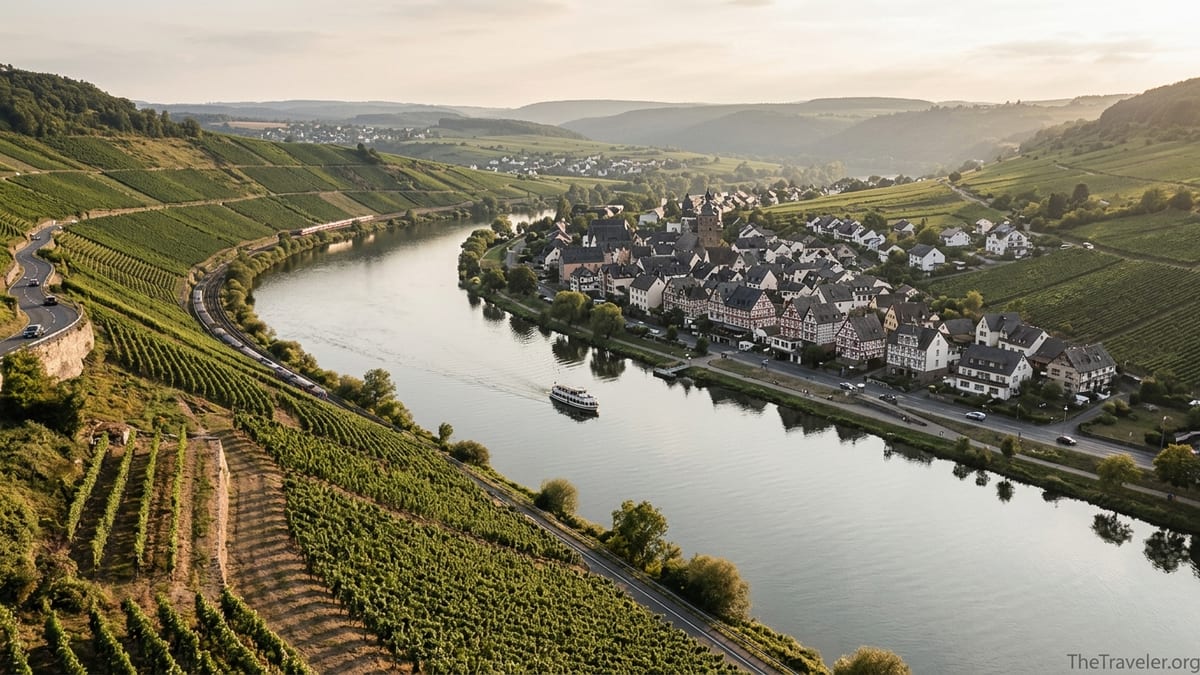
How to Structure a Rhine and Moselle Trip
The key to planning in this region is understanding the geography. The classic castle stretch of the Middle Rhine runs roughly between Bingen / Rüdesheim and Koblenz, while the most scenic part of the Moselle winds between Koblenz and Trier, with standout stops such as Cochem and Bernkastel-Kues in between. Most international travelers arrive via Frankfurt Airport, around 1.5 hours by direct train to Koblenz or Trier.
You can comfortably explore using only trains and riverboats, but a rental car opens up hillside wineries, small villages and panoramic viewpoints that are difficult to reach by public transport. Many visitors combine modes: for example, pick up a car in Koblenz for a few days along the Moselle, then drop it in Trier and continue by train. Car rental for a compact vehicle typically starts around 50 to 70 euros per day including basic insurance, depending on season and pickup location, while regional trains between nearby towns are often under 20 euros per person each way if booked on standard regional tickets.
River cruises in this region are mostly short segments rather than week-long voyages. Day boats on the Rhine run between towns like Boppard, St. Goar and Bacharach during the main season, usually April to October, with several departures daily. On the Moselle, you will find one to three hour cruises out of towns such as Cochem and Bernkastel-Kues. These short cruises are easy to slot into a day built around castles or wine tasting and are ideal even if you are staying on land rather than on a river cruise ship.
All four core bases in this itinerary have distinct personalities. Koblenz sits at the confluence of the Rhine and Moselle and works well as a transport hub with urban comforts. Cochem is more compact and resort-like, dominated by Reichsburg Castle above the town. Bernkastel-Kues is a postcard medieval wine town surrounded by steep vineyards. Trier is a small university city with major Roman remains and a more lived-in feel, making it a rewarding final stop.
3-Day Classic Taster: Castles and Cochem
A three day trip suits travelers who want a focused introduction without changing hotels too often. One workable pattern is to base in Koblenz or Cochem and make strategic day trips. If you prefer fewer hotel changes, choose Koblenz as your base and do day outings along both the Rhine and Moselle. If you like a smaller town close to vineyards, Cochem works well instead.
On Day 1, travel to Koblenz and settle in near the historic center. A mid-range option is a modern hotel near the Rhein-Mosel-Halle and riverside promenade, which places you within walking distance of the Deutsches Eck, where the Rhine and Moselle meet, and the cable car up to Ehrenbreitstein Fortress. In the afternoon, ride the cable car across the Rhine, walk the fortress ramparts and enjoy views along both rivers. Dinner in the Altstadt gives a first taste of regional dishes like schnitzel or käsespätzle accompanied by a glass of local Riesling.
Day 2 focuses on the castle stretch of the Upper Middle Rhine. Take a morning regional train from Koblenz to Boppard or St. Goar, usually a 20 to 40 minute ride depending on the stop. From Boppard you can connect with a Rhine day boat heading upriver or downriver past a chain of castles including Marksburg and Burg Katz. Many visitors ride a morning boat from Boppard to St. Goar, then walk or take a shuttle up to Burg Rheinfels, a large ruined fortress with sweeping views. Later, return to Koblenz by train. Expect to spend around 25 to 40 euros per person total for train and boat tickets for the day, depending on the exact route chosen.
On Day 3, sample the Moselle. Take a morning train from Koblenz to Cochem, which typically takes about 40 minutes. Stroll the lanes of the old town, then either hike or ride a shuttle up to Reichsburg Cochem, a restored castle with tours in several languages and panoramic views over the river bend. In the afternoon, join a short Moselle boat cruise from Cochem’s riverside landing, often lasting around 60 to 90 minutes, before returning to Koblenz by train or staying on in Cochem if you are extending your trip.
5-Day Immersion: Koblenz, Cochem and Bernkastel-Kues
With five days, you can add a second base on the Moselle and slow the pace. One pattern is two nights in Koblenz, two in Cochem and one in Bernkastel-Kues. Another is to skip a second night in Koblenz and stay more nights in the wine towns, but many travelers appreciate starting in a city with more hotel choices and straightforward rail access.
Days 1 and 2 in Koblenz follow the outline above: arrival, cable car and fortress, then a Rhine castle excursion. On Day 3, move along the Moselle to Cochem. You can arrive by train or, if you pick up a rental car, follow the river road through villages such as Winningen and Treis-Karden for views of terraced vineyards. In Cochem, hotels cluster along the riverfront and up into the streets behind. A small inn on the hillside might offer balconies with river views, while a modern riverside hotel lets you walk straight out to the promenade and boat landing.
Use your full day in Cochem for a mix of castles and wine. Start at Reichsburg if you have not already visited, then consider a short drive or bus ride out to a nearby winery that offers tastings by appointment. Many estates on the Moselle operate small tasting rooms where you can sample flights for a modest fee that is often waived with purchase. In season, you may also find simple wine taverns attached to family wineries in villages near Cochem, serving local Rieslings and light food such as flammkuchen.
On Day 5, continue upriver to Bernkastel-Kues, which sits roughly midway between Cochem and Trier. If you are driving, the route along the Moselle passes through towns like Zell and Traben-Trarbach and can easily turn into a day of scenic stops. Without a car, check regional buses or plan a connection via Wittlich station. Once in Bernkastel-Kues, base yourself in the medieval core or on the Kues side for slightly quieter surroundings. Many small hotels and guesthouses here are set in traditional half-timbered houses, with breakfast rooms that look over the vineyards.
7-Day Route: Adding Trier and Winery Time
A week in the region allows you to blend the highlights with more relaxed days in the vineyards. A common structure is two nights in Koblenz, two in Cochem, two in Bernkastel-Kues and one in Trier, with the flexibility to shift a night toward your favorite place once you are there. This length also justifies a rental car for at least part of the trip, although it remains optional if you prefer trains and buses.
After following the earlier five day pattern through Koblenz, Cochem and Bernkastel-Kues, use the extra days to go deeper into the Moselle wine scene. Bernkastel-Kues in particular makes an excellent base for tastings. In and around town, you will find numerous wineries and vinotheks where you can sample regional Rieslings, often for under 20 euros per structured tasting. Many estates require advance reservations, especially for longer or guided tastings, but some maintain drop-in hours, so it pays to check in person at the tourist office when you arrive to see which tasting rooms are open that week.
One practical approach is to devote a full day to tasting within walking or short taxi distance of Bernkastel-Kues, leaving the car parked. Book two tastings, one late morning and one mid-afternoon, and allow at least 90 minutes at each since producers often pour several wines and like to discuss vineyards and vintages. Between tastings, wander the town’s market square, cross the bridge to Kues for views back toward the castle ruins, or walk a marked footpath up into the vineyards for a picnic with views over the river curve.
Next, travel on to Trier, about an hour by car from Bernkastel-Kues or often around the same by regional bus. Trier is known for its well preserved Roman monuments, including the Porta Nigra city gate and the ruins of the imperial baths. Choose accommodation near the pedestrian center so you can explore on foot. In an afternoon you can visit the Porta Nigra, stroll past the cathedral and enjoy dinner in one of the many casual restaurants or wine bars that serve Moselle wines by the glass. On your final day, use Trier as a base for a half day out along the lower Moselle by train or bus if time allows, or simply linger over a relaxed brunch before departing by train to Frankfurt or onward into Luxembourg.
10-Day Grand Circuit by Train, Boat and Car
A 10 day itinerary lets you combine slow travel on both rivers with plenty of winery stops and time to simply sit by the water. One effective circuit is to begin on the Rhine, loop along the Moselle to Trier, then return via a different route. A sample pattern might be two nights in Koblenz, two along the Rhine between Boppard and Bacharach, two in Cochem, two in Bernkastel-Kues and two in Trier. You can do this entirely by public transport, but a car for the Moselle segment allows more flexibility with small villages and tasting appointments.
Start with Koblenz and a Rhine castle day as before, then move to a smaller Rhine town such as Boppard or St. Goar for two nights. From Boppard, you can join half day cruises that run upstream toward the Loreley Rock or downstream toward Koblenz, often with commentary on the castles and vineyards you pass. The chairlift in Boppard up to a viewpoint known for a multi-curve “four-lake” illusion of the Rhine offers a short hike and classic photographs. Staying in a family run hotel or guesthouse in the center allows easy evening strolls along the promenade once day trippers have gone.
From the Rhine, transfer back through Koblenz and follow the Moselle to Cochem for two nights, focusing on Reichsburg and a Moselle cruise. Then continue upriver to Bernkastel-Kues, where you can dedicate two days to wineries and vineyard walks. Consider one day exploring nearby villages such as Graach or Lieser, either by car or bicycle, and another day largely in town, combining a morning visit to the town’s regional wine center with an afternoon tasting at a single estate that emphasizes older vintages or specific vineyard sites.
Finish with two nights in Trier. With a full day, you can join a guided city walking tour that covers the Roman amphitheater, baths and church complexes, or explore independently with a combination ticket that includes several monuments. Those with a rental car can take a half day drive into the surrounding countryside or over the border toward Luxembourg before looping back. On the final day, allow sufficient time to reach Frankfurt Airport or your next city by train, bearing in mind that connections from Trier often involve a change in Koblenz or Saarbrücken and can take three hours or more.
Choosing Trains, River Cruises or Rental Cars
Many travelers wonder whether they should rely on trains and boats, rent a car or do both. In practice, you can comfortably see all the major towns and many castles using only public transport, but a car makes winery visits and smaller villages far more convenient. Trains run frequently along the Rhine between Mainz, Koblenz and Bonn, and along much of the Moselle between Koblenz and Trier, following the river closely and offering scenic views from the window. Ticket machines at stations can issue same day regional tickets without advance purchase, and staff at larger stations are generally used to helping English speaking visitors understand route options.
River cruises in this context are best treated as scenic legs rather than the main way of moving your luggage. Day boats typically have open decks, indoor lounges and basic food and drink like coffee, beer and simple snacks. You can board in one town, ride for one or two hours, and disembark at another town to continue by train. This works particularly well on the Rhine between Boppard and Bacharach or between Bingen and St. Goar, where the density of castles is highest. On the Moselle, shorter cruises from Cochem or Bernkastel-Kues give a relaxing break between walking tours or wine tastings.
Driving offers maximum flexibility but comes with narrow roads in village centers and occasional tight hotel parking. The main roads along both rivers are well maintained and easy to follow, but traffic can slow on sunny weekends and during major wine festivals. Parking in smaller towns often relies on pay and display machines near the riverbank or marked hotel spaces. If you plan multiple tastings on the same day, designate a driver who spits rather than swallows wine, or schedule the more wine intensive days when you can walk or use taxis so nobody has to drive after drinking.
A hybrid strategy suits many visitors. For example, you might travel from Frankfurt to Koblenz by train, enjoy a river cruise and castle day without a car, then pick up a rental car to drive the Moselle between Koblenz, Cochem, Bernkastel-Kues and Trier over several days. At the end of the trip, you could return the car in Trier or Koblenz and continue by train. This reduces car rental days while still unlocking smaller villages and hillside vantage points that can be cumbersome to reach by bus.
Where to Stay and How to Plan Winery Stops
Your choice of accommodation shapes the feel of the trip as much as your route. In Koblenz, you are likely to choose between modern business style hotels near the station or riverfront, and smaller hotels or guesthouses in the Altstadt. Staying near the center allows you to walk to the cable car, river promenades and most restaurants in the evening, while locations near the station simplify early onward trains. Expect mid-range double rooms to run from roughly 120 to 180 euros per night in high season, with lower rates in shoulder months.
In Cochem, options range from simple guesthouses just back from the river to boutique hotels that emphasize castle views. A hillside hotel might require a climb but reward you with balconies overlooking the town’s rooftops and river curve, which can be especially atmospheric in the evening when the castle is illuminated. Bernkastel-Kues leans more toward traditional small hotels and Ferienwohnungen, or holiday apartments, often in half-timbered houses. Apartments are useful for travelers who want a base for several nights, with a kitchen for simple meals between restaurant dinners and winery visits.
Planning winery stops requires more advance thought than booking hotels. Many Moselle estates, particularly smaller family operations, are working farms first and hospitality venues second. Some maintain fixed tasting room hours, while others offer tastings by prior appointment. Tourist information offices in towns like Bernkastel-Kues can point you toward wineries that are open during your visit, and regional wine centers often pour wines from multiple producers, which is useful if you do not have time to visit several individual estates. Tasting fees vary but are commonly in the range of 10 to 25 euros per person for a flight of wines, sometimes credited against purchases.
It is wise to limit yourself to two, at most three, winery stops in a single day, allowing time for conversation, note taking and meals. Many travelers enjoy combining a late morning tasting with a light lunch in town, followed by a vineyard walk or short river cruise, then an afternoon tasting. Having a simple plan for shipping or transporting bottles also helps. Some visitors buy a small number of special bottles to bring home in checked luggage, while others ask wineries about international shipping, which can be worthwhile if you plan to buy a case or more.
The Takeaway
Whether you have three days or ten, the Rhine and Moselle valleys reward careful but flexible planning. Shorter trips concentrate on headline sights like Rhine castles, Reichsburg Cochem and the riverside promenades of Koblenz, while longer stays add in vineyard walks, multiple winery visits and the Roman monuments of Trier. Mixing trains, boats and, where useful, a rental car lets you enjoy both the ease of public transport and the freedom to detour into smaller villages.
The most successful itineraries build around a handful of well chosen bases, avoid daily hotel changes and combine structured activities with free time by the water. Plan castle visits and cruises early in the day when sites are quieter, then leave afternoons or evenings open for unscheduled strolls through old towns or relaxed wine tastings. With this balanced approach, your days along the Rhine and Moselle can feel unhurried yet full, and you are likely to finish already thinking about which stretch of river you would like to return to next.
FAQ
Q1. When is the best time of year to visit the Rhine and Moselle?
The most reliable period for river cruises and outdoor activities is from May to September, with vines in full leaf from late spring and grape harvest atmosphere in early autumn.
Q2. How many days do I really need for both the Rhine and Moselle?
You can see highlights in three days, but five to seven days allow time for at least two river bases and some winery visits without feeling rushed.
Q3. Is it better to stay in one base or move between several towns?
Staying in two or three bases works best. For example, combine Koblenz or a Rhine town with one or two Moselle stops such as Cochem and Bernkastel-Kues.
Q4. Do I need to book river cruises in advance?
For day boats, buying tickets at the pier on the day is usually fine in this region, though on peak summer weekends you may want to arrive a little early for popular departures.
Q5. Can I do winery tastings without renting a car?
Yes. Many towns have central tasting rooms and wineries within walking distance, and taxis or buses can connect you to nearby villages, so a car is helpful but not essential.
Q6. How expensive are hotels along the Rhine and Moselle?
Mid-range doubles in high season often run between 120 and 200 euros per night, with guesthouses and apartments sometimes costing less, especially outside school holidays.
Q7. Is driving difficult in the river valleys?
Main roads are straightforward, but some village streets are narrow and parking can be tight. Taking your time and avoiding peak arrival times helps reduce stress.
Q8. Are the towns suitable for travelers who do not drink wine?
Yes. Beyond wineries there are castles, boat trips, hiking and cycling paths, Roman sites in Trier and riverside promenades that appeal even if you skip the wine.
Q9. How far in advance should I reserve accommodation?
For stays in July, August or during major wine festivals, it is wise to book several months ahead, while shoulder seasons often have more last minute availability.
Q10. Is it practical to visit Luxembourg from Trier?
Yes. Day trips from Trier to Luxembourg City by train or bus are common, and travel times are usually around one hour each way, making it an easy cross border excursion.