


Western Germany rewards travelers with river valleys lined with castles, lively cities like Cologne and Düsseldorf, vineyards along the Rhine and Moselle, and storybook towns such as Koblenz and Trier. To enjoy all of that without nasty surprises on your credit card, it helps to know what things actually cost right now. This guide uses recent price examples from western Germany to outline realistic daily budgets, plus what to expect for hotels, trains, rental cars, river cruises, castle tickets, meals, and wine tastings across budget, mid-range, and higher-end trips.
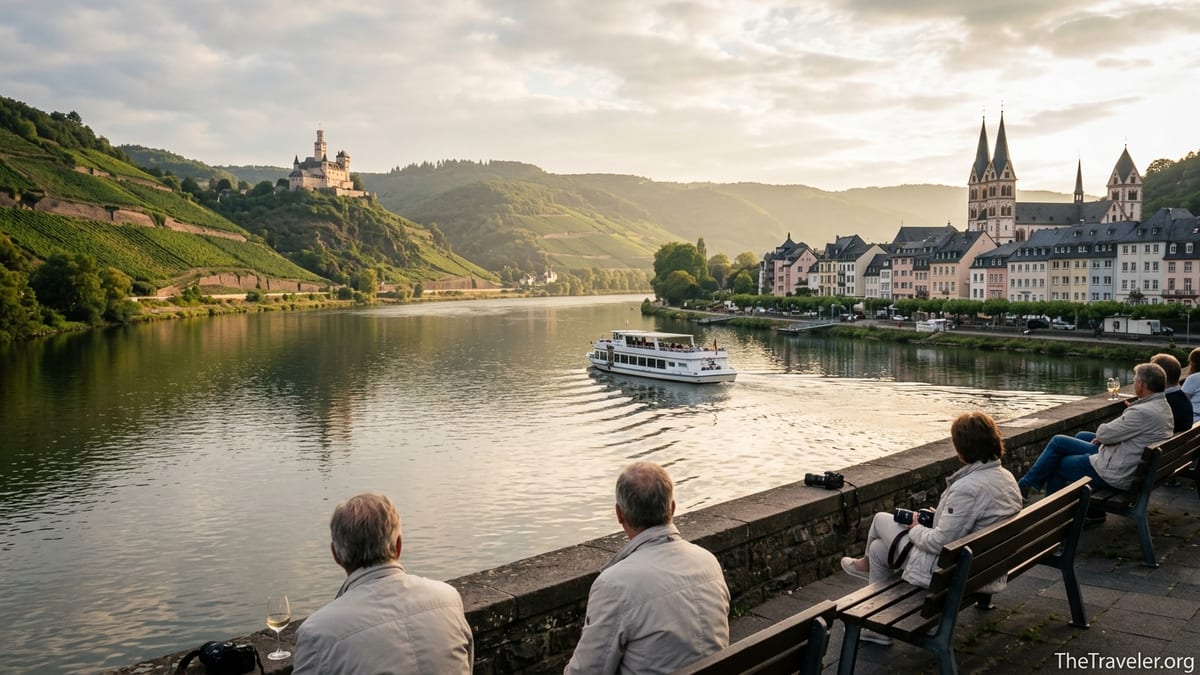
How Much Does a Western Germany Trip Really Cost?
Travel costs in western Germany vary depending on how you move around, where you sleep, and how often you sit down for restaurant meals or splurge on river cruises and tastings. A frugal traveler sticking mostly to public transport and simple guesthouses can manage on around 90 to 130 euros per person per day if sharing accommodation. A comfortable mid-range trip with central three-star or four-star hotels, at least one sit-down meal per day, and a couple of paid attractions will land closer to 150 to 220 euros per person. Travelers choosing four-star-plus or boutique hotels, frequent dining out, and several paid experiences such as cruises and guided tastings should expect 250 to 350 euros per person per day or more.
Western Germany’s major hubs like Cologne, Düsseldorf, Bonn and Mainz are slightly more expensive for hotels and dining than smaller towns such as Koblenz, Boppard or Cochem in the Rhine and Moselle valleys. On the other hand, sightseeing in the river valleys can add up quickly if you combine scenic railway stretches, castle entries and multiple boat legs in a single day. Building a realistic budget means thinking about your trip style by day: a “city day” with museums and a brewery dinner looks different on the bill than a “Rhine day” with a day cruise, castle visit and terrace lunch overlooking vineyards.
Exchange rates also matter. Prices in this guide are in euros and reflect recent ranges seen in 2025 and 2026, but your home currency cost will track the euro on your travel dates. Many travelers book big-ticket items such as multi-day cruises or prepaid train passes months ahead, locking in a concrete amount in their own currency, then plan a flexible daily cash budget in euros for food, local transport and smaller admissions.
One helpful strategy is to estimate your per-day baseline for accommodation, transport within the region and food, then add a separate “experiences pot” for river cruises, wine tours and castle entries. For many visitors, a baseline of 120 to 160 euros per person per day plus an extra 40 to 60 euros per day earmarked for activities gives enough room to enjoy highlights of western Germany without constant mental math.
Hotel Prices in Cologne, Koblenz, the Rhine and Moselle
Hotel costs in western Germany range widely, but recent booking data and rate checks in cities such as Cologne and Koblenz suggest some clear patterns. In Cologne, where the cathedral and trade fairs keep demand high, simple but central budget hotels and chain properties often start around 80 to 110 euros per night for a double room when booked in advance outside of major events. Expect three-star city hotels or well-rated boutique guesthouses within walking distance of Cologne Cathedral to fall roughly in the 120 to 170 euro range for flexible rates, with upscale four-star brands and design hotels closer to 190 to 260 euros or more depending on season and fairs.
Koblenz, at the confluence of the Rhine and Moselle, tends to be slightly cheaper than Cologne for the same standard. Recent searches for summer stays show simple guesthouses and smaller hotels from about 70 to 100 euros per night for a double, mid-range riverfront or old-town hotels in the 110 to 160 euro bracket, and nicer river-view rooms or four-star properties around 170 to 220 euros. In smaller Rhine and Moselle towns such as Boppard, Bacharach or Cochem, charming family-run hotels and wine tavern guesthouses often list doubles starting in the 80 to 130 euro window, especially if you can be flexible with dates.
Business-focused cities like Düsseldorf or Bonn have another important quirk: prices can swing sharply on weekdays during trade fairs or conferences. A central three-star that might run 140 euros midweek can drop nearer 100 euros on a quiet summer weekend when business travel dips. If your itinerary is flexible, reversing the usual pattern and spending weekdays along the Rhine and Moselle then weekends in the big cities can shave a noticeable amount off your hotel budget.
For budgeting, solo travelers in private rooms can estimate about 80 to 120 euros per night for budget options in central locations and 130 to 190 euros for comfortable mid-range hotels. Couples sharing a room can divide those figures by two. Breakfast is often included or available for around 10 to 20 euros per person, so check whether the rate includes it. In western Germany, many travelers find that paying slightly more for a riverside or old-town location saves money on trams or taxis and makes it easier to enjoy evening walks without additional transport costs.
Trains, Regional Passes and When a Rental Car Makes Sense
Rail remains the backbone of travel in western Germany, and it is usually the most efficient and relaxed way to move between cities such as Cologne, Bonn, Koblenz, Mainz and Trier. Deutsche Bahn long-distance tickets on Intercity Express or Intercity trains use a flexible fare system with advance-purchase saver fares that can start around 22 euros on many domestic routes when booked early. For example, a short intercity hop from Cologne to Koblenz can cost more than 30 euros at last minute flexible prices, but be much cheaper on a saver fare bought weeks in advance for a specific departure.
For local and regional trains, day tickets and regional passes are often better value. Group day tickets in the Rhine-Ruhr and Rhineland-Palatinate areas can cover multiple travelers for unlimited off-peak travel on regional trains, S-Bahns, trams and many buses within a large zone. Prices for these passes typically sit somewhere in the 25 to 55 euro range depending on how many people travel together and the specific network. A couple exploring the Middle Rhine by regional trains between Koblenz, Boppard and Bacharach can often ride all day for the equivalent of 10 to 20 euros per person using such tickets.
Rental cars give more freedom for side roads and small wine villages, but they add real costs. Recent comparisons on major booking platforms in 2026 show average daily prices for a medium-sized car in Germany around 60 to 70 US dollars per day before fuel, which works out to roughly 55 to 65 euros. Shorter rentals, one-way drops and automatic transmission will push that higher, and mandatory insurance can add another 10 to 20 euros per day if not already covered by your credit card. Fuel prices fluctuate, but it is reasonable to budget around 10 to 15 euros per 100 kilometers for petrol on typical consumption, so a full day of driving through the Eifel or Hunsrück hills can easily add 25 to 40 euros in fuel.
As a rule of thumb, trains are usually cheaper and less stressful for a couple or solo traveler doing a classic Rhine and Moselle itinerary focused on towns along the main lines. A rental car becomes more appealing and can be cost effective for small groups of three or four adults splitting the price, especially if you plan to visit smaller wine villages on the Ahr or Nahe rivers or combine western Germany with rural regions like the Eifel volcanos. When estimating your budget, remember to include parking; city-centre parking garages in Cologne or Düsseldorf often charge 15 to 25 euros per day.
Rhine & Moselle River Cruises and Castle Ticket Costs
River cruises are often the highlight of a western Germany trip, and prices vary by length and route. Classic day cruises on the Middle Rhine between Koblenz and Boppard, St. Goar or Rüdesheim typically cost in the region of 20 to 35 euros per person for shorter stretches and 40 to 65 euros for longer one-way or return journeys. One major operator currently prices one-way cruises from Koblenz to Boppard around 20 euros, and more elaborate combination tickets including a boat ride, Koblenz cable car and entry to Ehrenbreitstein Fortress around 30 to 35 euros per adult for 2026 sailings.
Further north, seasonal day cruises between Bonn, Linz and Koblenz tend to fall into a similar price band. As one example, a 2025 timetable for a historic paddle steamer on the Rhine lists a full-day Bonn to Koblenz and back cruise at about 46 euros per adult for a day ticket. Special themed cruises featuring brunch buffets or evening fireworks command higher prices, often 60 to 80 euros per person including food and some drinks. On the Moselle, shorter scenic cruises from Koblenz to wine villages or round-trips from Cochem or Bernkastel-Kues frequently cost around 15 to 25 euros for one to two hours on the river.
Castle and fortress entry fees are usually modest compared to the experience they offer. Many of the best-known castles along the Rhine, such as Marksburg above Braubach or Burg Rheinfels near St. Goar, charge adult admission in the 8 to 14 euro range, sometimes with mandatory or recommended guided tours. Ehrenbreitstein Fortress above Koblenz, often accessed by cable car across the Rhine, has a combined cable car and fortress ticket that typically costs around 18 to 22 euros per adult if bought on its own, or less as part of a river cruise package. Smaller ruins and local museums can be cheaper or even free, particularly if you explore less famous sites.
Multi-day Rhine or Moselle cruises that include accommodation and meals lie in a different budget category. A weeklong river cruise on a mid-range ship between Cologne, Koblenz, Trier and back can easily run 1,500 to 2,500 euros per person for an entry-level cabin, depending on the operator and time of year, with excursions sometimes extra. For this guide, the focus is on independent travelers piecing together their own routes, where you will likely mix one or two day cruises with train travel and overnight stays ashore.
Eating, Drinking and Wine Tasting Budgets
Food prices in western Germany are broadly similar to other major Western European destinations, with big savings available if you mix restaurant meals with bakery lunches and supermarket picnics along the river. Bakeries in Cologne, Koblenz or Trier routinely sell fresh rolls, pretzels and pastries for 1 to 3 euros each, and a simple takeaway sandwich or filled roll usually falls in the 4 to 6 euro range. A quick lunch of a sausage in a roll plus a drink from a kiosk might run 6 to 8 euros, while a casual sit-down lunch at a brasserie or brewery, perhaps a schnitzel or flammkuchen with a soft drink, often lands in the 12 to 18 euro bracket per person.
At dinner, traditional brewery restaurants and wine taverns in cities and river towns commonly charge around 15 to 22 euros for main courses such as roast pork, river fish or vegetarian plates, while a three-course dinner at a mid-range restaurant with a glass of local Riesling might total 30 to 45 euros per person. In more upscale settings or fashionable Cologne districts like Belgisches Viertel or Düsseldorf’s MedienHafen, expect to pay 20 to 30 euros for mains and 60 euros or more per person for a full meal with wine.
Western Germany’s wine regions add another cost category, but tastings can be surprisingly affordable. Many family wineries in the Middle Rhine, Moselle and Ahr valleys offer informal tastings for a small fee that is waived if you purchase bottles. A structured tasting of several Rieslings and Spätburgunders at a riverside estate might cost 10 to 20 euros per person, sometimes including a small snack board. More elaborate guided tastings or winery tours with cellar visits often command 20 to 35 euros per person. A glass of house wine in a local tavern usually falls around 5 to 7 euros, while a glass of beer in a Cologne brewery can be 2 to 3 euros for the traditional small Kölsch glass refilled as you drink.
For budgeting, a frugal traveler who leans on supermarket breakfasts, bakery lunches and a single restaurant meal per day might spend 25 to 35 euros per day on food and basic drinks. A mid-range traveler who enjoys a cafe breakfast, sit-down lunch, and full dinner with a drink can expect 45 to 70 euros per day. Those who factor in wine tastings, cocktails in Düsseldorf’s Altstadt and some room service or hotel-bar drinks should plan on 70 to 100 euros per person per day for food and beverages.
Sample Daily Budgets: Budget, Mid-Range and Higher-End
Putting all these elements together, it helps to imagine a typical day on the Rhine to see how costs might add up. Consider a budget-conscious couple based in Koblenz who use regional trains and a short cruise. They share an 90 euro double room in a simple guesthouse, buy a regional train day ticket for 30 euros for both of them, enjoy a short river cruise loop from Koblenz for 40 euros total, visit a castle for 24 euros for two admissions, and spend 60 euros on food and drinks for the day using bakery lunches and a modest tavern dinner. The total bill is 244 euros, or about 122 euros per person for a very full day.
A mid-range example might be a traveler spending a day between Cologne and Bonn. They stay in a central Cologne three-star at 150 euros per night, use a point-to-point train ticket at 10 to 15 euros each way, visit a museum in Cologne for 12 euros, enjoy a half-day Rhine cruise between Bonn and Linz for roughly 30 euros, and indulge in a cafe breakfast plus mid-range lunch and dinner that together cost around 60 euros. Add in a few beers and coffees for 15 euros and the daily cost lands around 280 to 300 euros; divided by two for a couple sharing a room, that is roughly 140 to 150 euros per person.
At the higher end, picture travelers on a romantic Rhine weekend staying in a boutique riverside hotel in Boppard at 230 euros per night. They take a longer scenic cruise to St. Goar and back at 60 euros per person, ride the chairlift in Boppard for 10 to 15 euros each, tour a castle for 12 euros per adult, and book a guided winery visit with tasting at 25 euros per person. With a leisurely cafe breakfast, restaurant lunch and multi-course dinner with wine, their food and drink expenses could easily reach 90 to 120 euros per person for the day. Factoring in incidental local transport or taxis of 20 to 30 euros, these travelers might see a daily spend of 320 to 380 euros per person for an indulgent but not ultra-luxury experience.
Looking across these scenarios, realistic per-person daily estimates excluding flights would be approximately 90 to 130 euros for budget travelers, 150 to 220 euros for most mid-range visitors, and 250 to 350 euros or more for higher-end travelers staying in character hotels and layering in several paid experiences. If you plan a mix of lighter sightseeing days and more expensive cruise-intensive days, averaging costs across your entire trip often leaves some extra space for an unplanned second cruise or another evening in a wine tavern.
The Takeaway
Western Germany can be as budget-friendly or as indulgent as you choose, but recent price patterns across Cologne, Düsseldorf, Bonn, Koblenz and the Rhine and Moselle valleys show that planning with concrete numbers pays off. Hotel doubles in central locations usually start around 80 to 110 euros and climb into the 150 to 220 euro range for nicer properties, while trains and regional passes offer cost-effective movement between cities and river towns. Day river cruises often cost 20 to 60 euros, castle entries cluster around 8 to 14 euros, and wine tastings range from casual 10 euro flights to more elaborate 30 euro guided experiences.
For most visitors, building a daily budget in the 150 to 220 euro per person range allows comfortable hotels, daily restaurant meals and a couple of memorable extras without constant financial stress. Travelers willing to use bakeries and supermarkets, pick regional train passes, and share basic guesthouse rooms can bring that down closer to 100 euros per person, while those chasing riverside balconies, multiple tastings and premium cruise options should plan for spending closer to 250 to 350 euros each day.
Thinking in terms of daily bundles rather than isolated prices makes trip planning easier. Decide your accommodation level, choose your main mode of transport between trains and cars, then add a realistic amount for one or two paid experiences on most days. Western Germany’s strength is that many of its best moments, from strolling the Rhine promenade at sunset to watching barges glide past vineyards, are free once you are there, letting your budget flex for the experiences that matter most to you.
FAQ
Q1. How much should I budget per day for a trip to western Germany?
Most travelers should expect to spend around 150 to 220 euros per person per day excluding flights, covering a mid-range hotel, trains or local transport, restaurant meals, and one or two paid attractions such as a short river cruise or castle visit.
Q2. Is it cheaper to travel western Germany by train or rental car?
For solo travelers and couples on typical routes between Cologne, Bonn, Koblenz and the Rhine or Moselle towns, regional trains and advance-purchase intercity tickets are usually cheaper and less stressful. Rental cars start around 55 to 65 euros per day before fuel and parking, so they become good value mainly for small groups or itineraries focused on rural wine villages.
Q3. What do hotels in Cologne and Koblenz usually cost?
In Cologne, simple central hotels often run 80 to 110 euros per night, with comfortable three-star to four-star options more commonly in the 130 to 190 euro range. Koblenz is slightly cheaper, with many mid-range riverfront or old-town hotels in the 110 to 160 euro bracket and smaller guesthouses from about 70 to 100 euros.
Q4. How much does a Rhine or Moselle day cruise cost?
Short scenic cruises typically cost 15 to 25 euros per person, while longer Middle Rhine trips between cities like Koblenz, Boppard, St. Goar and Rüdesheim can range from about 20 to 40 euros for shorter segments to around 40 to 65 euros for full-day or return journeys.
Q5. What should I expect to pay for castle and fortress tickets?
Most castles and fortresses in western Germany charge 8 to 14 euros per adult for entry, with some including guided tours. Combination tickets that include transport, such as a Koblenz cable car plus fortress entry, often run around 18 to 22 euros or are available slightly cheaper when bundled with a river cruise.
Q6. How expensive is food and drink in western Germany?
A basic daily food budget using bakeries and one restaurant meal can be about 25 to 35 euros per person. A more typical mid-range pattern of cafe breakfast, sit-down lunch and dinner with a drink usually costs 45 to 70 euros per day, with more if you add wine tastings or cocktails.
Q7. How much do wine tastings along the Rhine and Moselle cost?
Informal tastings at family wineries often start around 10 euros per person, sometimes waived if you buy wine. Structured tastings or winery tours with cellar visits usually cost 20 to 35 euros, while a glass of local wine in a tavern generally runs 5 to 7 euros.
Q8. Are regional train passes good value in western Germany?
Yes, regional day tickets can be excellent value if you plan multiple journeys in one day. In the Rhine-Ruhr and Rhineland-Palatinate areas, group day passes often cover two or more people for 25 to 55 euros total, which can bring per-person transport costs down to roughly 10 to 20 euros for a full day of travel.
Q9. How can I keep my western Germany trip on a tighter budget?
Travelers can save by booking hotels well ahead outside of trade fairs, choosing guesthouses in smaller towns, using regional train passes, mixing bakery or supermarket meals with occasional restaurant dinners, and limiting paid cruises to one or two highlight days instead of every day on the river.
Q10. When is western Germany most expensive to visit?
Hotel and some cruise prices peak from roughly May to September and during major trade fairs or events in Cologne and Düsseldorf. Shoulder seasons in April and October and winter months, apart from Christmas markets and New Year, often bring noticeably lower hotel rates and occasional off-season cruise or attraction deals.