


The steep slate vineyards of the Moselle and the castle-studded cliffs of the Middle Rhine offer one of Europe’s most atmospheric wine journeys. Within a few hours of Frankfurt or Cologne, you can be tasting Riesling in medieval villages, waking up in family-run wineries, and drifting past terraced vineyards on riverboats. This guide focuses on the Moselle and Middle Rhine, plus a glance at nearby regions, with practical trip-planning advice, concrete examples, and current travel details to help you turn a wine lover’s daydream into a realistic itinerary.
Understanding Western Germany’s Wine Map
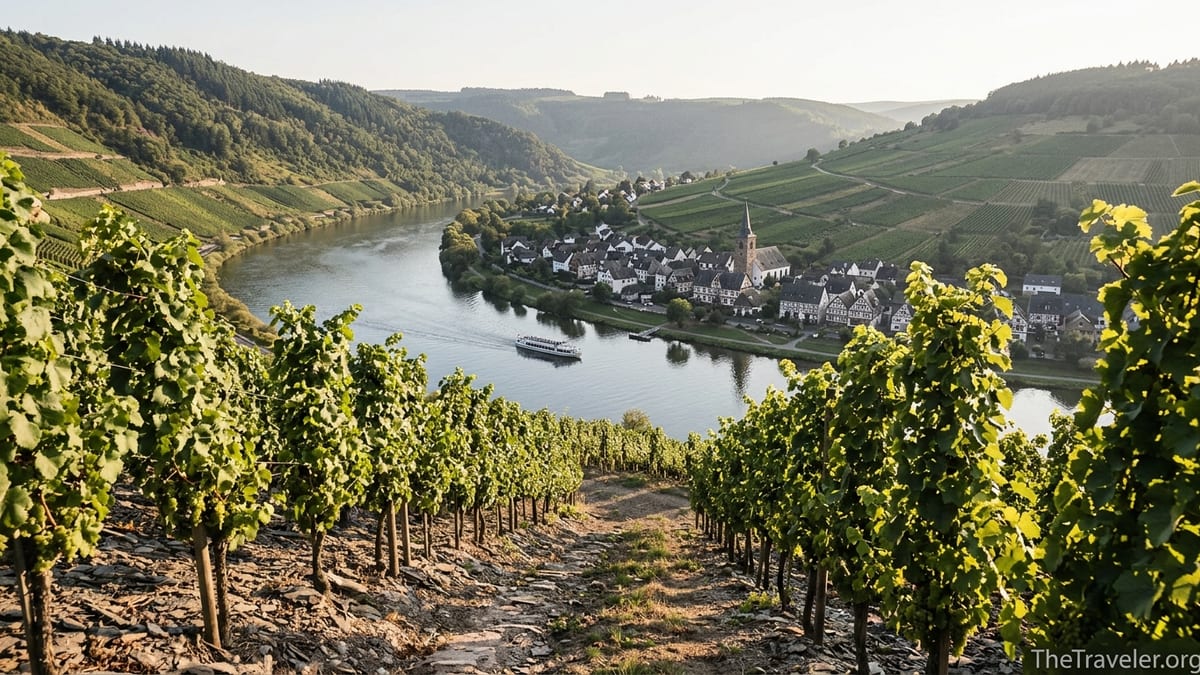
The Moselle and Middle Rhine are two of Germany’s classic Riesling regions, both located in the state of Rhineland-Palatinate and easily reached by train or car from major cities such as Frankfurt and Cologne. The Mosel wine region, often written “Mosel” within Germany, follows the winding Moselle River from near France and Luxembourg to its confluence with the Rhine at Koblenz. It is known for steep slate slopes, delicate aromatic whites, and picture-book towns like Bernkastel-Kues, Cochem, Traben-Trarbach, and Bremm.
The Middle Rhine, or Mittelrhein, runs along a roughly 120-kilometer stretch of the Rhine between Bingen and Bonn. This narrow valley, with vineyards tucked between cliffs and the river, includes famous viewpoints and villages such as Boppard, Oberwesel, Bacharach, Bingen and the Loreley rock, and much of it is recognized as the Upper Middle Rhine Valley UNESCO World Heritage landscape. It is one of Germany’s smaller wine regions by vineyard area, but it makes up for size with dramatic scenery and a tight concentration of wine villages.
For a first wine-focused trip, a common pattern is to spend three or four nights on the central Moselle, using a base like Bernkastel-Kues or Cochem, and then two or three nights along the Middle Rhine in places such as Boppard or Bacharach. This allows you to alternate structured tastings and vineyard walks with river cruises and castle visits, without needing to cover huge distances. Trains and boats tie the two valleys together, so you can move between them without renting a car if you prefer to rely on public transport and organized tours.
Nearby, other quality regions like the Rheingau and Nahe can easily be added as side trips. The Rheingau sits along a broad, more open stretch of the Rhine near Rüdesheim and Wiesbaden, famous for grand estates and dry Riesling. The Nahe lies to the southwest around Bad Kreuznach and Bad Münster am Stein, and some recent travelers describe it as a slightly quieter, less touristy option with top-class whites. Including one of these regions as a day trip or an extra night gives your itinerary more stylistic variety while keeping logistics manageable.
Moselle Highlights: Towns, Tastings and Vineyard Stays
The central Moselle between Trier and Cochem offers the densest cluster of wine villages, so it is a good starting point if you have limited time. Towns like Bernkastel-Kues combine half-timbered squares, riverside promenades, and easy access to famous vineyards with a wide selection of places to stay, from simple guesthouses to boutique hotels. A mid-range double room in a family-run hotel in Bernkastel-Kues or Ürzig often falls in the range of about 110 to 170 euros per night in high season, with breakfast typically included.
For a more immersive experience, many small wineries offer “Weingut” guest rooms or apartments attached to the cellar and family home. These vineyard stays might involve four or five rooms above a working winery in villages such as Ürzig, Graach, Wehlen, or Piesport. Rates often start around 90 to 130 euros per night for two people, depending on season and amenities. In practice, this might look like checking into a double room above a traditional Mosel winery, enjoying a welcome tasting of three or four house wines, then walking five minutes to the riverbank for dinner.
Tastings on the Moselle vary from casual to appointment-only. In larger towns and “vinotheks” (regional tasting rooms), you can often walk in and pay around 10 to 18 euros for a flight of five or six wines, sometimes offset against a purchase. Small family estates commonly ask visitors to book in advance, particularly on weekends or during the busy harvest period in September and early October. A typical structured tasting at a well-known Mosel estate might involve an hour spent sampling six to eight wines, from dry to sweet Riesling, with a fee in the 20 to 30 euro range per person, especially if you are not buying bottles.
Landscape is part of the experience. Villages like Bremm, where a famous looping bend of the river is lined with some of Europe’s steepest vineyards, show off the extremes of Mosel viticulture. Viewpoints above the Calmont vineyard or above Piesport offer sweeping views of slate terraces and barge traffic far below, and many visitors pair a morning hike through the vines with an afternoon of cellar visits. Even if you are not an avid hiker, short signposted vineyard trails around places like Bernkastel, Zeltingen and Traben-Trarbach provide accessible introductions to the terrain.
Middle Rhine Charm: Castles, Cliffs and River Towns
The Middle Rhine condenses a surprising number of wine villages into a relatively short distance, framed by castles perched on cliffs and narrow river bends. Boppard is one of the region’s key wine towns, with about 75 hectares of vineyards and the large Bopparder Hamm site rising directly behind the town. Steep, south-facing slopes here create a mild microclimate, and the view from the hills over the Rhine is one of the classics of the valley.
Bacharach, further downstream toward Bingen, is another favorite base, especially for travelers seeking a quieter, tightly clustered medieval town. Historic half-timbered houses crowd narrow lanes, and you can walk from the riverside to hillside chapels and castle ruins in less than half an hour. Boppard and Bacharach both sit on the main railway line, which makes them practical spots if you plan to explore by train, hopping to nearby villages like Oberwesel, St. Goar or Bingen for tastings and castle visits.
Accommodation choices on the Middle Rhine run from traditional inns to hotels housed in former merchant houses and castles. Expect village guesthouse rooms to start roughly around 100 to 130 euros per night in peak season for a double, while riverfront rooms with balconies viewable over the Rhine can creep closer to 160 to 220 euros depending on date and standard. In Boppard, you can also find basic but well-located rooms in older properties for less if you book early or travel outside peak weekends.
The vineyards themselves are rarely far away. From Boppard, a chairlift runs up to viewpoints like Gedeonseck above the Bopparder Hamm, passing over terraces of vines. Guided vineyard walks organized by the local tourist office or individual winegrowers often end with a tasting back in town, where you might sample five wines for a set fee. In Bacharach and Oberwesel, you can follow signposted trails through steep vineyards up to ruins and little chapels, then descend through the old town for a glass of dry Riesling or Spätburgunder (Pinot Noir) in a wine tavern courtyard.
Harvest Season, Wine Festivals and When to Go
Wine travel in Western Germany works year-round, but the character of your trip changes significantly with the seasons. Late spring, from late April into May, brings vineyard greenery, moderate temperatures and fewer crowds. Many regions stage spring wine events at this time, when producers present the new vintage in communal tastings and open courtyards. Summer from June through August is the heart of river-cruise season, warm evenings in outdoor wine gardens, and frequent local festivals in Mosel and Rhine villages.
Harvest season on the Moselle and Middle Rhine typically runs from roughly mid-September into October, depending on weather and grape ripeness. This is when you will see tractors in the vineyards and baskets at cellar doors, and it is also when many wine towns host their biggest festivals. On the Moselle, riverside towns such as Bernkastel-Kues, Cochem and smaller villages like Lieser or Lösnich schedule autumn wine weekends with Federweißer, the still-fermenting new wine, paired with onion tart and other seasonal dishes. An autumn festival in a village like Lösnich near Bernkastel might fill the final weekend of September with open winery courtyards, local food stands and music.
Along the Middle Rhine, Boppard’s annual wine festival weekends at the end of September and early October fill the riverfront with standing wine stalls from local estates and live music, and processions featuring regional wine queens highlight the area’s traditions. In smaller towns such as Bacharach or Oberwesel, events labeled culinary summer nights or wine weekends feature tastings combined with local gastronomy on the riverbank. These harvest-season celebrations create a lively atmosphere, but they also push room rates up and fill popular accommodations many months in advance.
If your focus is quiet tasting and relaxed walks among the vines, consider shoulder periods such as late May or mid-October after the main harvest rush. Winter brings a different charm, with some river towns hosting Christmas markets and a slower pace in the vineyards, though you will find fewer ferries and shorter hours at some estates. Whenever you travel, check local tourism office calendars for specific dates of wine festivals and events in the year of your visit, then decide whether you want to time your trip to coincide with them or to avoid the crowds.
Practical Tasting Logistics and Designated Driver Solutions
Good planning is essential if you want to explore these regions’ wines responsibly. Tastings can add up quickly, and many vineyards lie along narrow, winding roads or steep hillsides. If you are driving, the safest approach is to adopt a true designated driver who spits or tastes minimally, or to focus your visits around towns where you can walk or use local transport between tastings. German drink-driving regulations are strict, and rural roads on the Moselle and Rhine can be dark and twisting at night.
One common solution is to base yourself in a walkable town such as Bernkastel-Kues, Cochem, Traben-Trarbach, Boppard or Bacharach, then arrange tastings within walking distance or a short taxi ride. In Bernkastel-Kues, for example, you can spend a full day tasting in local vinotheks and wineries without ever needing a car. In Boppard, you can join a guided vineyard walk with tastings included, eliminating the need for a driver altogether. Taxis between neighboring villages are usually available but may need to be booked by phone, so ask your accommodation to help with reservations.
Organized wine tours provide another layer of safety and convenience. In both regions, local operators offer half-day or full-day tours that include transport, cellar visits and tastings, sometimes with lunch in a traditional wine tavern. Prices vary by group size and route, but you can expect to pay somewhere in the range of about 75 to 150 euros per person for a small-group full-day experience, depending on inclusions. In practical terms, that might mean being picked up at your hotel in Cochem at 10 in the morning, visiting three wineries in nearby villages such as Bremm and Zell, walking through a steep slope, and returning by late afternoon.
For independent travelers who do not wish to drive at all, public transport connects many key points. Local trains tie together Koblenz, Cochem, Traben-Trarbach, Bernkastel area stops, Boppard, Bacharach and Bingen, and regional day tickets can keep costs down if you are hopping between multiple towns. Riverboats on both the Moselle and Rhine offer hop-on, hop-off services between major villages in high season, which can double as sightseeing and transportation. This allows you to plan a day like cruising from Boppard to St. Goar, exploring Rhine castles, tasting at a wine tavern, then taking the train back in the evening without ever needing to get behind a wheel.
Choosing and Booking Vineyard Stays
Staying on a vineyard or in a winegrower’s guesthouse is one of the most memorable ways to experience the Moselle and Middle Rhine. These properties are often working family wineries with a small number of guest rooms or apartments. Typical check-in involves meeting an owner or family member in the tasting room, receiving keys and sometimes a welcome glass of wine, and getting tips on walking routes or nearby restaurants. Breakfast is usually served in a communal room, sometimes with views over the vines or river.
In Mosel villages such as Ürzig, Wehlen, Graach, Zeltingen or Piesport, vineyard stays are especially common. Rooms may be simple but comfortable, with traditional décor, and the emphasis is on hospitality and access to the wines rather than luxury amenities. Expect Wi-Fi, a solid breakfast, and parking if you are driving, but do not always expect air-conditioning or elevators in older buildings. On the Middle Rhine, Boppard and nearby villages also have estate guesthouses, though the region has a higher share of traditional hotels and inns compared to the Moselle.
When booking, consider how you plan to get around. If you will rely on trains and boats, look for vineyards within walking distance of a station or ferry stop, or in a village where taxis or rideshares are available. Travelers who plan to drive can choose more tucked-away properties on the valley slopes, with sweeping views but limited public transport. In harvest season, vineyard stays in popular villages such as Bernkastel-Kues, Cochem, Boppard and Bacharach can book out months ahead for festival weekends, so reserving as early as possible gives you more choice and better rates.
Most wineries handle direct bookings through their own websites or by email, sometimes in German-first but generally responsive to English inquiries. Specialized booking platforms and regional tourism sites also list winegrower accommodations with photos and brief descriptions. When you write or reserve, it is worth asking whether a tasting is included in the room rate, what time breakfast is served, and whether there are any planned events such as cellar tours or courtyard evenings during your stay. Clear communication before arrival helps align expectations and avoids disappointment if the owners are occupied with harvest work during your dates.
Beyond Moselle and Middle Rhine: Adding Rheingau or Nahe
Once you have decided to spend time in Western Germany’s wine country, it is relatively easy to add a neighboring region without greatly complicating logistics. The Rheingau sits just east of the Middle Rhine, along a broader, more open part of the river near Rüdesheim, Geisenheim and Eltville. It is known for more structured dry Rieslings and historic estates housed in monasteries and castles. From Bingen or Bacharach, it is a short train or ferry hop across the river and down to Rüdesheim, allowing a day of cable-car rides over vineyards, visits to large estates, and strolls through wine tavern lanes before heading back to your Moselle or Rhine base.
The Nahe region, southwest of the Middle Rhine and Rhine confluence, offers a quieter landscape centered on towns such as Bad Kreuznach and Bad Münster am Stein. Some recent visitors see it as an underappreciated alternative to the busier Moselle and Middle Rhine, with top quality Riesling and other whites but fewer crowds and a more local feel. It is feasible to spend a night or two in a spa town along the Nahe, perhaps between stays on the Moselle and Middle Rhine, using trains or a rental car to connect the dots.
These add-on regions are particularly attractive for repeat visitors who have already covered the classic Moselle loops between Cochem and Bernkastel or the main stretch of the Rhine between Bingen and Koblenz. They also broaden your palate. A week-long itinerary might begin with three nights in a Mosel village such as Bernkastel-Kues, continue with two nights on the Middle Rhine in Boppard or Bacharach, and finish with one or two nights in the Rheingau or Nahe before returning to Frankfurt Airport.
From a budget perspective, daily costs in Rheingau and Nahe are broadly similar to the Moselle and Middle Rhine. Mid-range hotel rooms usually fall in the same 110 to 180 euro bracket, tastings in the 10 to 25 euro range depending on level and producer, and restaurant main courses roughly from 15 to 30 euros. The main difference lies in ambiance. Where the Moselle offers small slate villages tucked into river bends and the Middle Rhine delivers cliffside castles and tightly packed river towns, the Rheingau and Nahe feel more open and, in parts, less tourism-driven, something many wine travelers appreciate after a few busy festival days.
FAQ
Q1. How many days do I need for a Moselle and Middle Rhine wine trip?
Most travelers are satisfied with six to eight days split between the Moselle and Middle Rhine, such as three or four nights on the Moselle and two or three on the Middle Rhine, with travel days bookended in Frankfurt or Cologne.
Q2. Do I need a car to explore the Moselle and Middle Rhine wine regions?
No, but a car increases flexibility. Trains, buses and riverboats connect major towns, and organized wine tours and taxis can fill gaps. Many travelers comfortably combine public transport with walking between nearby villages.
Q3. When is the best time of year to visit for wine tastings?
Late April to early June and September to mid-October are particularly good. You will find active vineyards, pleasant temperatures and frequent festivals, though harvest weeks in September and early October can be busy and require advance bookings.
Q4. Can I visit wineries without an appointment?
In larger towns and vinotheks, walk-in tastings are common, especially in summer. Smaller family estates often prefer or require appointments, particularly on weekends or during harvest, so emailing ahead is strongly recommended.
Q5. How much should I budget for wine tastings per day?
A modest day of visits with two or three tastings might cost around 30 to 60 euros per person in fees, depending on the level of winery and whether you buy bottles that offset or waive the tasting charges.
Q6. Are vineyard stays suitable for travelers who do not speak German?
Yes. Many winery owners speak at least some English, especially in touristy villages. Emails and basic communication are usually smooth, and regional tourism offices can assist if you need help with bookings or translation.
Q7. Is harvest work open to visitors who want to help pick grapes?
Occasionally, but it is not guaranteed. Most estates focus intensely on their own logistics and labor during harvest, so visitors are more likely to experience the atmosphere through festivals and cellar tastings than through hands-on picking.
Q8. What types of wine should I expect beyond Riesling?
Riesling dominates, but you will also encounter other whites such as Müller-Thurgau and Weissburgunder (Pinot Blanc), and reds like Spätburgunder (Pinot Noir) and Dornfelder, particularly on warmer sites and in certain villages.
Q9. How far in advance should I book accommodation for festival weekends?
For major Moselle and Middle Rhine wine festivals in September and early October, booking three to six months ahead is prudent, especially for river-view rooms, vineyard stays and popular towns like Bernkastel-Kues, Cochem, Boppard and Bacharach.
Q10. Are these regions suitable for travelers who are not serious wine experts?
Absolutely. The Moselle and Middle Rhine combine wine with river scenery, castles, hiking and historic towns. Many tastings are relaxed and educational, welcoming beginners who simply enjoy good wine and beautiful landscapes.