


Eastern Germany offers two very different nature escapes that often appear on the same short list: Saxon Switzerland, a dramatic sandstone hiking region south of Dresden, and the Spreewald, a tranquil maze of forested waterways south of Berlin. Both promise fresh air and a break from city life, but they deliver it in completely different ways. If you are torn between cliffs or canals, this guide compares hiking versus waterways, scenery, costs, access, and the overall feel of each destination so you can choose the trip that matches your travel style.
Overall vibe: cliffs versus canals
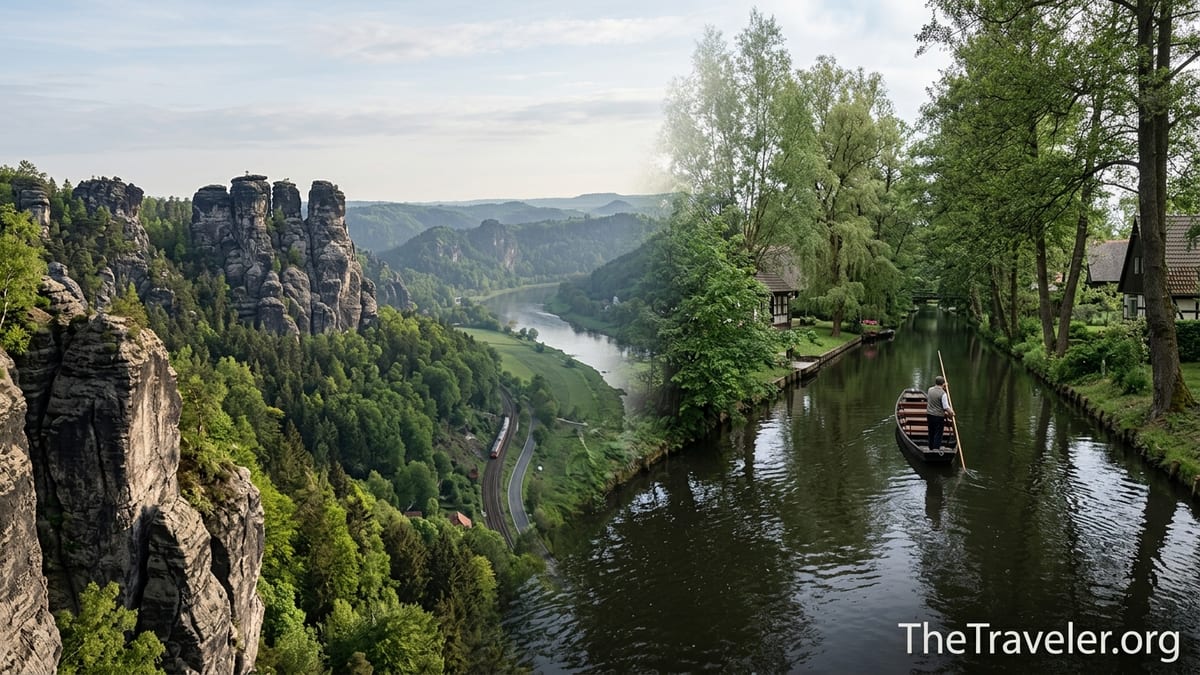
Saxon Switzerland is all about vertical drama. The landscape is dominated by weathered sandstone towers, sheer rock faces and balcony-like viewpoints high above the River Elbe. Classic spots such as the Bastei rock bridge near Rathen and the jagged Schrammsteine ridge near Bad Schandau give the area a distinctly alpine feel even though the elevations are modest. Villages like Königstein and Schmilka cluster along the river, with trails climbing steeply from the valley into the national park.
The Spreewald could hardly be more different. Here the River Spree fans out into hundreds of slow, shallow channels flowing through flat wetlands and mixed forest. Villages such as Lübbenau, Lübben and Lehde are threaded by narrow canals that function almost like streets, with traditional wooden boats serving as public transport and delivery vehicles. The atmosphere is quiet, green and low-key, with much of the activity happening at water level rather than on hilltops.
In practical terms, Saxon Switzerland feels like an adventure playground for hikers and climbers. Expect stone staircases, iron ladders and long-distance trails such as the Malerweg that string together viewpoints and table mountains. The Spreewald is calmer and slower. The main decisions of the day are whether to take a guided barge tour, rent a kayak, or simply sit at a waterside café sampling local pickled cucumbers while boats glide past.
For travelers weighing the two, the choice often comes down to whether you want to spend your energy on steep trails and viewpoints or prefer relaxed hours on the water with short walks in between. Both regions have family-friendly options, but the core experiences are very different.
Hiking in Saxon Switzerland versus walking in the Spreewald
Saxon Switzerland is one of Germany’s premier hiking regions, and it caters to everyone from casual walkers to experienced trekkers. Well-known routes include the Malerweg, a roughly 112 kilometer long-distance trail that can be broken into day stages, and shorter circuits around landmarks like the Bastei, Pfaffenstein or Lilienstein. Many classic routes involve tall stairways carved into the rock, metal railings and occasional ladders, especially on ridge walks around the Schrammsteine above Bad Schandau, so sure-footedness is important even when distances are moderate.
For a concrete example, a typical day hike might be a 10 to 14 kilometer loop from Bad Schandau to the Schrammsteine viewpoints, gaining several hundred meters of elevation and using steep staircases to reach narrow rock balconies. Another popular outing is the circuit from Rathen up to the Bastei Bridge and down through the Schwedenlöcher, a narrow sandstone gorge with long stair sections that can see heavy foot traffic in summer. These routes reward the effort with expansive views over the Elbe valley, cliff formations and forested plateaus.
The Spreewald does not offer mountain hiking in this sense. The terrain is almost completely flat, with short forest paths and dyke-top trails along the canals. A walk from Lübbenau to the traditional village of Lehde, for instance, is only a few kilometers each way and mostly level, often combined with a one-way boat ride. Many visitors replace long walks with paddling, using kayaks or canoe-like boats to explore the channels and stopping at waterside beer gardens or picnic spots.
If your main goal is to log vertical meters and challenging hikes, Saxon Switzerland clearly has more to offer. If you prefer gentle strolls that children and less mobile travelers can handle, combined with time on the water, the Spreewald’s walking options are more forgiving, though less dramatic.
Waterways and boat experiences in the Spreewald versus the Elbe
The Spreewald’s signature experience is being propelled silently along tree-lined canals while a boatman or boatwoman steers with a long pole. In places like the main harbor in Lübbenau you can simply walk up, choose from several operators, and join a scheduled tour of one to three hours. Prices vary by route and season, but as a broad reference you can expect a standard shared barge tour to cost roughly the price of a modest restaurant meal per adult, with reduced rates for children and options for longer themed rides that include village stops or evening outings.
Independent travelers often prefer kayaks or Canadian canoes, which are widely rented in Lübbenau, Lübben and Burg. Day rentals are typically in the range of a few tens of euros per boat depending on capacity and season, which makes it good value for couples and small groups. Rental stations usually provide simple waterproof maps that mark recommended circuits and rest points, such as circular routes that loop through quieter forest canals before returning along slightly busier main channels.
Saxon Switzerland does have water experiences, but they are secondary to hiking. The Elbe River carries regular passenger boats, including historic paddle steamers between Dresden and Bad Schandau, and there are small ferries at towns like Rathen, Königstein and Schmilka linking the two banks for walkers and cyclists. These rides are short and functional rather than the core attraction, although cruising a section of the Elbe with sandstone cliffs rising on both sides can be a memorable addition to a hiking day.
For travelers primarily motivated by waterways, the Spreewald is far richer. You can easily design a long weekend around different paddling routes, from family-friendly two-hour loops to full-day journeys between villages. In Saxon Switzerland, boats mostly help you reach trailheads or add a scenic break between walks along the riverbank.
Scenery and seasons: when each destination shines
Visually, Saxon Switzerland is at its best on clear days when the sandstone towers, forested ridges and the broad Elbe valley are visible from high viewpoints. Spring and autumn are particularly attractive, when temperatures are moderate and the deciduous forest adds either fresh greens or autumn colors. Summer brings lush vegetation but also the biggest crowds on well-known paths. In winter, occasional snow and frost highlight the rock formations, but some ladders and narrow sections can be icy and local authorities may temporarily close certain paths after storms or when there is a risk from fallen trees, so it is wise to check current information before planning demanding routes.
The Spreewald comes alive in a different way. Spring floods often mean higher water levels and a lively feel on the canals, while summer is prime time for long, warm days on the water and outdoor terrace dining. The flat forest canopy creates dappled light on the channels, and warm evenings are ideal for longer paddling trips or sunset barge tours. Autumn offers quieter waterways, cooler temperatures and golden foliage reflected in the slow-moving channels. In winter, tourism slows down sharply, although some barge operators run special cold-weather trips with blankets and hot drinks, and occasional ice on shallow channels creates a different atmosphere.
For photographers and scenery lovers, Saxon Switzerland delivers more “big view” panoramas from elevated platforms, often reached after steep climbs. Spots like the Bastei, Brand plateau or various Schrammsteine balconies are classic sunrise or sunset locations when conditions cooperate. The Spreewald is more about intimate scenes at eye level: reflections of alder trees in still water, traditional wooden houses accessible only by footpaths and bridges, or a barge sliding under a low wooden crossing with baskets of local cucumbers on board.
Seasonality also affects crowd patterns. Saxon Switzerland’s busiest trails around the Bastei and Rathen can feel crowded on summer weekends and public holidays, while quieter corners of the park remain more peaceful. In the Spreewald, main harbors such as Lübbenau can be lined with tour boats on warm weekends, but renting a kayak and choosing less trafficked side canals can restore a sense of solitude within minutes.
Access, transportation and getting around
Both regions are reachable by rail, but from different urban hubs. Saxon Switzerland is most naturally accessed from Dresden. Frequent suburban trains run along the Elbe, stopping at towns such as Pirna, Königstein, Bad Schandau and Schmilka. From these stations, local buses, ferries and in some cases small trams connect to trailheads and viewpoints. Many visitors base themselves in Dresden and make day trips, especially to the Bastei or Schrammsteine, using regional tickets that cover both the train and the short river ferries.
The Spreewald aligns more with Berlin. Direct regional trains link Berlin with Lübben and Lübbenau in roughly one hour, with additional services to Cottbus for those heading to the spa town of Burg. Once there, most guesthouses and boat harbors are walkable from the station in Lübbenau or Lübben, and rental bikes or e-bikes are common for moving between villages. Visitors without a car can easily spend several days combining trains, walking, cycling and paddling without needing private transport.
Within Saxon Switzerland, public transport is designed around hikers. The S-Bahn along the Elbe acts as a spine, while buses fan out to villages and plateaus. A dedicated national park railway and seasonal hiking buses serve trailheads that are less convenient for standard lines. Schedules can be more limited in early morning and late evening, so it is important to check return times if you plan long routes. In the Spreewald, the main constraint is the timetable of barge tours and the closing hours of rental stations; independent paddlers must ensure they return boats on time or arrange one-way rentals where offered.
If you plan to rent a car, both regions have advantages. Driving from Dresden to trailheads around Pirna or Bad Schandau is straightforward, with paid parking areas at many popular starting points. In the Spreewald, car access makes it simpler to combine multiple villages and remote put-in points for paddling. However, parking directly at busy harbors in Lübbenau or at spa complexes in Burg can fill quickly on summer weekends, so early arrivals are helpful.
Where to stay, food and approximate costs
Accommodation in Saxon Switzerland ranges from guesthouses in small towns to wellness hotels and self-catering apartments. Bad Schandau, Königstein and Pirna are common bases, as is Dresden for those who prefer an urban stay with day trips. A mid-range double room in a family-run hotel or pension in a place like Bad Schandau often sits in the range of a modest city hotel in Germany, though prices peak on summer weekends and during school holidays. Budget travelers can look for simple guesthouses in smaller villages or campsites along the Elbe.
In the Spreewald, Lübbenau and Burg are popular hubs. Lübbenau offers a mix of simple pensions, small hotels and holiday apartments within walking distance of the canals, while Burg leans more towards spa hotels with access to thermal baths and wellness facilities. As a ballpark, expect a comfortable double room in a central guesthouse to cost similar to a comparable property in Saxon Switzerland, though canal-front views and spa access tend to command higher rates. Booking ahead is advisable in summer or on holiday weekends, especially for properties with direct water access or family rooms.
Food in both regions is generally good value compared with larger German cities. In Saxon Switzerland, you will find hearty Saxon dishes such as pork roasts, potato dumplings and regional cakes in village inns, along with lighter modern options in hotel restaurants. In the Spreewald, local specialties feature strongly, notably pickled cucumbers, fish from the waterways and dishes influenced by the Sorbian minority, often served at riverside beer gardens and rustic restaurants. A typical main course in a casual restaurant in either region is usually priced at a level comparable to a mid-range eatery in Dresden or Berlin, and lunchtime specials or smaller plates help keep costs under control.
Activity costs differ more clearly. In Saxon Switzerland, most hiking is free apart from any transport or parking fees. Ferries across the Elbe and local buses are usually modestly priced, and regional public transport day tickets can reduce costs for groups or those planning multiple trips. In the Spreewald, you should budget separately for barge tours or boat rentals, which become the main daily expense beyond meals and accommodation. A family renting a canoe for a full day, for instance, will likely spend an amount broadly similar to what they might pay for a couple of restaurant meals, so planning a mix of paddling and walking days can spread the budget.
Families, couples and different travel styles
For families, both destinations can work well, but the experiences are distinct. Children who enjoy climbing stairs, scrambling and “castle-like” rock formations often love Saxon Switzerland, especially around the Bastei, where bridges and viewpoints feel adventurous without requiring technical skills. However, some routes involve exposure, ladders and long staircase sections that can be tiring or intimidating for younger kids, so route selection is important. Easy riverside paths and short walks to viewpoints such as Brand or Lilienstein give family-friendly alternatives.
The Spreewald tends to suit families who prefer gentle activities with clear endpoints. Short barge tours require no physical effort and allow even very young children and grandparents to participate together. Renting a large canoe or stable kayak for a half-day circuit and stopping at playgrounds or ice cream stands along the canals can be a relaxed way to spend time outdoors. Because the terrain is flat, cycling with older children is straightforward, and traffic on minor roads and dyke paths is often light, though helmets and normal road awareness remain essential.
Couples looking for romance or relaxation might lean towards different choices depending on their preferences. Saxon Switzerland offers dramatic viewpoints, sunrise hikes and the chance to pair nature days with evenings in Dresden’s historic center or riverside wine villages. It feels more adventurous and can be quite atmospheric in early morning mist or at golden hour on the rock terraces. The Spreewald, by contrast, has a slower, more intimate mood: quiet paddling through narrow shaded channels, spa evenings in Burg’s thermal baths and long dinners on hotel terraces just above the waterline.
For active solo travelers or groups of friends, Saxon Switzerland is better suited to full days of physical effort and varied terrain, including trail running, climbing and multi-day hikes. The Spreewald works well for sociable weekends with a mix of paddling, cycling and long meals, especially for people based in Berlin who want a quick escape without complex planning.
Which destination suits which traveler?
If your top priority is hiking, viewpoints and feeling like you are in a mini mountain range, Saxon Switzerland is the clear winner. You can string together several days of different routes without repeating scenery, from table mountains like Pfaffenstein to ridge walks above the Schrammsteine and quieter forest valleys. Even if you stay in Dresden, day trips by train allow you to reach multiple trailheads with relative ease. This destination fits travelers who are comfortable with strenuous walking, steep staircases and the possibility of crowds in the most famous spots.
Travelers who imagine their ideal nature break as mostly time on the water, punctuated by short walks and village visits, will be happier in the Spreewald. The region is designed around the canals, from boat harbors and rental stations to cafés with their own moorings. It is especially suitable if you want low-intensity days, perhaps combining a morning barge tour with an afternoon in a spa and an evening stroll along the dykes, or if you are introducing children or older relatives to gentle paddling in a safe, shallow environment.
Those who want a bit of everything can consider combining both regions in a longer trip. For example, spend three or four days in Dresden with two hiking days in Saxon Switzerland, then travel by train to Berlin and add two to three days in the Spreewald for recovery on the canals. The contrast between the rock landscapes and wetlands makes the overall journey feel diverse without requiring long distances; the train time between Dresden and the main Spreewald towns via Berlin is manageable for most travelers.
In the end, your decision may come down to where you start from. Visitors already planning to be in Berlin will find the Spreewald an easier add-on, while those focusing on Saxony, Dresden or journeys towards the Czech border will naturally gravitate to Saxon Switzerland. Both regions reward slow travel and benefit from at least two nights to experience sunrise or evening light without rushing back to a distant base.
The Takeaway
Choosing between Saxon Switzerland and the Spreewald is not about which place is objectively “better” but about matching terrain, activities and mood to your travel priorities. Saxon Switzerland is a compact hiking paradise with cliffside viewpoints, demanding staircases and a strong sense of verticality. The Spreewald is a lowland labyrinth of canals and forests where the main rhythm is set by paddles dipping quietly into still water and barges gliding between waterside villages.
If you are an active traveler seeking big views, full hiking days and the option to combine nature with a cultured city like Dresden, Saxon Switzerland will likely feel more satisfying. If your ideal break involves gentle exploration, quiet waterways, spa time and easily accessible day trips from Berlin, the Spreewald will fit more naturally. Both are accessible without a car, both offer family-friendly experiences, and both remain pleasantly local in feel compared with some of Germany’s better-known tourist hotspots.
Ultimately, there is no wrong choice. You can stand on a sandstone balcony watching the Elbe wind past fortress-topped hills, or sit in a wooden boat gliding through a flooded forest where houses are linked by bridges instead of streets. Decide whether your next eastern German escape should rise above the river or float upon it, and plan accordingly.
FAQ
Q1. Is Saxon Switzerland or the Spreewald better for a day trip from Berlin?
For a straightforward day trip from Berlin, the Spreewald is usually more practical, as regional trains reach Lübben or Lübbenau in about an hour and most activities start right by the station. Saxon Switzerland is feasible from Berlin but involves longer train journeys via Dresden, leaving less time on the trails.
Q2. Can beginners handle the hiking in Saxon Switzerland?
Yes, beginners can enjoy Saxon Switzerland if they choose easier routes such as short walks to viewpoints and avoid ladders or exposed ridge paths. However, even simple hikes often include many stairs, so basic fitness, good footwear and realistic planning are important.
Q3. Do I need to book boat tours in the Spreewald in advance?
Outside peak summer weekends you can often just show up at harbors like Lübbenau and join the next available barge tour. In high season or if you have a larger group or specific route in mind, reserving in advance with an operator or your accommodation can prevent long waits.
Q4. Is it possible to visit both destinations in one trip?
Yes, many travelers combine them in a longer itinerary, for example starting in Dresden with a few days of hiking in Saxon Switzerland and then continuing to Berlin for city time and a two or three day Spreewald visit. Trains make the connection manageable without a car.
Q5. Which destination is better for young children?
The Spreewald generally suits younger children better because activities like barge tours and gentle paddling require little exertion and the terrain is flat. Saxon Switzerland can still work, but routes with long staircases and steep drops need careful selection and close supervision.
Q6. Are there good options for spa and wellness stays?
Both regions offer wellness options, but the Spreewald has a stronger spa focus, particularly around Burg where thermal baths and wellness hotels are a major draw. Saxon Switzerland has some spa hotels, often in places like Bad Schandau, but they are more of a complement to hiking than the central attraction.
Q7. How expensive are activities in each region?
In Saxon Switzerland, most hiking is free apart from transport and parking, so daily activity costs can be quite low. In the Spreewald, you should budget for boat tours or kayak rentals, which are generally affordable but will add a noticeable line to your daily spending compared with simply walking.
Q8. Is a car necessary to enjoy either destination?
No, a car is not essential for either region. Saxon Switzerland’s trailheads are well served by trains, buses and ferries along the Elbe, and the Spreewald’s main villages and boat harbors are within walking distance of regional train stations. A car adds flexibility but is not required for a satisfying visit.
Q9. When is the best time of year to visit Saxon Switzerland for hiking?
Spring and autumn are generally ideal for hiking in Saxon Switzerland, offering cooler temperatures, fewer crowds on popular trails and attractive forest colors. Summer is also rewarding but can be hotter and busier, while winter brings a quieter atmosphere along with possible ice and some path closures.
Q10. When is the best time to visit the Spreewald for waterways?
Late spring to early autumn is the prime period for enjoying the Spreewald’s canals, with May to September offering the most reliable combination of warm weather, full boat schedules and open restaurants. Early autumn is especially pleasant for slightly cooler temperatures and fewer visitors on the waterways.