


Eastern Germany is compact enough that you can combine big-hitting cities with dramatic sandstone gorges and castle-topped hills in a single trip. The challenge is not where to go, but where to base yourself: should you sleep in central Berlin or a quieter suburb, pick Dresden or Leipzig for culture, or stay inside Saxon Switzerland for hiking instead of day-tripping from a city? This guide compares the most useful bases in Berlin, Dresden, Leipzig, Potsdam, Saxon Switzerland and a handful of smaller towns, with concrete suggestions for couples, families, road trippers and train-based travellers.
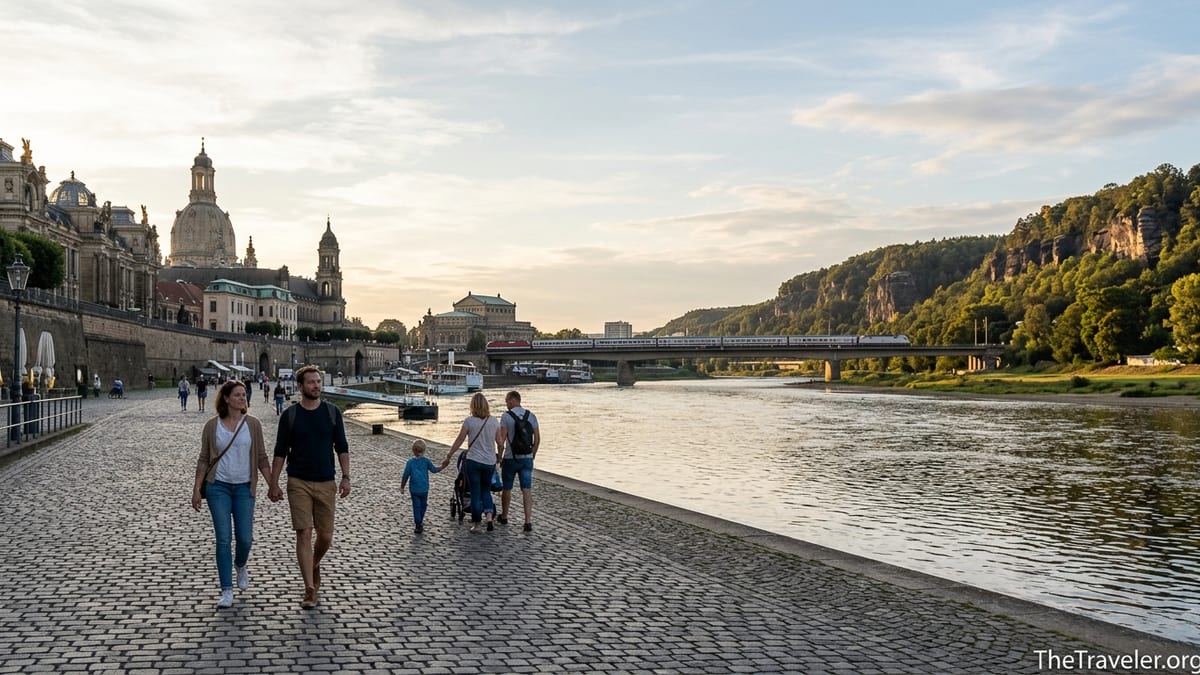
How to choose your base in eastern Germany
Before picking specific neighborhoods, decide what type of trip you are planning. A long weekend city break focused on museums and food is very different from a two-week rail journey that combines capital sights with hiking in Saxon Switzerland. Travel time between major hubs is short by American standards: the fast train from Berlin to Dresden usually takes around two hours, and Berlin to Leipzig can be about 75 minutes on high-speed services, which makes one-city bases with day trips realistic.
Transport style matters. If you are relying on trains and trams, prioritize walkable hubs near main stations or S-Bahn lines. For example, staying near Berlin Hauptbahnhof or in Mitte puts you on multiple S- and U-Bahn lines with direct links to most of the city, while a hotel near Leipzig Hauptbahnhof makes it easy to hop on regional trains to Naumburg, Halle or the lakes south of the city. Drivers can be more flexible and choose village guesthouses in Saxon Switzerland or villa districts on the outskirts of Dresden, at the cost of paying for parking and dealing with low-emission zones in city centers.
Season also shapes the best base. In December, Berlin, Dresden and Leipzig host big Christmas markets, so you may want central hotels within a 10-minute walk of the main squares. In summer, when temperatures are often warm and days long, basing in Saxon Switzerland or by the lakes near Leipzig lets you escape urban heat and still take occasional city day trips. Prices move with demand: a mid-range double room in central Berlin can easily cost 130 to 180 euros per night on a busy August weekend, while the same budget might secure a junior suite or spa hotel in Bad Schandau in shoulder season.
Finally, consider noise and atmosphere. Districts that are perfect for nightlife can feel punishing if you are traveling with kids or prefer early nights. In Berlin, Kreuzberg and Friedrichshain are packed with bars and late-opening restaurants, while Prenzlauer Berg and parts of Mitte tend to be quieter at night. In Dresden, the Altstadt is calmer after dark than the bar-heavy Outer Neustadt, despite being busier during the day.
Berlin vs Potsdam: best bases for a capital city break
For most first-time visitors, Berlin itself is the most practical base. The central district of Mitte is often recommended by local guides as the closest thing to a downtown core, with major sights such as Museum Island, the Brandenburg Gate and the Berlin TV Tower all within a 10 to 20 minute walk of each other. Recent neighborhood guides highlight Mitte’s dense public transport and hotel options, from business-style chains near Friedrichstrasse to boutique properties around Hackescher Markt, which usually start from roughly 140 to 220 euros per night for a double in high season.
If you prefer a more residential feel, Prenzlauer Berg and Kreuzberg are popular alternatives. Travel writers frequently describe Prenzlauer Berg as safe, leafy and family-friendly, especially around Kollwitzplatz and Helmholtzplatz, with plenty of playgrounds, cafés and brunch spots. Kreuzberg and neighboring Friedrichshain lean younger and livelier, with graffiti-covered streets, bars that stay open late and plenty of affordable eateries. Budget travelers can still find private rooms in simple hotels or hostels in these areas from about 80 to 120 euros per night if they book early outside peak festivals.
Potsdam, reachable in roughly 30 to 40 minutes by S-Bahn or regional train from central Berlin, works well as a quieter base if you are more interested in parks and palaces than nightlife. Accommodation in Potsdam’s Old Town and around Sanssouci Park tends to consist of smaller hotels and guesthouses rather than big chains. Here, mid-range doubles often cost around 110 to 160 euros in summer. From Potsdam you can explore Sanssouci Palace, the Dutch Quarter and lakeside paths on foot or bicycle, then ride into Berlin for a day of museums. This setup is attractive for couples seeking a slower pace or families who want green space and playgrounds on their doorstep.
For train-based holidays focused on urban sightseeing, basing in central Berlin and visiting Potsdam as a day trip is usually more efficient, because late trains back to Berlin are frequent. However, road trippers or those planning several days of cycling might flip the model and sleep in Potsdam, driving into Berlin for occasional dinners or museum visits and avoiding Berlin’s denser traffic and parking challenges.
Dresden or Leipzig: which city should be your hub?
Dresden and Leipzig are only about 75 minutes apart by direct train, so for many travelers they form a natural pair. Dresden is famous for its rebuilt Baroque Old Town, lined with landmarks such as the Frauenkirche, Zwinger and Semperoper. Leipzig leans more towards art, music and a lived-in urban feel, with the Gewandhaus, Bach heritage and a thriving student and creative scene. Both have compact centers and efficient public transport, making them easy bases without a car.
In Dresden, you essentially choose between the Altstadt and the Neustadt. Travel guides updated in 2026 often describe the Altstadt as a solid all-rounder with strong tram and train connections as well as family amenities and parks along the Elbe. Hotels here range from large international chains overlooking the river to smaller design hotels on side streets. Expect to pay roughly 110 to 180 euros for a central double in a well-rated mid-range property. The big advantage is that most sights are less than a 15-minute walk away, even with children, and the area becomes pleasantly quiet after day-trip buses leave.
The Neustadt, on the north bank of the Elbe, splits into the more elegant Inner Neustadt and the bohemian Outer Neustadt. The latter is full of bars, street art and independent shops, particularly around Alaunstrasse and Görlitzer Strasse. Guides aimed at younger travelers often recommend it for those wanting nightlife and a local vibe, while families may prefer the calmer villa districts further east, such as Blasewitz, which combine greenery and river access with tram rides of 15 to 25 minutes into the center. Prices in the Neustadt are similar to the Altstadt, with small guesthouses and serviced apartments sometimes undercutting big hotels.
Leipzig’s most convenient base is the Zentrum, the compact inner city just south of the main station. Here you will find a range of hotels from business chains near Augustusplatz and the Gewandhaus to higher-end properties tucked into historic passages like Mädler-Passage. A modern, well-reviewed hotel a five-minute walk from Leipzig Hauptbahnhof typically charges around 120 to 170 euros per night for a double in busy months. From the Zentrum you can walk to most museums, churches and concert halls in 10 to 15 minutes.
Just south of the core, Südvorstadt and Zentrum-Süd are popular with students and young professionals. Booking platforms list a cluster of apartments and small hotels here, often noting that trams take about 5 to 10 minutes into the center and that Karl-Liebknecht-Strasse, nicknamed KarLi, has a dense row of bars, cafés and restaurants. Nightlife-oriented travelers may appreciate staying here rather than in the quieter Zentrum, while families might prefer the central area or leafier neighborhoods near Clara-Zetkin-Park. For a week-long city break, Leipzig can also serve as a base for day trips to Naumburg’s cathedral, the industrial heritage sites in the region, or the lake district formed from former open-cast mines south of the city.
Staying close to the trails: best bases in Saxon Switzerland
Saxon Switzerland, the dramatic sandstone region along the Elbe southeast of Dresden, rewards travelers who stay inside the area rather than commuting in for day hikes from the cities. Official hiking information for the Malerweg long-distance trail highlights towns such as Bad Schandau, Pirna, Königstein, Kurort Rathen, Stadt Wehlen and Schmilka as suitable bases, thanks to S-Bahn and bus connections that link trailheads with accommodation. The S1 suburban line typically runs along the Elbe between Dresden and Schöna, stopping at riverside villages and making car-free hiking straightforward.
Bad Schandau is the best-known hub, a small spa town with riverfront hotels, guesthouses and an elevator linking the center with viewpoints above town. Travel companies promoting rail-based trips in the region often use Bad Schandau as their base for two or more nights, from which guests ride the S-Bahn to Kurort Rathen for the Bastei Bridge or to Königstein Fortress. Accommodation ranges from traditional spa hotels with wellness facilities to simpler pensions; mid-range doubles here commonly cost around 100 to 160 euros per night, with higher prices in summer and autumn foliage season.
Kurort Rathen and Stadt Wehlen work well for travelers who want to wake up directly among the cliffs. Rathen, a tiny spa village split by the Elbe, sits below the Bastei rocks and has a small cluster of hotels and guesthouses, many with views of the river or rock formations. Car access is limited and you typically arrive by S-Bahn and ferry, so it suits hikers, couples and those planning shorter stays rather than road trippers with a lot of luggage. Königstein, further downstream, combines a historic hilltop fortress with a proper town and thus more services, including supermarkets and a wider choice of apartments.
For multi-day hiking or a quiet romantic break without a car, choosing one village and staying put can be ideal. For example, a couple could base in Kurort Rathen for three nights, hiking to the Bastei and along the Elbe one day, then taking the S-Bahn to Schmilka to explore wilder trails near the Czech border on another. Families, on the other hand, often appreciate the slightly larger size and facilities of Bad Schandau or Pirna, where they can find playgrounds, riverside paths suitable for strollers and indoor pools to fall back on in bad weather. In all cases, checking that your accommodation offers the local guest card that covers regional transport can save money on trains and buses during your stay.
Matching bases to trip styles: couples, families, road trips and rail holidays
For couples, the most appealing bases are usually characterful districts with strong dining scenes and walkable streets. In Berlin, that might mean a boutique hotel near Hackescher Markt in Mitte or a stylish guesthouse in Prenzlauer Berg within a few minutes’ walk of wine bars and bistros. In Dresden, a river-view room in the Altstadt or a design hotel in the Inner Neustadt puts you within easy reach of evening strolls along the Elbe. In Saxon Switzerland, a family-run pension in Kurort Rathen or Schmilka provides quiet nights and direct access to trails.
Families tend to prioritize safe, quiet streets, playgrounds and easy transport over nightlife. In Berlin, family-focused blogs frequently recommend Prenzlauer Berg, especially around Kollwitzplatz, because of its many playgrounds and traffic-calmed streets, combined with tram and U-Bahn access into Mitte in about 10 to 15 minutes. In Dresden, staying in the Altstadt or in villadominated Blasewitz means short tram rides to attractions and quick access to parks like the Großer Garten or riverside meadows, which are ideal for picnics and cycling. In Leipzig, central hotels near the main station or Clara-Zetkin-Park allow for simple logistics with strollers and young children.
Road trippers often prefer a mix of urban and rural nights. A classic itinerary might start with three nights in Berlin, where a hotel in Charlottenburg or Mitte offers easier parking than hyper-central pedestrian zones, followed by two nights in Dresden or Leipzig, then three nights in Saxon Switzerland. Drivers can choose guesthouses outside town centers to avoid parking fees, perhaps staying in a farmhouse pension on the Elbe plateau above the cliffs or in a village near Pirna, using the car to reach viewpoints at sunrise or sunset that are less accessible by public transport.
For train-based holidays, concentrating your overnights in well-connected hubs saves time moving luggage. One effective plan is to base in Berlin for four or five nights, using the fast trains for day trips to Leipzig or Potsdam, then shift to Dresden for three nights, including a full day in Saxon Switzerland reached by S-Bahn. Travelers with more time might instead stay three nights in Leipzig, three in Dresden and three in Bad Schandau, moving steadily southeast. In each case, choosing accommodation within a 10-minute walk of the main station or a central tram interchange can make early departures and late arrivals less stressful.
Smaller bases and side-trip ideas beyond the big three
Beyond Berlin, Dresden, Leipzig, Potsdam and Saxon Switzerland, several smaller towns in eastern Germany can serve as atmospheric bases or rewarding side trips. Meissen, northwest of Dresden, is known for its porcelain heritage and hilltop cathedral. Staying a night or two here, perhaps in a guesthouse in the Old Town, allows you to wander cobbled streets after day-trippers leave, then ride a regional train back to Dresden or continue along the Elbe valley. Room rates are often a little lower than in the bigger cities, with simple doubles sometimes available under 100 euros in shoulder seasons.
In the Leipzig region, Naumburg and Halle appeal to culture lovers. Naumburg’s cathedral and nearby wine villages along the SaaleUnstrut wine route can fill a relaxed couple of days, while Halle offers museums and a more off-the-beaten-path urban experience. Both are reachable from Leipzig in roughly 30 to 45 minutes by regional train, so many travelers opt to keep Leipzig as their base and visit these towns on day trips rather than changing hotels. This works especially well if you have a multi-day regional rail pass.
Closer to Berlin, small towns and lakeside areas in Brandenburg provide a contrast to the capital. Without naming specific hotels, you can expect a mix of lakeside resorts, simple pensions and holiday apartments, some of which cater heavily to Berlin residents on weekend breaks. Travelers who enjoy cycling can base in a town with easy rail access to Berlin, such as Oranienburg or Königs Wusterhausen, then ride through forests and along canals during the day and make occasional forays into the city.
If you only have a week, these smaller bases are best treated as optional extras rather than anchors of the itinerary. However, for longer trips of two weeks or more, adding one or two nights in a town like Meissen or Naumburg can add variety and a slower pace between intense city sightseeing and full days of hiking in Saxon Switzerland.
The Takeaway
Choosing where to stay in eastern Germany is about matching your base to your travel style rather than chasing a single “best” city or neighborhood. Berlin and Potsdam together form a versatile capital region: Berlin for museums, nightlife and sheer variety, Potsdam for palaces and slower, greener surroundings. Dresden and Leipzig offer two different flavors of culture, close enough together that you can comfortably sample both on a single trip. Saxon Switzerland adds a wild element of sandstone cliffs and forested gorges, best experienced by staying in small towns threaded along the Elbe.
For couples, characterful districts and scenic villages are usually more satisfying than purely practical locations. Families benefit from quiet, park-filled neighborhoods with short, straightforward tram journeys rather than edgy nightlife hubs. Train-based travelers should focus on hubs like Berlin, Leipzig, Dresden and Bad Schandau, where stations sit close to the center, while drivers can trade urban convenience for rural calm in villa districts and countryside pensions. With realistic expectations about travel times, budgets and atmosphere, you can compose an itinerary that feels coherent rather than rushed, using each base as a lens on a different side of eastern Germany.
FAQ
Q1. Is it better to base in Berlin or Potsdam for a first visit?
For a first visit, most travelers find it more convenient to base in Berlin, ideally in Mitte or a well-connected neighborhood like Prenzlauer Berg, then visit Potsdam on a day trip by S-Bahn or regional train. This keeps you close to major museums and nightlife while still allowing plenty of time in Sanssouci Park and Potsdam’s Old Town.
Q2. How many nights should I spend in Saxon Switzerland?
If you enjoy hiking, plan at least two nights in Saxon Switzerland so you have one full day on the trails and another for shorter walks or a fortress visit. Serious hikers often stay three to four nights in towns like Bad Schandau, Kurort Rathen or Königstein to explore several different areas without rushing.
Q3. Can I visit Saxon Switzerland as a day trip from Dresden or Leipzig?
Yes, from Dresden it is straightforward to visit Saxon Switzerland as a day trip using the S-Bahn along the Elbe, and many visitors hike to the Bastei and return the same evening. From Leipzig, the journey is longer and usually requires a change of trains, so a day trip is possible but more tiring; staying overnight in the region is more relaxed if you have the time.
Q4. Which city works better as a base, Dresden or Leipzig?
Dresden is better if you are interested in Baroque architecture, river scenery and easy day trips into Saxon Switzerland, while Leipzig suits travelers who prioritize music, contemporary culture and a denser bar and café scene. Because they are close together by train, many visitors split their time between both cities.
Q5. Where should families with young children stay in Berlin?
Families often prefer quieter, residential neighborhoods with playgrounds and short rides into the center, such as Prenzlauer Berg around Kollwitzplatz or family-friendly parts of Mitte near parks. These areas combine cafés, supermarkets and traffic-calmed streets with tram or U-Bahn links that make reaching major sights straightforward with a stroller.
Q6. Is staying near Berlin Hauptbahnhof a good idea?
Staying near Berlin Hauptbahnhof is practical for train-based travelers, early departures and short trips, because many S- and U-Bahn lines meet there. The immediate surroundings feel more businesslike than atmospheric, so some travelers choose a hotel a couple of stops away in Mitte, which balances convenience with a more interesting neighborhood feel.
Q7. Do I need a car to enjoy Saxon Switzerland?
You do not need a car to enjoy Saxon Switzerland, as the S-Bahn and local buses link most trailheads and towns along the Elbe, and many accommodations provide guest cards that include regional transport. A car can be helpful for reaching remoter viewpoints at off hours, but it is not essential for a typical hiking trip.
Q8. Are Leipzig and Dresden good bases for Christmas markets?
Both Leipzig and Dresden make excellent bases for Christmas markets, with large, atmospheric markets usually held in their central squares from late November into December. Staying in or near the historic centers allows you to reach stalls, concerts and festive events within a short walk, even in cold or wet weather.
Q9. How far in advance should I book accommodation in eastern Germany?
For peak periods such as summer weekends, major events and the Christmas market season, it is wise to book at least two to three months in advance, particularly for popular areas like central Berlin, Dresden’s Altstadt or small towns in Saxon Switzerland. In quieter months, you can often find good options with only a few weeks’ notice.
Q10. Is it safe to stay in nightlife areas like Kreuzberg or Leipzig’s Südvorstadt?
Nightlife districts such as Kreuzberg in Berlin or Südvorstadt in Leipzig are generally safe for visitors who follow normal urban precautions, though they can be noisy and crowded late at night. If you are sensitive to noise or traveling with children, consider choosing a side street or a calmer neighborhood while still visiting these areas for evenings out.