


Western Germany is one of Europe’s most rewarding regions for city breaks, castle-hopping and slow travel along the Rhine and Moselle rivers. The challenge is not what to see, but where to base yourself so that day trips stay pleasant instead of exhausting. This guide compares the main bases used by travelers – Cologne, Düsseldorf, Koblenz, Cochem, Trier and a handful of Rhine and Moselle wine towns – and helps you match each place to the kind of trip you have in mind, from car-free long weekends to road trips and romantic escapes.
How to Choose the Right Base in Western Germany
Before you lock in a non-refundable hotel, be clear about your priorities. Do you want big-city nightlife and museums, or half-timbered villages and vineyard walks? Are you happy changing trains, or do you prefer to step off your InterCity and roll your suitcase a few minutes to your hotel? Your answers will strongly influence whether Cologne or Düsseldorf make more sense than Koblenz, Cochem, Trier or a small wine town.
Transport is the first big filter. Cologne and Düsseldorf are major rail hubs with frequent long-distance trains to the rest of Germany, Belgium and the Netherlands. Koblenz sits where the Moselle meets the Rhine and has hourly regional trains that follow both river valleys, making car-free day trips to places like Cochem or Boppard straightforward. Smaller towns such as Cochem or Traben-Trarbach are on branch lines or require bus connections, which feels charming on a relaxed week but can be tiring on a short, packed itinerary.
Budget is the second major factor. A centrally located mid-range hotel in Cologne or Düsseldorf often starts around 120 to 200 euros per night for a double room during normal periods, with prices spiking during trade fairs and Christmas markets. In smaller Rhine and Moselle towns you can still find comfortable guesthouses and family-run hotels in the 90 to 140 euro range in shoulder seasons, sometimes less outside peak summer and festival weekends. Self-catering apartments in wine villages can bring nightly costs down further for longer stays.
Finally, think about atmosphere and trip style. Couples often gravitate towards Moselle or Middle Rhine villages with river views and wine taverns, while first-time visitors who want a mix of big sights, nightlife and a few river excursions tend to choose Cologne or Düsseldorf. Road trippers can comfortably stay in quieter scenic bases like Boppard or Bernkastel-Kues and use the car for castle loops, while car-free travelers may prefer Koblenz or Cochem, where riverboats, trains and buses cover much of what they want to see.
Cologne: Best for Big-City Base and Short Breaks
Cologne is the default base for many first-time visitors to western Germany, and with good reason. Its main station opens directly onto the famous cathedral, and from here fast trains radiate to Brussels, Amsterdam, Frankfurt and Berlin. For a three or four night city break that includes one or two river day trips, staying near Cologne Hauptbahnhof keeps logistics simple. You can take a morning regional train down the Rhine to Koblenz, Boppard or Linz, enjoy a few hours of walking and castle views, and be back at your Cologne hotel before dinner.
Accommodation choice in Cologne is wide, from large international chains near the station and cathedral to smaller design hotels and guesthouses in neighborhoods like Ehrenfeld and Belgisches Viertel. As a rough guide, expect basic but central doubles to start around 110 to 130 euros per night outside major events, with better-located or more stylish properties from about 150 euros. During peak weeks such as big trade fairs or Advent weekends, the same rooms can jump significantly, so flexible dates and early booking help a lot.
Cologne also works well for travelers who value nightlife, food variety and museum options more than picture-perfect old towns. The riverside promenade, Romano-Germanic Museum, chocolate museum and the cathedral itself easily fill a day or two, and evenings can be spent in traditional beer halls drinking Kölsch or exploring contemporary bars. On a five day stay, many visitors will plan one or two day trips by train: for example, a Rhine day via Koblenz and Boppard, or a Moselle excursion to Cochem, which is reachable in roughly two hours with a change at Koblenz.
Cologne is less ideal if you mainly want quiet vineyard walks, early nights and a strong sense of being immersed in river scenery. Trains from Cologne to the prettiest stretches of the Middle Rhine take around 60 to 90 minutes one way, and although the rides are scenic, repeating this commute daily can get tiring. In that case, consider splitting your time: two nights in Cologne for big-city culture, then move to the Rhine or Moselle for a slower-paced finale.
Düsseldorf: Understated Hub for Business, Art and Short Trips
Düsseldorf is sometimes overshadowed by Cologne, but it can be an excellent base for certain travelers. The city has a compact Altstadt, an impressive modern waterfront in the MedienHafen and one of Germany’s best concentrations of contemporary art galleries and museums. Its airport offers plentiful connections, and the main station has frequent direct trains along the Rhine toward Cologne, Bonn and Koblenz, as well as north to the Ruhr area and beyond.
For visitors combining work and leisure, Düsseldorf is a strong candidate. Many trade fairs and conferences take place here, and it is easy to bolt on a Saturday Rhine excursion. A typical pattern might be three nights in a modern business hotel near the Hauptbahnhof or in the MedienHafen, with nightly rates around 140 to 200 euros outside fair periods, then a Saturday train to Koblenz or Linz followed by a short boat ride on the Rhine before returning in the evening.
Düsseldorf is also known for its food and nightlife, especially in the Altstadt, which has a dense cluster of bars and breweries pouring the local Altbier. If you want a lively evening scene but slightly less tourist volume than Cologne, this can be appealing. However, its historic core is smaller and its direct connection to the Rhine’s most scenic stretch is less immediate than from cities like Koblenz. You are still roughly 90 minutes by regional train from highlights like Boppard or Sankt Goar.
As a primary base for a week-long river-focused trip, Düsseldorf is usually less efficient than staying further south. It works best for travelers flying in and out of Düsseldorf Airport, or those who want an urban base with sophisticated dining, shopping and art, and who plan just one or two river days. If your priority is vineyard landscapes and castle silhouettes from dawn to dusk, you will be happier relocating closer to the Middle Rhine or Moselle after a night or two in the city.
Koblenz: Central Hub for Rhine and Moselle Day Trips
Koblenz sits almost exactly where the Moselle meets the Rhine, and its geography makes it one of the most practical car-free bases in western Germany. From Koblenz Hauptbahnhof, hourly trains run down the Moselle to Cochem and on to Trier, and along both banks of the Rhine toward Boppard, Sankt Goar, Bacharach and Mainz. Riverboats also depart from the Deutsches Eck area in season, allowing classic cruises through the UNESCO-listed Upper Middle Rhine.
For travelers who want to sample both rivers without changing hotels repeatedly, Koblenz is a strong contender. A four or five night stay gives enough time for one Moselle day to Cochem, another Rhine loop by boat and train, plus time for the Ehrenbreitstein Fortress and Koblenz’s own old town. Because it is a real city rather than a purely touristic village, you will find supermarkets, varied restaurants and accommodation at several price points, from simple pensions up to modern riverfront hotels.
Approximate prices in Koblenz are slightly lower than in Cologne for similar standards. Comfortable mid-range doubles often fall in the 110 to 150 euro range per night in shoulder seasons, with simpler guesthouses or apartments below that. Staying near the old town or along the Rhine makes evening strolls easy, while locations closer to the station are convenient for early trains. As always, large events and festival weekends can tighten availability, so reserve ahead if you plan to visit in high summer or during major wine festivals along the rivers.
Koblenz does not have the romantic, compact village feel of somewhere like Bacharach or Cochem, and some travelers find its postwar architecture less charming than smaller towns. However, as a base it is hard to beat for flexibility. It works especially well for car-free visitors, families or older travelers who value shorter walking distances, flatter streets and reliable transport options in case of bad weather. Road trippers can also use Koblenz as a practical midpoint, though they might prefer a smaller wine town if scenic character is the priority.
Cochem and Moselle Wine Towns: Romantic Bases for Slower Trips
Cochem is one of the most photographed towns on the Moselle, with its hilltop Reichsburg castle and pastel houses lining the riverbank. It sits on the Koblenz to Trier railway, which means regular trains connect it to both larger cities. This makes Cochem a very popular base for couples and small groups who want a slower, scenic trip focused on wine tasting, short hikes and castle visits rather than intensive city sightseeing.
In Cochem, many accommodations are family-run hotels, guesthouses and apartments, some with balconies facing the Moselle. Prices vary by proximity to the center and season, but a typical mid-range double in a small hotel often starts around 110 to 140 euros per night between Easter and October, with lower rates available in early spring and late autumn. A river-view room or higher-end boutique stay can cost more, especially on peak weekends. Restaurants and wine taverns are easy to reach on foot, and evening strolls along the river promenade are a highlight.
For travelers who want an even quieter base, smaller Moselle towns like Traben-Trarbach or Bernkastel-Kues offer a different feel. Traben-Trarbach is known for its Art Nouveau villas and sits on a branch rail line from Bullay, while Bernkastel-Kues is surrounded by vineyards and has a beautiful medieval market square. Accommodation in these towns leans toward guesthouses, holiday apartments and a handful of upscale hotels, some with in-house spas and elaborate wine lists. Nightly rates are often slightly lower than Cologne for comparable comfort, though premium riverfront properties can match or exceed big-city prices.
The Moselle works best if you stay at least three or four nights. From a base like Cochem, you can combine a castle visit with a short river cruise, take a train or bus to a nearby village for a wine tasting, or head out on a marked vineyard trail. Cycling is also popular along the Moselle cycle path. Car-free travelers should check timetables in advance, as buses into the side valleys and smaller villages may be infrequent, especially outside summer and weekends. Some local guest cards offered by towns or regional tourist boards include free or discounted public transport, which can add value on longer stays.
Trier: Historic City Base at the Western Edge
Trier is often described as Germany’s oldest city and is filled with Roman sites, including an amphitheater, thermal baths and the imposing Porta Nigra gate. It sits on the Moselle close to the Luxembourg border and is connected by regional and occasional long-distance trains to Koblenz, Cologne and Luxembourg City. For travelers particularly interested in history, churches and Roman ruins, Trier makes a rewarding two or three night base that can be combined with a Moselle stay or a wider western Germany itinerary.
As a university city, Trier has a mix of traditional hotels, modern chains and budget-friendly guesthouses and apartments. Mid-range doubles in central locations typically start around 110 to 140 euros per night in non-peak periods. Staying near the historic core allows you to walk between the main Roman monuments, the cathedral and the riverside. Evenings can be spent in wine bars that feature Moselle Rieslings from the surrounding region, so you still get a strong sense of the local wine culture without staying in a small village.
Trier is also a practical option for travelers who want to blend city comforts with day trips along the Moselle. Regional trains follow the river to Cochem and Koblenz, and some itineraries extend into Luxembourg for a day. That said, travel times between Trier and the most photographed Middle Moselle villages can be longer than from a central town like Cochem, which is something to consider on a short trip. If your focus is primarily river scenery and wine villages, Trier is best used as one segment of a multi-base itinerary rather than your only stop.
Because Trier is slightly further from major airports used for transatlantic flights, some visitors pair it with Frankfurt or Cologne at the start or end of a trip. A common pattern is to fly into Frankfurt, spend a night near the station, travel to Trier for three nights, then continue along the Moselle toward Cochem and Koblenz before ending in Cologne for a final city break. This kind of routing avoids backtracking and lets you experience both historic city life and quieter river landscapes.
Rhine Wine Towns: Boppard, Bacharach and Beyond
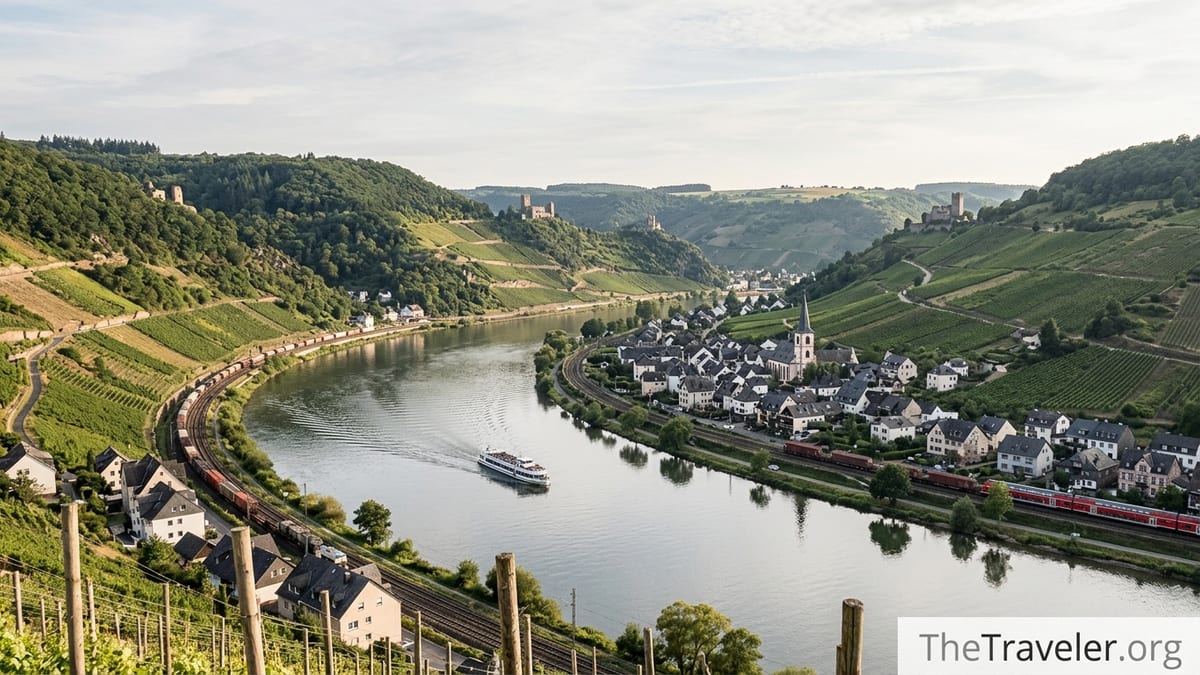
The Upper Middle Rhine Valley between roughly Koblenz and Bingen contains some of Germany’s most iconic river scenery, with steep vineyard slopes, frequent castles and compact riverside villages. Towns like Boppard, Sankt Goar and Bacharach are classic bases for couples and slower trips, especially in late spring, summer and early autumn. Many travelers choose one of these as a base for three or four nights, spending their days riding boats between villages, visiting castles such as Rheinfels or Marksburg, and hiking short sections of ridge-top trails.
Boppard is one of the larger settlements in this stretch and has a good selection of hotels, guesthouses and apartments, many clustered near the river promenade. As a rough guide, mid-range hotel rooms often fall in the 100 to 140 euro range per night outside festival periods, with river-view balconies and on-site restaurants the main upgrades. Boppard has frequent trains along the left bank of the Rhine and is a common stop for river cruises, which makes it easy to combine rail and boat day trips without a car.
Bacharach and Sankt Goar are smaller and feel more intimate. Their half-timbered old towns appeal strongly to travelers looking for a romantic getaway, and evenings tend to be quiet once day visitors leave. Accommodation here can book out quickly in high season due to limited supply, and room prices may run slightly higher than in less-famous towns for similar standards. However, wake up to church bells and views across the river, and the premium can feel worthwhile.
Rhine wine towns are ideal for travelers who want to be surrounded by scenery rather than use their base as a major transport hub. Train and boat services are good along the river itself, but reaching large cities such as Cologne or Frankfurt for a spontaneous day trip will usually take around 90 minutes or more with at least one change. If your trip is only three nights and you hope to visit both Cologne and several Rhine villages, consider splitting your stay or using Koblenz instead of a small town as your single base.
Matching Bases to Trip Types: City Breaks, Road Trips and Car-Free Holidays
For short city breaks of two to four nights, Cologne is usually the most efficient base. You can explore its cathedral, museums and neighborhoods on foot, enjoy a lively evening scene and still slot in a Rhine or Moselle day trip by train. Düsseldorf works similarly for travelers drawn to its art and dining scene, especially if flights into its airport are convenient. In both cities, pick accommodation close to the main station or in central neighborhoods to reduce transfer times on tight schedules.
For longer car-free holidays focused on rivers and wine, Koblenz and Cochem stand out. Koblenz is best if you value flexibility and want to sample both Rhine and Moselle with minimal changes; Cochem is better if you want to immerse yourself in Moselle scenery and do slightly fewer city excursions. Expect to use a mix of regional trains, boats and occasional buses whether you stay in Koblenz or Cochem. Checking regional transport passes and guest cards can help reduce costs across several days.
Road trips open up smaller towns and side valleys. With a car, you can happily base yourself in Boppard, Bacharach, Bernkastel-Kues or Traben-Trarbach and explore loops that include castle ruins, viewpoints and lesser-known villages. Parking conditions vary, so checking whether your hotel or guesthouse offers on-site or nearby spaces is important, especially in historic centers with narrow streets. Self-catering apartments attached to wineries or farmhouses are common in wine regions and can be excellent value for stays of a week or more.
Couples seeking a romantic setting often choose Moselle or Rhine wine villages, sometimes after a night or two in a city for ease of arrival and departure. A typical pattern might be to land in Frankfurt or Cologne, take a train to Koblenz, transfer to a small town like Boppard or Cochem for four nights, and then finish with a night back in Cologne before flying out. Families and multi-generational groups may prefer Koblenz or Trier, where playgrounds, supermarkets and varied dining options are easier to find than in tiny villages while river excursions remain simple.
The Takeaway
Choosing where to stay in western Germany is less about finding a single “best” base and more about matching a place to your style of travel. Cologne and Düsseldorf excel as major-city hubs for short breaks, with strong nightlife, museums and rail connections. Koblenz and Cochem work better for car-free river holidays where trains and boats are part of the experience rather than just a commute. Trier adds Roman history and a more local city feel at the western edge, while Rhine and Moselle wine towns deliver the half-timbered charm and vineyard scenery many travelers dream of.
Think through how many hotel changes you are comfortable with, how much time you want to spend each day in transit and whether evenings in your base should feel lively or serene. Then sketch your route on a map: if your wish list leans heavily toward both rivers, Koblenz makes sense; if it tilts toward castles and wine villages on one valley, a town like Cochem, Boppard or Bernkastel-Kues may be a better fit. With realistic expectations and a base that suits your priorities, western Germany’s cities and river landscapes fit together into a satisfying, memorable trip.
FAQ
Q1. Is Cologne or Düsseldorf better as a base for first-time visitors?
For most first-time visitors, Cologne edges ahead thanks to its central cathedral, big-city sights and especially convenient train connections for Rhine and Moselle day trips. Düsseldorf is attractive if you are flying into its airport, attending a trade fair or particularly interested in its art, dining and Altbier culture.
Q2. How many nights should I spend in a Rhine or Moselle wine town?
Three to four nights is a comfortable minimum if you want to settle in, enjoy a river cruise, visit at least one or two castles and spend unhurried time in vineyards or wine taverns. Shorter stays are possible, but you may feel rushed, especially if you also want to include a big-city day trip.
Q3. Do I need a car to explore the Rhine and Moselle?
No, you can explore comfortably without a car if you base yourself in a town with good train and boat connections such as Koblenz, Cochem or Boppard. Regional trains run along both rivers, and seasonal boats link many villages. A car becomes more useful if you want to reach small side valleys, remote viewpoints or stay in very small villages with limited public transport.
Q4. Which base is best if I want to visit both Rhine and Moselle on a short trip?
Koblenz is usually the most efficient single base if you want to see both rivers on a three to five night trip. It sits at the confluence of Rhine and Moselle, has frequent trains in both directions and offers easy access to riverboats in season, so you can cover a lot without changing hotels.
Q5. Are small wine towns like Bacharach or Bernkastel-Kues suitable for winter visits?
They can be atmospheric in winter, especially around Advent when some towns host Christmas markets, but services are more limited than in summer. Some hotels and restaurants close or reduce opening hours, and river cruise schedules are shorter. If you are visiting in the colder months, consider combining a night or two in a village with time in a larger city like Cologne or Trier.
Q6. Is Cochem too small for a full week’s stay?
Cochem is compact, but many travelers happily spend a week there, especially if they enjoy slow days mixing short excursions, walks and relaxed evenings. With a full week you can spread out visits to nearby castles, take several boat trips, ride regional trains to Koblenz or Trier and still have time to simply enjoy the town.
Q7. How far in advance should I book accommodation in Rhine and Moselle towns?
For travel between roughly May and October, booking several months in advance is sensible, particularly for popular weekends, rooms with river views or stays in very small villages with limited beds. City hotels in Cologne and Düsseldorf also fill quickly during large trade fairs and Christmas markets, so early planning is worthwhile there too.
Q8. Which base works best for a couple without a car who want a romantic trip?
Many couples enjoy staying in Cochem or a small Rhine town like Boppard or Bacharach, using trains and boats for excursions. These places combine river views, evening walks and intimate wine taverns, while still having enough infrastructure to avoid feeling isolated. For added variety, some couples split their time between a wine town and a bigger city such as Cologne.
Q9. Is Trier a good alternative to Cologne if I prefer smaller cities?
Yes, Trier can be an appealing base if you like history and a more relaxed city atmosphere. It offers major Roman sites, Moselle wine culture and decent connections to Cochem and Luxembourg. However, it is further from the scenic Middle Rhine, so it is best suited to itineraries focused more on the Moselle and nearby regions.
Q10. Can I comfortably visit both Cologne and the Middle Rhine on a long weekend?
It is possible but works best with careful planning. For a three night trip, many travelers spend two nights in Cologne and one night in a Rhine town, or base in Cologne and dedicate one full day to a Rhine loop via Koblenz and Boppard. Trying to see too many places in a short time can make the trip feel rushed, so prioritize either a city focus or a river focus.